_(2).jpg)
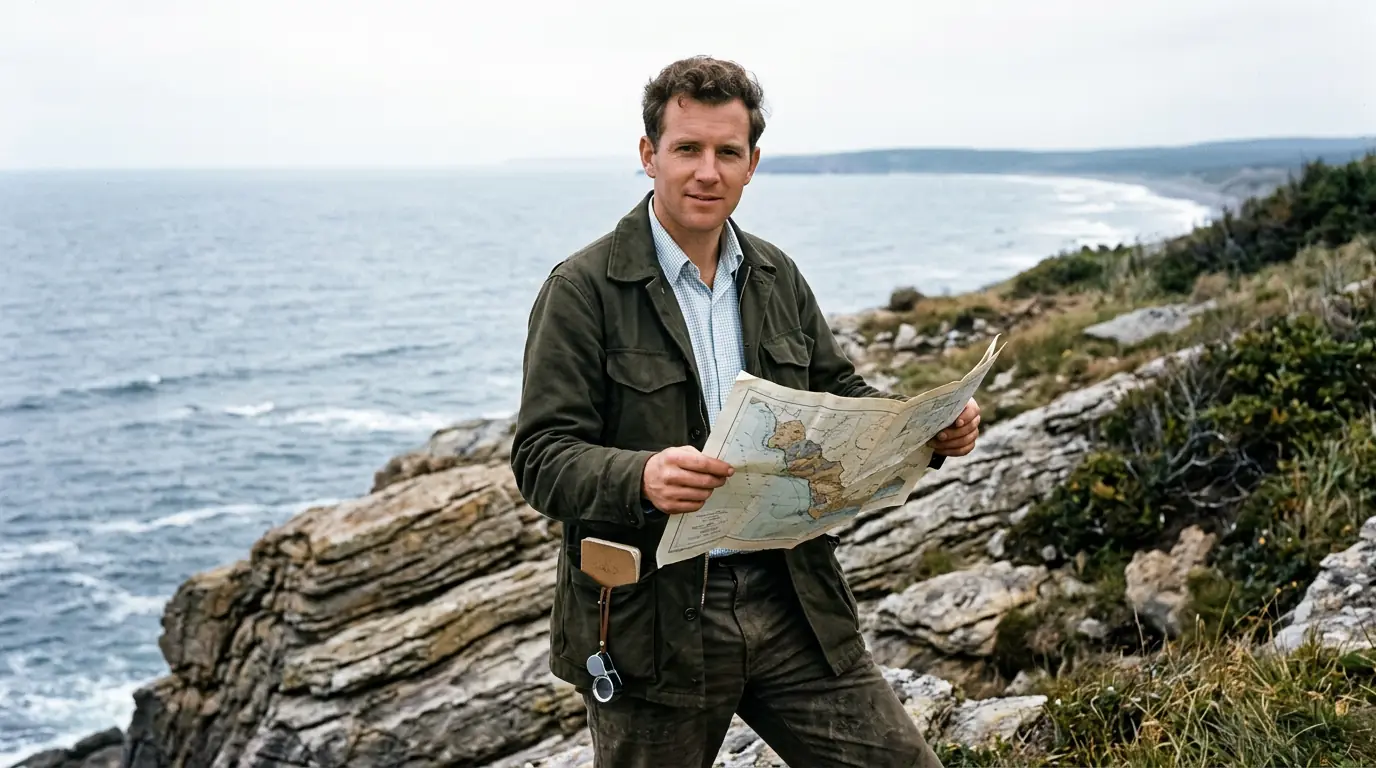
J. Tuzo Wilson
1908–1993 · Geophysics and plate tectonics
J. Tuzo Wilson helped explain moving tectonic plates, volcanic hotspots and the repeated opening and closing of ocean basins.
Why is this scientist famous?
J. Tuzo Wilson helped complete the modern picture of moving tectonic plates by proposing transform faults, exploring volcanic hotspots and explaining cycles of ocean opening and closure.
Plate tectonics helps scientists interpret earthquakes, volcanic islands, mountain ranges and the changing geography of oceans.
Tuzo's story
Learning to read the Earth
John Tuzo Wilson was born in Ottawa, Canada, on 24 October 1908. His mother’s surname, Tuzo, became the professional name that distinguished him from another geologist with similar initials. He studied geophysics at the University of Toronto, continued his education at Cambridge and earned a doctorate at Princeton in 1936. Field geology and precise mapping were vital to his early work. He later became a major figure in Canadian geophysics.
Why would volcanoes appear in the middle of a plate?
In the early 1960s, scientists were assembling evidence that Earth’s outer shell is divided into slowly moving plates. Wilson suggested in 1963 that a plate could travel over a relatively long-lived volcanic hotspot, leaving a chain of volcanic islands behind. Hawaii was an important example. The idea offered a way to explain volcanoes far from plate boundaries, although scientists have since refined how hotspots and mantle plumes behave.
The missing kind of fault
At spreading ridges, new ocean floor forms; at subduction zones, older crust sinks. Wilson’s 1965 contribution described transform faults, where adjoining plates slide sideways. Many ocean-floor fracture zones had been mapped, but his explanation made their motion fit the geometry of plate tectonics. Transform boundaries helped complete the framework that makes moving plates into one connected global system. The San Andreas Fault is a familiar example of sideways plate motion.
Oceans can close and open again
In 1966 Wilson asked whether the Atlantic region had once held an earlier ocean that later closed before a new ocean opened. The resulting concept, now called the Wilson cycle, links continental collisions, mountain building, breakup and new ocean basins across immense spans of time. This was not a claim that oceans change quickly or that every ocean follows identical steps. It offered geologists a way to interpret very old rocks on opposite sides of today’s sea.
A teacher of a changing planet
Wilson worked at the University of Toronto and became an influential scientific teacher and communicator. He was elected a Fellow of the Royal Society in 1968 and received major geology honours. He died in Toronto on 15 April 1993. Today his ideas are taught alongside contributions from many others, including ocean-floor mappers, magnetic-field researchers and scientists who explained how plate motion works. His most important lesson is that even an accepted picture of Earth can be radically revised.
What did they discover?
Transform faults
Explained how plates slide sideways at a third major kind of plate boundary.
Volcanic hotspots
Proposed moving plates over relatively persistent volcanic sources as one explanation for island chains.
Wilson cycle
Linked ocean-basin opening, closing and reopening with continental collisions and rifting.
Plate-tectonic synthesis
Helped make separate geological observations fit a connected global explanation.
Amazing facts
He became known by his middle name, Tuzo, to avoid confusion with another geologist’s initials.
He earned his doctorate at Princeton University in 1936.
He initially questioned continental drift but later became a major champion of plate tectonics.
In 1963 he proposed that moving plates could help create chains of volcanic islands such as Hawaii.
His 1965 transform-fault concept helped complete the modern plate-boundary picture.
His 1966 Atlantic Ocean paper helped inspire the concept now called the Wilson cycle.
He was elected a Fellow of the Royal Society in 1968.
He received the Geological Society’s Wollaston Medal in 1978.
Timeline
Born in Ottawa, Canada.
Earned a doctorate at Princeton University.
Proposed a moving-plate explanation for volcanic hotspot chains.
Published his influential transform-fault concept.
Published a paper asking whether the Atlantic had closed and reopened.
Elected a Fellow of the Royal Society.
Received the Wollaston Medal.
Died in Toronto, Canada.
Awards & honours
Related Super Scientists
Alfred Wegener
1880–1930 · Meteorologist & Geophysicist
Proposed the theory of continental drift, the foundation of modern plate tectonics.
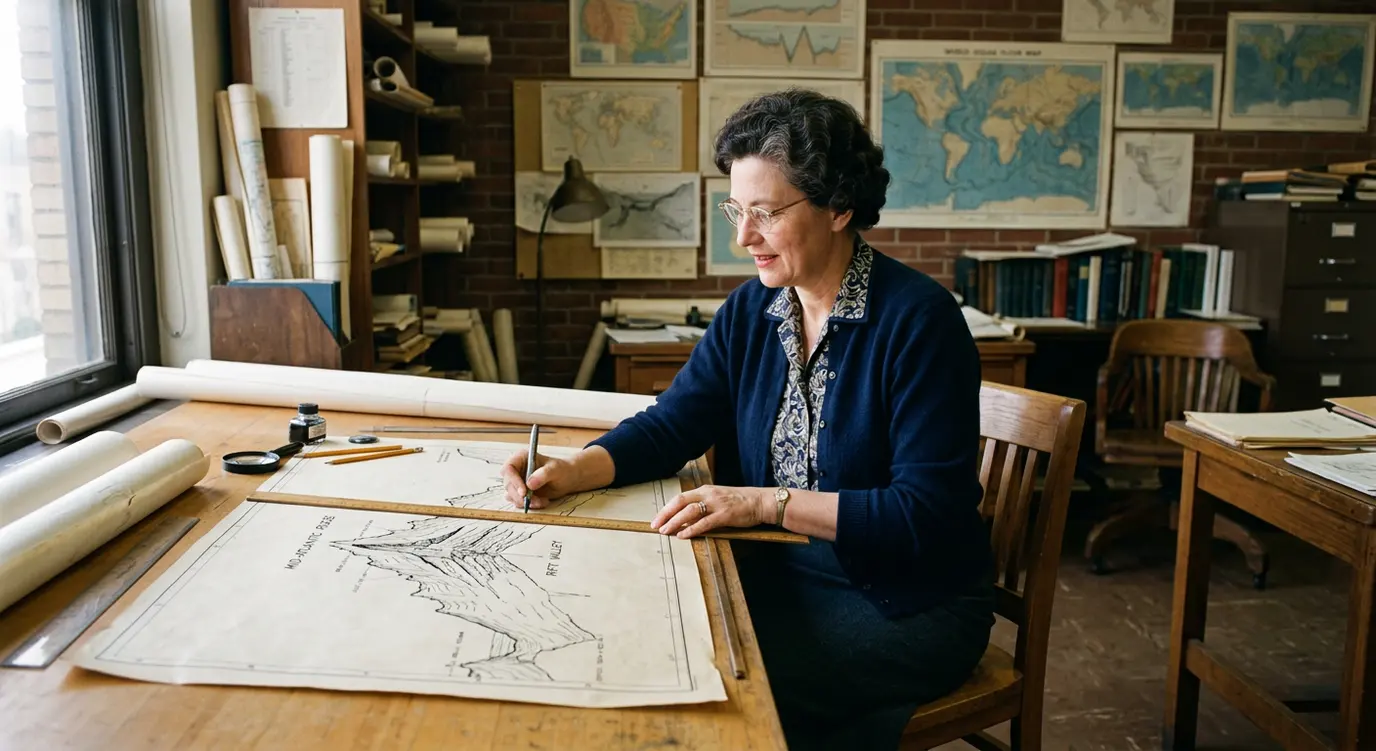
Marie Tharp
1920–2006 · Oceanographic cartography and geology
Her seafloor maps, made with colleague Bruce Heezen, revealed major underwater features and strengthened the case for continental movement and plate tectonics.
Harry Hammond Hess
1906–1969 · Geology and geophysics
His seafloor-spreading hypothesis connected ocean-floor observations to a mechanism that helped build plate tectonics.