_(2).jpg)
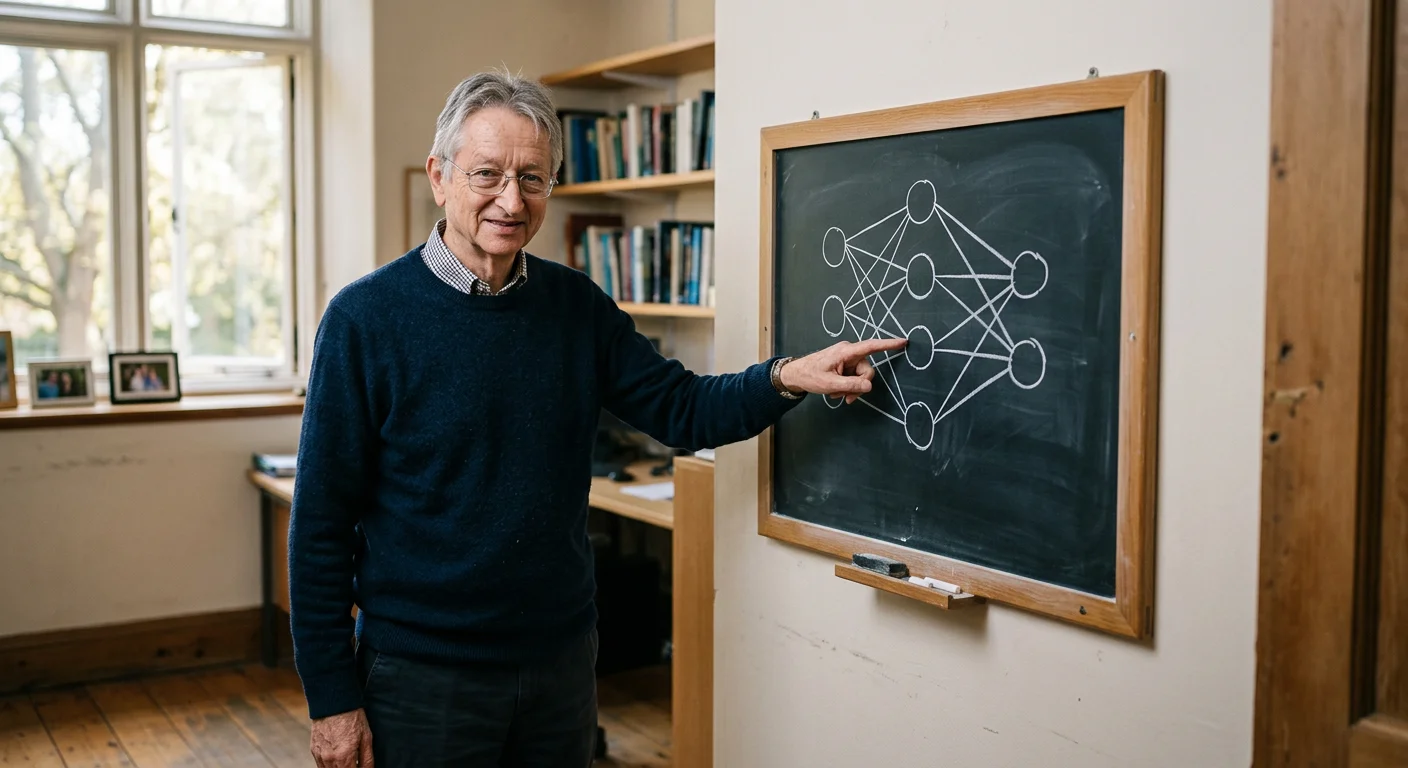
Geoffrey Hinton
1947–present · Computer science and artificial intelligence
Geoffrey Hinton helped demonstrate the power of backpropagation in training artificial neural networks, laying foundations for modern AI.
“If you believe in something, don't give up on it until you understand why that belief is wrong”
Why is this scientist famous?
Hinton helped show how artificial neural networks could learn patterns through backpropagation, laying groundwork for modern machine learning.
His work helps explain why modern software can learn to identify patterns in pictures, speech and other data. Progress came from teamwork, experiments and better computing, not from a single inventor.
Geoffrey's story
From psychology to computing
Geoffrey Hinton was born on 6 December 1947 in London, United Kingdom. He studied experimental psychology at the University of Cambridge, earning a bachelor’s degree in 1970. His interest in how minds learn led him to artificial intelligence (AI), and he completed a doctorate in that field at the University of Edinburgh in 1978.
A career across continents
Hinton’s research path took him to Sussex and the University of California, San Diego, then to five years at Carnegie Mellon, and finally to the University of Toronto. From 1998 to 2001 he directed the Gatsby Computational Neuroscience Unit in London, then returned to Toronto. From 2013 to 2023 he worked half-time at Google, connecting academic research with industrial computing.
Teaching networks to learn
Artificial neural networks are mathematical systems of connected units, loosely inspired by brains. They learn patterns by adjusting connection strengths using examples. Backpropagation works backwards through a network’s calculations to determine how adjustments could reduce errors. In 1986, Hinton, David Rumelhart and Ronald Williams helped demonstrate its power in influential work. The achievement was a collaboration, not the work of a single inventor.
Boltzmann machines and physics
Hinton also developed Boltzmann-machine research with Terry Sejnowski and others. Boltzmann machines use probabilistic ideas related to statistical physics, which is one reason his machine-learning research connects with the Physics Nobel. These systems explore how networks of units can learn by settling into stable states, drawing on concepts from the physics of energy and probability. During training, the network’s connection strengths are adjusted so that patterns resembling the training examples become more likely.
The 2012 image-recognition breakthrough
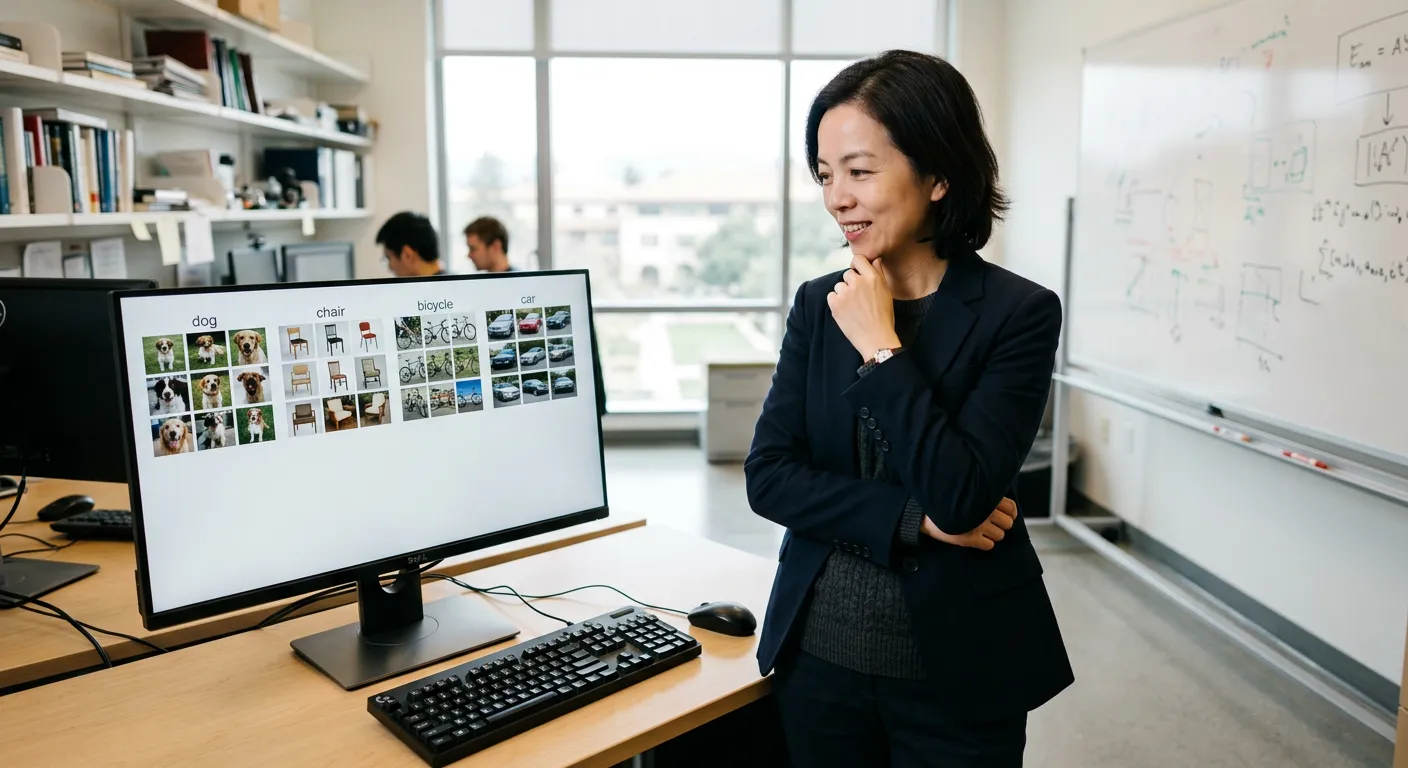
In 2012, Hinton’s students Alex Krizhevsky and Ilya Sutskever worked with him to achieve a major image-recognition breakthrough using a deep convolutional network. Their system dramatically outperformed earlier approaches, helping spark renewed interest in deep learning. The advance depended on all three researchers and on better computing hardware, not on computer vision being invented by one person.
Recognition and responsibility
In 2018, Hinton shared the A.M. Turing Award with Yoshua Bengio and Yann LeCun. In 2024, he shared the Nobel Prize in Physics with John J. Hopfield. The Nobel recognised foundational machine-learning work. Hinton has also raised concerns about potential dangers from advanced AI and called for more research into making it safe.
What did they discover?
Backpropagation
Helped demonstrate, with Rumelhart and Williams, how neural networks could learn by propagating error signals backwards through connections to adjust their strengths.
Boltzmann machines
Developed with Terry Sejnowski and others, these networks use probability to represent patterns in data. Training adjusts their connection strengths so that patterns resembling the training examples become more likely.
AlexNet image recognition
With students Alex Krizhevsky and Ilya Sutskever, achieved a landmark image-classification result in 2012 using a deep convolutional neural network.
Amazing facts
He first studied experimental psychology. His route into computing grew from questions about minds and learning, rather than beginning with a computer-science degree.
Learning changes connections. In the networks he studied, training adjusts numerical strengths between units so the system can improve at recognising patterns from examples.
Errors can be useful teachers. Backpropagation helps determine which changes could reduce a network’s mistakes; the 1986 work was a collaboration with Rumelhart and Williams.
Physics helped inspire his computing. Boltzmann machines use probabilistic ideas related to statistical physics, one reason his machine-learning research connects with the Physics Nobel.
Two students helped produce a landmark result. Krizhevsky and Sutskever worked with Hinton on the 2012 image-recognition advance, showing why students deserve named credit in research stories.
He kept studying an unpopular approach. He recalled that many researchers thought neural networks would fail at complex tasks; his advice is to persist while also examining whether an idea is wrong.
He has shared two different major prizes. The Turing Award recognised work with Bengio and LeCun; the Physics Nobel paired him with Hopfield. They are distinct awards and collaborations.
He has worked across several research settings. His path included psychology, university laboratories, a neuroscience research unit and Google, connecting questions about learning with practical computing.
Timeline
Born in London, United Kingdom.
Completes his bachelor’s degree in experimental psychology at Cambridge.
Completes his doctorate in artificial intelligence at Edinburgh.
Publishes influential work on backpropagation with Rumelhart and Williams.
Begins directing the Gatsby Computational Neuroscience Unit in London.
Returns to Toronto after the Gatsby directorship.
Achieves a major image-recognition breakthrough with Krizhevsky and Sutskever.
Begins half-time work at Google.
Shares the A.M. Turing Award with Bengio and LeCun.
Ends his work at Google.
Shares the Nobel Prize in Physics with John J. Hopfield.
Awards & honours
Related Super Scientists
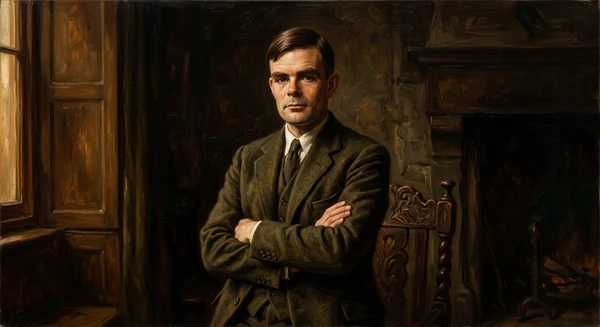
Alan Turing
1912–1954 · Mathematician & Computer Scientist
Making foundational contributions to theoretical computer science and artificial intelligence, and playing a major role in Allied codebreaking during the Second World War.
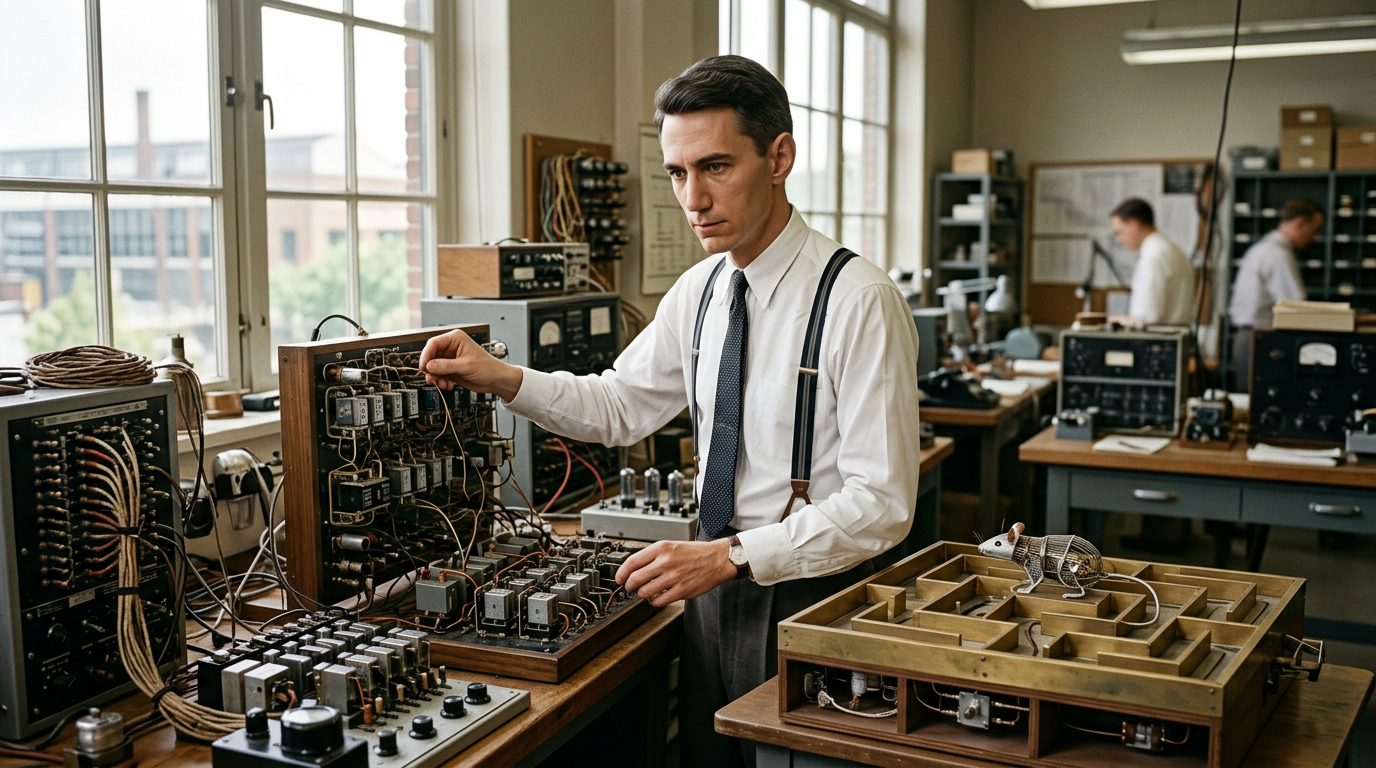
Claude Shannon
1916–2001 · Mathematics, electrical engineering, information theory, cryptography and computing
Founding information theory and making a landmark contribution to digital circuit design.
Ada Lovelace
1815–1852 · Mathematician
Publishing influential 1843 Notes on Charles Babbage's Analytical Engine, including a detailed algorithm for calculating Bernoulli numbers and a visionary description of uses beyond arithmetic.