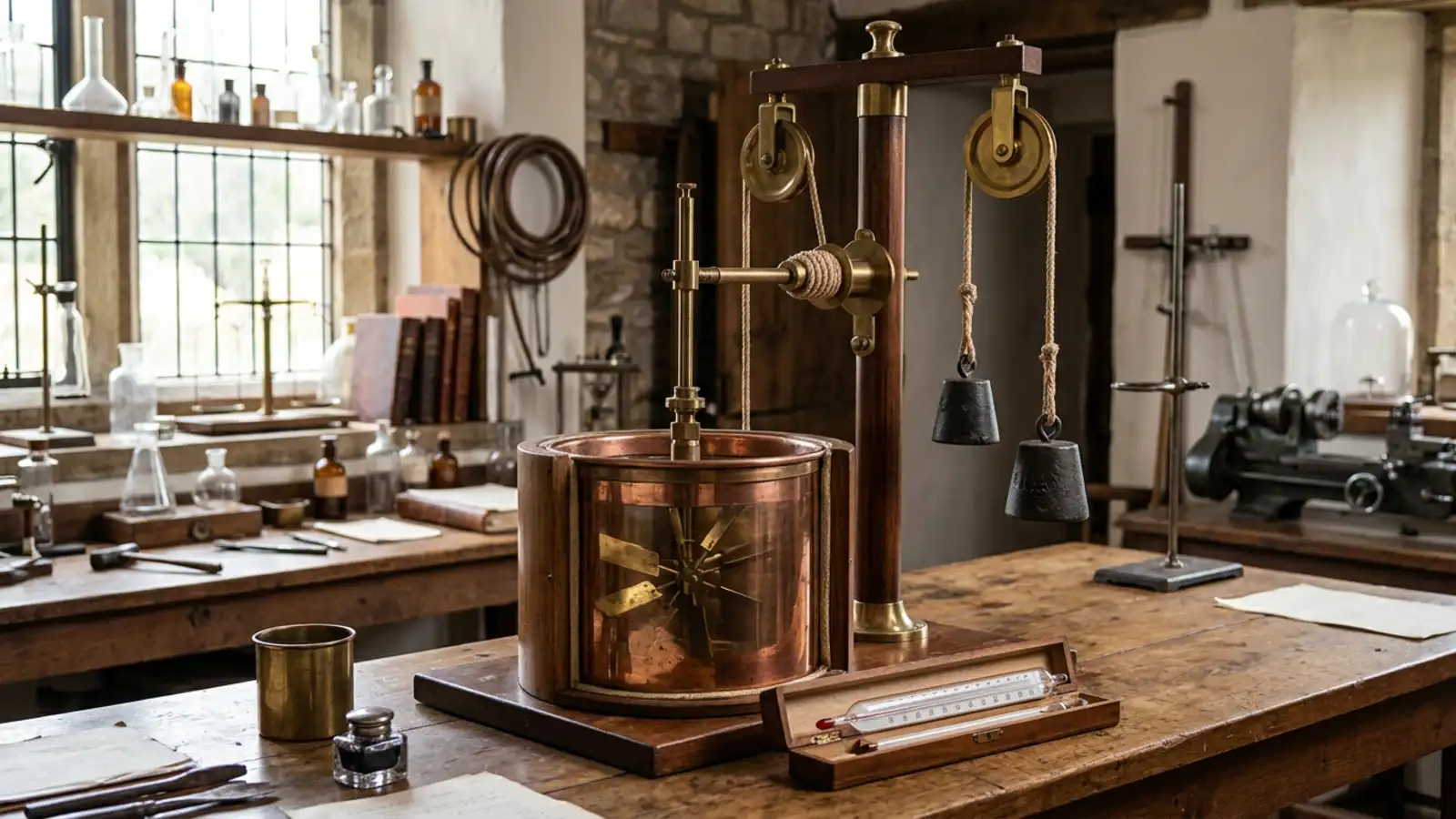
_(2).jpg)
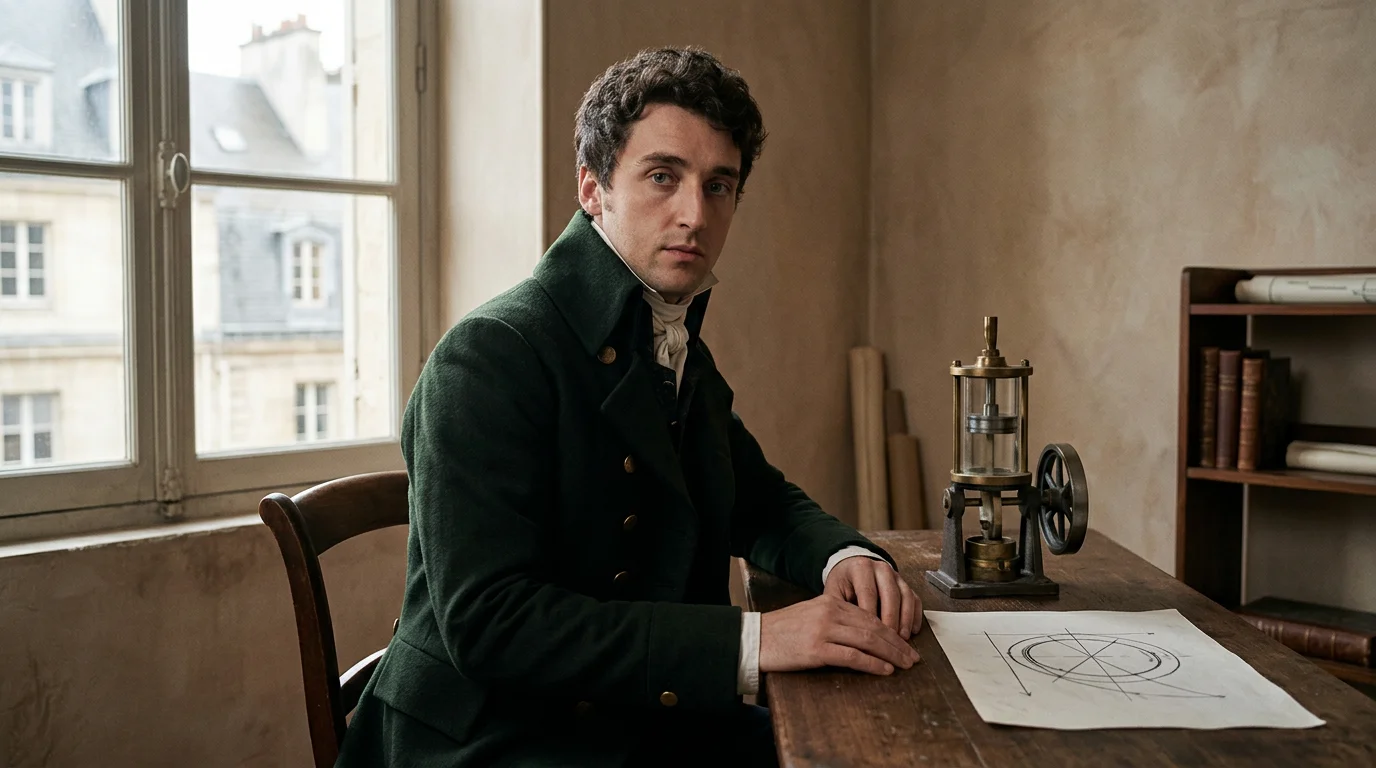
Sadi Carnot
1796–1832 · Thermodynamics and heat-engine efficiency
Sadi Carnot analysed ideal heat engines and showed why temperature differences limit their performance, helping found thermodynamics.
Why is this scientist famous?
Sadi Carnot developed a theory of the maximum possible performance of heat engines, establishing ideas later central to thermodynamics.
His idealised engine cycle still helps engineers assess power stations, refrigeration and energy conversion.
Sadi's story
The age of steam power
Nicolas Léonard Sadi Carnot was born in Paris in 1796. His father Lazare Carnot was a mathematician, engineer and political figure. Sadi trained at the École Polytechnique, entering in 1812, and then served as a military engineer. Steam engines were becoming essential to mines, factories and transport, yet builders struggled to know why one engine performed better than another. Carnot wanted a principle that would apply to any heat engine, not just one favourite machine.
A question about useful work
A steam engine uses a temperature difference to make mechanical work. Carnot imagined an ideal sequence of heating, expansion, cooling and compression to investigate the upper limit of efficiency. His 1824 book Reflections on the Motive Power of Fire developed the argument that a heat engine requires heat transfer between hotter and colder bodies. Within his ideal model, maximum performance depends on those temperatures rather than on the particular working substance.
An influential idea with an outdated assumption
Carnot reasoned using the caloric theory, which treated heat as a conserved fluid. Scientists later rejected this model as experiments clarified the relationship between heat and energy. That does not erase Carnot’s achievement: William Thomson (Lord Kelvin) and Rudolf Clausius reinterpreted his insights in the developing science of thermodynamics. His ideal reversible engine became a useful benchmark for comparing real machines, all of which suffer losses and cannot reach perfect ideal behaviour.
A life shorter than his influence
Carnot published only one book in his lifetime and died in Paris on 24 August 1832, aged 36. Later study of his notebooks showed that he had begun to rethink aspects of the older caloric theory. His work was not widely celebrated at first, but Émile Clapeyron’s 1834 reformulation brought the ideas to more readers. The book eventually became a foundation of the second law of thermodynamics.
Thinking in limits
Engineers still use the Carnot cycle to understand why an engine operating between a hot source and cold surroundings has a maximum theoretical efficiency. Real electricity generation and refrigeration involve many design details, but Carnot’s example offers a powerful habit of mind: before trying to improve a machine, ask what nature allows it to achieve at all.
What did they discover?
Heat-engine efficiency
Proposed a general limit for the performance of an ideal engine operating between temperatures.
Carnot cycle
Developed a reversible ideal cycle for comparing heat engines.
Thermodynamic foundations
Influenced later formulations of the second law.
Theory beyond a single machine
Used a general model rather than analysing one steam engine design.
Amazing facts
He entered the École Polytechnique in 1812 at age sixteen.
He trained as an engineer rather than as a factory engine designer.
His father Lazare Carnot was also a mathematician and engineer.
His only published book appeared in 1824.
He used an idealised engine cycle to ask what efficiency might be possible.
His original explanation relied on the now-rejected caloric theory of heat.
Émile Clapeyron made the 1824 work more widely accessible in 1834.
He died aged only thirty-six.
Timeline
Born in Paris, France.
Entered the École Polytechnique.
Completed studies at the École Polytechnique and pursued military engineering.
Published Reflections on the Motive Power of Fire.
Died in Paris.
Related Super Scientists
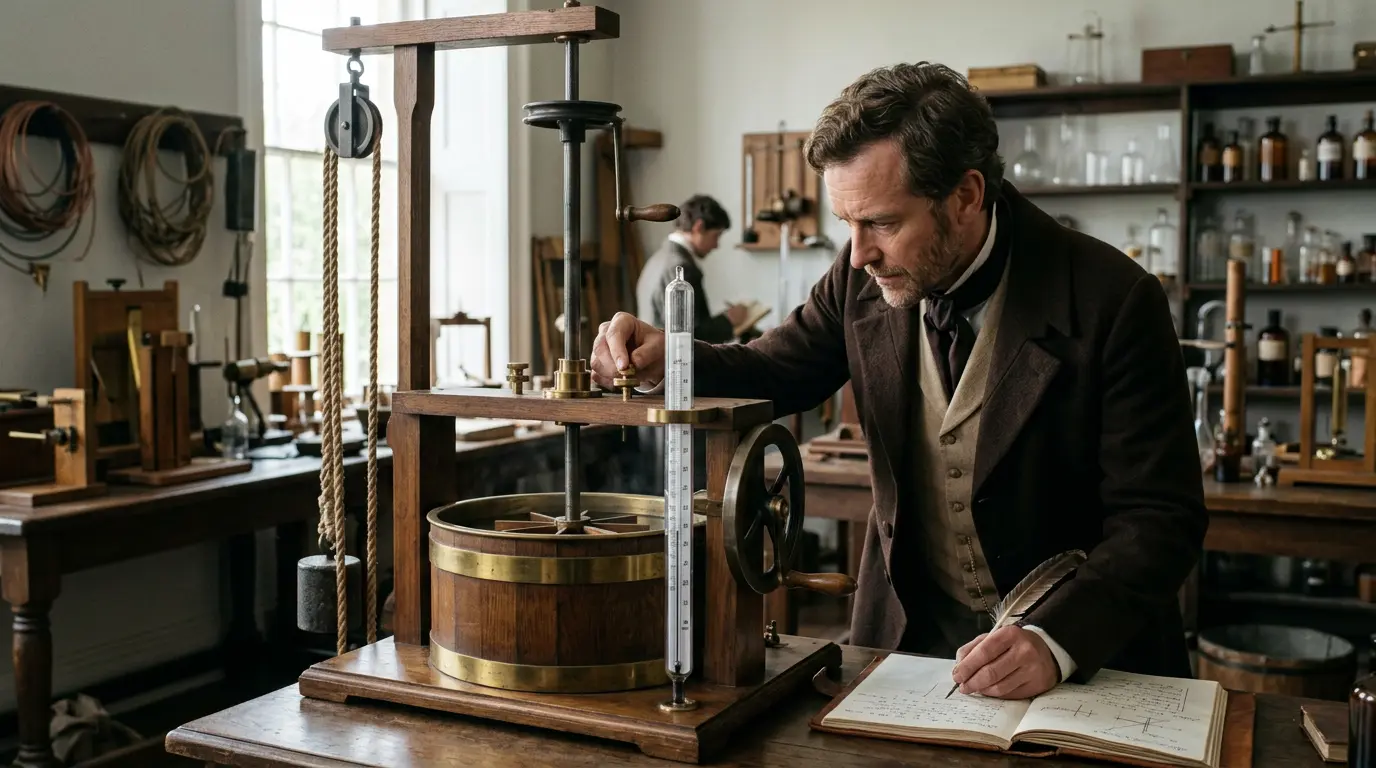
James Prescott Joule
1818–1889 · Physicist
Measured the mechanical equivalent of heat, discovered the electrical heating law bearing his name and made major contributions to the development of energy conservation and thermodynamics.

William Thomson, Lord Kelvin
1824–1907 · Physicist and Engineer
Developed the absolute temperature scale measured in kelvins (K), made major contributions to thermodynamics, and played a key role in the laying of the transatlantic telegraph cable.