_(2).jpg)
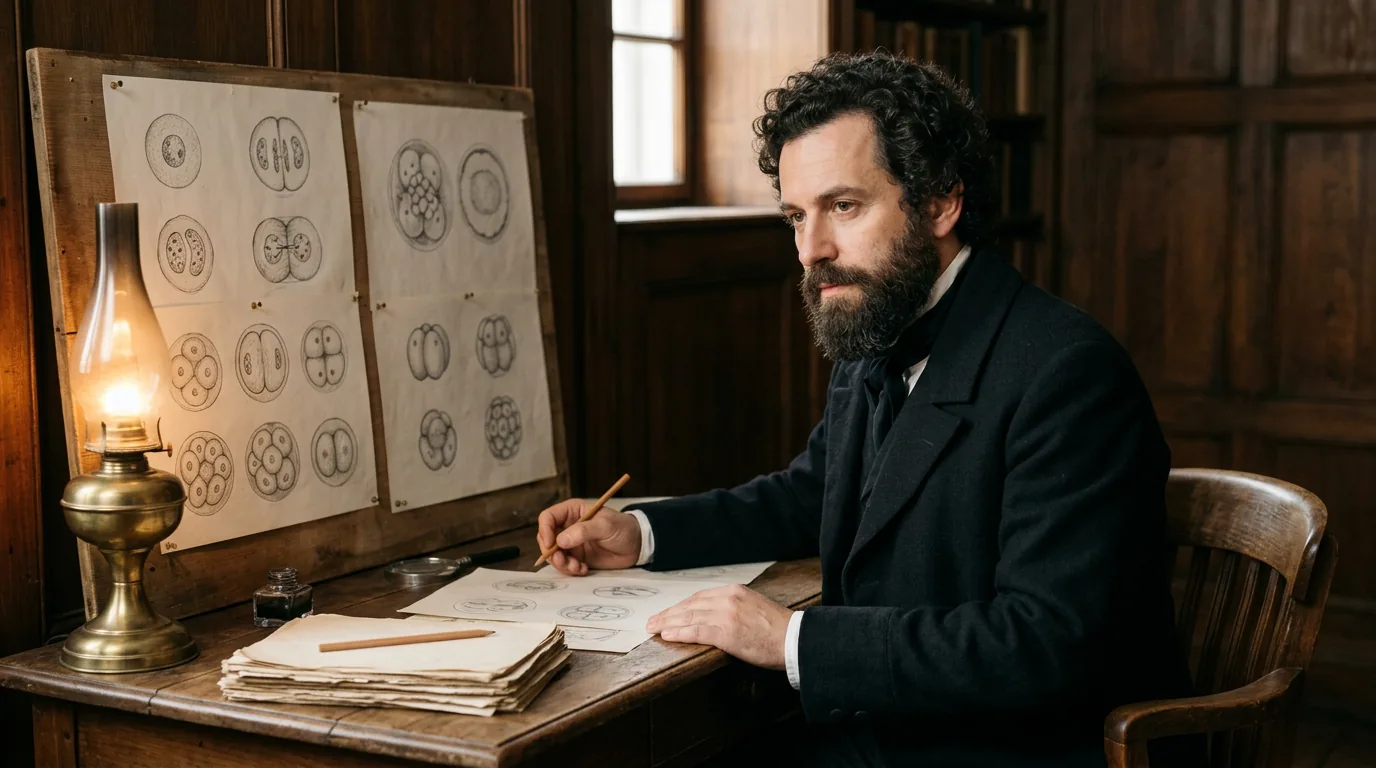
Robert Remak
1815–1865 · Embryology, cell division and nerve anatomy
Robert Remak used microscopes to show how cells divide and how developing embryos form tissues, advancing cell theory before the work of Rudolf Virchow.
Why is this scientist famous?
Robert Remak documented cell division in animal tissues and clarified how embryos develop, supplying vital evidence that new cells come from existing cells.
Researchers still study cell division and embryonic tissue development to understand growth, inheritance and disease.
Robert's story
Seeing more than others could
Robert Remak was born in 1815 in Posen, then part of Prussia and now Poznań in Poland. He studied medicine in Berlin from 1833 and learned microscopic anatomy in Johannes Müller’s laboratory. In 1838 he earned a medical doctorate with research on the structure of nerves. Remak was Jewish at a time when university careers were restricted by discrimination. Despite serious obstacles, he pursued original investigations of cells, nerves and developing animals.
A remarkable view of nerves
In the 1830s Remak studied the fine structure of nerve fibres using microscopes. He identified important features of nerve cells, including the central fibre we now call an axon. Some unmyelinated nerve fibres are still described as Remak fibres. Such work helped overturn overly simple ideas about what nerves looked like. It also helped connect anatomy with how the nervous system functions.
Where do new cells come from?
Some scientists, including Matthias Schleiden and Theodor Schwann, thought new cells could arise from a formative material rather than by splitting existing cells. Remak studied developing animals and observed cells producing daughter cells through division. In 1852 he published evidence in support of this process, challenging the older explanation. He extended these observations in his studies of embryos and tissues. Rudolf Virchow later made the principle famous, but Remak’s earlier work deserves explicit credit.
Three layers build an animal
An animal embryo starts with a fertilised egg cell and undergoes repeated divisions. Remak carefully investigated three early tissue layers, now called the ectoderm, mesoderm and endoderm. These layers give rise to different structures during development, although their fates are far more complex than a simple one-layer-per-organ rule. His work in the 1850s helped explain how the growing embryo becomes an organised animal. Microscopic evidence let scientists connect an early single cell to later body tissues.
Recognition came slowly
In 1847 Remak obtained special permission to teach at the University of Berlin, becoming an early Jewish medical lecturer there. Yet he was not appointed an extraordinary professor until 1859, years after he had made important discoveries. He also investigated electrical treatment of nerve and muscle disorders. Remak died in Bad Kissingen on 29 August 1865. Cell biology and embryology still rely on the central principle he helped establish: new cells arise through division of earlier ones.
What did they discover?
Cell division from existing cells
He published influential evidence in 1852 that animal cells multiply through division rather than appearing from a formless material.
Three embryonic germ layers
His detailed observations clarified how three early layers in vertebrate embryos develop into different tissues.
Anatomy of nerve fibres
He identified structures in nerve fibres and helped establish a more accurate microscopic understanding of the nervous system.
Cell theory beyond original errors
His studies challenged an incorrect element of early cell theory and informed later explanations of growth and disease.
Amazing facts
He was born in the city now known as Poznań in Poland, which was then under Prussian rule.
His medical doctorate in 1838 examined microscopic structures of the nervous system.
Some fine nerve fibres remain known as Remak fibres.
In 1847 he needed special royal permission to qualify as a Jewish lecturer at Berlin University.
He published an important paper on animal-cell division in 1852, before Virchow’s celebrated slogan.
He studied how the three embryonic germ layers develop into tissues.
He became an extraordinary professor at the University of Berlin in 1859.
He later explored electrical stimulation as a treatment for nerve and muscle conditions.
Timeline
Born in Posen, Prussia, now Poznań, Poland; exact day is disputed.
Began medical studies in Berlin.
Earned his medical doctorate with research on nerves.
Received permission to lecture at the University of Berlin.
Published evidence for animal-cell multiplication by division.
Completed influential work on vertebrate embryonic development.
Appointed extraordinary professor in Berlin.
Died in Bad Kissingen, Bavaria.
Related Super Scientists
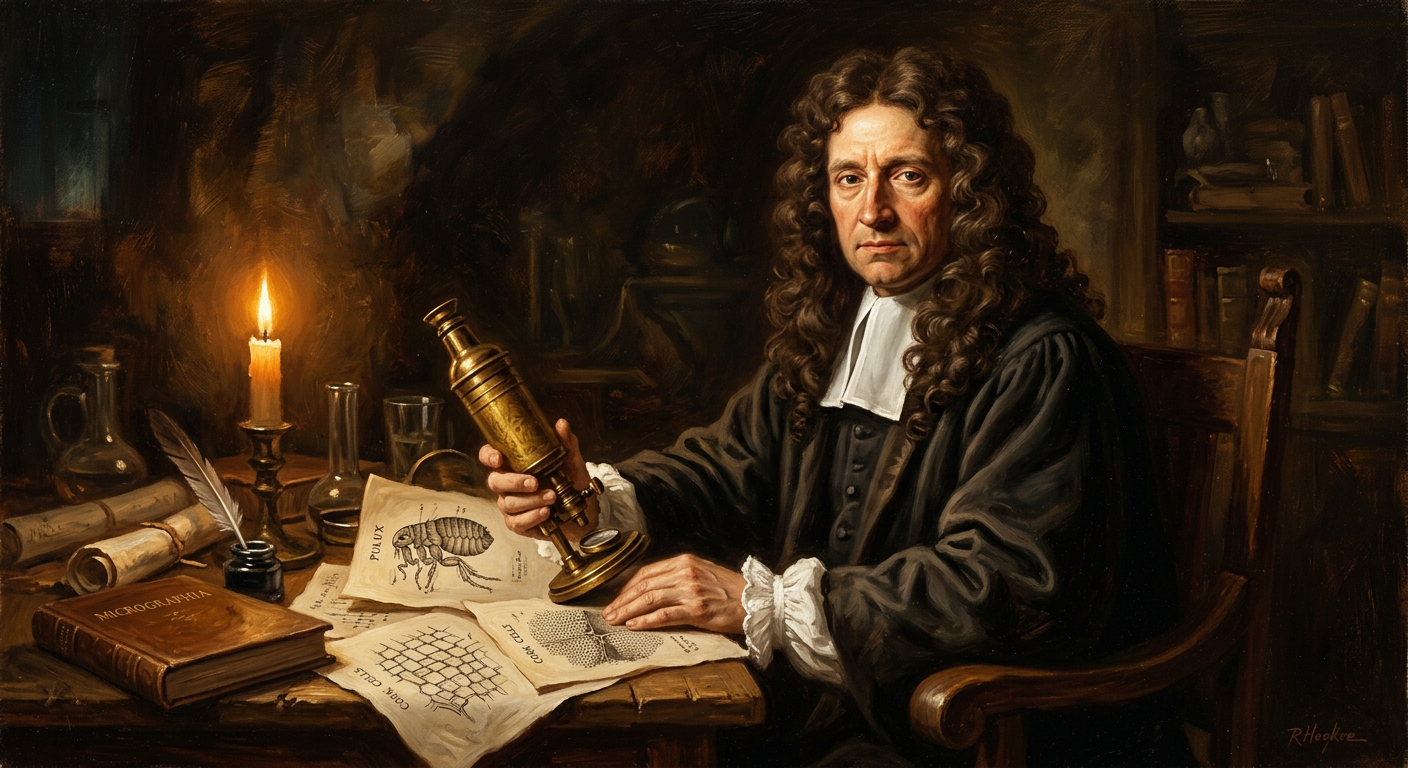
Robert Hooke
1635–1703 · Biologist and Physicist
Coined the word "cell" after examining cork under a microscope and formulated Hooke’s Law on springs.
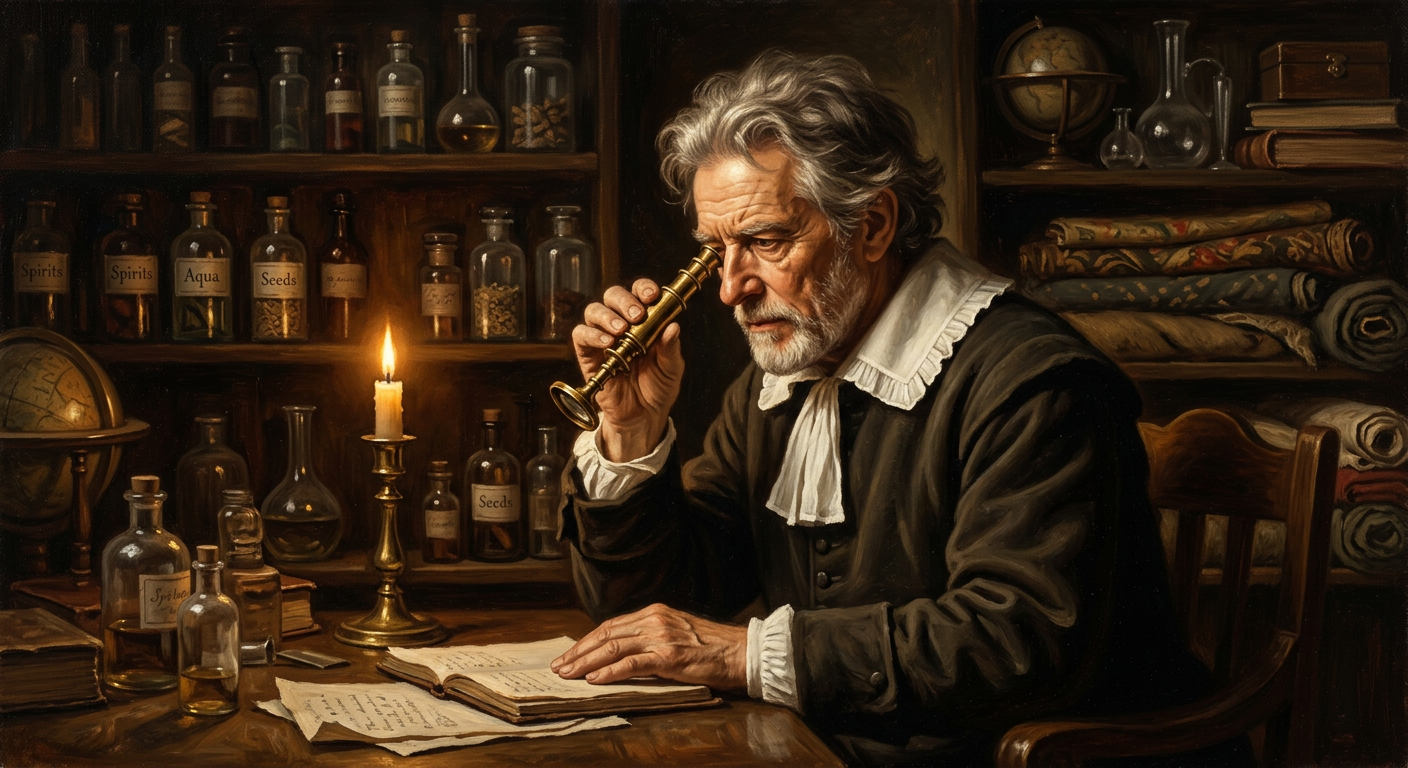
Antonie van Leeuwenhoek
1632–1723 · Biologist
First person to see and describe microorganisms — tiny living creatures invisible to the naked eye.