_(2).jpg)
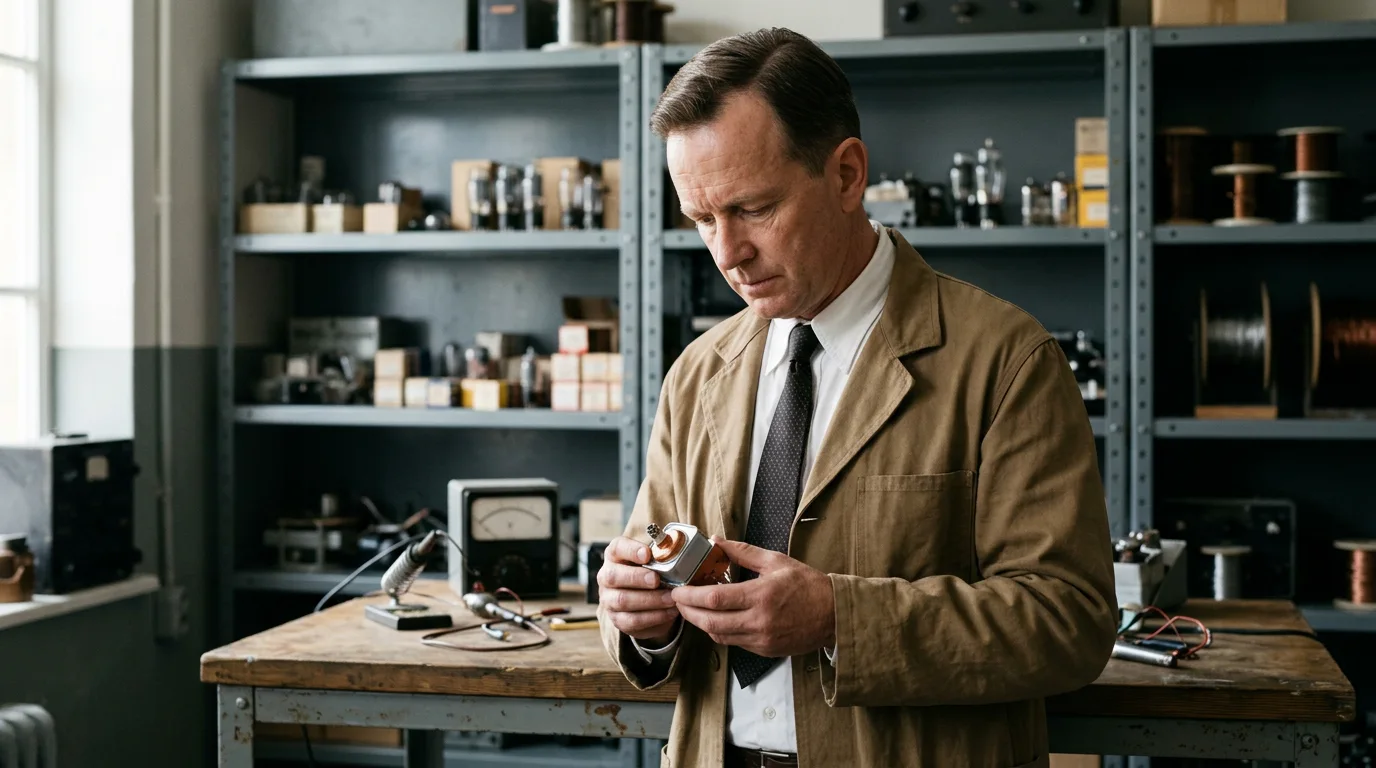
Percy Spencer
1894–1970 · Radar engineering and microwave cooking
Percy Spencer improved radar magnetron production and helped create the microwave oven, turning laboratory experiments into a practical new technology.
Why is this scientist famous?
Percy Spencer improved mass production of radar magnetrons and led early work at Raytheon that turned microwave energy into a new way of cooking food.
Microwave ovens use high-frequency electromagnetic energy to heat food, a commercial application Spencer and Raytheon colleagues helped make practical.
Percy's story
From a mill to a world of radio
Percy Spencer was born in Howland, Maine, on 9 July 1894. He faced a difficult childhood and left school while still young to earn money. As a teenager he helped with electrical work at a paper mill, teaching himself skills that employers needed. Inspired by the importance of wireless communication, he joined the United States Navy and trained as a radio operator. He continued studying mathematics and physics through books rather than following a conventional university route.
Making radar technology practical
Spencer eventually joined the company that became Raytheon in the 1920s. During the Second World War, radar equipment used magnetrons, specialised vacuum tubes that generate powerful microwaves. British researchers had already developed important cavity-magnetron designs, so Spencer was not the sole inventor of the technology. His major engineering contribution was finding ways to manufacture magnetrons much more quickly and in large numbers. Such production improvements made radar systems more available to Allied forces during the war.
The surprising effect of microwaves
While working near magnetrons, Spencer noticed that microwave energy could heat food. A famous account describes a snack melting in his pocket, followed by experiments with popcorn and an egg. Historians note that the idea developed through several observations and other researchers had studied radio-frequency heating earlier. Spencer recognised that an enclosed metal cooking chamber could make this energy useful for preparing food. In 1945 Raytheon applied for a patent covering a microwave cooking process, and the company's engineering teams continued improving the design.
A machine much bigger than today's
Early microwave ovens were nothing like the small machines found in many kitchens. Raytheon introduced the commercial Radarange in the late 1940s, and units sold in 1947 were large, heavy and expensive. They were initially aimed at professional kitchens and other organisations rather than ordinary homes. Engineers needed to solve problems involving cooling, electrical power, cost and safe construction before the idea could spread widely. Later designs became smaller and more affordable as manufacturers improved components and controls.
The inventor behind a familiar appliance
Spencer rose to senior leadership at Raytheon and received the US Navy Distinguished Public Service Medal for his wartime engineering achievements. In 1961, the University of Maine awarded him an honorary Doctor of Science degree. He earned numerous patents and continued exploring practical applications of electronics. He died on 7 September 1970 and was inducted into the National Inventors Hall of Fame in 1999.
What did they discover?
High-volume radar magnetron manufacture
Spencer developed changes that enabled Raytheon to produce magnetrons on a much larger scale, supporting wartime radar technology.
Microwave cooking process
He recognised a useful food-heating application of microwave energy and led development work that resulted in a Raytheon patent application in 1945.
Early commercial microwave ovens
Raytheon teams transformed microwave heating experiments into large professional Radarange ovens sold in 1947.
Practical radio-frequency engineering
His work connected radio technology, vacuum-tube engineering and methods for building reliable, repeatable products.
Amazing facts
Spencer left formal school around the age of twelve and worked in a spool mill to help support his family.
After the Titanic disaster in 1912, he became interested in the work of radio operators and joined the US Navy.
He learned advanced subjects including calculus and physics by reading textbooks while serving in the Navy.
One magnetron improvement replaced difficult-to-machine parts with layered metal pieces that were faster to manufacture.
A familiar story says a sweet snack melted in his pocket near a magnetron, but historians warn against treating this as the whole invention story.
Microwave-cooking experiments connected with his team included making popcorn pop.
Early Radarange machines weighed hundreds of kilograms and were designed for commercial rather than ordinary home use.
He was inducted into the National Inventors Hall of Fame in 1999, nearly thirty years after his death.
Timeline
Born in Howland, Maine, United States.
Joined the United States Navy and trained in radio communications.
Joined American Appliance Company, later known as Raytheon.
Worked on manufacturing improvements that dramatically increased magnetron production.
Raytheon filed a patent application for a microwave cooking process arising from Spencer's work.
The commercial Radarange microwave oven began reaching customers.
A key microwave-cooking patent filed in 1945 was issued.
Retired from Raytheon after a long engineering career.
Died after decades working on radio and microwave technology.
Awards & honours
Related Super Scientists
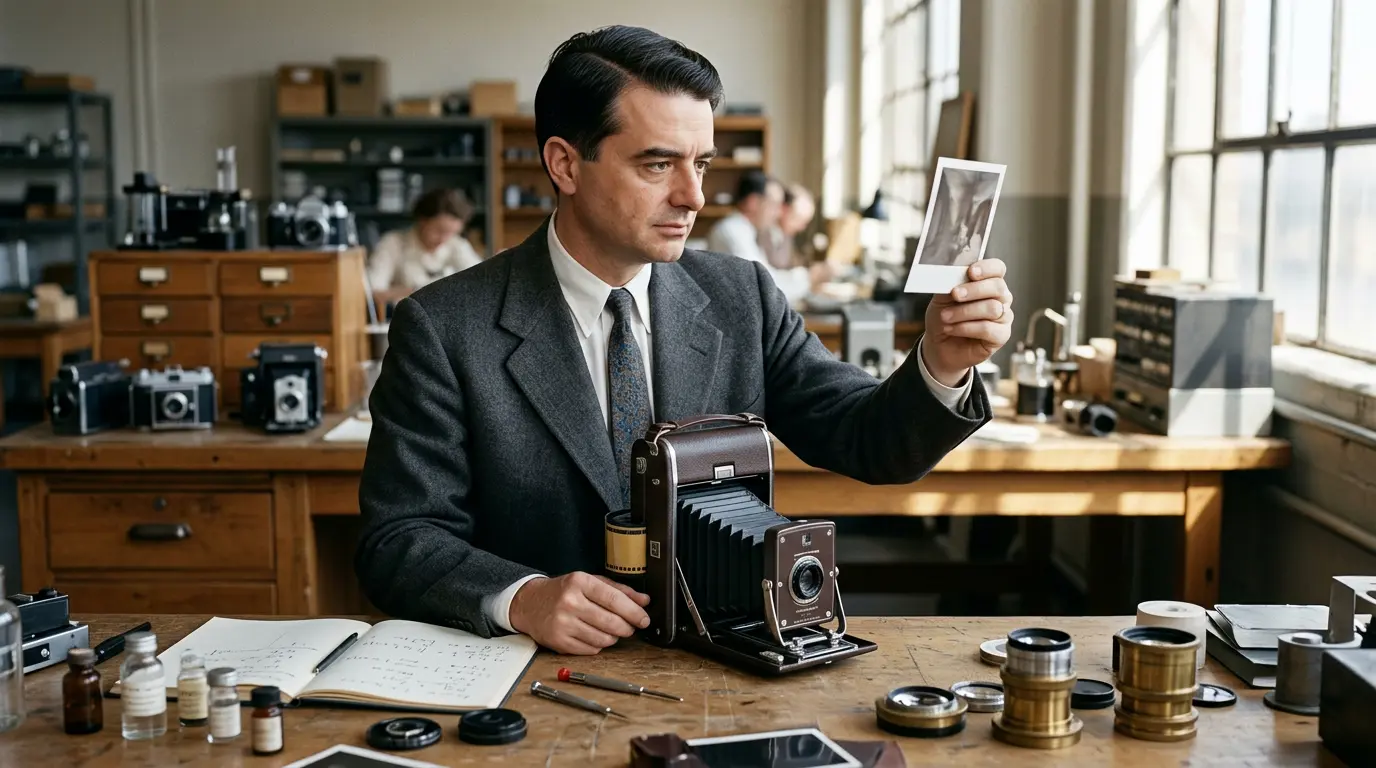
Edwin H. Land
1909–1991 · Optics, polarising materials and instant photography
Edwin H. Land pioneered inexpensive polarising filters and led the development of Polaroid instant cameras that could produce photographs in minutes.
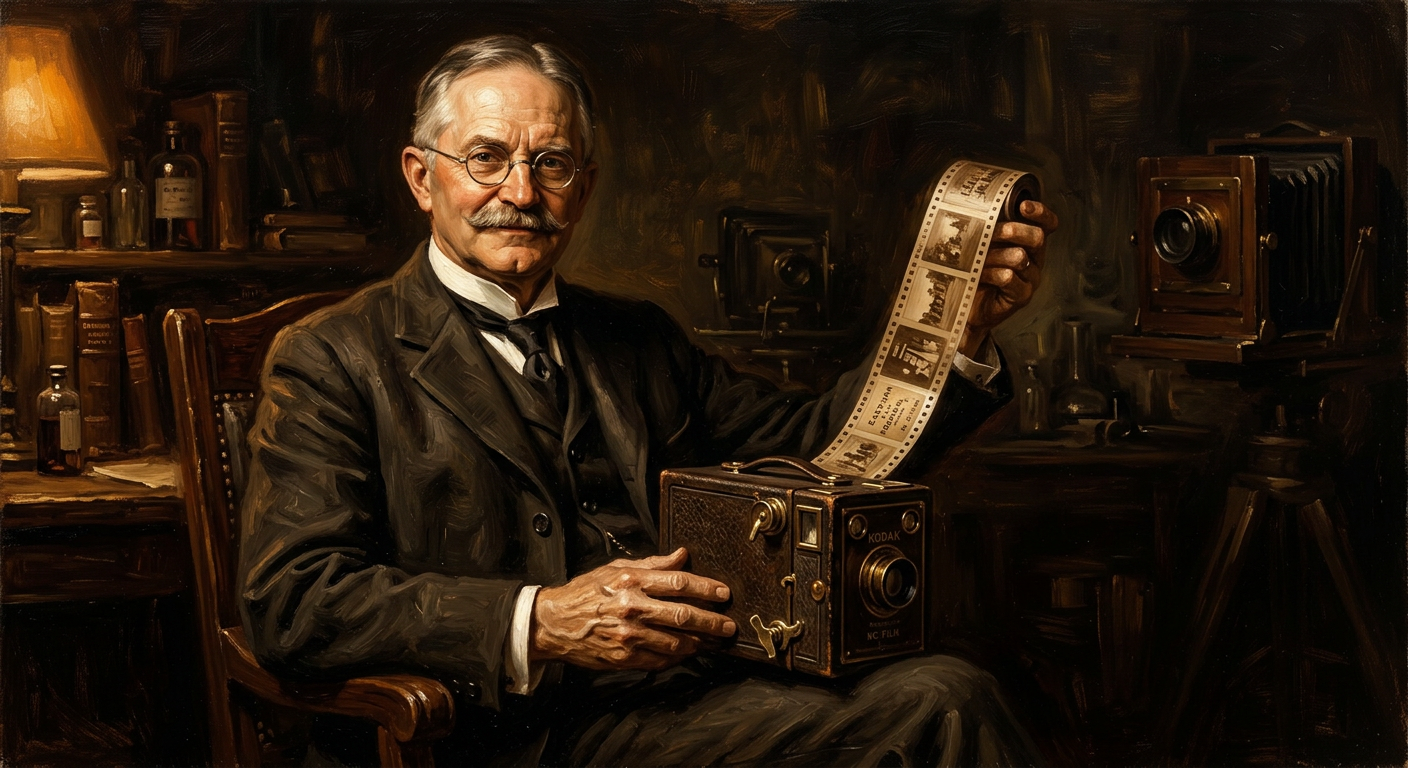
George Eastman
1854–1932 · Inventor and Entrepreneur
Developing practical roll-film systems and the Kodak camera, helping make photography accessible to ordinary people and contributing to the rise of motion pictures.