_(2).jpg)
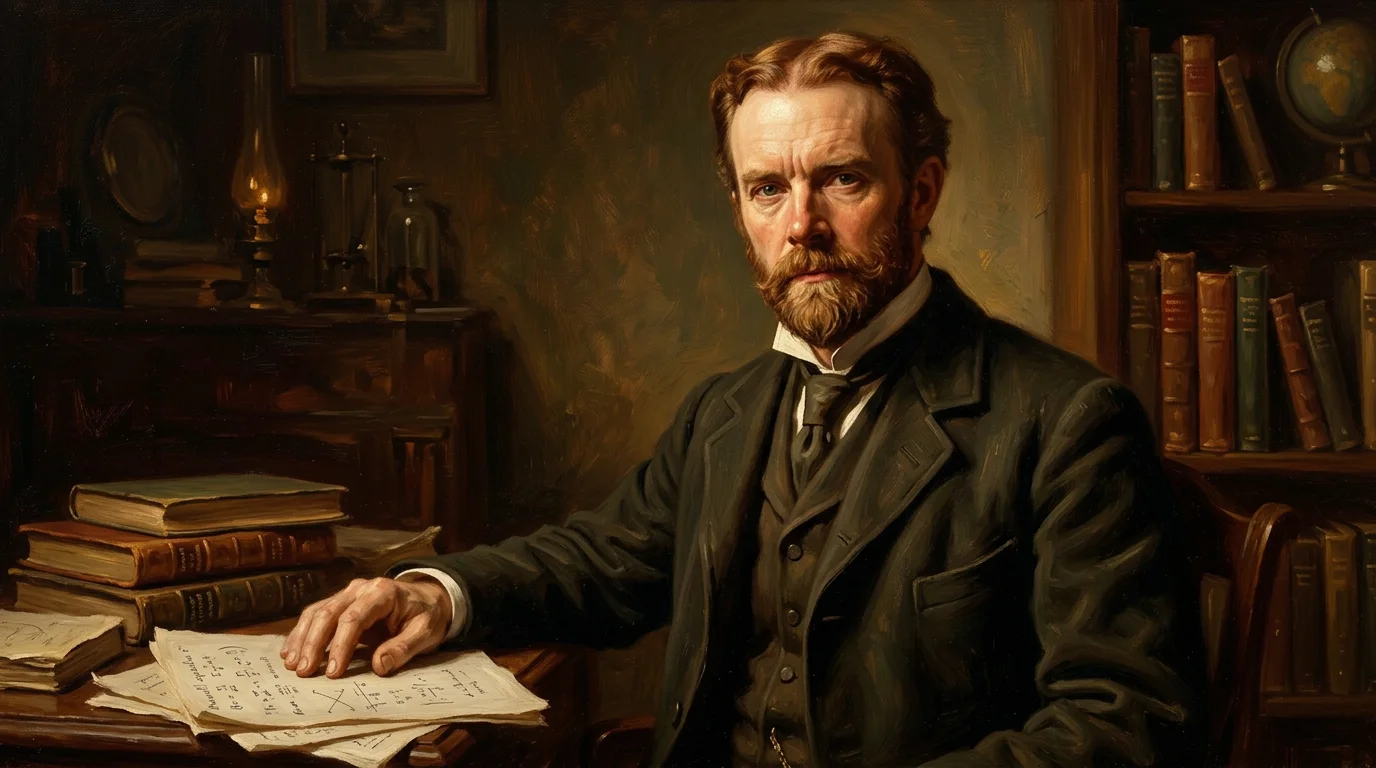
Oliver Heaviside
1850–1925 · Mathematician, Physicist & Electrical Engineer
A British mathematician who reformulated Maxwell's equations into their modern compact vector form and made foundational contributions to electrical engineering.
Why is this scientist famous?
Reformulating Maxwell's electromagnetic theory into a compact vector form, developing transmission-line equations fundamental to telecommunications, and predicting a radio-reflecting atmospheric layer later called the Heaviside-Kennelly layer.
Heaviside helped turn Maxwell's electromagnetic theory into mathematics that engineers could use. His work influenced telecommunications, circuit theory, radio propagation and modern electrical engineering. His story shows that major scientific contributions can come from someone working largely outside the traditional university system.
Oliver's story
Early Life and Self-Education
Oliver Heaviside was born in Camden Town, London, on 18 May 1850. He did not attend university. He left formal schooling when he was young and continued learning independently, teaching himself advanced mathematics and electrical theory. His family connection to Sir Charles Wheatstone, who was married to Heaviside's aunt, helped introduce him to the world of telegraphy.
Telegraph Career and Independent Research
In 1868, aged 18, Heaviside began working as a telegraph clerk for the Anglo-Danish Telegraph Company. He later worked for the Great Northern Telegraph Company. His practical experience with telegraph systems led him to study how electrical signals travelled through cables. In 1874, increasing deafness contributed to his decision to leave paid telegraph work. He then devoted himself largely to independent scientific and mathematical research.
Reformulating Maxwell's Theory
Heaviside studied James Clerk Maxwell's electromagnetic theory intensively after encountering Maxwell's Treatise on Electricity and Magnetism in 1873. Maxwell's original presentation used a much larger and less compact mathematical framework than the four vector equations familiar today. Heaviside reformulated Maxwell's electromagnetic theory using vector methods, helping turn it into the compact form used by later physicists and engineers. This made the theory much easier to apply to practical electrical problems.
Transmission Lines and Operational Calculus
Heaviside developed important mathematics for understanding how electrical signals travel along wires and cables. His transmission-line equations became fundamental to telecommunications and electrical engineering. He showed how inductance could help reduce signal distortion in long-distance cables. He also developed powerful methods now associated with operational calculus for solving electrical-circuit problems. Some of his methods initially lacked the formal mathematical justification later mathematicians preferred, but they proved extremely useful and influenced later mathematical techniques.
The Ionosphere and Later Recognition
Heaviside predicted that an electrically conducting layer high in Earth's atmosphere could reflect radio waves and allow them to travel beyond the horizon. American engineer Arthur Kennelly independently proposed a similar idea. The atmospheric region became historically known as the Heaviside-Kennelly layer and is associated with what is now called the ionosphere. Heaviside was elected a Fellow of the Royal Society in 1891. He became an Honorary Member of the Institution of Electrical Engineers in 1908. In 1922 he received the first Faraday Medal awarded by the Institution of Electrical Engineers. His important publications include Electrical Papers (1892) and Electromagnetic Theory, published in three volumes between 1893 and 1912. He died in Torquay, Devon, on 3 February 1925.
What did they discover?
Reformulating Maxwell's Equations
Heaviside reformulated and extended Maxwell's electromagnetic equations into a much more compact vector form that strongly influenced the modern presentation of Maxwell's equations.
Transmission-Line Equations
He developed mathematics for understanding how electrical signals travel along wires and cables, becoming fundamental to telecommunications and electrical engineering.
Predicting the Ionosphere
He predicted a radio-reflecting conducting layer high in the atmosphere, independently proposed by Arthur Kennelly and known as the Heaviside-Kennelly layer.
Operational Calculus
He developed powerful methods for solving electrical-circuit problems that influenced later mathematical techniques.
Amazing facts
Heaviside became an important mathematician and physicist without attending university.
He began his career working directly with telegraph systems rather than in a university laboratory.
Practical problems with telegraph cables led him into advanced mathematical physics.
He spent years teaching himself enough mathematics to master Maxwell's electromagnetic theory.
His reformulation helped give Maxwell's theory the compact mathematical form familiar to later generations.
His transmission-line mathematics remains foundational in electrical and communications engineering.
He predicted a radio-reflecting atmospheric layer before it was experimentally demonstrated.
He received the very first Faraday Medal in 1922.
Timeline
Born in Camden Town, London, on 18 May
Began work as a telegraph clerk
Encountered Maxwell's Treatise on Electricity and Magnetism, which became central to his later research
Left professional telegraph work and concentrated on independent research
Developed major work on electromagnetic theory, telegraph transmission and vector methods
Elected Fellow of the Royal Society
Electrical Papers published
First volume of Electromagnetic Theory published; further volumes followed through 1912
Proposed the existence of a conducting atmospheric layer capable of returning radio waves towards Earth
Became an Honorary Member of the Institution of Electrical Engineers
Received the first Faraday Medal
Died in Torquay, Devon, on 3 February
Awards & honours
Related Super Scientists
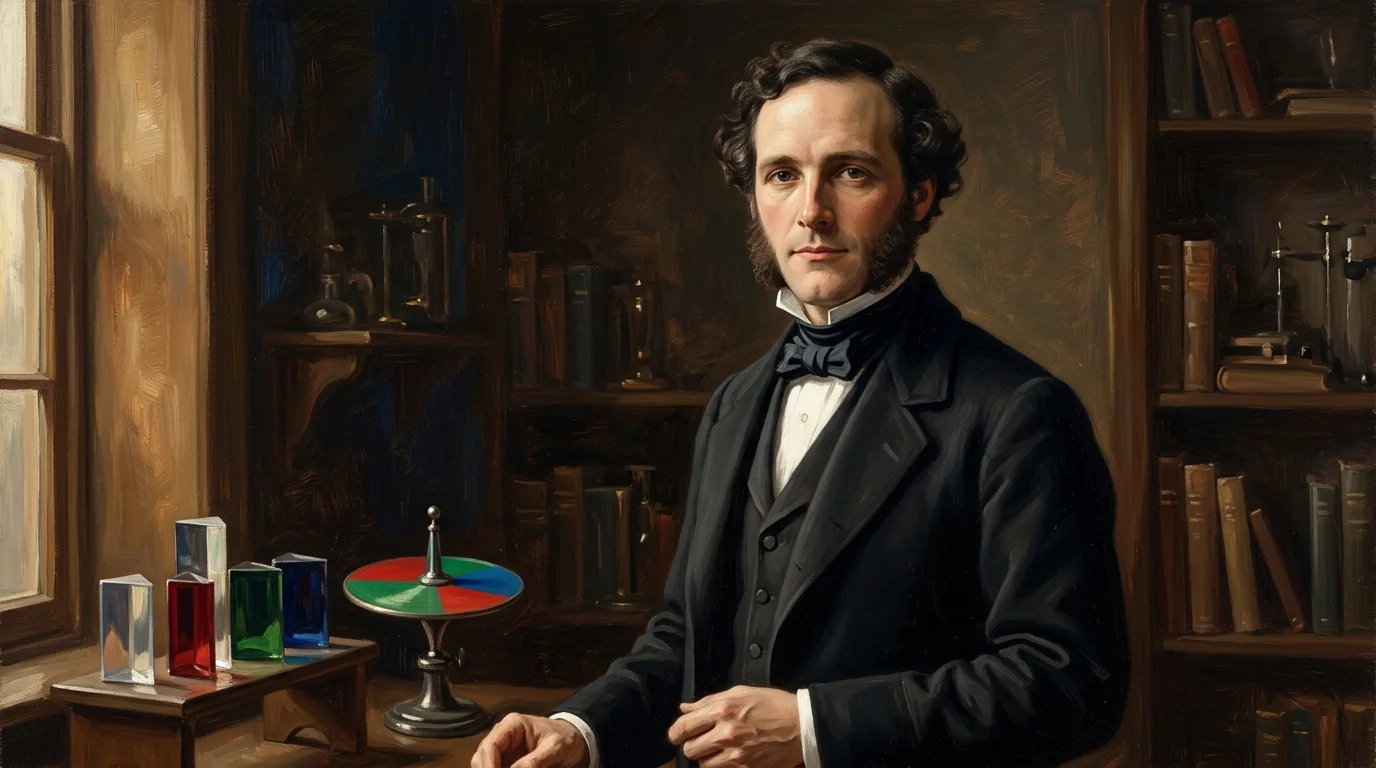
James Clerk Maxwell
1831–1879 · Physicist & Mathematician
Developing the classical theory of electromagnetism, showing mathematically that electricity, magnetism and light are connected, and making major contributions to kinetic theory, colour science and the understanding of Saturn's rings.
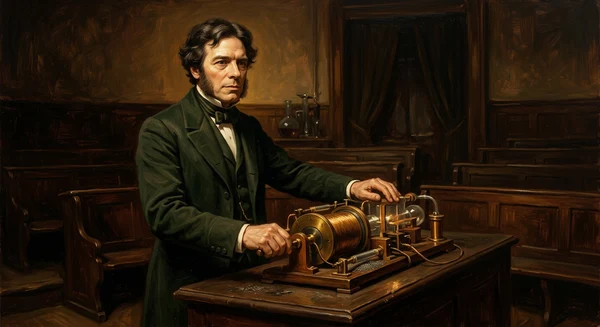
Michael Faraday
1791–1867 · Physicist & Chemist
Discovered electromagnetic induction and created pioneering devices that became the foundations of the electric motor, transformer and generator.
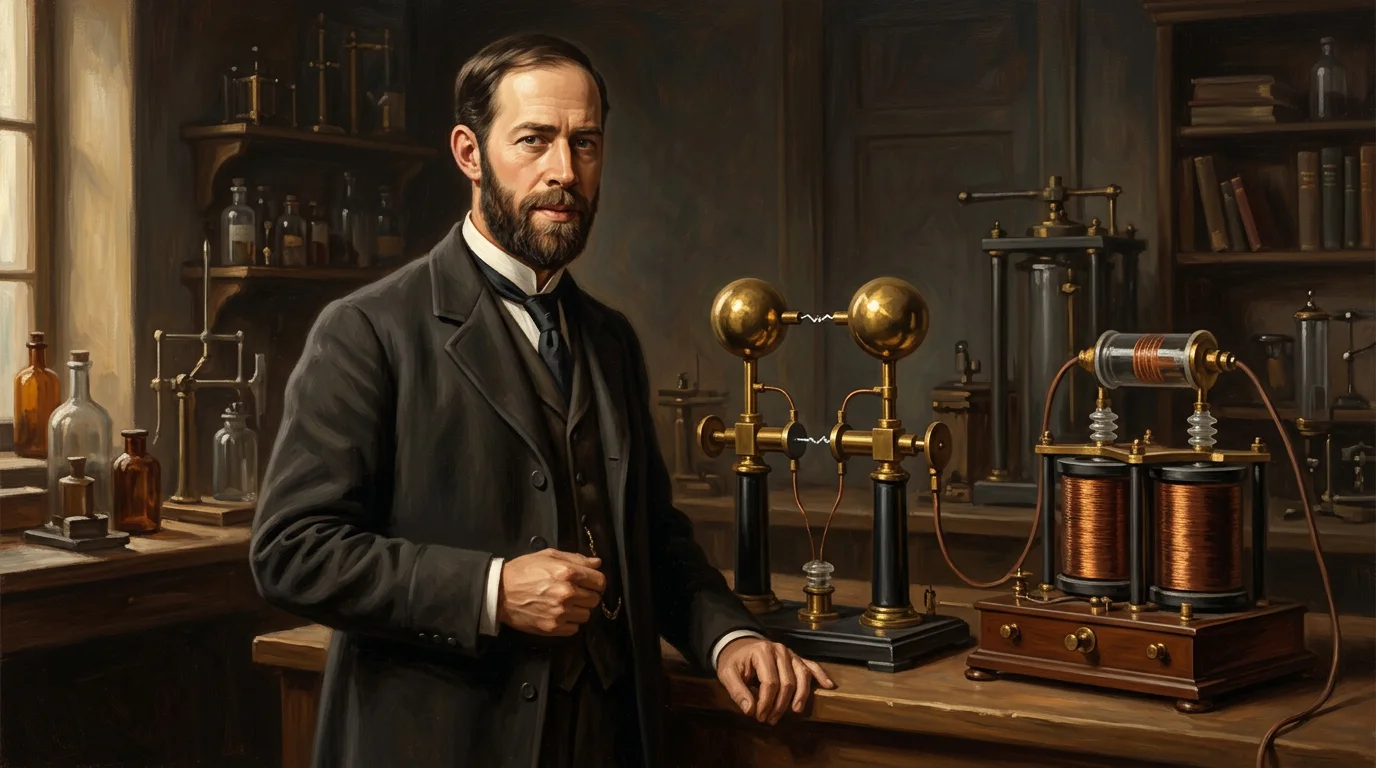
Heinrich Hertz
1857–1894 · Physicist
Experimentally demonstrated electromagnetic waves in the late 1880s, confirming key predictions of James Clerk Maxwell's electromagnetic theory. The unit hertz (Hz) is named after him.