_(2).jpg)
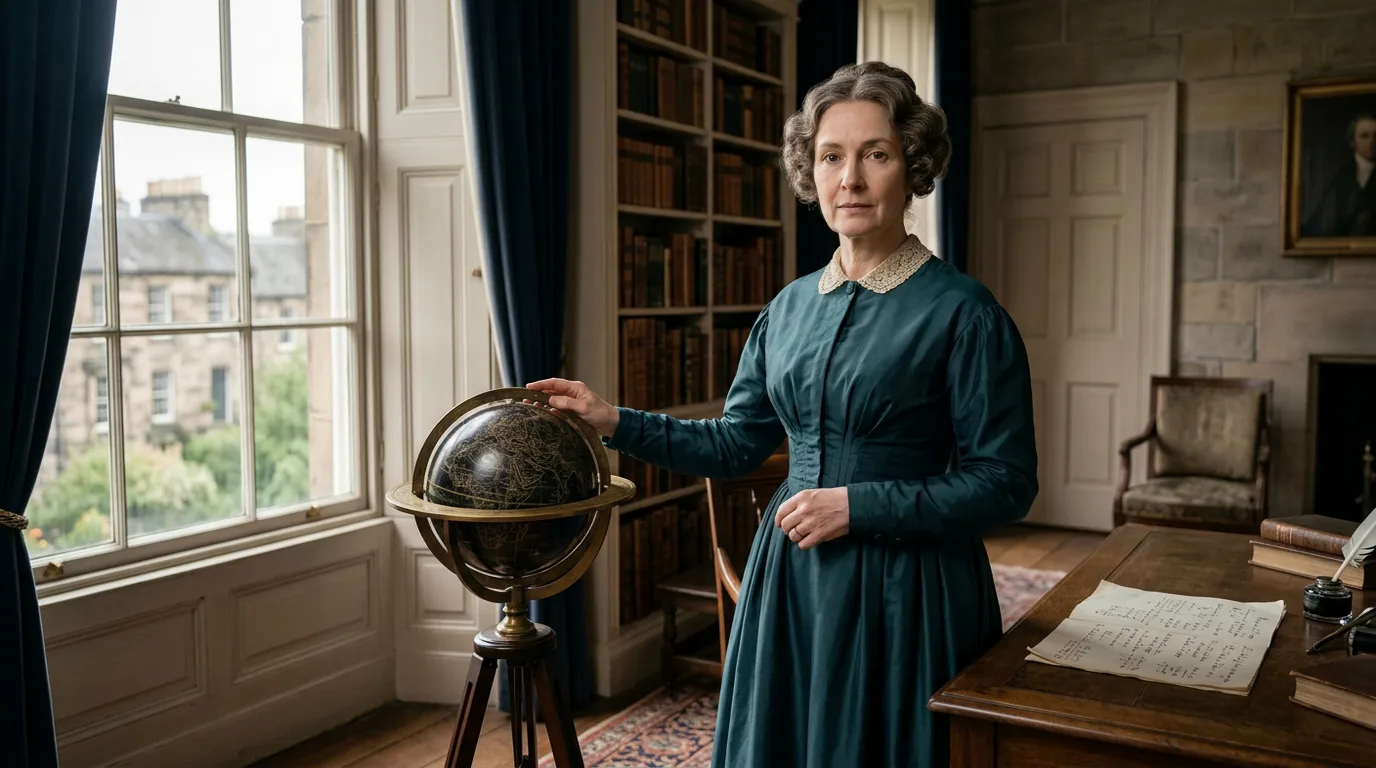
Mary Somerville
1780–1872 · Mathematics, astronomy and scientific communication
Mary Somerville explained mathematics, astronomy and the connections between sciences in influential books that made difficult ideas accessible.
“My life has been domestic and quiet.”
Why is this scientist famous?
Mary Somerville united mathematical, astronomical and physical ideas for broad audiences and became one of the first two women honoured by the Royal Astronomical Society.
Somerville’s ability to link subjects and explain difficult science clearly remains a model for communicating mathematical evidence to students.
Mary's story
Curiosity beyond the classroom
Mary Fairfax, later Mary Somerville, was born in Jedburgh, Scotland, on 26 December 1780. Her schooling was limited compared with that available to many boys, but she pursued books, languages and mathematics with determination. Scientific mentors and a supportive second husband later helped her continue studying. She became fascinated by the mathematical patterns behind the movement of planets, light and other natural phenomena.
Learning to connect the sciences
Somerville read advanced mathematics, worked through difficult calculations and corresponded with leading researchers. In 1826 she published a paper investigating whether violet sunlight affected the magnetic properties of needles. Its proposed effect was not upheld by later experiments, an important reminder that observations and interpretations must be tested. Her enduring achievement lay especially in bringing different scientific subjects into a single understandable account rather than claiming every early experiment was right.
Explaining the heavens
In 1831 Somerville published The Mechanism of the Heavens. What began as a request to translate the French mathematician Pierre-Simon Laplace’s work became a substantial explanation of the mathematics of the solar system. She did more than replace French words with English ones: she supplied context and clarified reasoning. Her book helped people in Britain study advanced astronomy and mathematical physics. It was an unusual accomplishment in an age when women were often excluded from formal scientific positions.
Books that travelled further
Somerville’s The Connection of the Physical Sciences appeared in 1834, examining links among astronomy, electricity, magnetism, light and other fields. In 1848 she published Physical Geography, an influential introduction to the natural features of Earth. She later wrote Molecular and Microscopic Science in 1869 and encouraged Ada Lovelace’s mathematical interests. These books changed as research changed: good scientific explanation does not simply preserve old answers but continually incorporates new discoveries.
Recognition across generations
In 1835 Somerville and astronomer Caroline Herschel became the first women given honorary membership of the Royal Astronomical Society. Somerville lived for many years in Italy and continued studying late into life. She died in Naples on 29 November 1872. She is remembered both as a mathematician and as a communicator who helped the public see physics, astronomy and geography as connected ways of understanding the same world.
What did they discover?
Mathematical astronomy
Explained advanced work on planetary motion and gravitational mathematics to English-language readers.
Connections across science
Showed how light, electricity, magnetism and astronomy could be discussed as related fields.
Physical geography
Wrote an enduring introduction to Earth’s environments and physical features.
Scientific communication
Helped widen access to sophisticated science through rigorous, readable books.
Amazing facts
She was born Mary Fairfax in Jedburgh, Scotland.
She learned much of her advanced mathematics through sustained independent study.
Her 1826 paper on violet light and magnetism proposed a result that was later disputed.
Her 1831 Mechanism of the Heavens explained Pierre-Simon Laplace’s mathematical astronomy.
The Connection of the Physical Sciences was published in 1834.
She and Caroline Herschel became honorary members of the Royal Astronomical Society in 1835.
Her 1848 Physical Geography became an important teaching text.
She published Molecular and Microscopic Science in 1869, late in life.
Timeline
Born in Jedburgh, Scotland.
Published research into violet light and magnetism.
Published The Mechanism of the Heavens.
Published The Connection of the Physical Sciences.
Became an honorary member of the Royal Astronomical Society.
Published Physical Geography.
Published Molecular and Microscopic Science.
Died in Naples, Italy.
Related Super Scientists
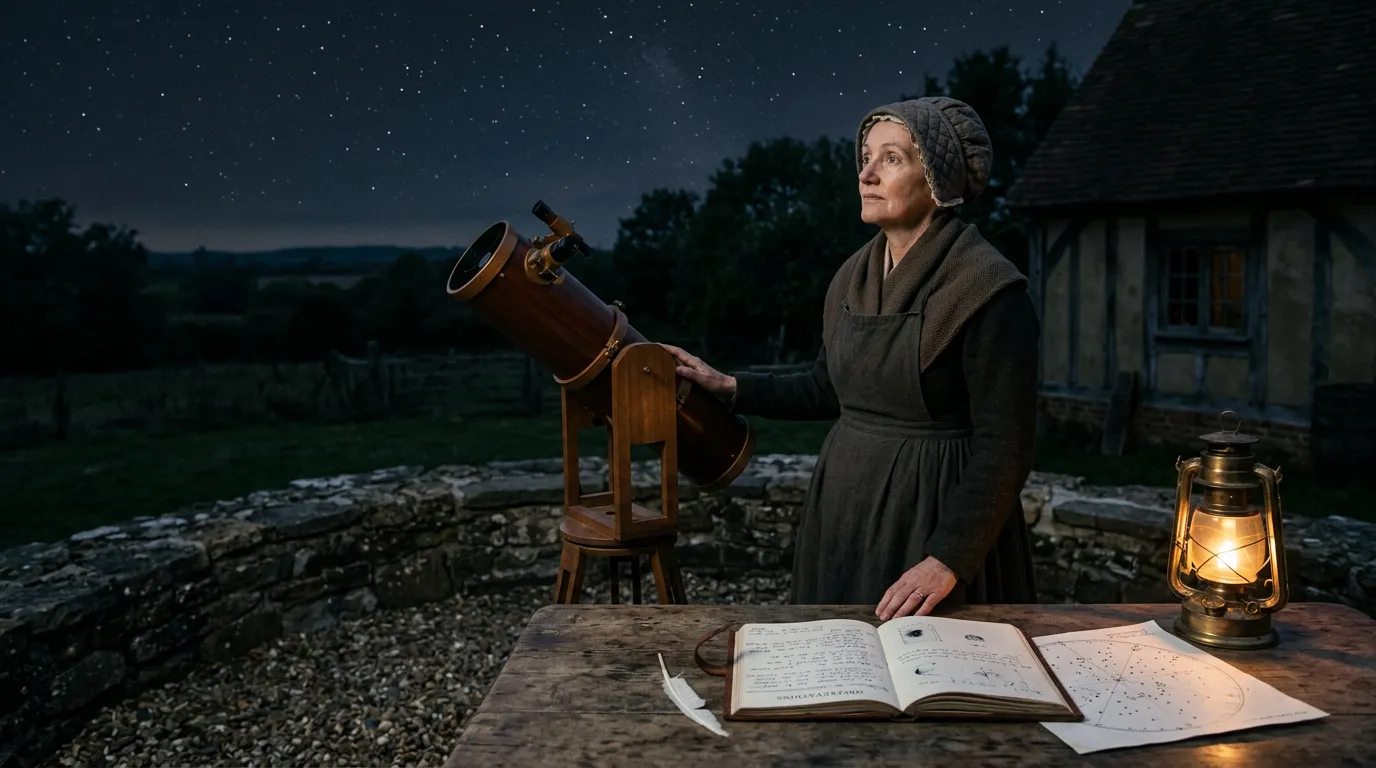
Caroline Herschel
1750–1848 · Comets, nebulae, star catalogues and observational astronomy
The first woman known to receive a salary for astronomical work, who discovered eight comets and made important catalogue contributions.
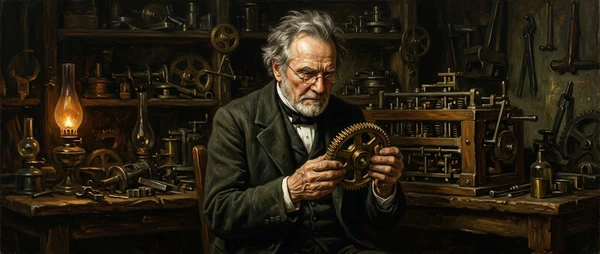
Charles Babbage
1791–1871 · Mathematician & Inventor
Designing the Difference Engine, an automatic mechanical calculator, and the Analytical Engine, an early design for a general-purpose programmable computer.
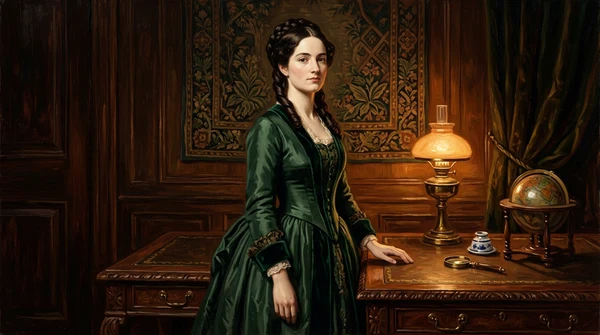
Ada Lovelace
1815–1852 · Mathematician
Publishing influential 1843 Notes on Charles Babbage's Analytical Engine, including a detailed algorithm for calculating Bernoulli numbers and a visionary description of uses beyond arithmetic.