_(2).jpg)
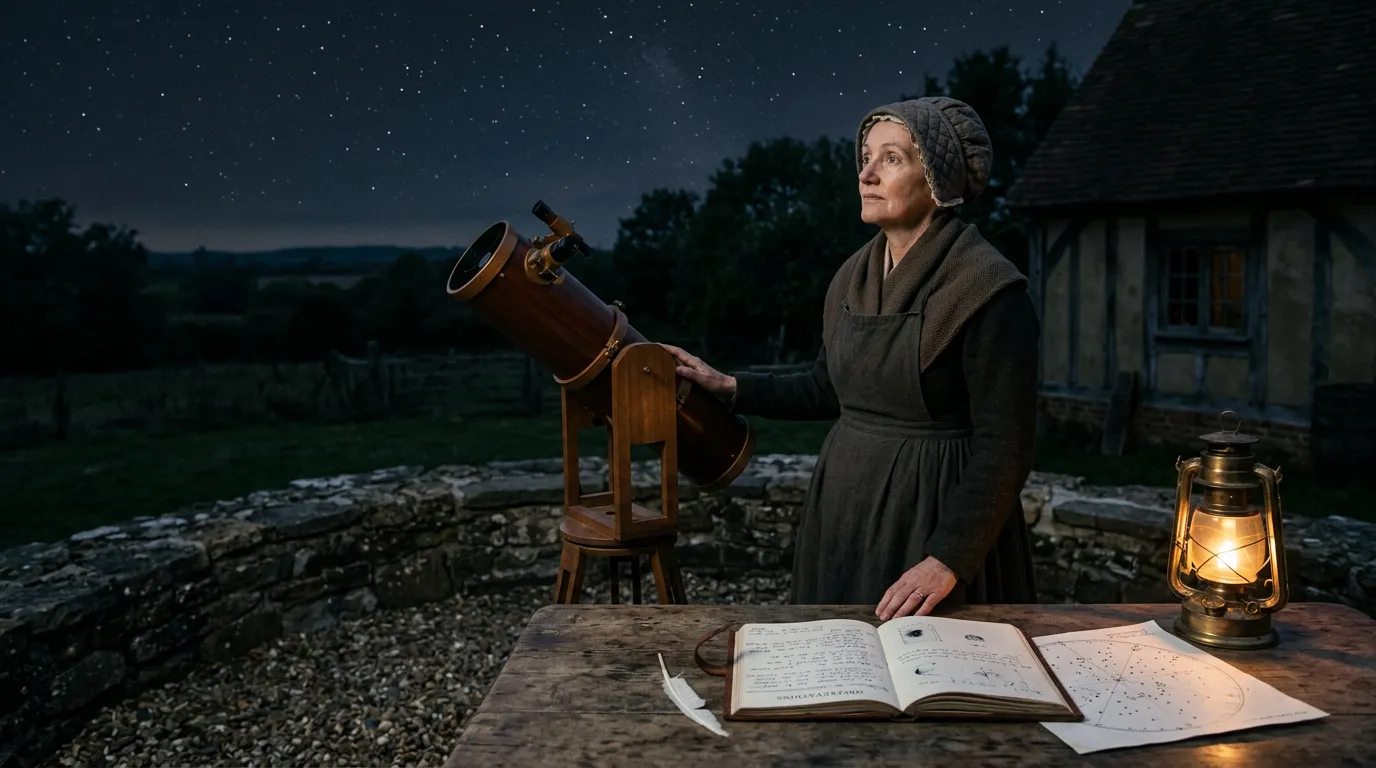
Caroline Herschel
1750–1848 · Comets, nebulae, star catalogues and observational astronomy
Caroline Herschel was a German-born astronomer who discovered eight comets and became the first woman in Britain known to earn a salary for astronomical work.
“The eyes of her who is glorified here below turned to the starry heavens.”
Why is this scientist famous?
The first woman known to receive a salary for astronomical work, who discovered eight comets and made important catalogue contributions.
Caroline Herschel established herself as an astronomer in her own right in a period when women had very limited access to formal scientific careers, and her meticulous catalogue and data work was as significant as her comet discoveries.
Caroline's story
From singer to astronomer
Caroline Lucretia Herschel was born on 16 March 1750 in Hanover, in what is now Germany. Opportunities for girls were restricted, but her father encouraged learning in music and mathematics. In 1772 she moved to Bath, England, to join her brother William Herschel, who trained her in singing, English, mathematics and astronomy. She became a successful singer before astronomy increasingly became central to the siblings’ work.
Discovering comets
Caroline assisted William with telescope making, observations and calculations, grinding and polishing telescope mirrors and recording astronomical data. But she also carried out systematic sky sweeps with a telescope made specifically for her, searching for comets. In 1786 she discovered her first comet, C/1786 P1. She discovered eight comets in total between 1786 and 1797. In 1787 King George III granted her a salary of £50 a year as William’s astronomical assistant, making her the first woman in Britain known to earn a salary for astronomical work.
Catalogue and data work
Caroline’s contributions went beyond observing. She spent about 20 months checking, correcting and indexing John Flamsteed’s star catalogue, producing an important index containing hundreds of additional stars, published through the Royal Society in 1798. After William’s death in 1822 she returned to Hanover and continued astronomical catalogue work, helping organise William’s observations of nebulae and star clusters into a form useful to later astronomers, including her nephew John Herschel.
A pioneering legacy
In 1828 Caroline became the first woman to receive the Royal Astronomical Society’s Gold Medal. She was made an honorary member of the Royal Astronomical Society in 1835 alongside Mary Somerville, and received the Gold Medal of Science from the King of Prussia in 1846. She died in Hanover on 9 January 1848. Her career helped establish a path for later women in professional astronomy, and the Royal Astronomical Society now uses her name for a medal celebrating scientific achievement and UK-German astronomical cooperation.
What did they discover?
Discovering eight comets
Between 1786 and 1797 Caroline discovered eight comets using a telescope made specifically for her own sky sweeps, becoming the first woman known to discover a comet.
Correcting and indexing Flamsteed’s star catalogue
She spent about 20 months checking, correcting and indexing Flamsteed’s star catalogue, producing an important index with hundreds of additional stars published through the Royal Society in 1798.
First salaried female astronomer in Britain
In 1787 King George III granted her a £50 annual salary as William’s astronomical assistant, making her the first woman in Britain known to earn a salary for astronomical work.
Amazing facts
Caroline first came to Britain to sing with her brother William and became a successful performer before astronomy took over much of their lives.
She learned to grind and polish telescope mirrors as part of the Herschels’ observing work.
William made a telescope especially for Caroline to use in her own searches of the sky.
In 1786 she became the first woman known to discover a comet.
She discovered eight comets in total.
In 1787 King George III gave her a £50 annual salary for astronomical work, an extraordinary achievement for a woman at the time.
She spent about 20 months checking, correcting and indexing Flamsteed’s star catalogue.
In 1828 she became the first woman to receive the Royal Astronomical Society’s Gold Medal.
Timeline
Born in Hanover
Moved to Bath, England, to live and work with William Herschel
Detected new nebulae during her own observing work
Discovered her first comet, C/1786 P1
Began receiving a £50 annual salary from King George III as William’s astronomical assistant
Discovered her eighth and final comet
Published her corrected and indexed work on Flamsteed’s star catalogue through the Royal Society
Returned to Hanover after William’s death
Awarded the Royal Astronomical Society Gold Medal
Made an honorary member of the Royal Astronomical Society
Received the King of Prussia’s Gold Medal of Science
Died in Hanover
Awards & honours
Related Super Scientists
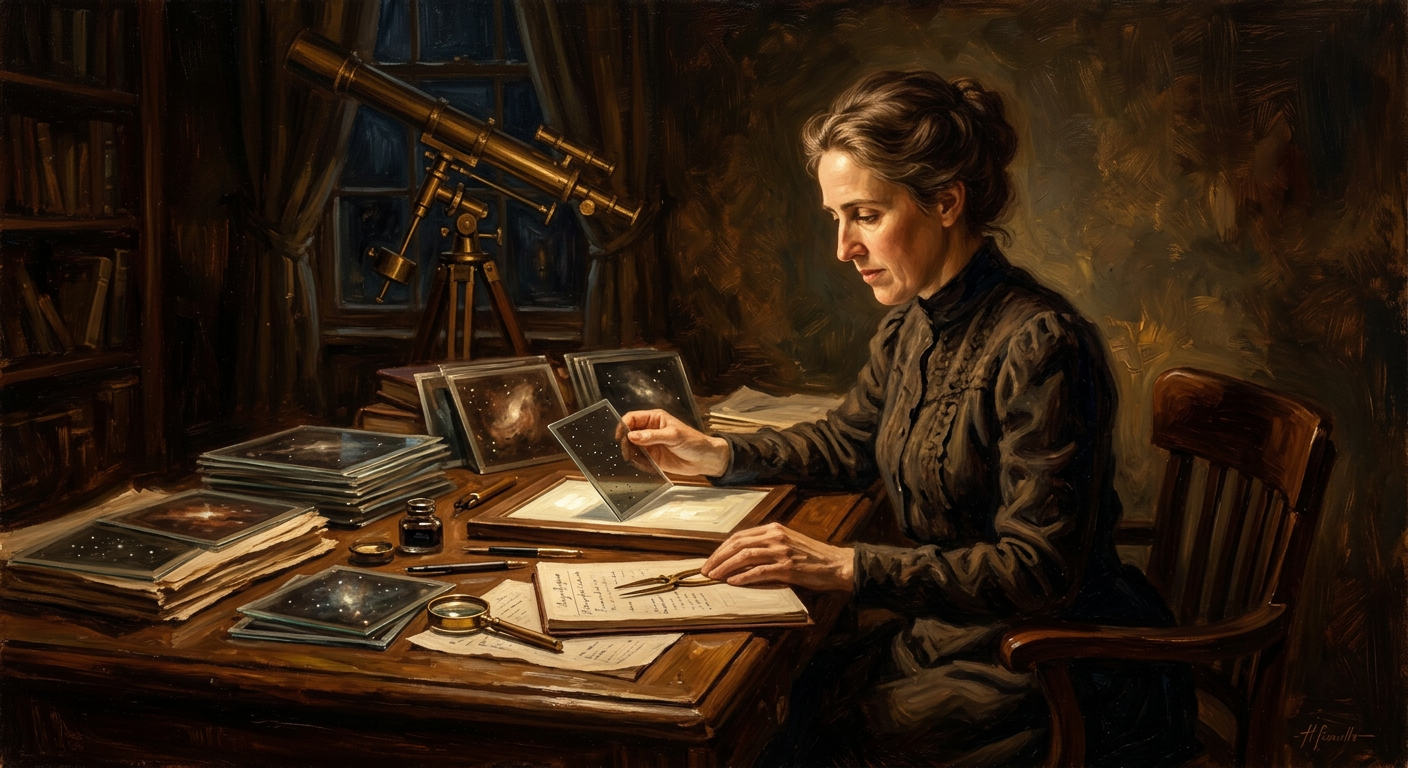
Henrietta Leavitt
1868–1921 · Astronomer
Discovering the Cepheid period–luminosity relationship, which became a crucial tool for measuring distances beyond the Solar System after it was calibrated by later astronomers.
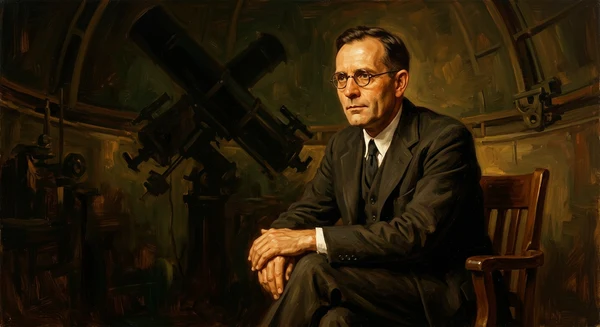
Edwin Hubble
1889–1953 · Astronomer
Showed that galaxies exist far beyond the Milky Way and published the distance–redshift relationship now called the Hubble–Lemaître law.
Vera Rubin
1928–2016 · Astronomer
Providing the most compelling early evidence for the existence of dark matter through galaxy rotation measurements.