
Maria Sibylla Merian
1647–1717 · Natural history, entomology and scientific illustration
Maria Sibylla Merian studied insect life cycles firsthand and combined meticulous natural-history observations with influential scientific illustrations.
Why is this scientist famous?
Maria Sibylla Merian was a naturalist and artist who raised and observed insects, recording their life cycles and relationships with plants. Her illustrated books, especially her work on Suriname, helped readers see insects as living organisms with connected stages of development.
Merian combined repeated observation, specimen rearing and detailed illustration. Her plates documented relationships among insects, food plants and habitats, linking careful pictures to natural-history evidence. Her work is also a reminder that European science in the colonial era depended on knowledge and labour from Indigenous people and enslaved communities.
Maria's story
Learning to draw and observe
Maria Sibylla Merian was born in Frankfurt in 1647 into a family connected with printing and publishing. After her father died, her mother married the artist Jacob Marrel, in whose workshop Merian learned painting, watercolour and copperplate techniques. By her early teens she was collecting caterpillars and watching them change. Rather than relying on stories that insects appeared spontaneously from mud or decay, she reared specimens and recorded what emerged from them.
Caterpillars as a subject of study
Merian’s early books brought together drawings and descriptions of caterpillars, pupae, moths, butterflies and their food plants. She observed that different caterpillars produced different adult insects, and that the insects fed on particular plants. Some pupae produced parasitic wasps or flies rather than the butterfly she expected, an observation she described as a “false change.” Her books made the sequence from egg or larva to adult visible to readers through repeated, carefully arranged studies.
A scientific journey to Suriname
In 1699, aged 52, Merian travelled to the Dutch colony of Suriname with her younger daughter Dorothea. She wanted to observe tropical insects and plants where they lived, rather than study only specimens brought back to Europe. The journey was difficult; after illness, the pair returned to Amsterdam in 1701. Merian’s field notes and watercolours became the basis of her best-known book, Metamorphosis Insectorum Surinamensium, published in 1705.
Pictures that showed relationships
The book contained large hand-coloured engravings of insects alongside the plants and settings associated with them. One plate could show a plant, feeding insect and different stages in a life cycle together. This arrangement was visually striking but also informative: readers could see that insects were connected to particular foods and habitats. Her observations were not all correct by modern standards, but much of her work was unusually careful and many details were later confirmed.
Collaboration and colonial context
Merian’s Suriname research depended in part on knowledge and labour from Indigenous people and enslaved people living in the colony, who collected specimens and helped identify them. The Rijksmuseum notes that Merian also recorded the mistreatment of enslaved people by the Dutch. Her work should therefore be understood both as a major contribution to natural history and as research made possible within a colonial society. Her books were admired by European collectors, and the Russian tsar Peter the Great’s family acquired several volumes in 1716–1717, just before and after her death. The images remain valuable as both scientific records and works of art.
What did they discover?
Insect life-cycle observation
Raised caterpillars and other insects to document their transformations rather than relying only on preserved specimens or inherited accounts.
Host-plant recording
Connected insects with the plants they fed on and the habitats where they were found.
Suriname natural history
Recorded insects, plants and other animals during the 1699–1701 expedition, later publishing the observations in a major illustrated book.
Scientific illustration
Combined accurate observation with watercolour, engraving and hand-coloured printing to communicate natural history to readers.
Observation of parasitism
Recorded cases where pupae produced wasps or flies instead of the expected butterfly or moth, an early account of insect parasitism.
Amazing facts
Merian began observing caterpillars as a teenager and later described how she collected and reared them to find out what adult insects emerged.
She learned watercolour and copperplate techniques in her stepfather Jacob Marrel’s art workshop.
Her book Metamorphosis Insectorum Surinamensium was published in 1705 and contained 60 hand-coloured engravings.
The book’s images often placed an insect’s life stages together with the plant it used for food or habitat, a visual way of showing ecological relationships.
Merian and her daughter made the journey to Suriname in 1699, when Merian was 52; the trip was unusually independent for a European woman of her period.
The expedition ended early after illness, and they returned to Amsterdam in 1701.
Merian recorded “false changes” when a pupa produced parasitic flies or wasps instead of the butterfly or moth she expected.
The Rijksmuseum records that Indigenous and enslaved people in Suriname collected specimens and helped her identify and name them.
Merian’s book could be bought with its accompanying text in either Dutch or Latin.
Timeline
Born in Frankfurt
As a teenager, begins systematic observations of caterpillars and their transformations (c. 1660)
Publishes the first part of her book on caterpillars and their transformations
Publishes a second part of the caterpillar book
Settles in Amsterdam
Travels to Suriname with her daughter Dorothea to study local insects, plants and animals
Returns to Amsterdam after illness
Publishes Metamorphosis Insectorum Surinamensium
Peter the Great’s household acquires several volumes of her work (1716–1717)
Dies in Amsterdam
Related Super Scientists
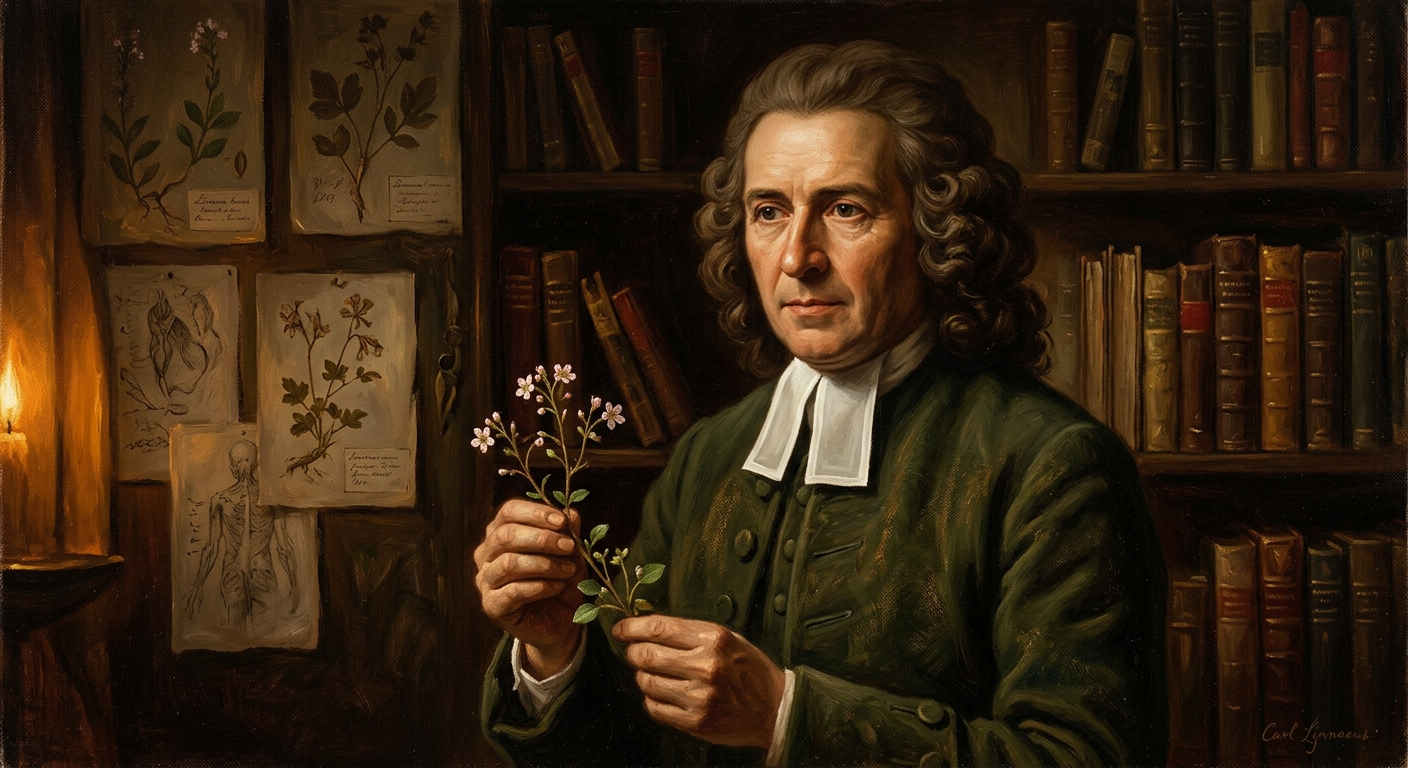
Carl Linnaeus
1707–1778 · Botanist and Zoologist
Standardised binomial nomenclature — the two-part scientific naming system used for species — and developed an influential system of biological classification.
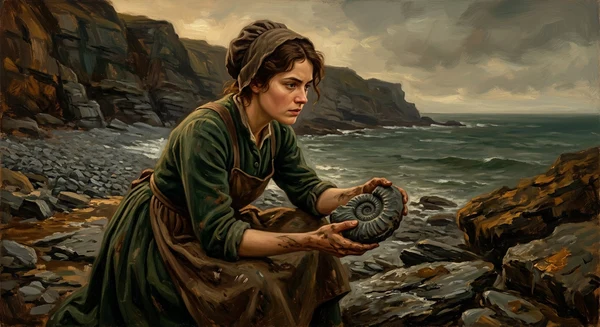
Mary Anning
1799–1847 · Paleontologist
Helped uncover an important, largely complete ichthyosaur skeleton with her brother Joseph in 1811–1812 and discovered a remarkably complete plesiosaur in 1823.
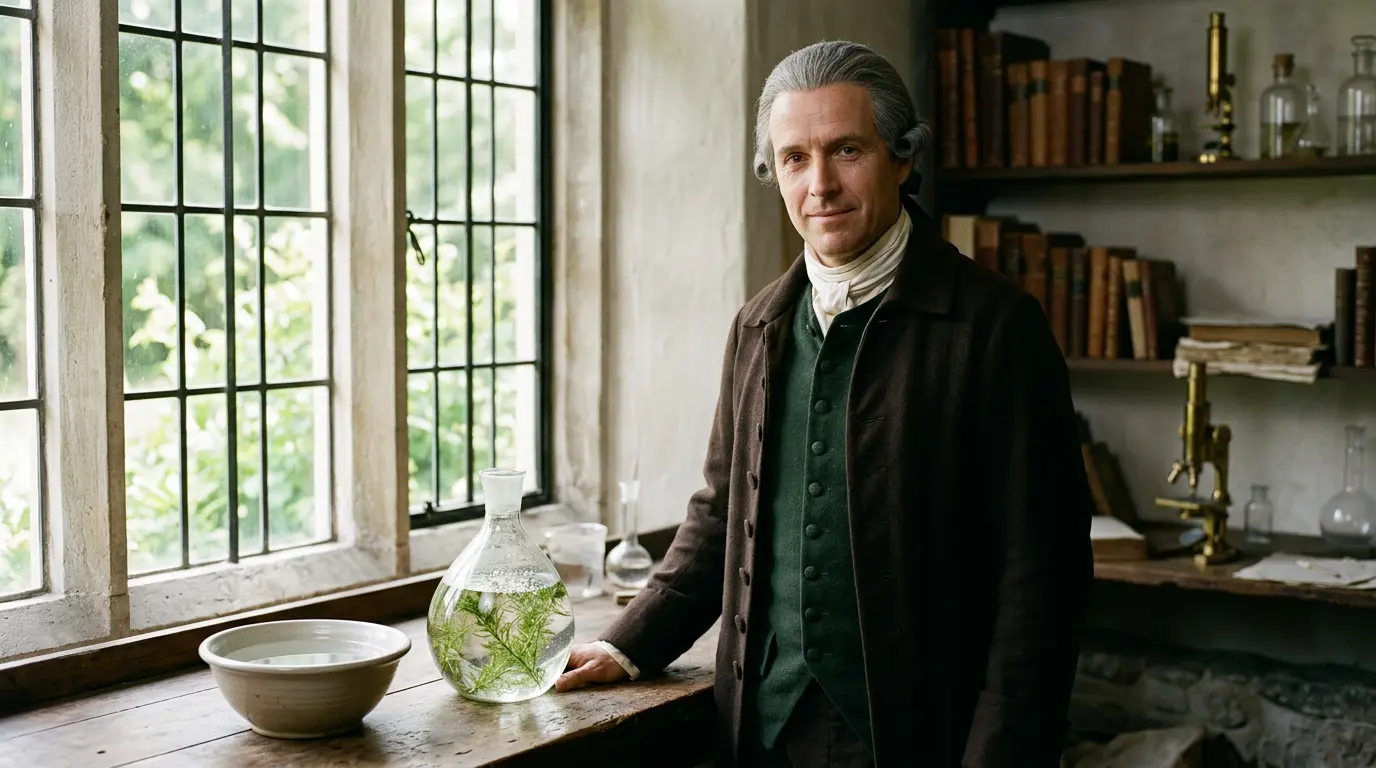
Jan Ingenhousz
1730–1799 · Photosynthesis and experimental plant physiology
Jan Ingenhousz showed that green plant parts release oxygen in sunlight and investigated how plants affect the surrounding air.
Sources & references
- Maria Sibylla Merian: Metamorphosis unmasked by art and science, Natural History Museum
- Maria Sibylla Merian, Oxford University Museum of Natural History
- 10 things to know about Maria Sibylla Merian’s insects of Suriname, Rijksmuseum
- Recent Rare Books and Special Collections Acquisition Highlights, University of Sydney Library (includes the 1719 edition with handwritten translation)