_(2).jpg)
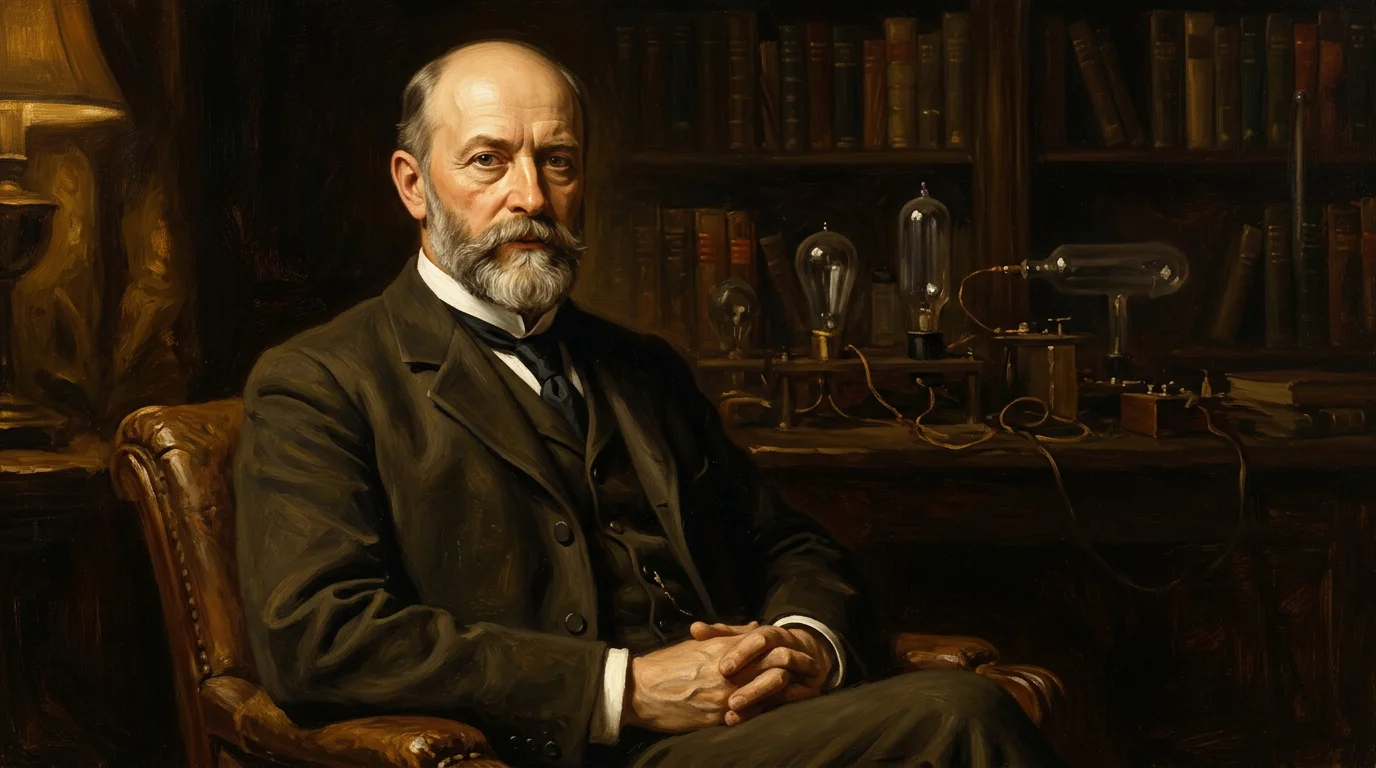
Karl Ferdinand Braun
1850–1918 · Physicist & Electrical Engineer
A German physicist who discovered semiconductor rectification in 1874, developed the Braun tube in 1897, and shared the 1909 Nobel Prize for wireless telegraphy.
Why is this scientist famous?
Discovering an important rectification effect at a metal-crystal contact in 1874, developing the Braun cathode-ray tube in 1897, and sharing the 1909 Nobel Prize in Physics with Marconi for contributions to wireless telegraphy.
Braun's work connects three major areas of technology: semiconductors, electronic displays and radio communication. His career shows how fundamental experiments on electrical materials can eventually influence technologies developed many years later.
Karl's story
Early Life and Education
Karl Ferdinand Braun was born in Fulda, Germany, on 6 June 1850. He began studying physics, chemistry and mathematics at the University of Marburg in 1868. In 1869 he transferred to the University of Berlin, where he worked with physicist Heinrich Gustav Magnus. He later studied under Georg Hermann Quincke. Braun completed his PhD in 1872 with research on vibrating strings. He completed his state examination in 1873.
Academic Career
From 1872 to 1874 Braun worked as Quincke's assistant at the University of Würzburg. He then worked as a secondary-school teacher in Leipzig. He became an associate professor of theoretical physics at Marburg in 1877. He later held professorships at Strasbourg, Karlsruhe and Tübingen. He returned to Strasbourg in 1895 and remained a professor there until 1918.
Semiconductor Rectification
In 1874, while studying the electrical behaviour of materials, Braun observed that electrical current passed much more easily in one direction than the other through a contact between metal and a crystal of galena. This is a rectification effect. It became an important early observation in the history of semiconductor electronics. Braun's work was later relevant to crystal radio detectors and the development of semiconductor devices.
The Braun Tube
In 1897 Braun developed an early cathode-ray tube, widely known as the Braun tube. His apparatus used a beam of electrons inside a glass tube to produce a visible spot on a fluorescent screen. The principle became important in oscilloscopes and later cathode-ray display technology.
Wireless Telegraphy and the Nobel Prize
Braun also worked on radio and wireless communication. He introduced improvements involving tuned or resonant electrical circuits, helping transmitters and receivers operate more effectively. His work contributed to increasing the usefulness and range of wireless telegraphy. In 1909 he shared the Nobel Prize in Physics with Guglielmo Marconi. The Nobel Prize recognised their contributions to the development of wireless telegraphy. Braun died in Brooklyn, New York, on 20 April 1918.
What did they discover?
Semiconductor Rectification Effect
In 1874, Braun observed that current passed more easily in one direction than the other through a metal-crystal contact, one of the earliest important observations in semiconductor-device history.
The Braun Cathode-Ray Tube
In 1897 he developed an early cathode-ray tube that used an electron beam to produce a visible spot on a fluorescent screen, important for oscilloscopes and later display technology.
Tuned Circuits for Wireless Telegraphy
He introduced improvements involving tuned or resonant electrical circuits that helped transmitters and receivers operate more effectively, contributing to practical wireless communication.
Amazing facts
Braun was writing scientific essays while still a teenager.
He studied physics, chemistry and mathematics rather than restricting himself to one subject.
Before becoming a university professor, he worked as a secondary-school teacher.
His 1874 experiments with galena crystals anticipated ideas that later became central to semiconductor electronics.
Crystal radio receivers later used related rectifying contacts to detect radio signals.
The cathode-ray device he developed became known as the Braun tube.
Cathode-ray tubes later became important in oscilloscopes and traditional television and computer displays.
He shared a Nobel Prize with Marconi for work that helped make wireless communication practical.
Timeline
Born in Fulda on 6 June
Began university studies at Marburg
Moved to the University of Berlin
Completed his PhD
Reported the rectification effect in crystal contacts
Became associate professor at Marburg
Returned to a professorship at Strasbourg
Developed the Braun cathode-ray tube
Shared the Nobel Prize in Physics with Guglielmo Marconi
Died in Brooklyn, New York, on 20 April
Awards & honours
Related Super Scientists
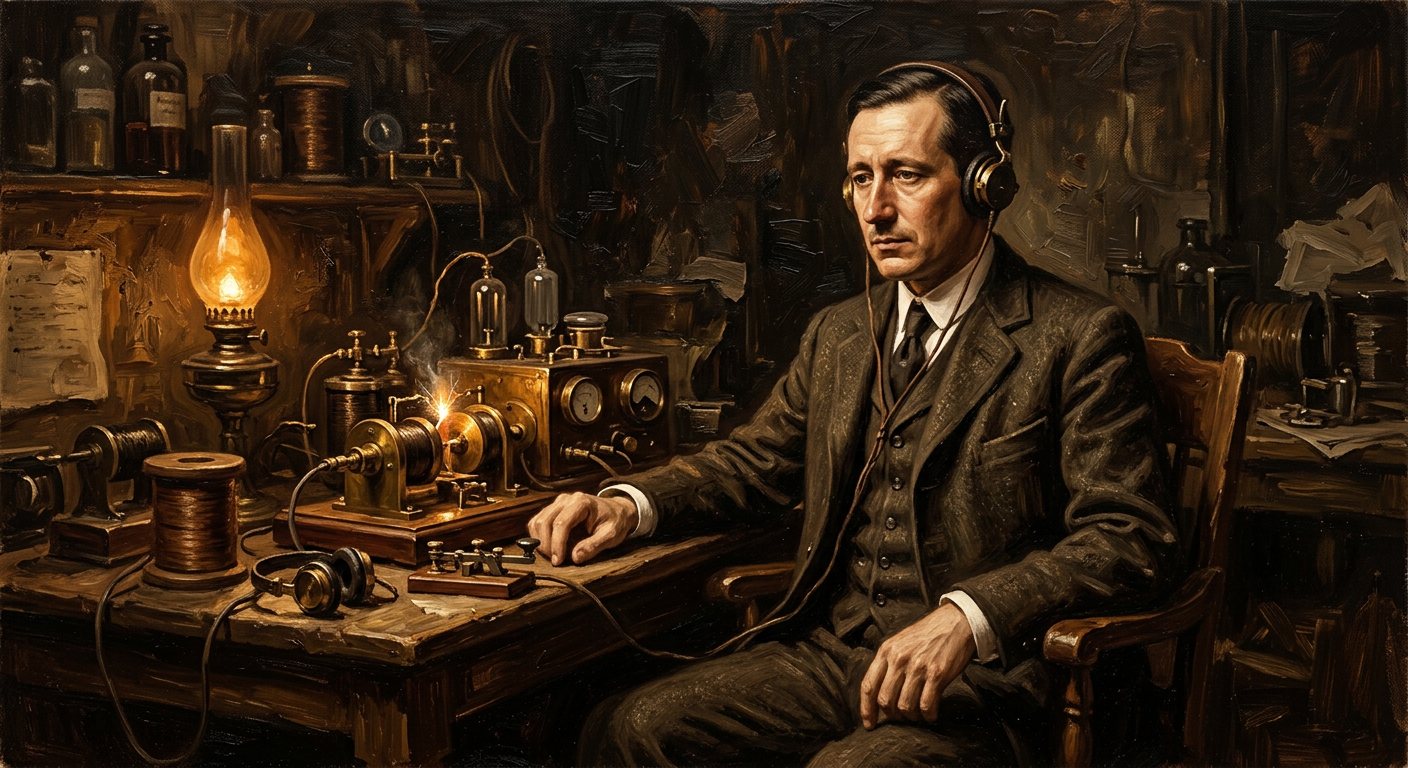
Guglielmo Marconi
1874–1937 · Electrical Engineer and Inventor
Developed practical wireless telegraphy systems, demonstrated long-distance radio communication and shared the 1909 Nobel Prize in Physics for contributions to wireless telegraphy.
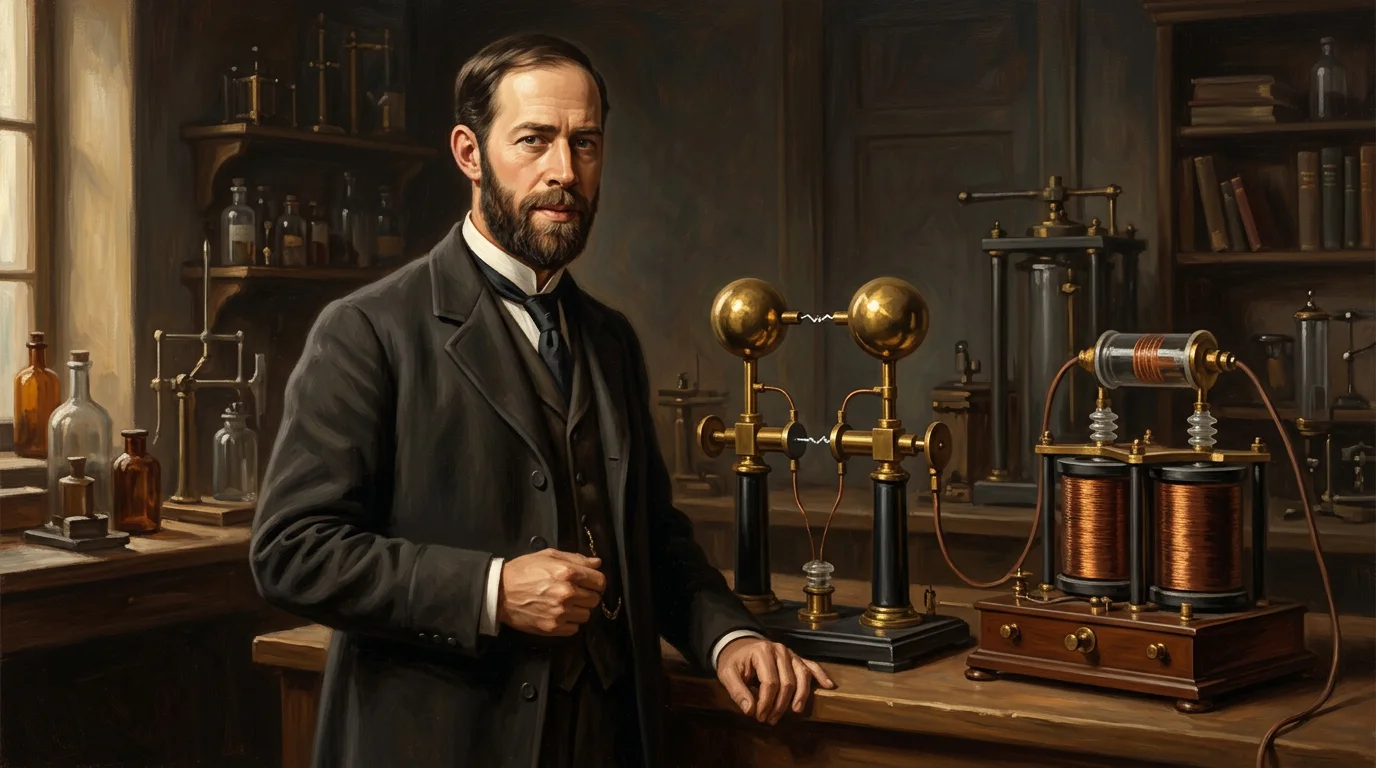
Heinrich Hertz
1857–1894 · Physicist
Experimentally demonstrated electromagnetic waves in the late 1880s, confirming key predictions of James Clerk Maxwell's electromagnetic theory. The unit hertz (Hz) is named after him.
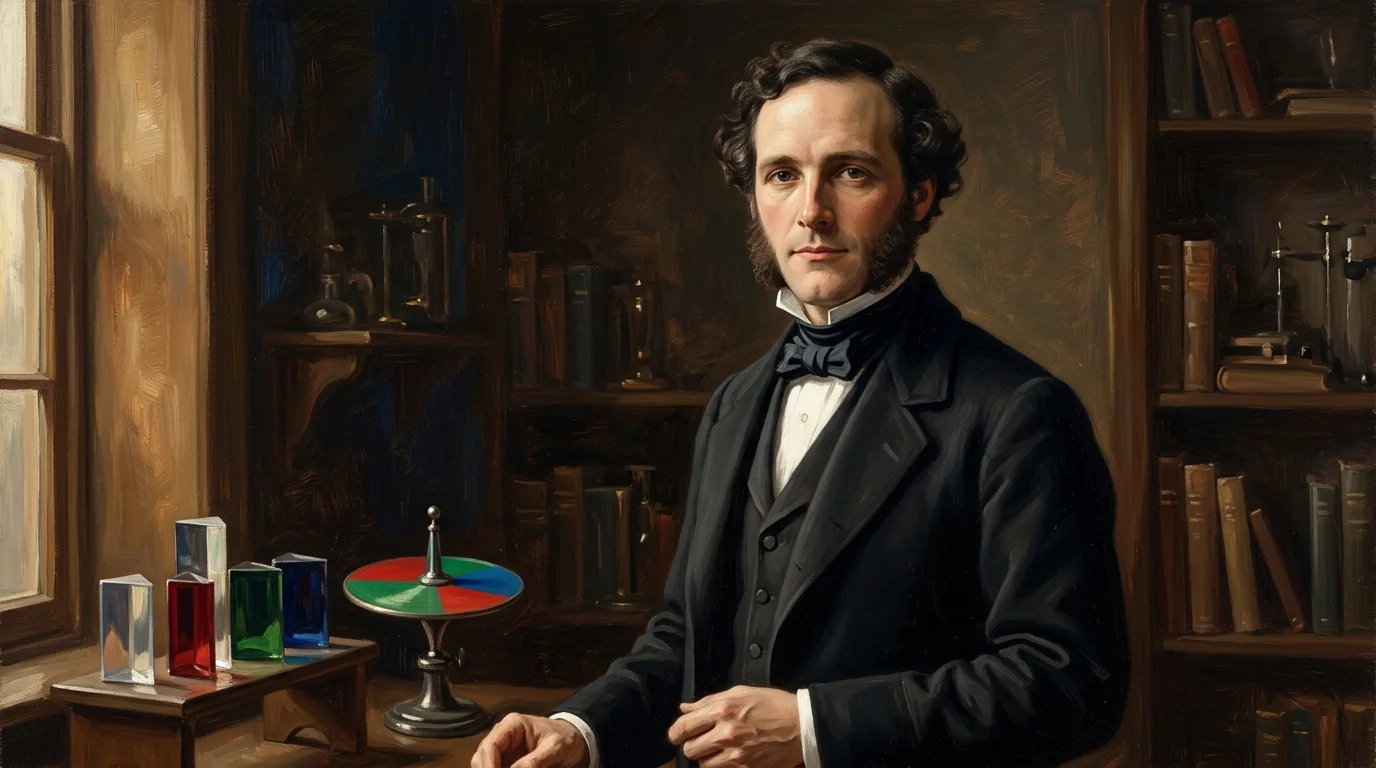
James Clerk Maxwell
1831–1879 · Physicist & Mathematician
Developing the classical theory of electromagnetism, showing mathematically that electricity, magnetism and light are connected, and making major contributions to kinetic theory, colour science and the understanding of Saturn's rings.