_(2).jpg)
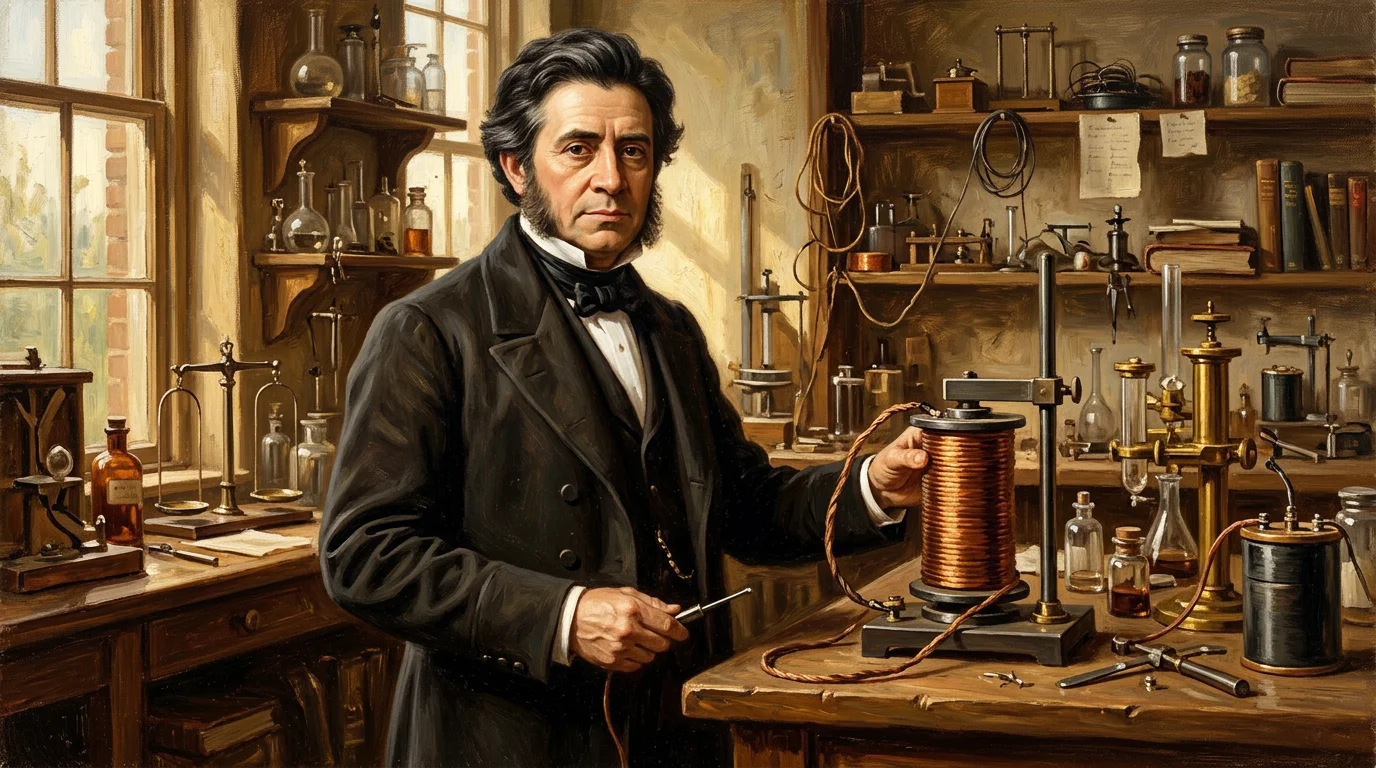
Joseph Henry
1797–1878 · Physicist
An American physicist who built powerful electromagnets, discovered self-induction, demonstrated an early motor, and became first Secretary of the Smithsonian.
Why is this scientist famous?
Building powerful electromagnets, independently investigating electromagnetic induction and discovering self-induction, demonstrating an early electromagnetic motor in 1831, and providing important scientific foundations for telegraph technology.
Henry made foundational contributions to electromagnetism while also helping build the scientific institutions of the United States. Self-induction is fundamental to inductors, transformers, motors, generators and many electronic circuits. His work also demonstrates the connection between basic laboratory science and technologies that later become part of everyday life.
Joseph's story
Early Life and Education
Joseph Henry was born in Albany, New York, on 17 December 1797. He had limited access to formal education when young. As a teenager he was apprenticed to a watchmaker. He developed an interest in theatre and at one stage was offered professional acting work. In 1819 he entered the Albany Academy, where his interest in science developed rapidly. He later assisted with science teaching and laboratory demonstrations there. He did not graduate from a traditional college and described himself as largely self-educated.
Teaching and Princeton
In 1826 Henry became Professor of Mathematics and Natural Philosophy at the Albany Academy. In 1832 he became Professor of Natural Philosophy at the College of New Jersey, now Princeton University. He remained at Princeton until 1846. His experiments with long-distance electrical signalling, electromagnets and relay principles provided important scientific foundations used in later telegraph systems. Samuel Morse later developed the successful telegraph system with contributions from other people.
Powerful Electromagnets
Henry greatly improved the power of electromagnets. A key innovation was using insulated wire wound many times around an iron core. This allowed him to build much stronger electromagnets. One magnet he built for Yale could lift approximately 2,300 pounds. His experiments helped establish practical principles for designing electromagnetic devices and circuits.
Electromagnetic Induction and Self-Induction
Henry investigated the production of electricity from magnetism at roughly the same historical period as Michael Faraday. Faraday reported electromagnetic induction first and therefore receives priority for the discovery of mutual induction. Henry independently performed closely related work. Henry is particularly credited with discovering self-induction, in which a changing current in a circuit induces an electromotive effect in that same circuit.
An Early Motor and the Smithsonian
In 1831 Henry demonstrated a small reciprocating electromagnetic device producing repeated movement by magnetic attraction and repulsion. It was an important early forerunner of later electric motors. Henry regarded it principally as an experimental demonstration rather than developing it into a commercial machine. In 1846 Henry became the first Secretary of the Smithsonian Institution. He served as Smithsonian Secretary until his death in 1878 and played a major part in shaping the new institution as a centre for research and the spread of knowledge. He was elected to the National Academy of Sciences in 1863. The SI unit of inductance, the henry (H), was named in his honour, formally adopted by an international electrical congress in 1893. He died in Washington, D.C., on 13 May 1878.
What did they discover?
Powerful Electromagnets
Henry greatly improved electromagnet power by using insulated wire wound many times around an iron core, building magnets capable of lifting very heavy loads.
Self-Induction
Henry independently investigated electromagnetic induction and is especially credited with discovering self-induction, where a changing current induces an electromotive effect in the same circuit.
Early Electromagnetic Motor
In 1831 he demonstrated a small reciprocating electromagnetic device that produced continuous movement, an important early forerunner of electric motors.
First Secretary of the Smithsonian
In 1846 he became the first Secretary of the Smithsonian Institution, shaping it as a centre for research and the spread of knowledge.
Amazing facts
Henry was apprenticed to a watchmaker when young, giving him useful practical skills for constructing experimental equipment.
Before committing himself to science, he had a serious interest in theatre.
He became a leading physicist despite never graduating from a conventional college.
His improved electromagnets could lift extraordinarily heavy loads.
A magnet he built for Yale could lift about 2,300 pounds.
He built a small electromagnetic machine that rocked back and forth continuously — an early step in electric-motor history.
His experiments showed how electromagnetic effects could be transmitted through long wires, helping prepare the way for telegraph technology.
The modern unit of inductance, the henry, carries his name.
Timeline
Born in Albany, New York, on 17 December
Entered the Albany Academy
Became Professor of Mathematics and Natural Philosophy at Albany Academy
Demonstrated an early reciprocating electromagnetic motor and advanced his electromagnet research
Reported work including self-induction and became professor at the College of New Jersey
Became the first Secretary of the Smithsonian Institution
Elected to the National Academy of Sciences
Died in Washington, D.C., on 13 May
The electrical unit henry was named in his honour
Awards & honours
Related Super Scientists
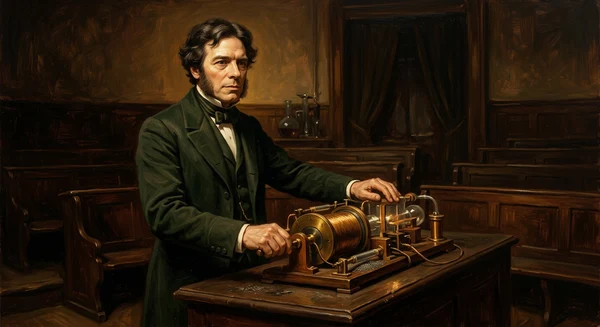
Michael Faraday
1791–1867 · Physicist & Chemist
Discovered electromagnetic induction and created pioneering devices that became the foundations of the electric motor, transformer and generator.
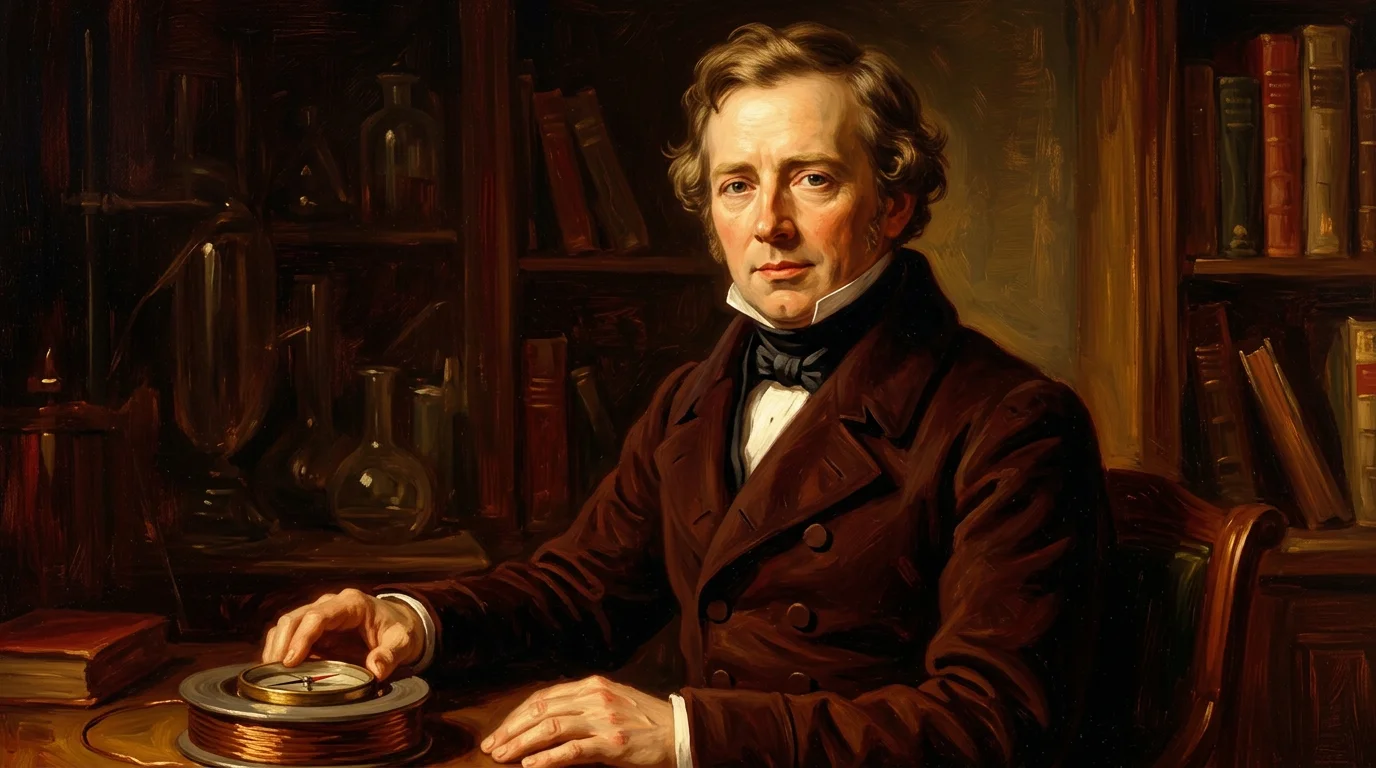
Hans Christian Ørsted
1777–1851 · Physicist, Natural Philosopher & Chemist
Discovering that an electric current produces a magnetic effect in 1820, providing the first clear experimental connection between electricity and magnetism, and producing aluminium metal in 1825.
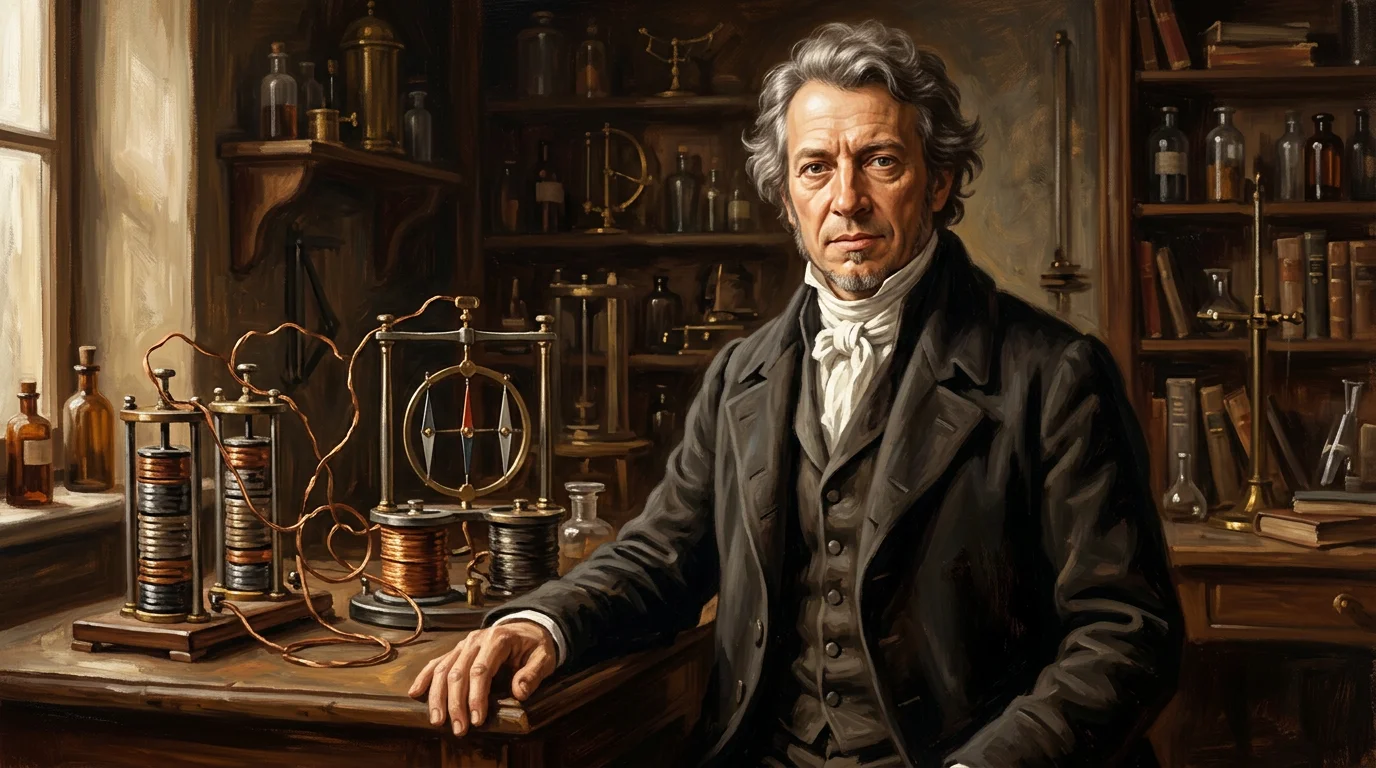
André-Marie Ampère
1775–1836 · Physicist and Mathematician
Foundational work on the relationship between electricity and magnetism. The SI unit of electric current, the ampere or amp (A), is named after him.