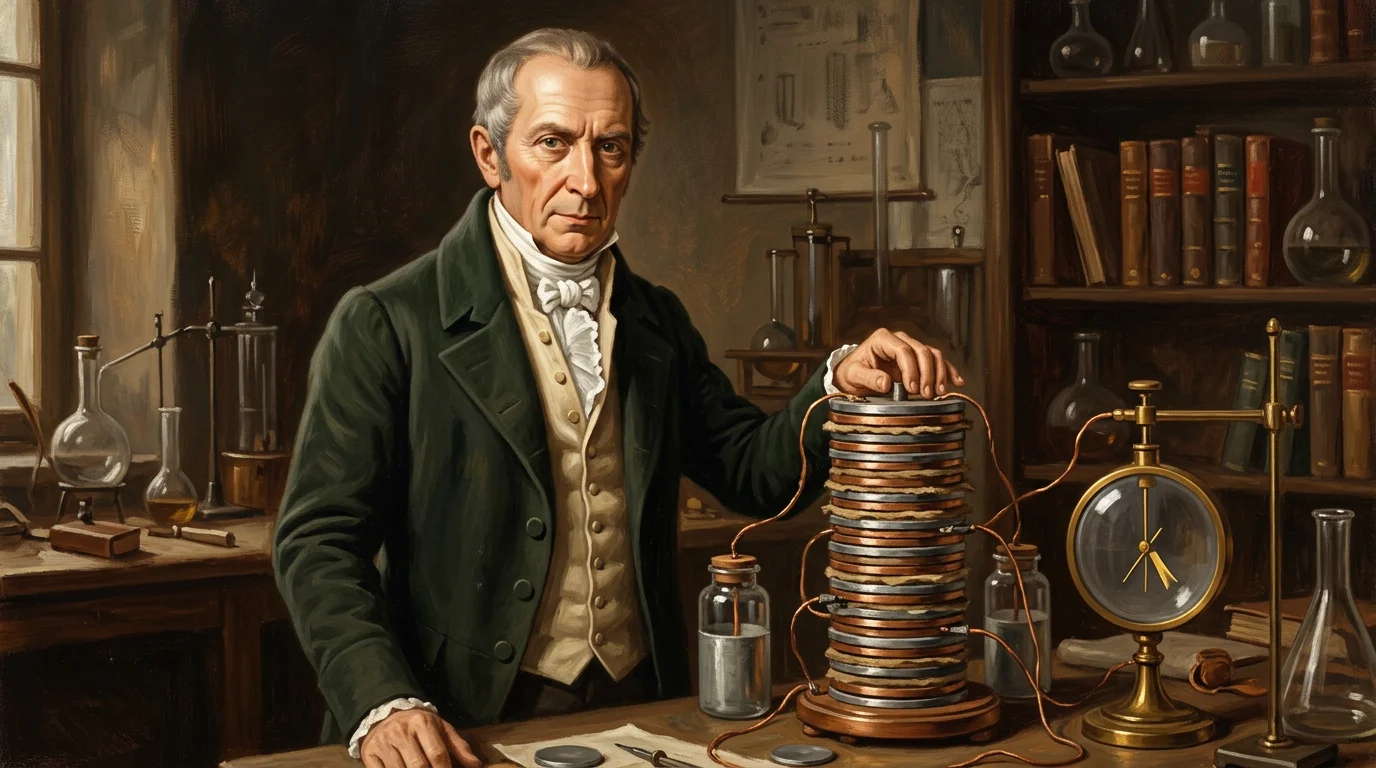
_(2).jpg)
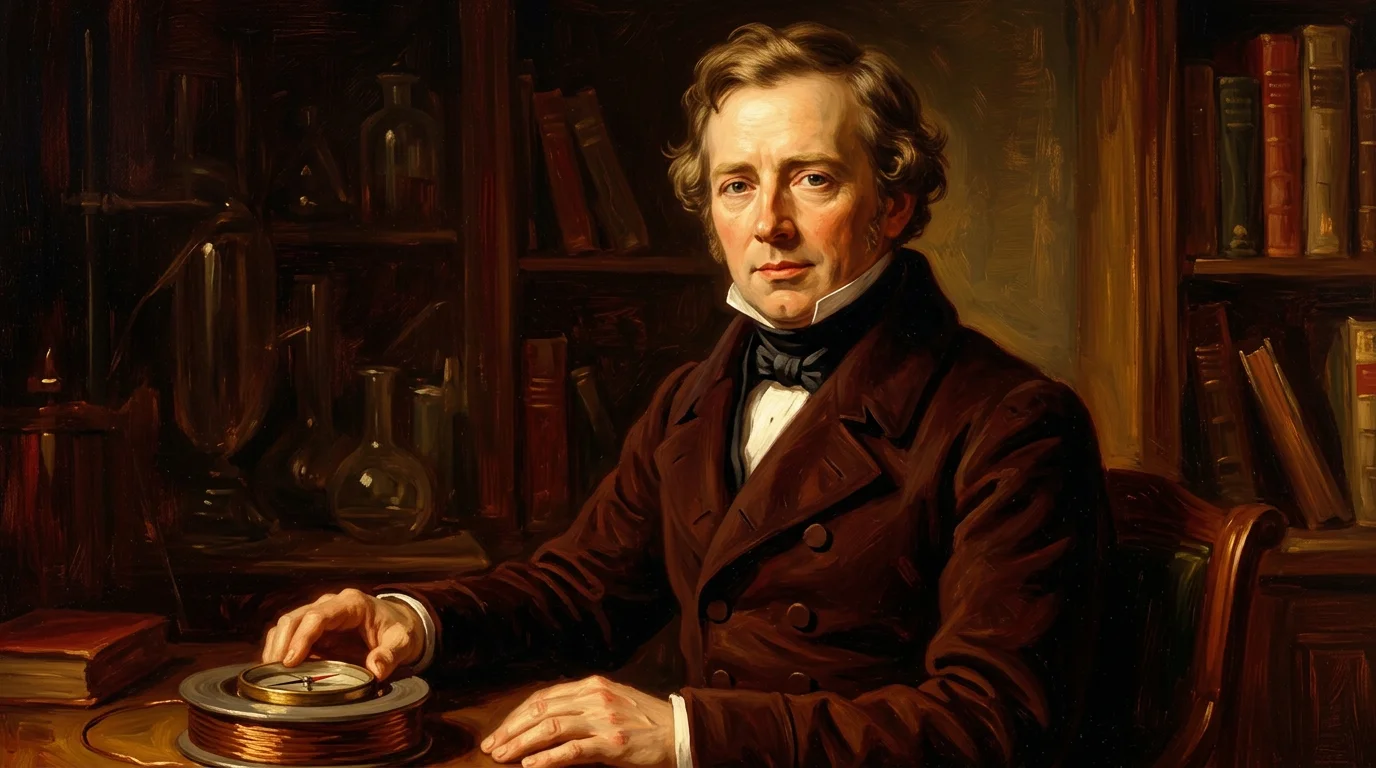
Hans Christian Ørsted
1777–1851 · Physicist, Natural Philosopher & Chemist
A Danish physicist who discovered that an electric current produces a magnetic effect in 1820, the first clear experimental connection between electricity and magnetism.
Why is this scientist famous?
Discovering that an electric current produces a magnetic effect in 1820, providing the first clear experimental connection between electricity and magnetism, and producing aluminium metal in 1825.
Ørsted's 1820 experiment helped launch the science of electromagnetism. The chain of research that followed eventually contributed to electric motors, generators, telecommunications and modern electrical technology. His work is an excellent example of how one experimental result can open an entirely new area of science.
Hans's story
Early Life and Education
Hans Christian Ørsted was born in Rudkøbing, on the Danish island of Langeland, on 14 August 1777. His father was a pharmacist, and Ørsted grew up in a household where practical chemistry was part of daily life. Rudkøbing had no conventional school when he was young, so much of his early education came through private teaching and self-study. He and his brother Anders prepared for admission to the University of Copenhagen. Ørsted studied pharmacy and natural philosophy. He passed his pharmacy examination in 1797 and completed his doctoral dissertation in natural philosophy at the University of Copenhagen in 1799.
Professor and Science Communicator
Ørsted began teaching at the University of Copenhagen in the early nineteenth century and became professor of physics. He was strongly interested in making science accessible beyond universities. In 1824 he founded the Society for the Dissemination of Natural Science, dedicated to bringing scientific knowledge to a wider public. In 1829 he played a central role in founding the Polytechnical Institute in Copenhagen, later associated with what became the Technical University of Denmark. He became its first director and taught physics there until his death.
The Magnetic Effect of Electric Current
Ørsted's most important work came in 1820. While experimenting with electrical current and a compass, he observed that a current passing through a nearby wire caused the compass needle to move. He investigated the effect systematically. Reversing the direction of the electric current also reversed the direction of the compass needle's deflection. His results demonstrated a direct connection between electric current and magnetism. He circulated his published findings in July 1820. This was a crucial step in the development of electromagnetism. Ørsted's result stimulated immediate further work: André-Marie Ampère investigated the forces between electric currents, Michael Faraday later demonstrated electromagnetic induction, and James Clerk Maxwell eventually developed a mathematical theory unifying electricity and magnetism.
Producing Aluminium
Ørsted also made an important contribution to chemistry. In 1825 he became the first person known to produce aluminium metal experimentally. His aluminium was not the highly pure metal later produced by improved methods. Friedrich Wöhler subsequently developed the preparation further.
Recognition and Later Life
Ørsted received the Royal Society's Copley Medal in 1820 for his work involving electricity and magnetism. He was elected a Foreign Member of the Royal Society in 1821. He continued to teach and promote science in Denmark until his death in Copenhagen on 9 March 1851.
What did they discover?
The Magnetic Effect of an Electric Current
In 1820, Ørsted discovered that an electric current passing through a wire could deflect a nearby compass needle, providing the first clear experimental connection between electricity and magnetism.
Founding the Society for the Dissemination of Natural Science
In 1824 he founded a society dedicated to making scientific knowledge accessible to the wider Danish public.
First Production of Aluminium Metal
In 1825, Ørsted became the first person known to have produced aluminium metal experimentally, though later scientists improved its purity and preparation.
The Polytechnical Institute in Copenhagen
In 1829 he helped establish the Polytechnical Institute and became its first director, contributing to technical and scientific education in Denmark.
Amazing facts
Ørsted grew up in a pharmacist's household and learned practical chemistry while still young.
Because Rudkøbing lacked a normal school, he and his brother were taught by several local people and also educated themselves.
His brother Anders later became an important Danish lawyer and statesman.
A compass needle helped reveal one of the fundamental links in physics: the connection between electricity and magnetism.
Ørsted found that reversing the electric current reversed the direction of the compass needle's movement.
His 1820 work quickly inspired experiments by other European scientists, including Ampère.
He produced aluminium decades before the metal could be manufactured cheaply on a large scale.
He helped establish an institution devoted to technical and scientific education and served as its first director.
Timeline
Born in Rudkøbing, Denmark, on 14 August
Passed his pharmacy examination
Completed his doctoral dissertation in natural philosophy at the University of Copenhagen
Demonstrated the magnetic effect of an electric current and published his findings
Awarded the Royal Society's Copley Medal
Elected a Foreign Member of the Royal Society
Founded the Society for the Dissemination of Natural Science
Produced aluminium metal
Helped establish the Polytechnical Institute and became its first director
Died in Copenhagen on 9 March
Awards & honours
Related Super Scientists
André-Marie Ampère
1775–1836 · Physicist and Mathematician
Foundational work on the relationship between electricity and magnetism. The SI unit of electric current, the ampere or amp (A), is named after him.
Michael Faraday
1791–1867 · Physicist & Chemist
Discovered electromagnetic induction and created pioneering devices that became the foundations of the electric motor, transformer and generator.
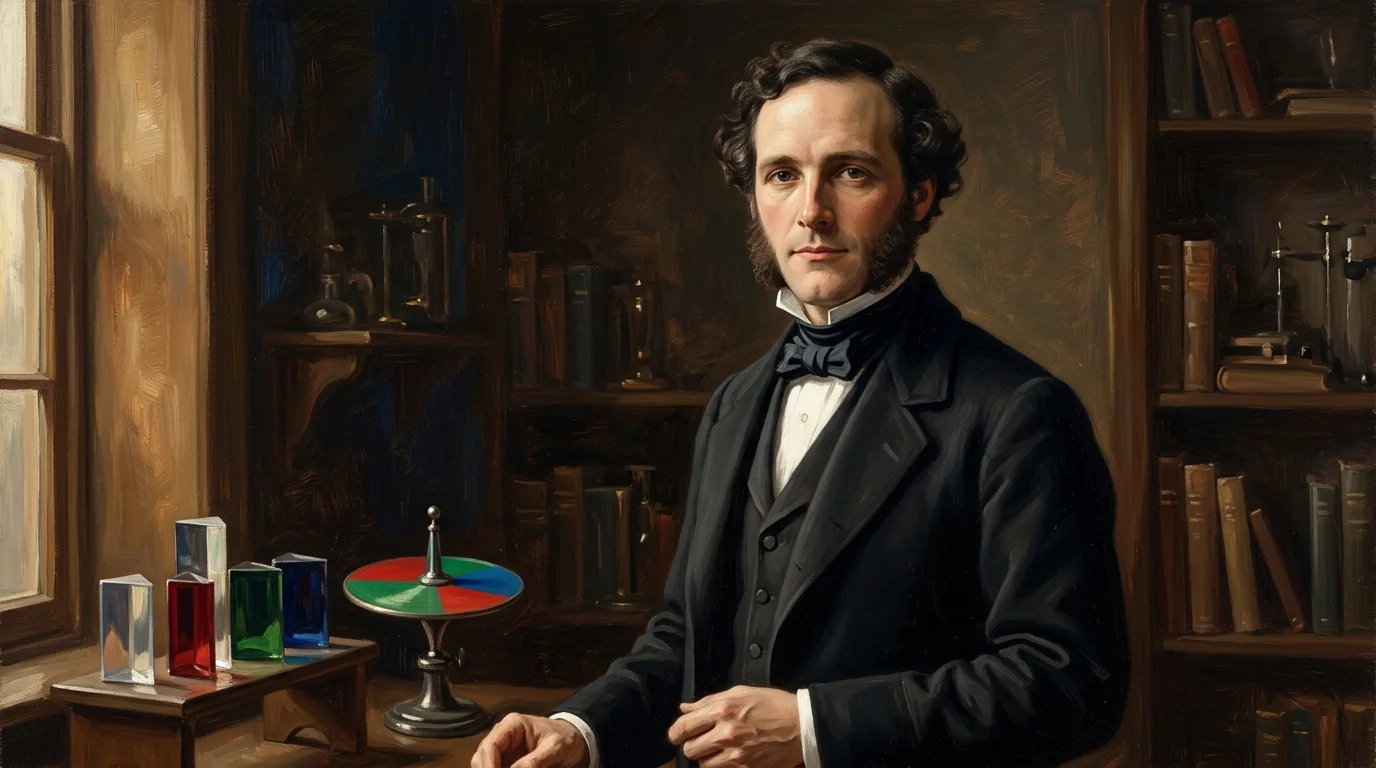
James Clerk Maxwell
1831–1879 · Physicist & Mathematician
Developing the classical theory of electromagnetism, showing mathematically that electricity, magnetism and light are connected, and making major contributions to kinetic theory, colour science and the understanding of Saturn's rings.