_(2).jpg)
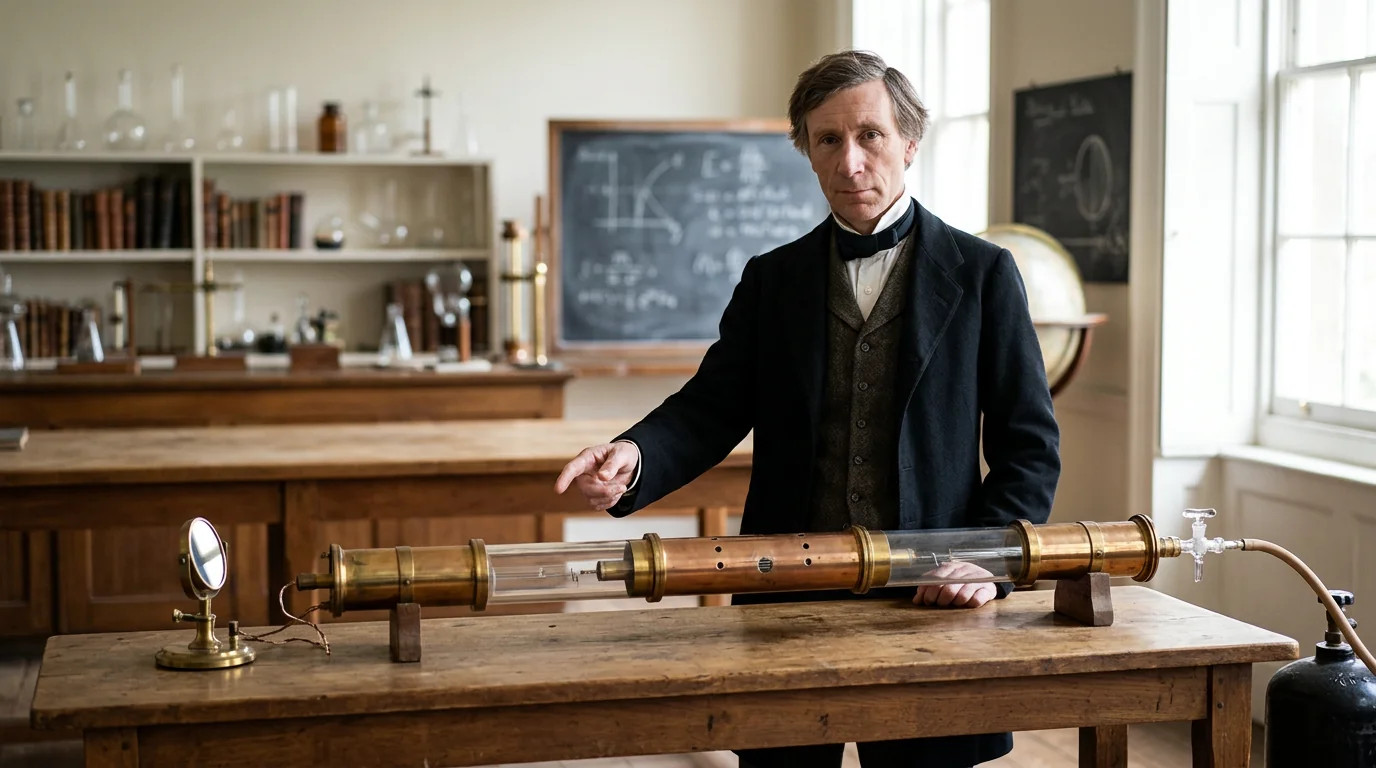
John Tyndall
1820–1893 · Physics, atmospheric heat and glaciers
John Tyndall demonstrated that gases such as water vapour and carbon dioxide absorb infrared heat, helping explain the greenhouse effect.
Why is this scientist famous?
John Tyndall measured the absorption of radiant heat by atmospheric gases, helping explain the greenhouse effect, and also studied glaciers, light and scientific communication.
His experiments help explain why greenhouse gases affect Earth’s temperature, while his glacier and light studies show the reach of experimental physics.
John's story
From surveying to physics
John Tyndall was born at Leighlinbridge in County Carlow, Ireland, on 2 August 1820. He began work with the Ordnance Survey in 1839 and later surveyed railway routes. After a dispute over working conditions, he left surveying and taught mathematics. He travelled to Marburg in Germany to study physics and earned a doctorate. In 1853 he became professor of natural philosophy at London’s Royal Institution, a centre for experiments and public lectures.
A tube that tested invisible heat
Tyndall wanted to know whether gases allowed radiant heat to pass through them. Beginning in 1859, he assembled an apparatus that sent infrared radiation through a tube containing different gases and vapours. He found that water vapour, carbon dioxide and some other gases absorbed far more infrared radiation than major gases such as nitrogen and oxygen. His results helped explain why the atmosphere can retain heat. They were different from Eunice Newton Foote’s earlier sunlight-heating tests.
Why the sky looks blue
His curiosity also extended to light scattering. Using illuminated fine particles, Tyndall investigated why very small particles scatter some colours of light more effectively than others. The resulting Tyndall effect became important in explaining the appearance of a beam passing through a smoky or misty substance. Rayleigh’s later work gave a more complete mathematical account of clear-sky colour. Tyndall’s experiments helped turn a familiar visual puzzle into something testable.
Ice that slowly flows
Tyndall studied Alpine glaciers with other researchers, including Thomas Huxley. He observed and investigated ice movement, crevasses and the effects of pressure. Glaciers may appear still on a short visit, but they deform and flow on longer timescales. His work placed laboratory ideas alongside difficult mountain fieldwork. He was also a skilled public lecturer who helped generations of audiences understand experiments they could not conduct for themselves.
A lasting climate connection
Tyndall became superintendent of the Royal Institution after Michael Faraday and continued writing and lecturing about science. He died in Surrey on 4 December 1893. His absorption experiments are still discussed when explaining greenhouse gases, although modern climate science includes far more measurements and theory than were available to him. His legacy is not just one discovery: it is the habit of testing an invisible physical process with carefully constructed equipment.
What did they discover?
Infrared absorption by gases
Demonstrated that water vapour, carbon dioxide and other gases absorb radiant heat.
Greenhouse-effect physics
Connected atmospheric gas absorption with the temperature of Earth.
Light scattering
Investigated the scattering of light by fine suspended particles, now often called the Tyndall effect.
Glacier physics
Contributed field and experimental studies of how ice moves and changes.
Amazing facts
He started his working life as a surveyor before becoming a physicist.
He was dismissed from surveying after campaigning over pay and working conditions.
He earned a doctorate at the University of Marburg in Germany.
He became professor of natural philosophy at the Royal Institution in 1853.
His radiant-heat apparatus dates from investigations begun in 1859.
He showed that water vapour and carbon dioxide absorb infrared radiation.
He explored glaciers in the Alps and investigated their movement.
He helped explain the scattering of light by fine particles, the phenomenon now called the Tyndall effect.
Timeline
Born in Leighlinbridge, County Carlow, Ireland.
Started surveying work in Ireland.
Travelled to Marburg to study experimental physics.
Became professor of natural philosophy at the Royal Institution.
Began key experiments on how gases absorb radiant heat.
Published influential investigations of radiant heat in gases.
Became superintendent of the Royal Institution.
Died in Hindhead, Surrey.
Related Super Scientists
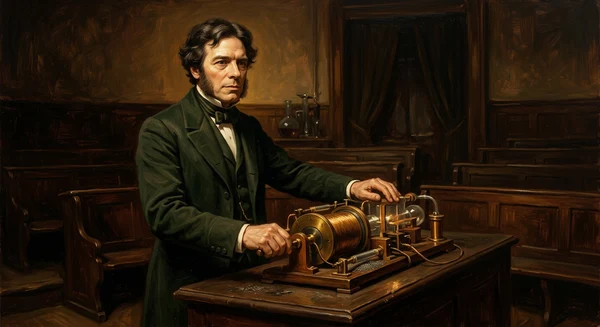
Michael Faraday
1791–1867 · Physicist & Chemist
Discovered electromagnetic induction and created pioneering devices that became the foundations of the electric motor, transformer and generator.
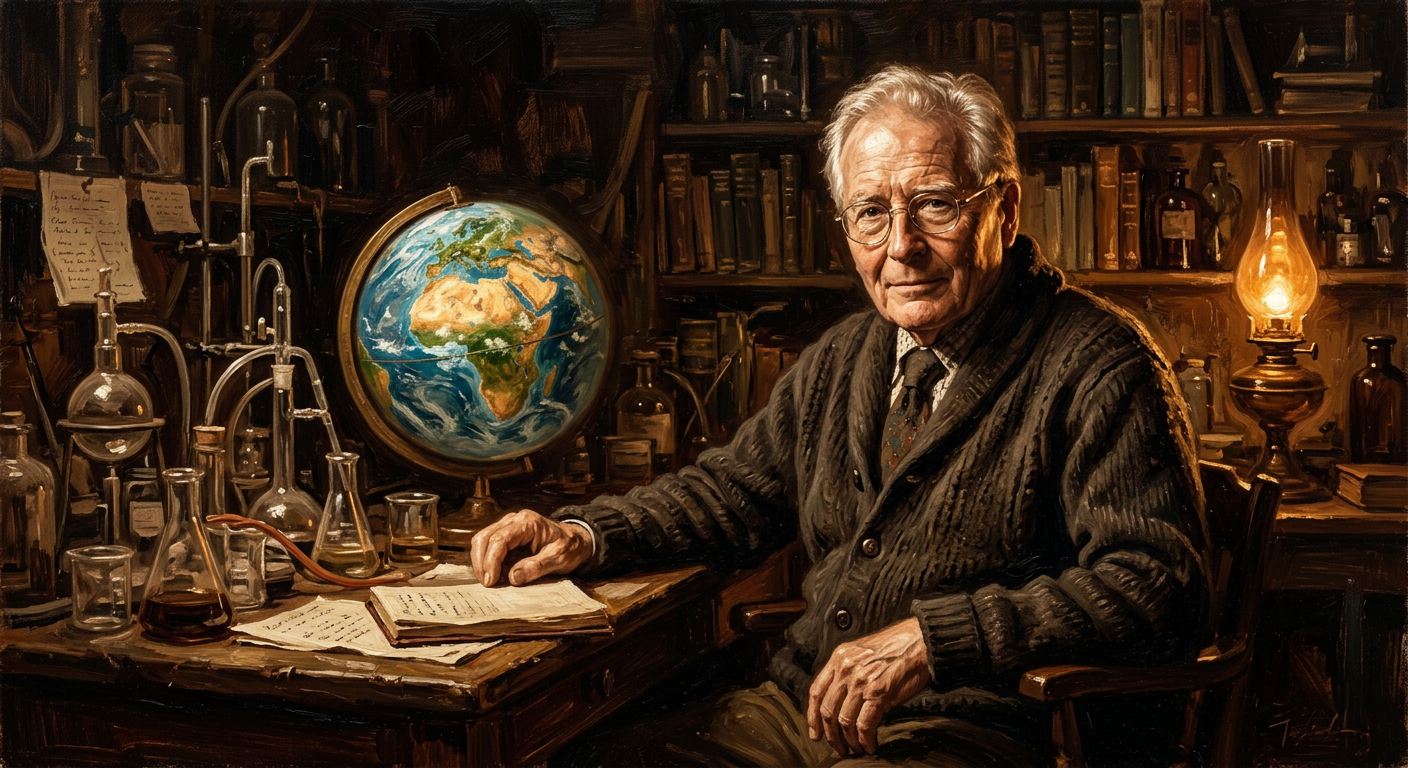
James Lovelock
1919–2022 · Independent Scientist and Environmentalist
Inventing the electron capture detector and developing the Gaia hypothesis, an influential idea about interactions between life and Earth's atmosphere, oceans and rocks.
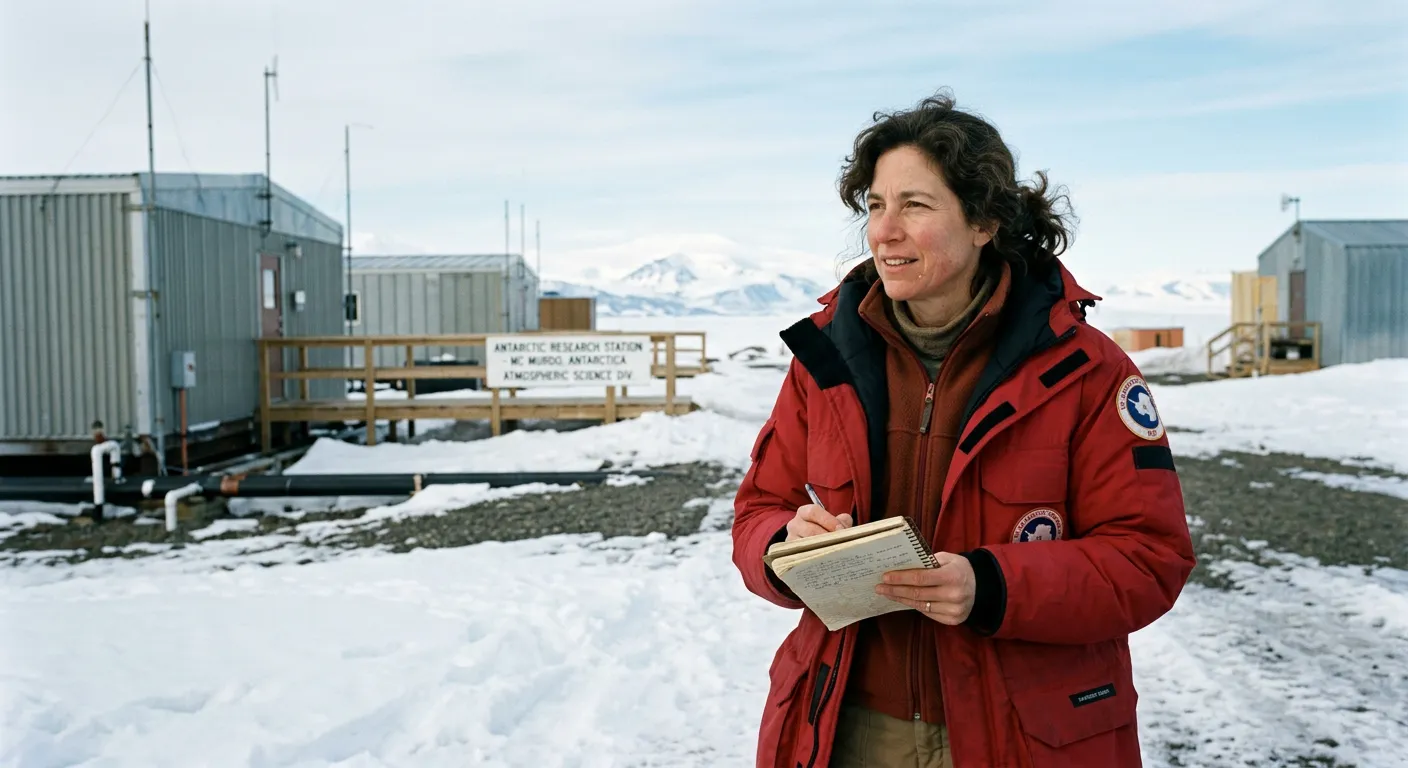
Susan Solomon
1956–present · Atmospheric chemistry and Earth science
Solomon led Antarctic research expeditions that explained why ozone depletion was especially severe there, connecting laboratory chemistry with a global environmental problem.