_(2).jpg)
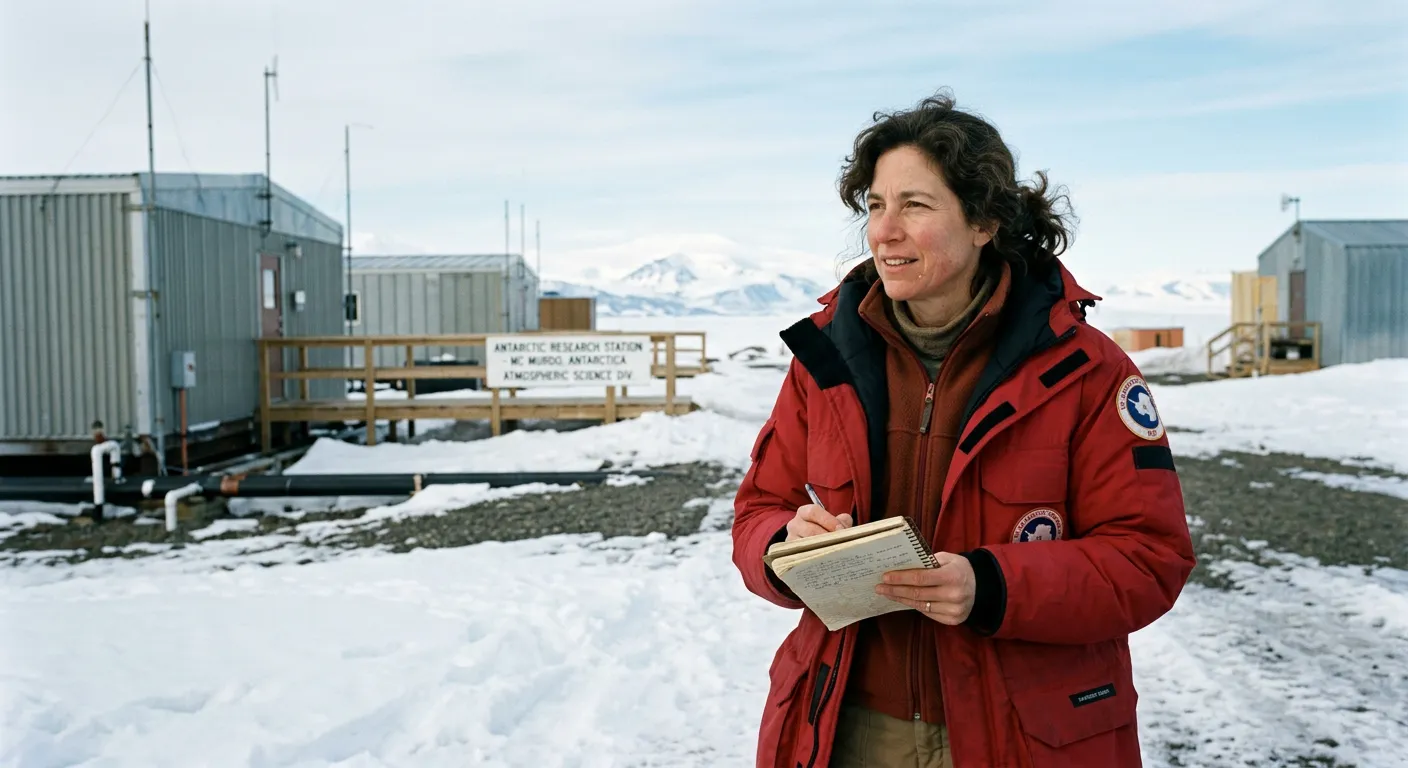
Susan Solomon
1956–present · Atmospheric chemistry and Earth science
Susan Solomon helped explain why the ozone layer above Antarctica was thinning, revealing how chemistry on icy cloud particles contributes to ozone destruction.
“We can now be confident that the things we've done have put the planet on a path to heal”
Why is this scientist famous?
Solomon led Antarctic research expeditions that explained why ozone depletion was especially severe there, connecting laboratory chemistry with a global environmental problem.
Her work shows how chemistry, field measurements and international environmental decisions can work together. It connects reduced ozone-depleting chemicals with measurable atmospheric recovery, demonstrating why scientists keep monitoring long after policy changes.
Susan's story
From television to atmospheric chemistry
Susan Solomon was born on 19 January 1956 in Chicago, Illinois. As a child she watched Jacques Cousteau programmes about the underwater world, which helped spark her interest in science. She earned a bachelor’s degree in chemistry at the Illinois Institute of Technology in 1977, a master’s at the University of California, Berkeley in 1979, and a doctorate in chemistry there in 1981.
Joining NOAA and heading south
Solomon joined the National Oceanic and Atmospheric Administration (NOAA) as a researcher in 1981. Her work took an unexpected direction when scientists discovered unusually severe ozone depletion over Antarctica. Solomon led a sixteen-scientist Antarctic research expedition in 1986, the only woman on that team, and returned for a second expedition in 1987.
Understanding the ozone hole
The ozone layer in the stratosphere absorbs much of the Sun’s harmful ultraviolet (UV) radiation. The ozone hole means unusually severe thinning, not an empty physical hole. Solomon and colleagues helped explain why Antarctic depletion was especially strong: chemical reactions on very cold polar stratospheric cloud particles activate chlorine that can destroy ozone when sunlight returns. Human-made chlorofluorocarbons (CFCs) were an important chlorine source.
Building on earlier work
Solomon’s contribution was crucial explanatory chemistry and field evidence, not the single-handed discovery of the hole. Mario Molina and F. Sherwood Rowland had earlier shown how CFCs could damage ozone, and the British Antarctic Survey had detected the ozone hole. Solomon’s 1986 Nature paper was coauthored with Rolando Garcia, Rowland and Donald Wuebbles. Her achievement was connecting the chemistry to the Antarctic conditions.
Climate science and the IPCC
Solomon later moved to the Massachusetts Institute of Technology (MIT) after her NOAA career. She co-chaired Working Group I of the Intergovernmental Panel on Climate Change (IPCC) for the 2007 assessment, with Qin Dahe. The IPCC organisation shared the 2007 Nobel Peace Prize with Al Gore. Her work spans both atmospheric chemistry and climate.
Signs of recovery
In 2016, Solomon led research identifying evidence of Antarctic ozone recovery. Her team combined observations and modelling to show that the ozone hole was beginning to heal, while recognising that year-to-year conditions can complicate the picture. This does not mean the hole has completely disappeared, and scientists cannot yet promise a precise recovery date. But the evidence shows that international action, including the Montreal Protocol, has helped put the atmosphere on a path to recovery.
What did they discover?
Antarctic ozone chemistry
Led field expeditions and co-authored research explaining how chemical reactions on polar stratospheric cloud particles activate chlorine to destroy ozone in Antarctic conditions.
Evidence of ozone recovery
Led a 2016 study combining observations and modelling to identify evidence that Antarctic ozone depletion was beginning to heal.
Amazing facts
Her interest in science was encouraged by television exploration. As a child she watched Jacques Cousteau programmes about the underwater world, before her own career took her into atmospheric research.
She measured gases while still at school. Her oxygen-measurement project placed third in a national science fair, foreshadowing her later interest in atmospheric chemistry.
She led a sixteen-scientist Antarctic expedition in 1986. She was the only woman on that team; the expedition gathered evidence needed to explain a global environmental problem.
Tiny cloud particles help explain a huge phenomenon. Their surfaces enable chemical reactions important to Antarctic ozone loss, linking microscopic chemistry with a continent-scale change.
Extreme cold alone was not the whole answer. The chemistry also involves chlorine and returning sunlight, explaining why the Antarctic seasonal cycle matters.
Two Antarctic features carry her name. Solomon Glacier and Solomon Saddle were named in 1994 in recognition of her research leadership.
She later studied signs of recovery. Her 2016 team combined observations and modelling to identify evidence of healing, while recognising that year-to-year conditions can complicate the picture.
Environmental improvement can be tested with evidence. Her work connects reduced ozone-depleting chemicals with atmospheric measurements, showing why scientists keep monitoring after policy changes.
Timeline
Born in Chicago, Illinois, United States.
Completes her bachelor’s degree in chemistry at the Illinois Institute of Technology.
Completes her master’s degree at the University of California, Berkeley.
Completes her doctorate and joins NOAA research.
Leads her first Antarctic expedition and co-authors the ozone-chemistry paper in Nature.
Leads her second Antarctic expedition.
Solomon Glacier and Solomon Saddle are named in her honour.
Co-chairs IPCC Working Group I for the 2007 assessment.
Leads research identifying evidence of Antarctic ozone recovery.
Shares the Crafoord Prize in Geosciences with Syukuro Manabe.
Awards & honours
Related Super Scientists
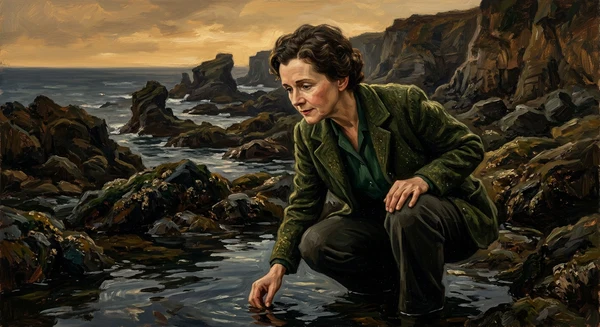
Rachel Carson
1907–1964 · Marine Biologist & Conservationist
Wrote Silent Spring, helping transform public understanding of pesticides and inspiring the modern environmental movement.
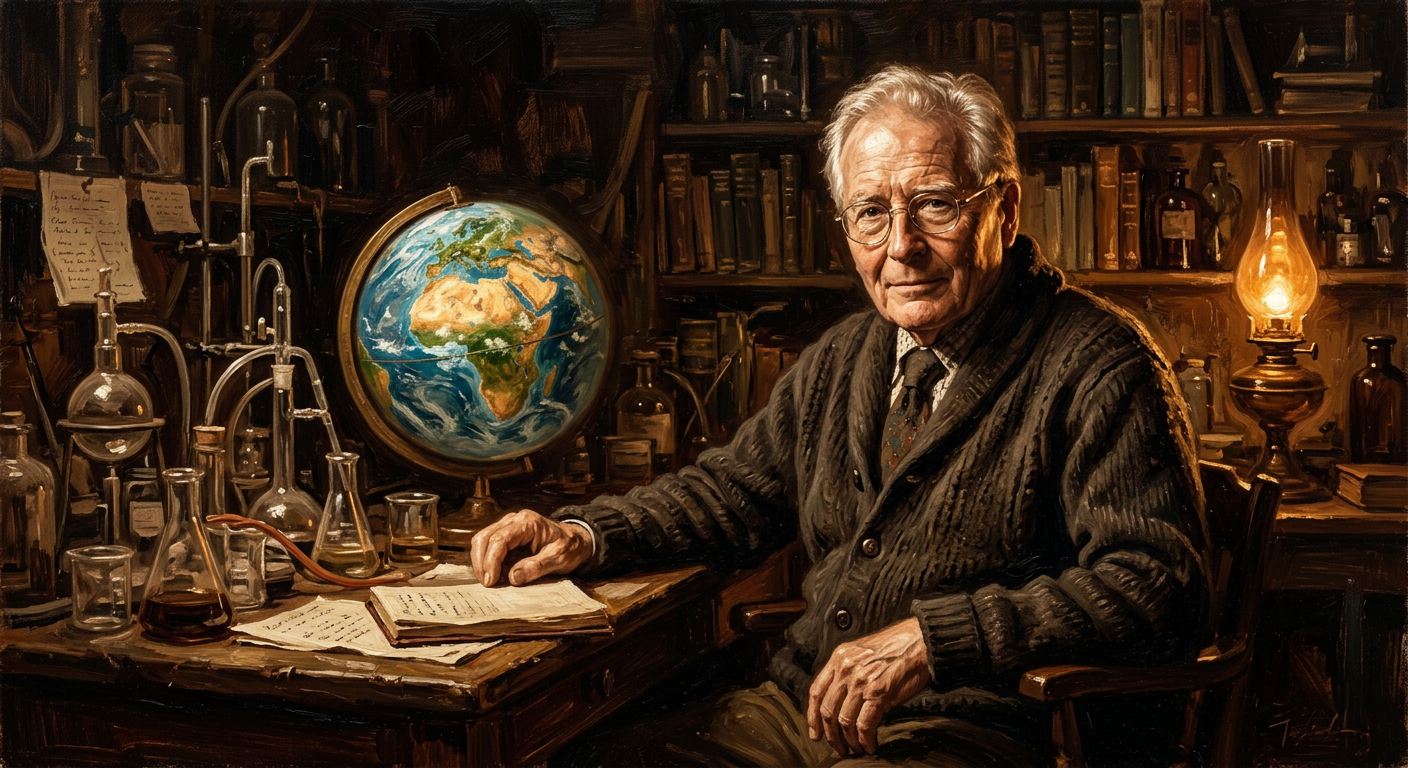
James Lovelock
1919–2022 · Independent Scientist and Environmentalist
Inventing the electron capture detector and developing the Gaia hypothesis, an influential idea about interactions between life and Earth's atmosphere, oceans and rocks.