_(2).jpg)
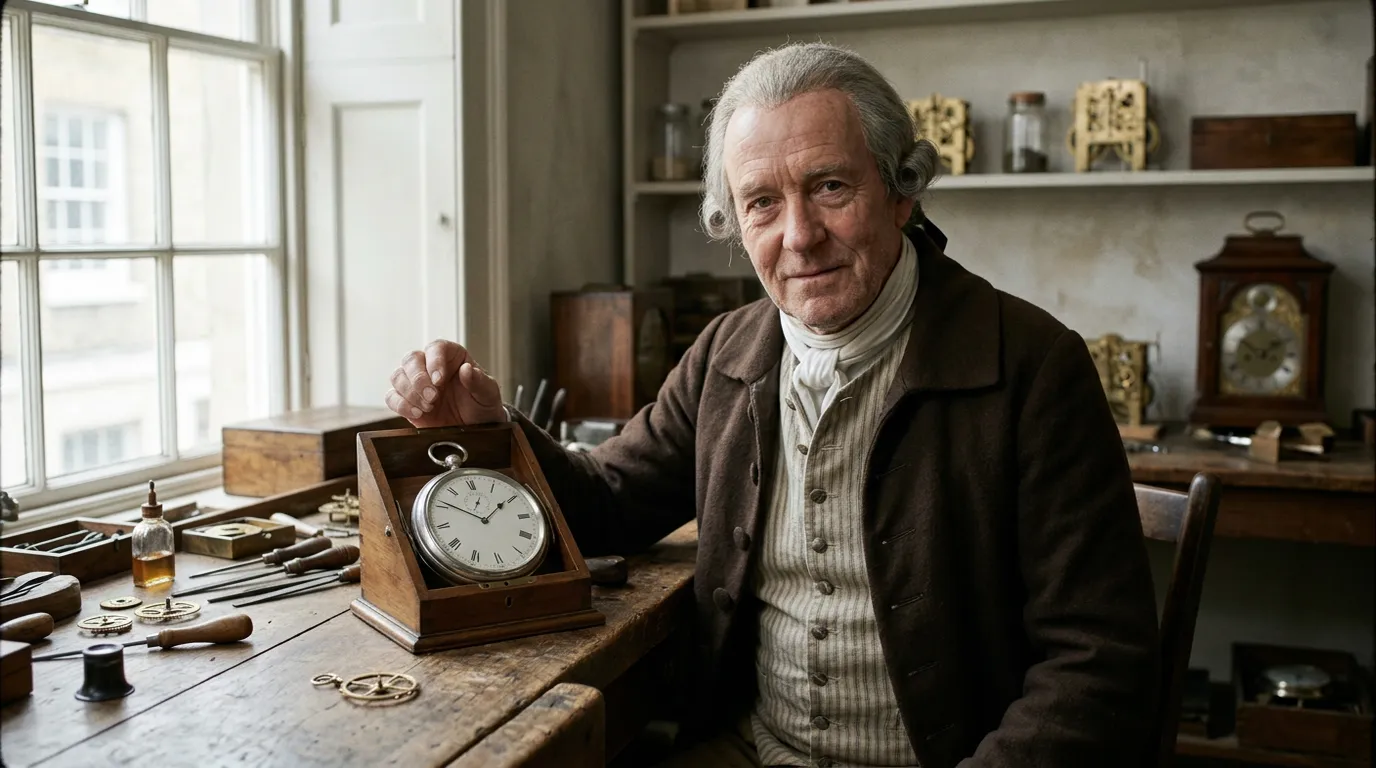
John Harrison
1693–1776 · Precision clockmaking and navigation
John Harrison built exceptionally precise marine timekeepers that helped sailors calculate longitude at sea, transforming navigation and clockmaking.
Why is this scientist famous?
John Harrison developed marine timekeepers that made accurate sea-going longitude measurements increasingly practical after decades of engineering work.
Marine chronometers made ocean navigation much safer, showing the importance of precision instruments alongside astronomical observation and charts.
John's story
The clockmaker and the ocean
John Harrison was born in Yorkshire, England, in 1693. His birth day is reported under different calendars, so the year is the safest date to use here. He trained as a carpenter and became a remarkably inventive clockmaker. On land, accurate clocks could rely on regular mechanisms; at sea, rolling ships, temperature changes and long voyages made reliable timekeeping harder. The problem mattered because sailors could estimate latitude from the sky but needed more information to determine how far east or west they had travelled.
Why the time matters
Longitude is a measure of east–west position. If a sailor knows the time at a fixed reference place and compares it with local solar time, the time difference helps reveal longitude. However, a clock losing just minutes on a voyage can produce a large navigation error. Britain’s 1714 Longitude Act promised rewards for workable solutions. Harrison was among the instrument makers who tried to build timekeepers accurate enough for the ocean, although astronomical methods were also being developed.
Big clocks on moving ships
Harrison made precise wooden clocks before trying sea-going designs. His first marine timekeeper, now called H1, was demonstrated in 1735 and tested on a voyage to Lisbon in 1736. It performed promisingly but was not the final answer. He created further designs H2 and H3, exploring balances and compensation for changing conditions. These were impressive devices, but repeated testing showed where they needed improvement. His work was a long process of redesign rather than a sudden perfect invention.
A watch that beat the waves
Harrison turned to a smaller design: H4, completed in 1759. It looked like an unusually large pocket watch yet kept time with exceptional care. His son William carried H4 on a voyage to Jamaica in 1761. Tests showed impressive performance, and a later Barbados trial added evidence, but arguments with the Board of Longitude delayed resolution of the reward. Harrison’s claims were examined alongside rival astronomical methods and independent tests.
Making accurate navigation practical
Harrison received substantial payments for his work but remained dissatisfied with how the reward system treated him. He died in London on 24 March 1776. His instruments demonstrated what precise timekeeping could achieve; later clockmakers, including John Arnold and Thomas Earnshaw, helped make marine chronometers simpler and more widely affordable. Harrison is remembered not as the only person to tackle longitude, but as a central pioneer who moved the problem from a scientific challenge towards practical engineering.
What did they discover?
H1 sea clock
Produced a pioneering marine timekeeper with linked balances designed to operate aboard moving ships.
H4 marine watch
Developed a highly precise watch-sized timekeeper that succeeded in important sea trials.
Temperature and motion compensation
Improved mechanisms that kept time despite changes in ship movement and the environment.
Longitude by time difference
Demonstrated how accurate reference-time instruments could support east–west navigation.
Amazing facts
He was born in Yorkshire in 1693; old-style and modern calendars give different birth-day readings.
His earliest surviving clock movement dates from 1713 and used substantial wooden parts.
His H1 sea clock was demonstrated in London in 1735.
H1 was tested on a sea voyage to Lisbon in 1736.
He spent many years improving designs H2 and H3.
H4 was completed in 1759 and resembled a large watch.
His son William carried H4 to Jamaica for a 1761 test.
Harrison’s work helped launch the development of practical marine chronometers, later simplified by other makers.
Timeline
Born in Yorkshire; the precise modern-calendar birthday is not used.
Made his earliest surviving wooden clock.
Presented marine timekeeper H1 in London.
Took H1 on its sea trial to Lisbon.
Completed the highly accurate H4 marine watch.
H4 underwent a voyage to Jamaica with his son William.
The Board of Longitude considered further tests and reward conditions.
Died in London.
Related Super Scientists
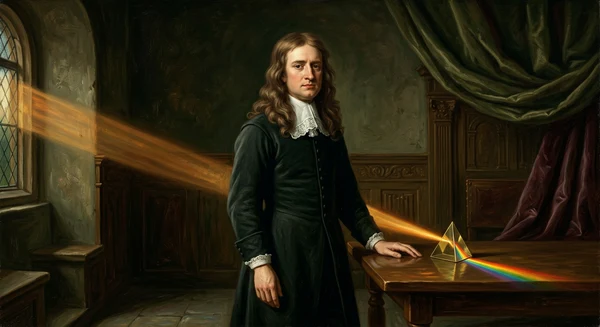
Isaac Newton
1643–1727 · Physicist & Mathematician
Formulating the laws of motion and universal gravitation.
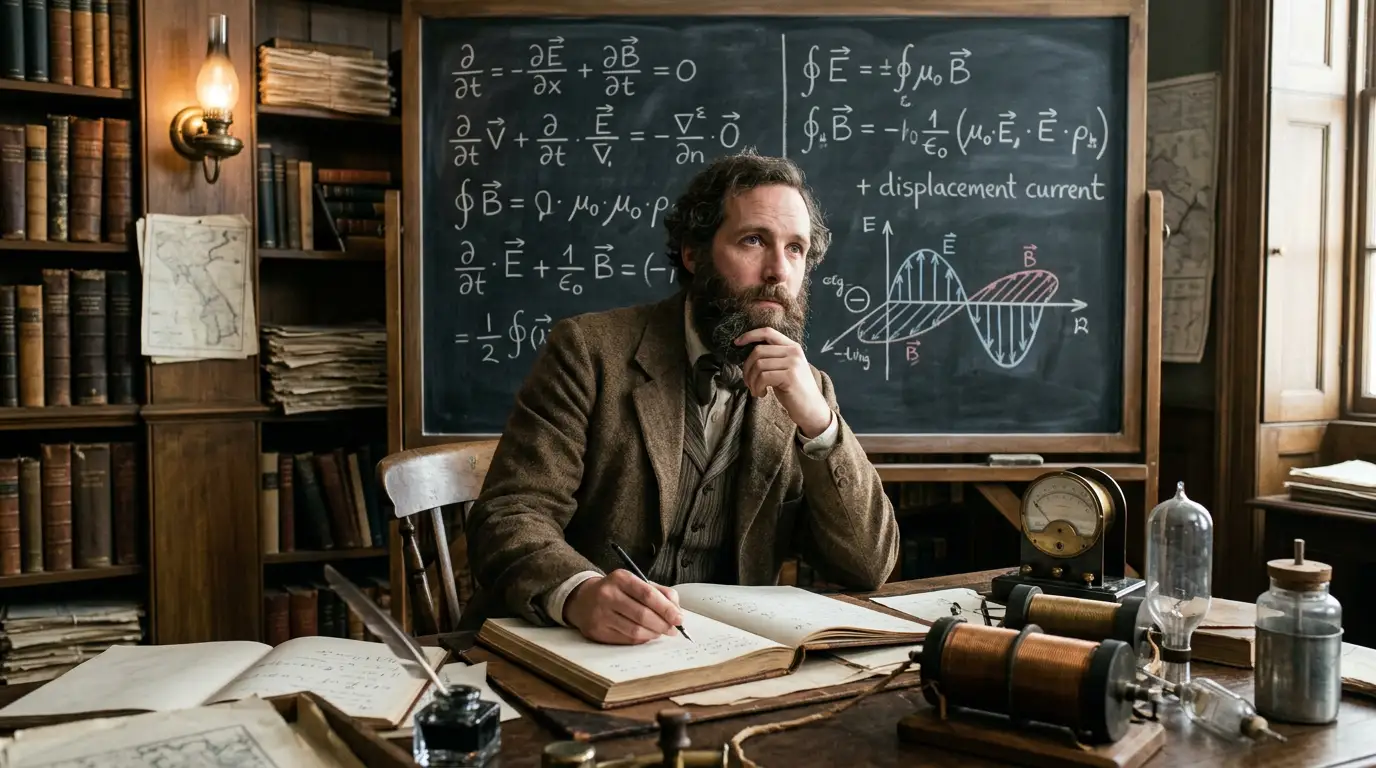
James Clerk Maxwell
1831–1879 · Physicist & Mathematician
Developing the classical theory of electromagnetism, showing mathematically that electricity, magnetism and light are connected, and making major contributions to kinetic theory, colour science and the understanding of Saturn's rings.
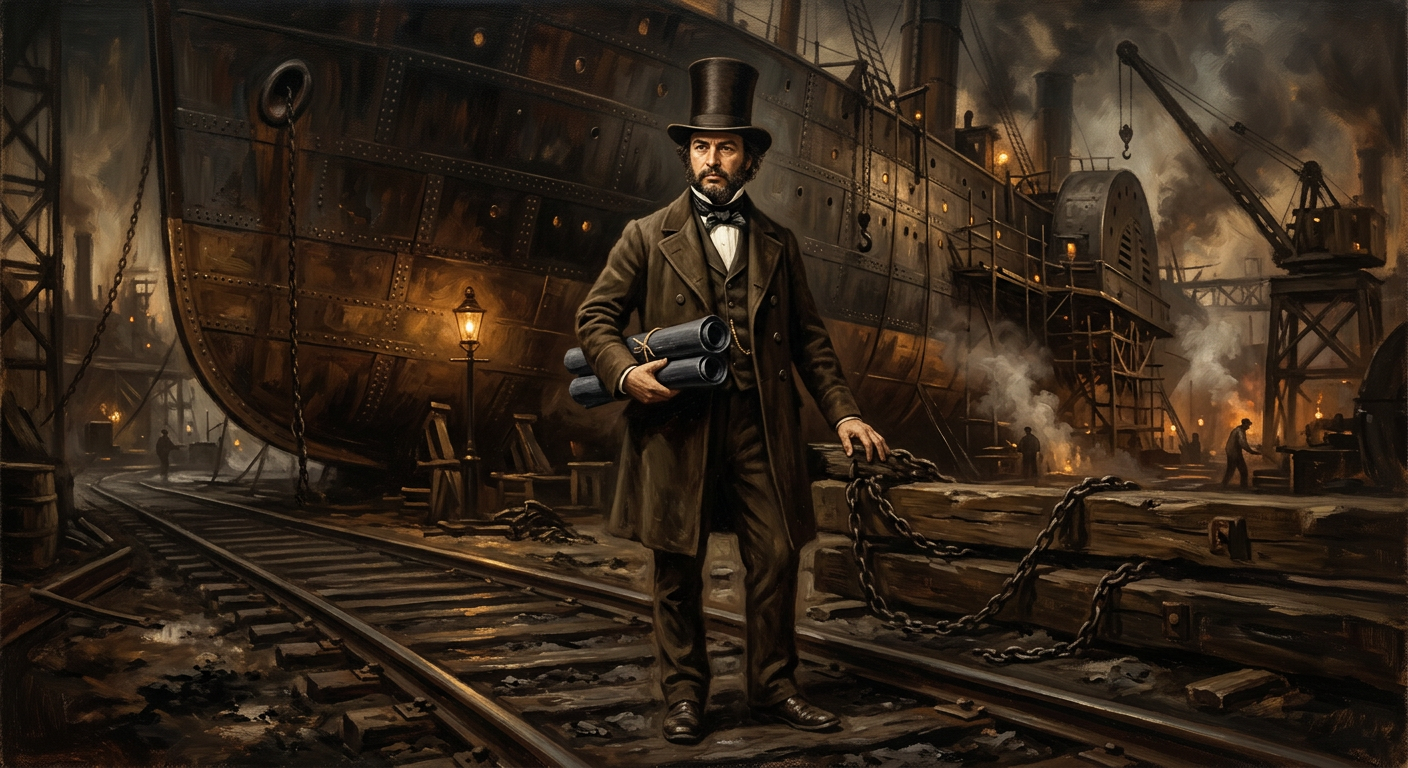
Isambard Kingdom Brunel
1806–1859 · Civil and Marine Engineer
Brunel was chief engineer of the Great Western Railway and designed major bridges, tunnels and ships including Great Western, Great Britain and Great Eastern. His work pushed nineteenth-century railway and ship engineering into new territory.