_(2).jpg)
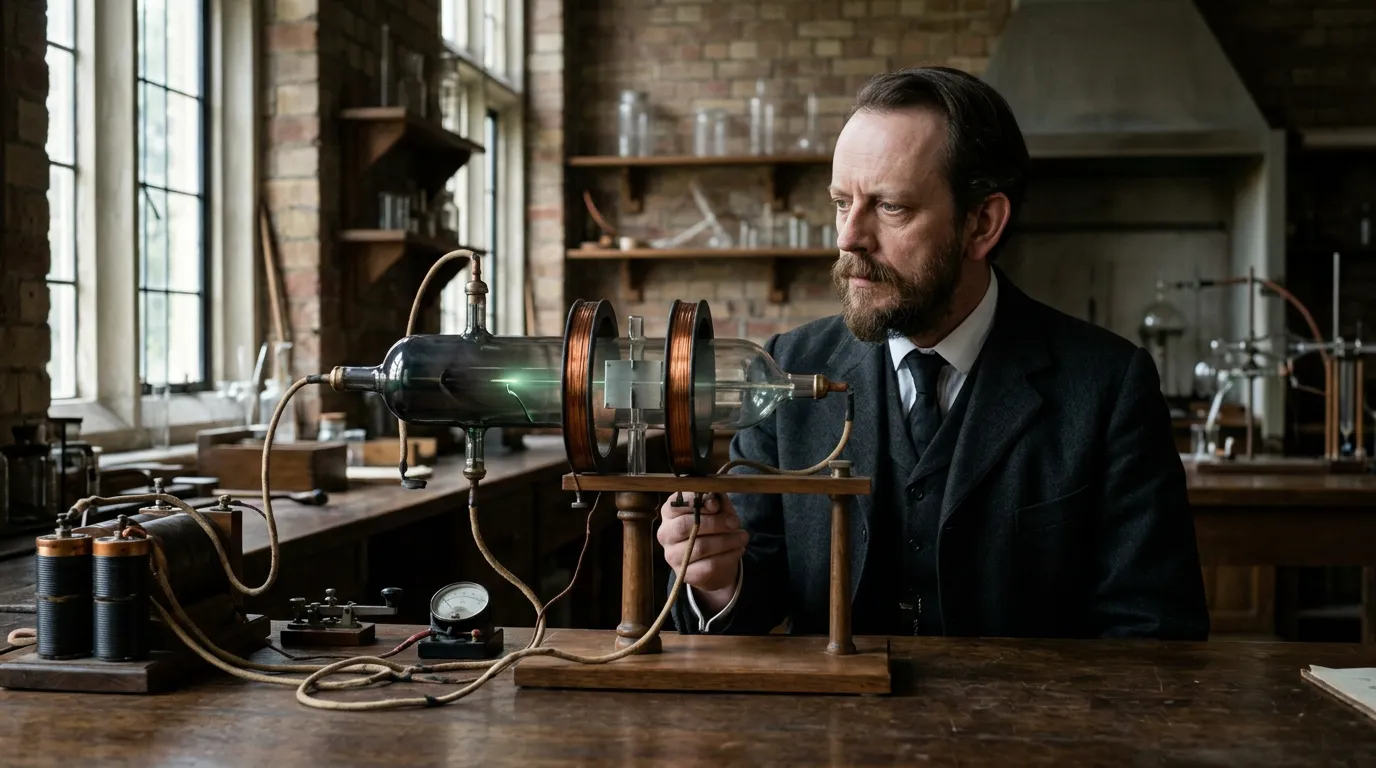
J. J. Thomson
1856–1940 · Atomic physics, electricity and cathode-ray research
J. J. Thomson was a British physicist whose 1897 cathode-ray experiments revealed particles smaller than atoms, opening the door to atomic physics.
“bodies much smaller than atoms”
Why is this scientist famous?
A British physicist who discovered the electron and led the Cavendish Laboratory at Cambridge.
Thomson’s identification of the electron transformed the scientific picture of matter, and his laboratory leadership trained a remarkable generation of physicists.
J.'s story
A young professor at Cambridge
Joseph John Thomson was born on 18 December 1856 in Cheetham Hill, near Manchester, England. His family originally expected him to become an engineer, but he entered Owens College, Manchester, at age 14 in 1870. In 1876 he moved to Trinity College, Cambridge, and in 1880 became a Fellow of Trinity after outstanding mathematical results. In 1884, still in his twenties, he was appointed Cavendish Professor of Experimental Physics at Cambridge, a role that put him in charge of the Cavendish Laboratory.
Discovering the electron
In 1897 Thomson’s cathode-ray experiments showed that cathode rays consisted of tiny negatively charged particles much smaller than atoms. He called these particles “corpuscles”; they became known as electrons. His result showed that atoms were divisible and contained smaller components, overturning the idea of atoms as indivisible units. In 1904 he proposed an early model of the atom in which electrons were embedded within a positively charged region. This model was later replaced as scientists learned more about the nucleus, but it was an important step in understanding atomic structure.
Leading the Cavendish Laboratory
Thomson led the Cavendish Laboratory from 1884 to 1918 and was an influential teacher and research leader. Ernest Rutherford, who later succeeded Thomson as Cavendish Professor, was among the scientists who worked under him. Thomson’s later positive-ray work developed techniques that helped lead to mass spectrography. Francis Aston developed Thomson’s positive-ray instrument further and used improved mass-spectrograph methods to identify isotopes in many non-radioactive elements.
A Nobel family
Thomson won the Nobel Prize in Physics in 1906 for his theoretical and experimental investigations on the conduction of electricity by gases. He was knighted in 1908 and served as President of the Royal Society from 1915 to 1920. In 1918 he became Master of Trinity College. Remarkably, his son George Paget Thomson later won the Physics Nobel Prize in 1937 for work showing the wave behaviour of electrons. Thomson died in Cambridge on 30 August 1940, leaving behind a legacy that helped set up the discoveries of atomic structure, isotopes and later particle physics.
What did they discover?
Identifying the electron
In 1897 Thomson’s cathode-ray experiments showed that cathode rays consisted of tiny negatively charged particles much smaller than atoms, which he called “corpuscles” and which became known as electrons.
An early atomic model
In 1904 he proposed an early model of the atom in which electrons were embedded within a positively charged region, an important step toward understanding atomic structure.
Paving the way for mass spectrography
His positive-ray experiments developed techniques that Francis Aston later refined into mass-spectrograph methods for identifying isotopes.
Amazing facts
Thomson entered Owens College when he was only 14.
His family originally expected him to become an engineer.
He became Cavendish Professor at Cambridge in 1884 while still in his twenties.
His 1897 experiments showed that atoms contained particles far smaller than atoms themselves.
Thomson called the new particles “corpuscles”; today they are called electrons.
His early atomic model was later replaced as scientists learned more about the nucleus.
His positive-ray experiments helped create the path toward mass spectrography and isotope research.
Thomson won the Nobel Prize in Physics in 1906; his son George Paget Thomson later won the Physics Nobel Prize in 1937 for work showing the wave behaviour of electrons.
Timeline
Born at Cheetham Hill near Manchester
Entered Owens College, Manchester
Entered Trinity College, Cambridge
Became a Fellow of Trinity College
Appointed Cavendish Professor of Experimental Physics
Announced the cathode-ray work that identified the electron
Proposed an early atomic model containing electrons within positive matter
Awarded the Nobel Prize in Physics
Knighted
Received the Royal Society’s Copley Medal
Became Master of Trinity College
Died in Cambridge
Awards & honours
Related Super Scientists
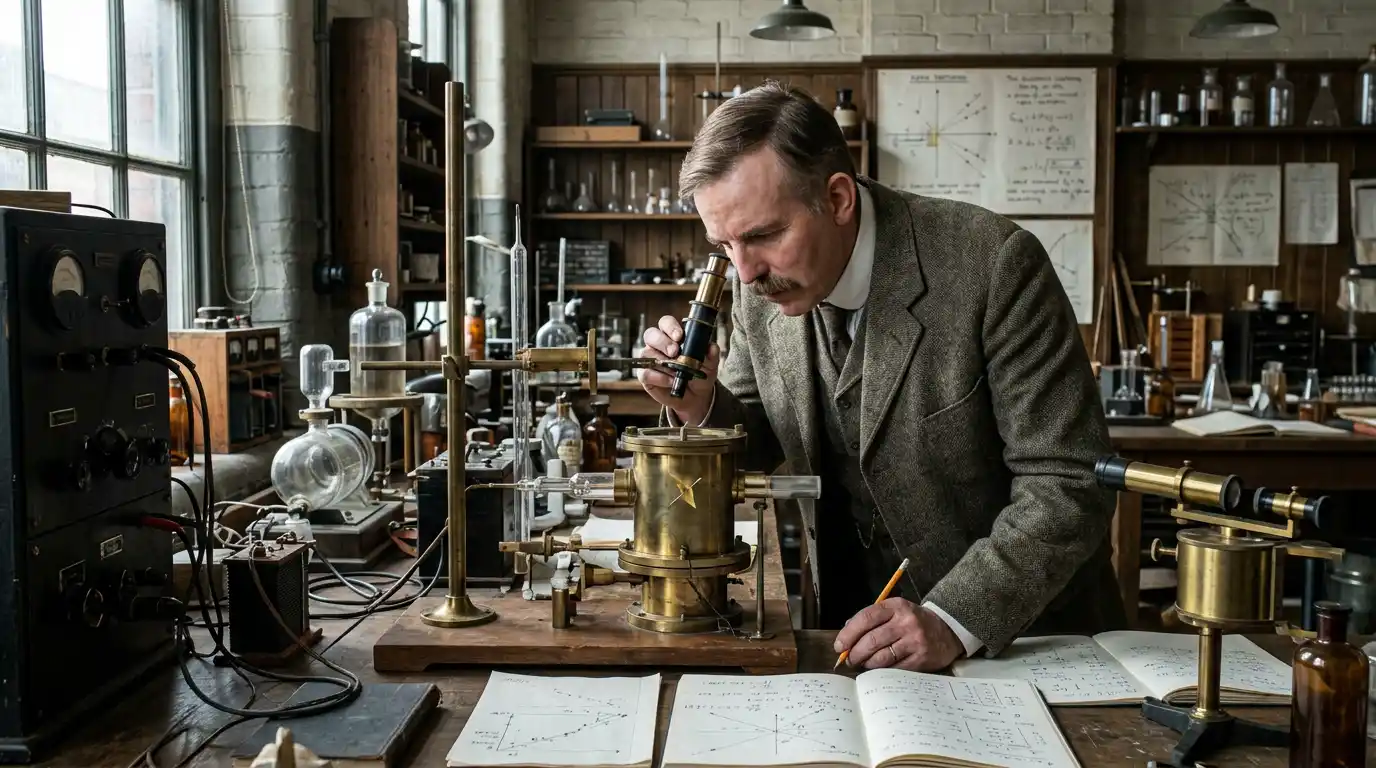
Ernest Rutherford
1871–1937 · Physicist
Discovering the nuclear structure of the atom and pioneering the field of nuclear physics.
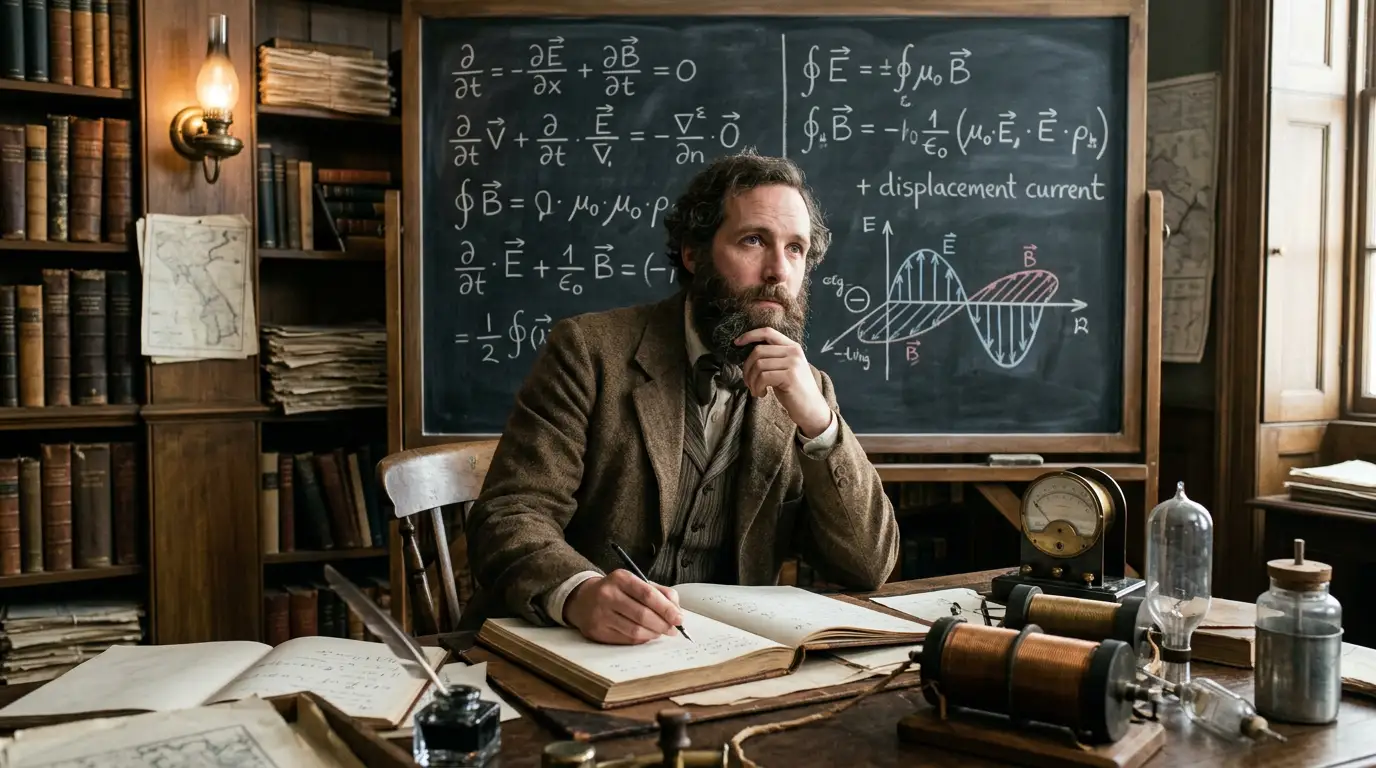
James Clerk Maxwell
1831–1879 · Physicist & Mathematician
Developing the classical theory of electromagnetism, showing mathematically that electricity, magnetism and light are connected, and making major contributions to kinetic theory, colour science and the understanding of Saturn's rings.
Niels Bohr
1885–1962 · Physicist
Developed the Bohr model of the atom and made foundational contributions to quantum mechanics.