Irving Langmuir
1881–1957 · Surface chemistry, chemical bonding and industrial research
Irving Langmuir advanced surface chemistry, helped popularise electron-based chemical bonding, and won the 1932 Nobel Prize in Chemistry.
“The scientist is motivated primarily by curiosity and a desire for truth.”
Why is this scientist famous?
Irving Langmuir transformed the scientific understanding of surfaces and helped explain electron arrangements in chemical bonds, winning the 1932 Nobel Prize in Chemistry.
His work helps scientists describe how gas molecules attach to surfaces, design coatings and catalysts, and understand chemical bonds and the behaviour of thin films.
Irving's story
A young American scientist studies in Germany
Irving Langmuir was born in Brooklyn, New York, on 31 January 1881. As a child, he studied at schools in the United States and spent several years in Paris. He earned an engineering degree from Columbia University’s School of Mines in 1903 and a doctorate at the University of Göttingen in Germany in 1906. After teaching chemistry at Stevens Institute in New Jersey, he joined General Electric’s research laboratory in Schenectady, New York, in 1909. There he could investigate basic scientific questions while also working on practical technologies. His career became a striking example of how experiments in a company laboratory could lead to major discoveries about atoms and molecules.
Why a light bulb does not always stay bright
At General Electric, Langmuir investigated the behaviour of gases, hot metal filaments and electrical currents inside light bulbs and vacuum tubes. Working within a larger team that included William Coolidge, he helped turn knowledge about hot tungsten filaments into improved electric lamps. He found that a suitable gas inside a bulb could slow the loss of tungsten from its filament. The work contributed to gas-filled incandescent lamps and developments in high-vacuum electronics. This practical research also demanded a deeper understanding of how individual gas molecules interact with solid surfaces.
Exploring the almost invisible surface of matter
A liquid can look still, and a metal can look smooth, yet molecules at their surfaces behave differently from molecules inside them. Langmuir investigated gases sticking to solids, a process called adsorption, as well as extremely thin films spreading across water. He developed ways to describe how molecules occupy a surface, including the idea that in some conditions they form a single layer. Such work offered a clearer account of surface reactions and helped researchers measure phenomena too small to see directly. In 1932 he received the Nobel Prize in Chemistry for his discoveries and investigations in surface chemistry, not specifically for inventing the modern theory of chemical bonds.
How electrons help atoms join together
Langmuir also wanted to explain the arrangement of electrons in atoms and molecules. In his important 1919 paper, “The Arrangement of Electrons in Atoms and Molecules”, he developed and publicised an electron-based account of valence and chemical structure. His ideas drew on earlier work by Gilbert Newton Lewis, who had introduced a shared-electron picture of covalent bonding in 1916, and Walther Kossel, who explained ionic bonding through electron transfer. Langmuir helped make the importance of outer-electron arrangements familiar to a wider scientific audience. It would be misleading, however, to credit him alone with the electron-pair bond or the rule of eight.
A researcher whose name travels far
Langmuir remained at General Electric for decades, continuing to investigate materials, electrical effects and chemical processes. The National Inventors Hall of Fame credits him with dozens of patents and recognised him in 1989. He died in Massachusetts on 16 August 1957. His scientific name survives in expressions such as the Langmuir adsorption model, which describes how particles occupy available sites on a surface, and in the journal Langmuir, devoted to surfaces and interfaces. From light bulbs to the chemistry of thin films, his career showed how studying an invisible molecular layer could lead to discoveries with very visible effects.
What did they discover?
Surface adsorption and monolayers
Investigated how gas molecules and thin liquid films occupy surfaces, developing an influential account of adsorption and single-molecule-thick layers.
Electron arrangements and chemical valence
Developed and widely presented electron-based explanations of chemical structure in 1919, building on Lewis and Kossel rather than originating the entire theory.
Gas-filled incandescent lamps
Used research on gases and tungsten filaments to help improve electric lamps at General Electric.
High-vacuum electron technology
Contributed to the understanding and development of high-vacuum electron devices through investigations of hot surfaces and electron emission.
Amazing facts
Langmuir attended schools in Paris as well as in the United States while he was growing up.
He trained as a metallurgical engineer at Columbia University before earning a doctorate in Göttingen, Germany.
He spent most of his working life at General Electric’s research laboratory rather than in a university chemistry department.
His investigations helped turn the gas-filled tungsten-filament electric lamp into a practical technology.
He studied layers of molecules so thin that they could be just one molecule deep.
His major 1919 paper on electrons and molecules appeared in the Journal of the American Chemical Society.
He won the 1932 Nobel Prize in Chemistry for surface chemistry, not specifically for chemical-bonding theory.
The National Inventors Hall of Fame reports that he received 63 patents during his industrial research career.
Timeline
Born in Brooklyn, New York.
Graduated from Columbia University’s School of Mines.
Received a doctorate from the University of Göttingen and began teaching at Stevens Institute.
Joined General Electric’s research laboratory in Schenectady.
Developed important high-vacuum electron-tube technology.
Made major advances in the gas-filled incandescent lamp.
Published “The Arrangement of Electrons in Atoms and Molecules”.
Received the Nobel Prize in Chemistry for discoveries and investigations in surface chemistry.
Moved from regular research employment to consulting for General Electric.
Died in Massachusetts.
Awards & honours
Related Super Scientists
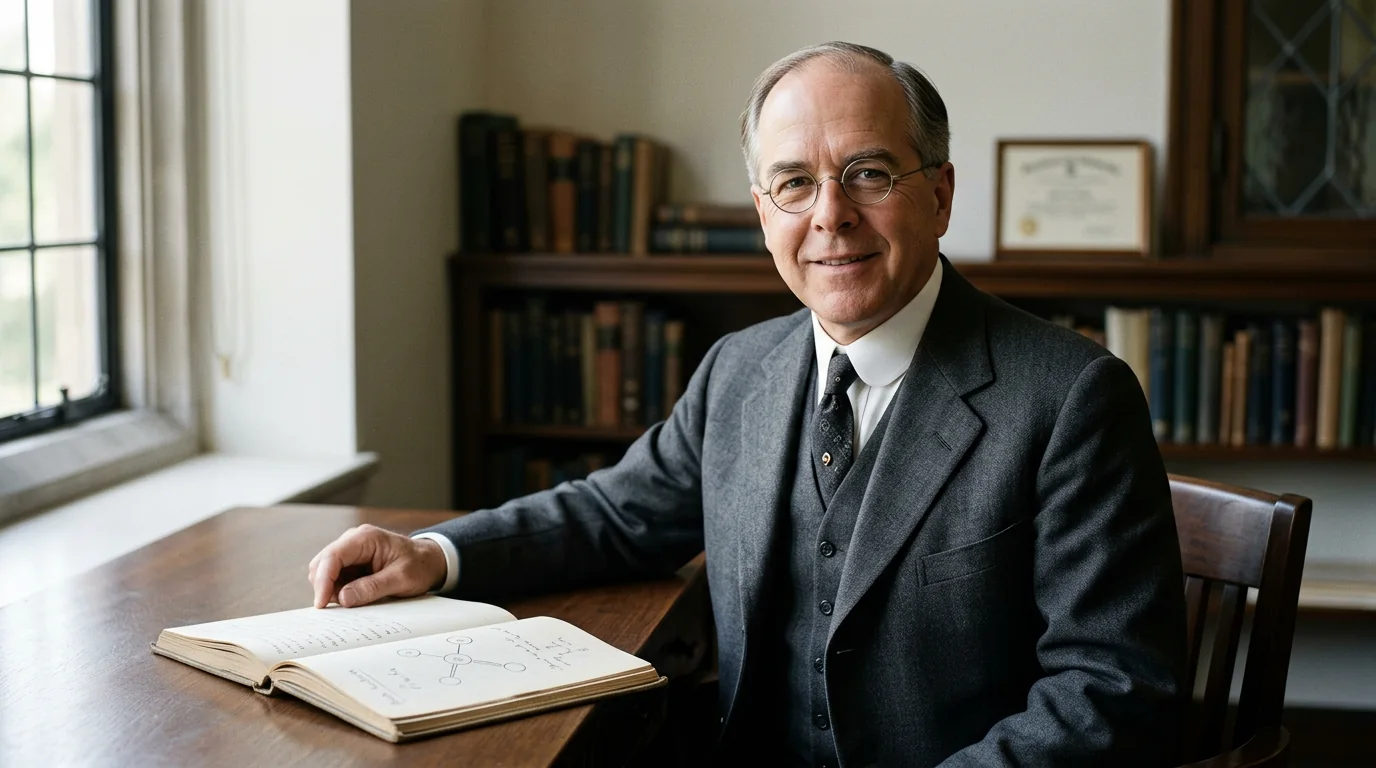
Gilbert Newton Lewis
1875–1946 · Chemical bonding, thermodynamics and acids and bases
Gilbert N. Lewis developed the electron-pair model of covalent bonding and Lewis structures, transforming how chemists explain atoms sharing electrons.
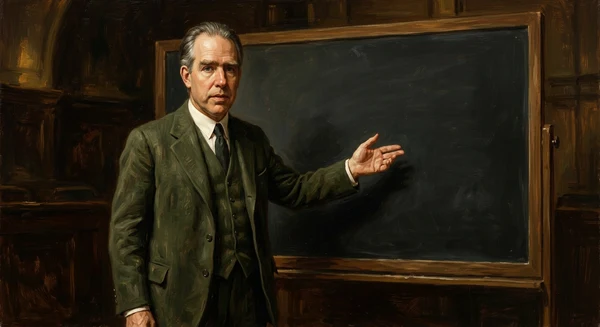
Niels Bohr
1885–1962 · Physicist
Developed the Bohr model of the atom and made foundational contributions to quantum mechanics.
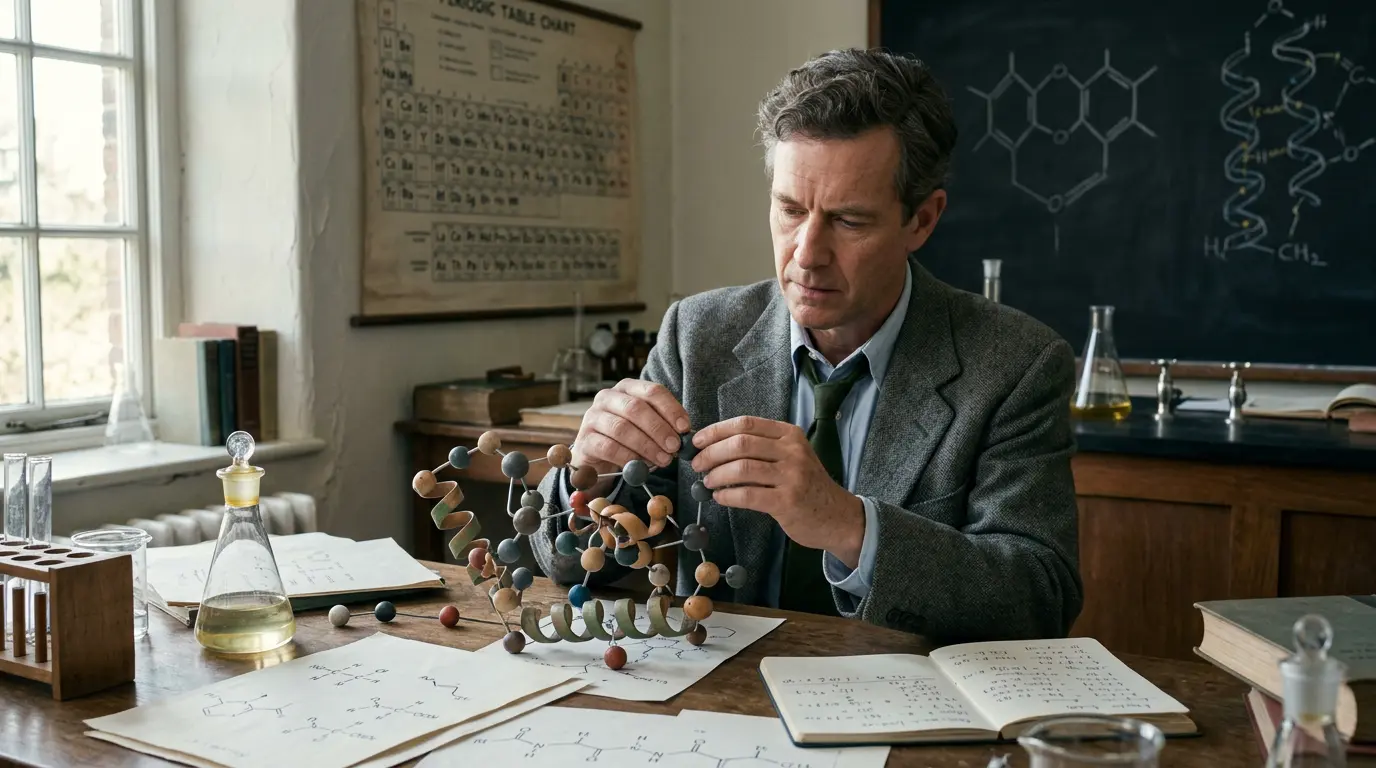
Linus Pauling
1901–1994 · Chemist
Transforming understanding of chemical bonding and molecular structure, major work on protein structure, and winning both the 1954 Nobel Prize in Chemistry and the 1962 Nobel Peace Prize.