_(2).jpg)
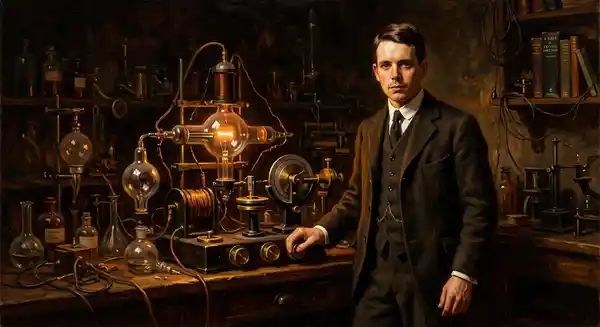
Henry Moseley
1887–1915 · Physicist
Henry Moseley was a British physicist whose X-ray spectroscopy work showed that atomic number, not atomic weight, is the true basis for ordering the elements. He was killed at Gallipoli in 1915, aged 27.
“If I have been able to see further, it was because I stood on the shoulders of giants.”
Why is this scientist famous?
Establishing atomic number as the fundamental basis for ordering the chemical elements through X-ray spectroscopy in 1913–1914.
Henry's story
A Brilliant Young Physicist
Henry Gwyn Jeffreys Moseley was born on 23 November 1887 in Weymouth, England. He came from a scientific family — his father was a biologist and his grandfather a mathematician. He attended Eton College and then studied natural sciences at Trinity College, Oxford, specialising in physics.
In 1910, Moseley joined Ernest Rutherford's laboratory at the University of Manchester. Rutherford was already one of the leading researchers in radioactivity and atomic physics, and Moseley soon began developing his own experimental work.
X-Rays and Atomic Number
Moseley's breakthrough came in 1913 and 1914. He used X-ray spectroscopy to study the characteristic X-rays emitted by different elements when bombarded with electrons. By measuring the frequencies of these X-rays, he discovered a remarkably simple mathematical relationship: the square root of the X-ray frequency was proportional to an integer that corresponded to the element's position in the periodic table.
This integer is what we now call the atomic number. Moseley realised that atomic number was not just an arbitrary label — it corresponded to the positive charge on the nucleus, the quantity that physically determines an element's identity.
Before Moseley, the periodic table was ordered by atomic weight, which sometimes produced anomalies. Moseley's work showed that atomic number was the correct ordering principle. He also identified gaps in the sequence of atomic numbers, pointing to elements that had not yet been discovered.
Death at Gallipoli
When the First World War broke out in 1914, Moseley volunteered for military service. He was posted to Gallipoli as a signals officer in the Royal Engineers.
On 10 August 1915, during the Battle of Sari Bair, Moseley was killed in a Turkish counter-attack near Chunuk Bair. He was 27 years old. His death was widely regarded as a devastating loss to science. Rutherford and others argued that promising scientists should not be sent to the front lines, and Moseley's death became a powerful example of the cost of war to scientific progress.
Legacy
Moseley's work fundamentally changed the periodic table. By establishing atomic number as the correct ordering principle, he resolved longstanding anomalies and gave the periodic table a physical foundation.
His identification of gaps in the atomic number sequence guided chemists to the remaining undiscovered elements. The law he discovered — now called Moseley's law — remains a cornerstone of X-ray spectroscopy.
In a career that lasted only a few years, Moseley achieved what many scientists do not accomplish in a lifetime. His death at Gallipoli is often cited as one of the greatest individual losses to science in the First World War.
What did they discover?
Moseley's Law
Moseley discovered that the square root of the frequency of characteristic X-rays emitted by an element is proportional to its atomic number, establishing atomic number as the physical basis for ordering the elements.
Atomic Number as the Basis of the Periodic Table
His work showed that the periodic table should be ordered by atomic number rather than atomic weight, resolving anomalies that had puzzled chemists for decades.
Identifying Gaps in the Periodic Table
By measuring the X-ray spectra of known elements, Moseley identified missing atomic numbers, guiding chemists to elements that had not yet been discovered.
Amazing facts
Moseley's father, Henry Nottidge Moseley, was a biologist who sailed on the Challenger expedition.
He worked in Ernest Rutherford's laboratory at Manchester, one of the most important centres of atomic physics in the world.
Moseley's law relates X-ray frequency to atomic number with a simple and elegant mathematical formula.
He was 27 years old when he was killed at Gallipoli in 1915.
After his death, the British government changed its policy to prevent promising scientists from being sent to the front lines.
Moseley’s scientific research career lasted only about 40 months before his death at the age of 27.
Timeline
Born in Weymouth, England.
Joined Ernest Rutherford's laboratory at the University of Manchester.
Began X-ray spectroscopy experiments that established atomic number.
Published his findings on the relationship between X-ray frequency and atomic number.
Killed at the Battle of Sari Bair, Gallipoli, aged 27.
Related Super Scientists
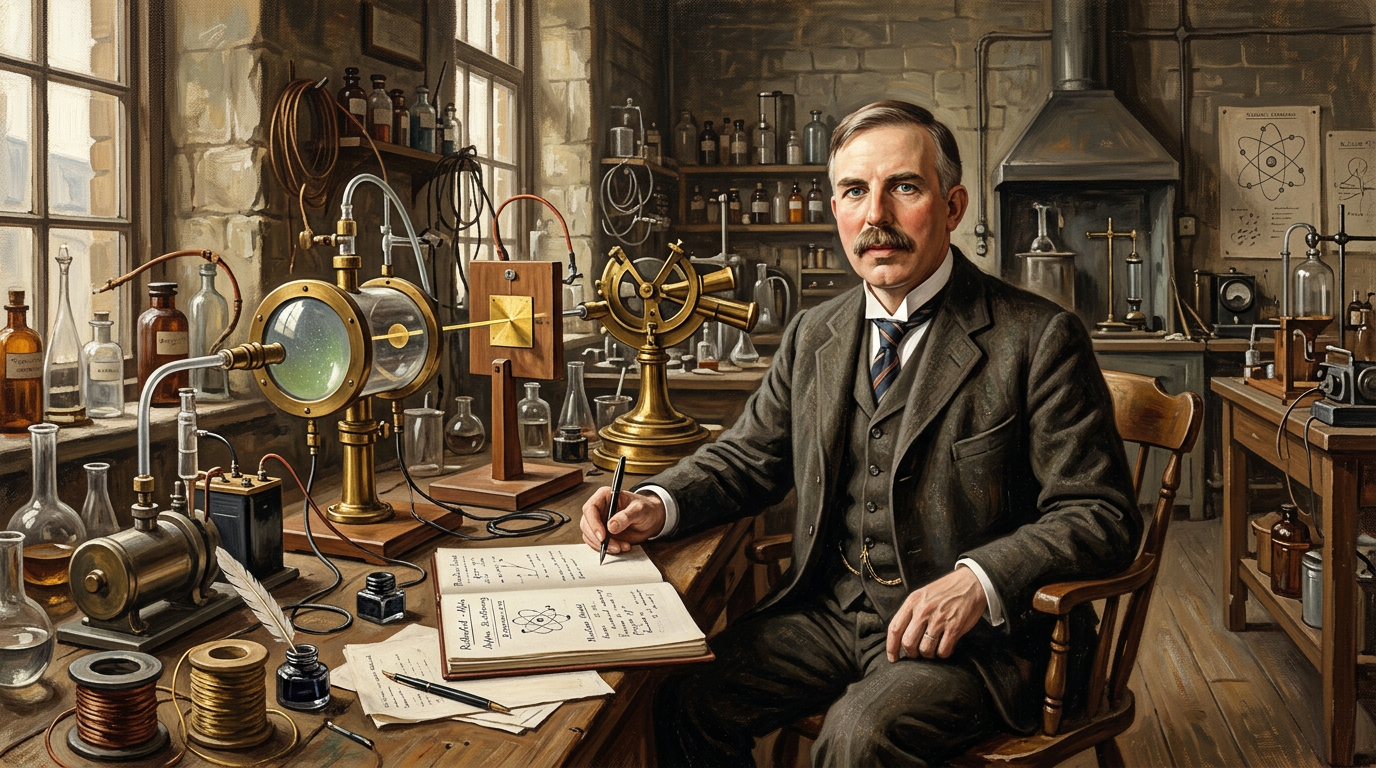
Ernest Rutherford
1871–1937 · Physicist
Discovering the nuclear structure of the atom and pioneering the field of nuclear physics.
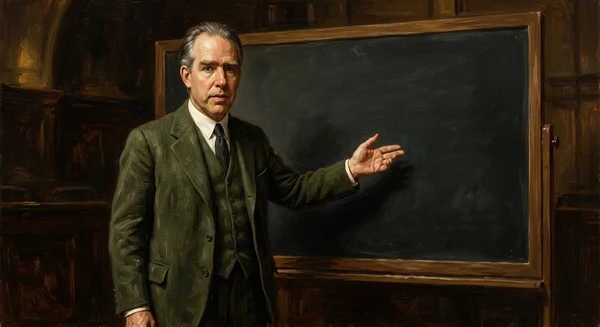
Niels Bohr
1885–1962 · Physicist
Developed the Bohr model of the atom and made foundational contributions to quantum mechanics.
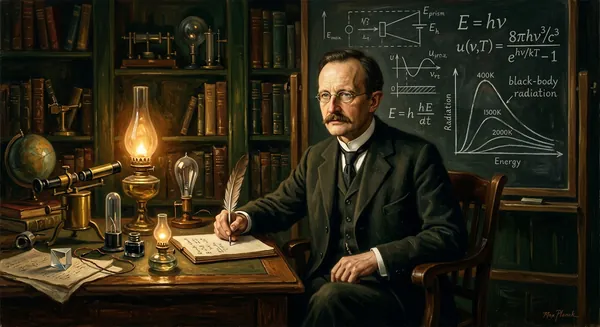
Max Planck
1858–1947 · Theoretical Physicist
Introducing the quantum of action while deriving his black-body radiation law, helping launch quantum theory.