_(2).jpg)
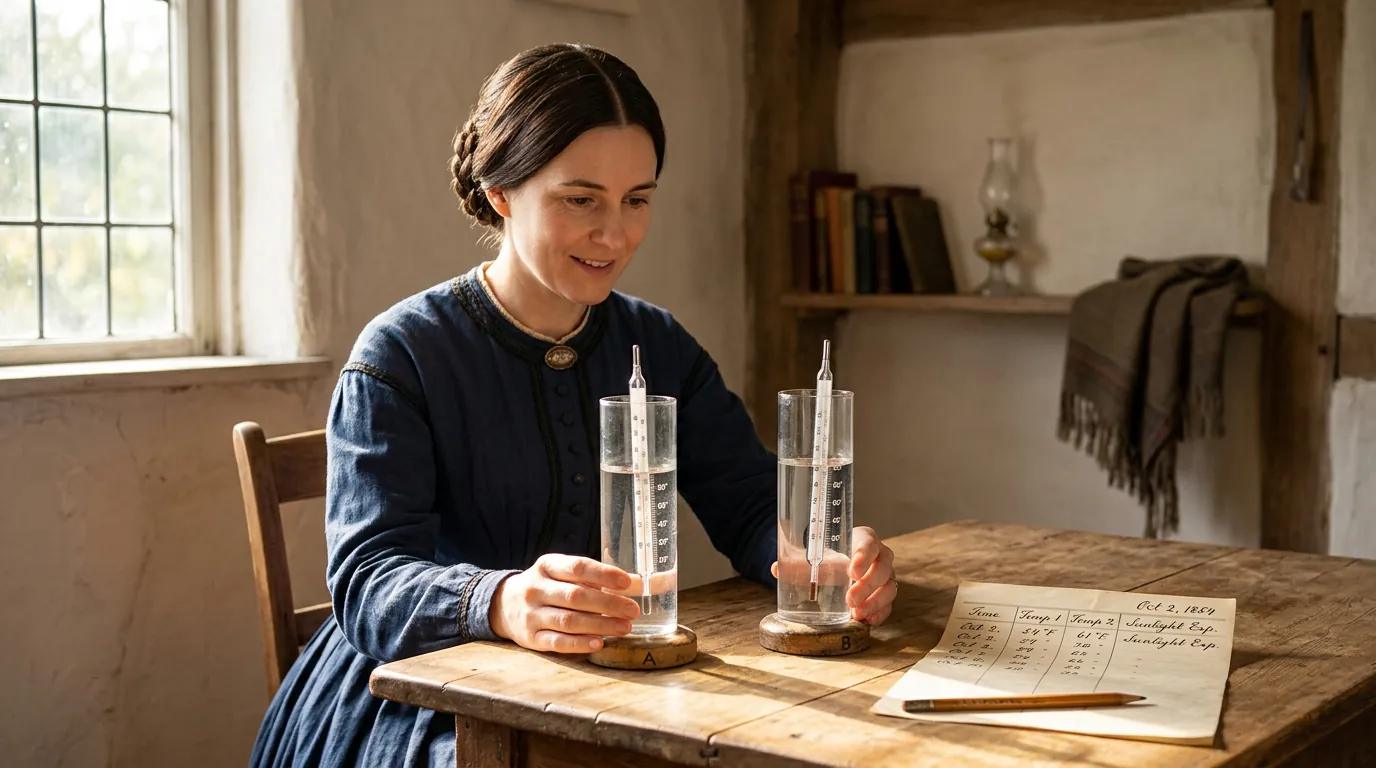
Eunice Newton Foote
1819–1888 · Early climate experiments and women’s rights
Eunice Newton Foote showed that carbon dioxide warmed strongly in sunlight and suggested changes in the gas could affect Earth’s climate.
“An atmosphere of that gas would give to our earth a high temperature”
Why is this scientist famous?
Eunice Newton Foote tested how gases warm in sunlight in 1856 and recognised that increased carbon dioxide might affect Earth’s climate, decades before her contribution became widely known.
Her overlooked experiment is an early chapter in climate science and shows why the contributions of women researchers must be recognised accurately.
Eunice's story
Questions beside a sunny window
Eunice Newton Foote was born in Connecticut on 17 July 1819. She became interested in scientific questions at a time when women had limited opportunities to join recognised research institutions. Working with accessible equipment, she investigated why different kinds of air warmed differently in sunshine. She was also active in the movement for women’s rights, showing that her curiosity about nature belonged to a wider belief that women should have opportunities to learn and participate.
Glass cylinders and a revealing test
In 1856 Foote placed thermometers inside glass cylinders containing different gases or air with different moisture levels. She exposed them to sunlight and compared their temperatures. The cylinder containing carbon dioxide warmed markedly and remained warm for longer. The investigation used incoming sunlight and the cylinders’ whole heating behaviour, not the controlled infrared-absorption method John Tyndall would later develop. The distinction matters because their experiments asked related questions using different methods.
Could changing air change climate?
Foote wrote that an atmosphere containing more carbon dioxide would have a higher temperature. Her paper, Circumstances Affecting the Heat of the Sun’s Rays, appeared in 1856. Because she was not given the same scientific platform as many men, Joseph Henry presented her results at a scientific meeting. She had identified an important possible link between atmospheric composition and warming, but this did not amount to a complete modern explanation of the greenhouse effect.
Science and the right to be heard
Eight years earlier, in 1848, Foote had signed the Declaration of Sentiments at Seneca Falls, which called for greater rights for women. She also helped with work to record that convention’s proceedings. Much of her scientific contribution received little attention in later histories. Modern historians, physical scientists and climate communicators have worked to restore her place alongside other early investigators of atmospheric heat.
An early climate-science voice
Foote died in 1888. Her work can be taught accurately beside John Tyndall’s later experiments on the absorption of radiant heat by gases. Neither scientist invented the greenhouse effect on their own, and their work was not interchangeable. Foote’s achievement was to notice, test and publish a connection between gas composition and solar warming. Her story shows that important scientific insight can come from a simple question and a carefully recorded experiment.
What did they discover?
Carbon dioxide and solar warming
Found strong warming in a sunlit cylinder containing carbon dioxide.
Climate hypothesis
Proposed that more carbon dioxide in the atmosphere could raise temperature.
Moisture comparisons
Compared how moist and dry air behaved in sunlight.
Independent experimental observation
Published an early result that was historically distinct from later infrared-absorption measurements.
Amazing facts
She used glass cylinders with thermometers to compare gases in sunshine.
Her carbon-dioxide-filled cylinder warmed strongly and retained heat.
Her 1856 paper was called Circumstances Affecting the Heat of the Sun’s Rays.
Joseph Henry presented her findings at a scientific meeting rather than Foote delivering them herself.
She also compared the warming of moist air and dry air.
She signed the 1848 Declaration of Sentiments at Seneca Falls.
She helped prepare the published proceedings of the women’s rights convention.
Her work was widely overlooked for generations before historians and scientists brought it renewed attention.
Timeline
Born in Connecticut, United States.
Signed the Declaration of Sentiments at the Seneca Falls convention.
Published experiments comparing how gases warm in sunlight.
Her findings were presented at a scientific meeting by Joseph Henry.
Died in the United States; exact day is not included here because published accounts disagree.
Related Super Scientists
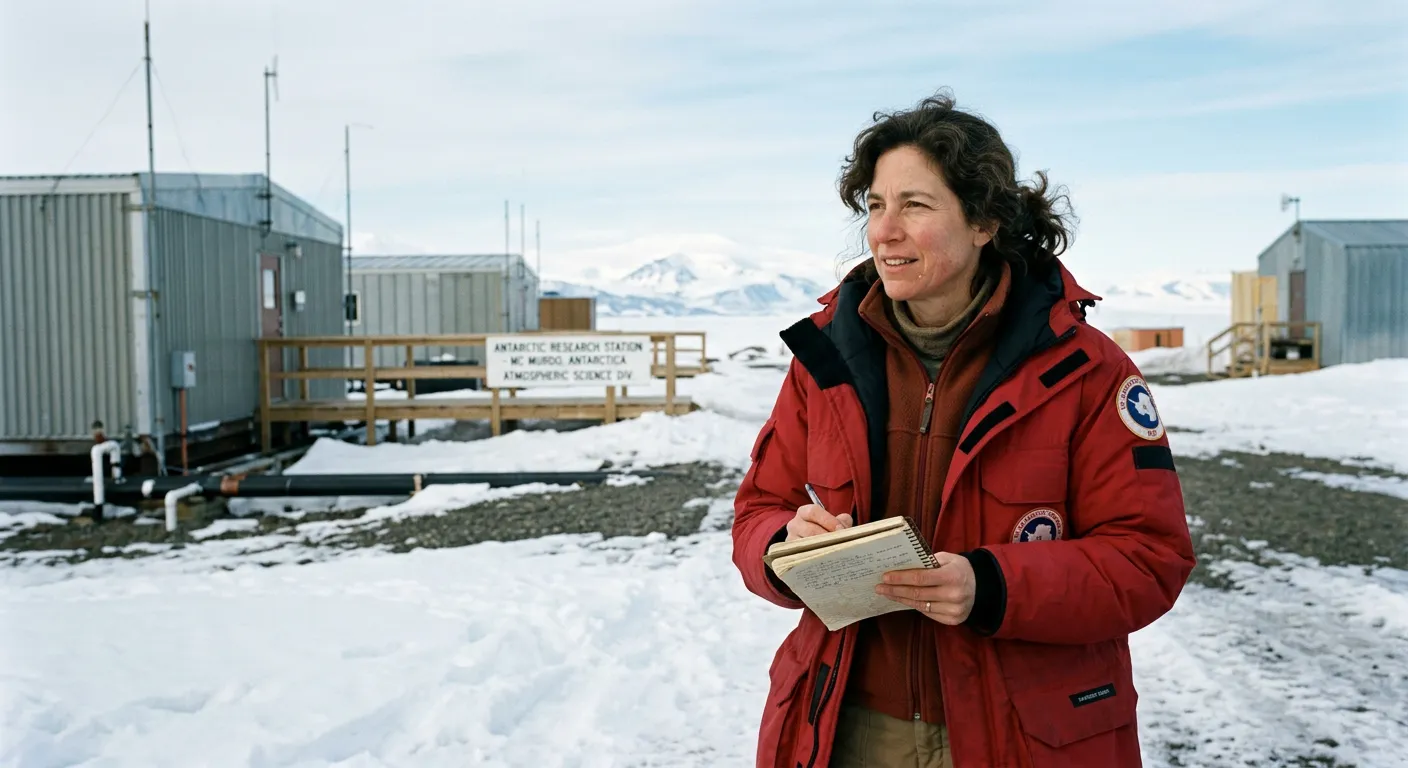
Susan Solomon
1956–present · Atmospheric chemistry and Earth science
Solomon led Antarctic research expeditions that explained why ozone depletion was especially severe there, connecting laboratory chemistry with a global environmental problem.
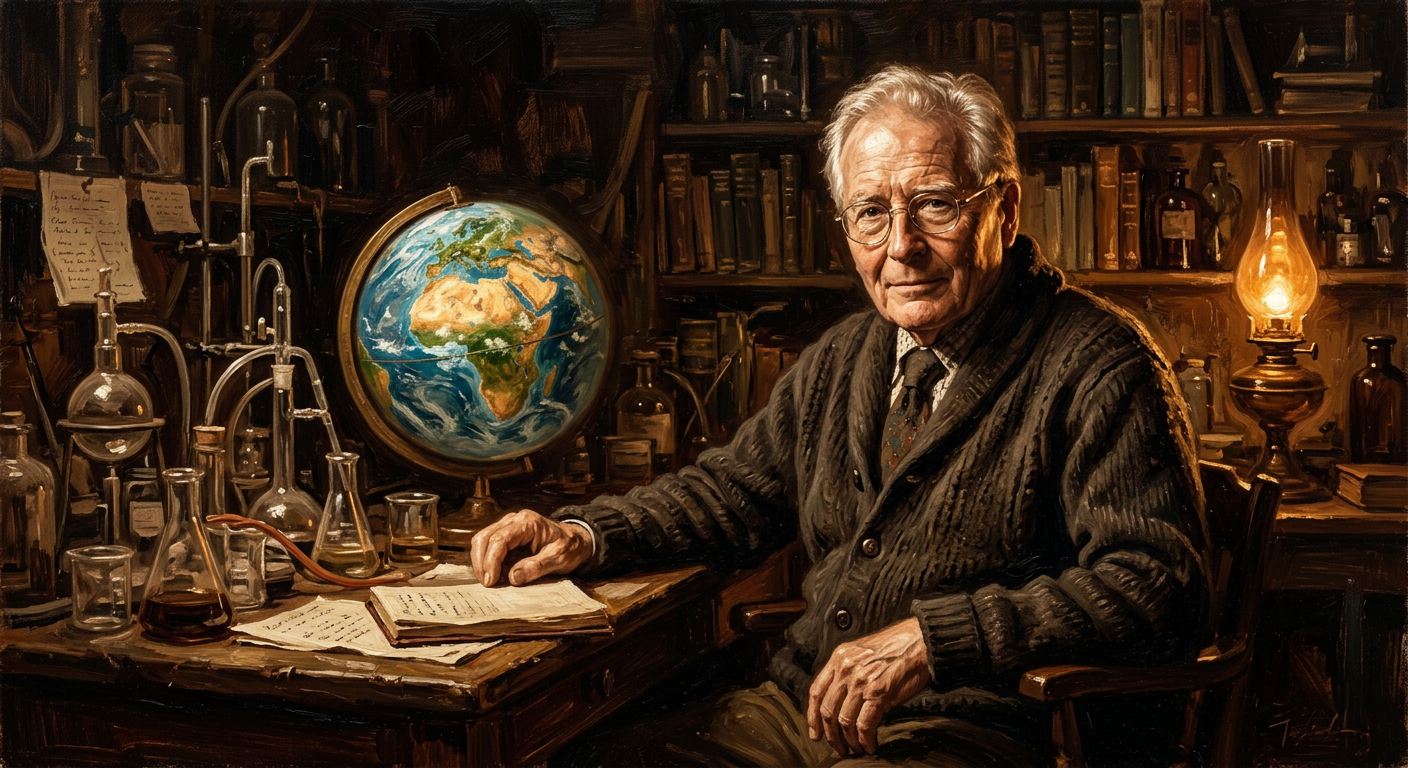
James Lovelock
1919–2022 · Independent Scientist and Environmentalist
Inventing the electron capture detector and developing the Gaia hypothesis, an influential idea about interactions between life and Earth's atmosphere, oceans and rocks.
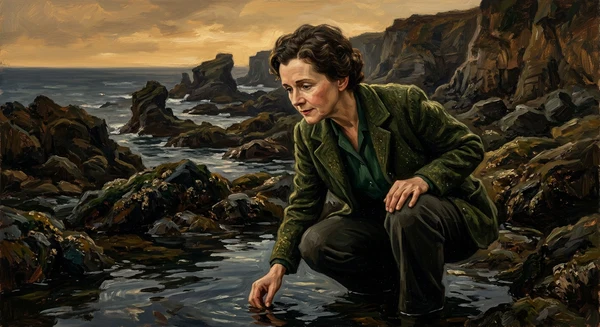
Rachel Carson
1907–1964 · Marine Biologist & Conservationist
Wrote Silent Spring, helping transform public understanding of pesticides and inspiring the modern environmental movement.