_(2).jpg)
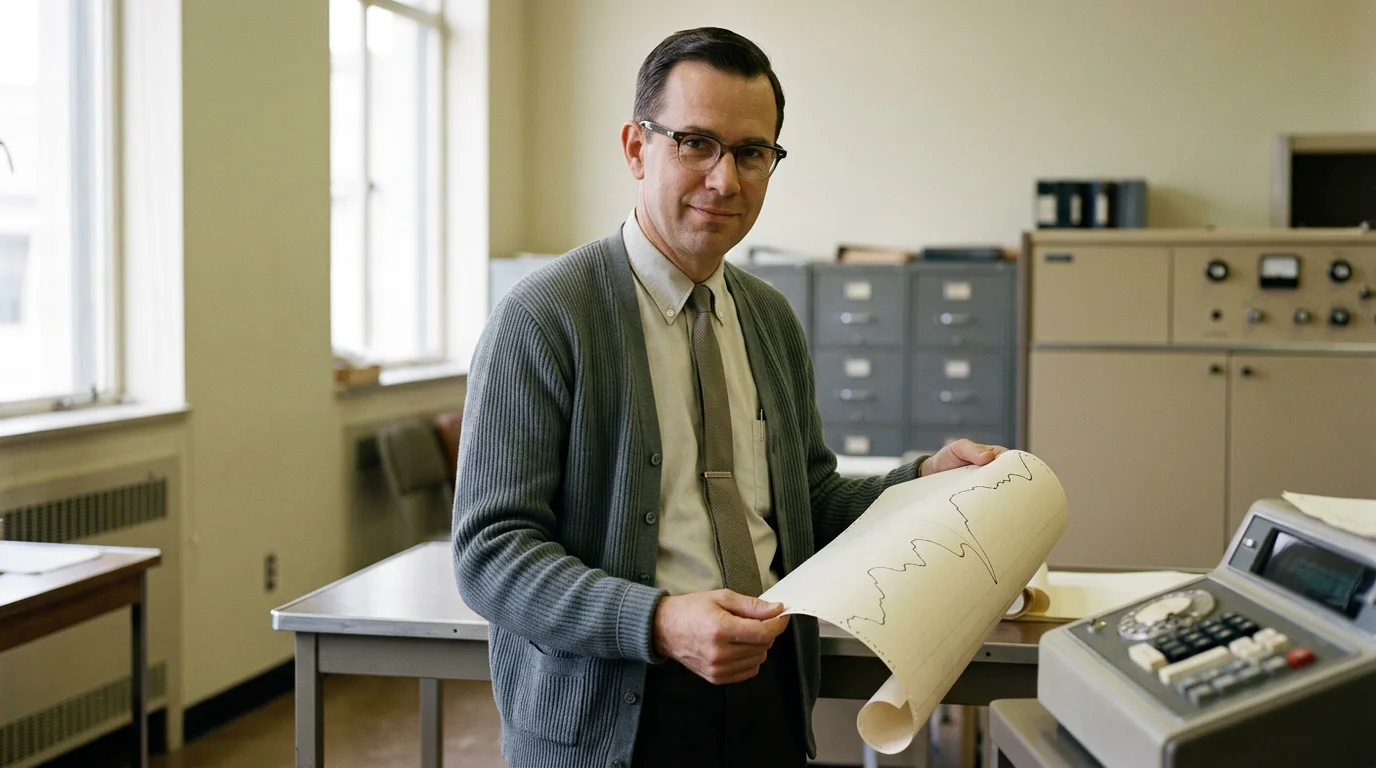
Edward Lorenz
1917–2008 · Meteorology, chaos theory and mathematics
Edward Lorenz showed why tiny differences in starting conditions can make weather forecasts diverge, helping establish modern chaos theory.
Why is this scientist famous?
Edward Lorenz discovered sensitive dependence on initial conditions in simplified weather models, revealing fundamental limits to long-range prediction.
Weather and climate researchers use computer models, ensembles and uncertainty estimates partly because tiny starting differences can grow rapidly.
Edward's story
The mathematician who watched weather
Edward Norton Lorenz was born in West Hartford, Connecticut, on 23 May 1917. He studied mathematics at Dartmouth College and Harvard University before training in meteorology during the Second World War. He later earned a doctorate from the Massachusetts Institute of Technology (MIT) in 1948 and continued his career there. Lorenz wanted to understand the movement of air around our planet and why predictions so often become unreliable when they extend far into the future.
A computer gives a surprise
In the early 1960s Lorenz ran simplified weather calculations on a computer. When he restarted a calculation using rounded values from an earlier printed result, the new forecast eventually diverged markedly from the old one. This showed that very small differences in starting measurements can grow as the equations evolve. It was not proof that weather is random or that the computer was broken. The important point was that fully specified rules can still produce behaviour that is exceptionally hard to predict far ahead.
Three equations and a new field
Lorenz published Deterministic Nonperiodic Flow in 1963, using a simple mathematical model to explore irregular flow. A deterministic system follows definite rules, but it need not repeat and it can be highly sensitive to its starting state. His equations became a classic example of chaos: complex patterns arising without random instructions. Real weather is much more elaborate than his model, but the example helped scientists rethink the limits of forecasting.
What does a butterfly have to do with it?
Lorenz’s 1972 talk used a question about a butterfly flapping its wings and a tornado as a vivid way to discuss sensitivity. He did not claim that one specific butterfly causes a particular tornado. The phrase butterfly effect became a popular shorthand for a scientific idea about initial conditions, error growth and predictability. Even very good observations cannot measure every point in an atmosphere with perfect accuracy, which places a practical limit on some predictions.
The science of uncertainty
Lorenz received major scientific honours and taught at MIT for decades. He received the American Meteorological Society’s Carl-Gustaf Rossby Research Medal in 1969 and was elected to the US National Academy of Sciences in 1975. He died in Cambridge, Massachusetts, on 16 April 2008. His work changed fields well beyond meteorology, from physics and mathematics to ecology, by showing why understanding the rules of a system does not always mean predicting every future detail.
What did they discover?
Sensitive dependence
Showed how very small differences in the initial state can lead to widely different outcomes.
Deterministic chaos
Established an influential simple model of complex, irregular behaviour governed by equations.
Weather predictability
Clarified a fundamental limit of how accurately future weather can be predicted.
Butterfly effect
Popularised a memorable metaphor for error growth in complex dynamic systems.
Amazing facts
Lorenz was born in Connecticut in 1917.
He studied mathematics before pursuing meteorology.
He earned a meteorology doctorate from MIT in 1948.
A restarted computer calculation alerted him to the importance of rounded starting values.
His famous paper Deterministic Nonperiodic Flow appeared in 1963.
His 1972 lecture helped popularise the phrase butterfly effect.
He received the Carl-Gustaf Rossby Research Medal in 1969.
He was elected to the US National Academy of Sciences in 1975.
Timeline
Born in West Hartford, Connecticut.
Completed a doctorate in meteorology at MIT.
Published Deterministic Nonperiodic Flow.
Received the Carl-Gustaf Rossby Research Medal.
Delivered the famous butterfly-effect lecture.
Elected to the US National Academy of Sciences.
Shared the Crafoord Prize with Henry Stommel.
Died in Cambridge, Massachusetts.
Awards & honours
Related Super Scientists
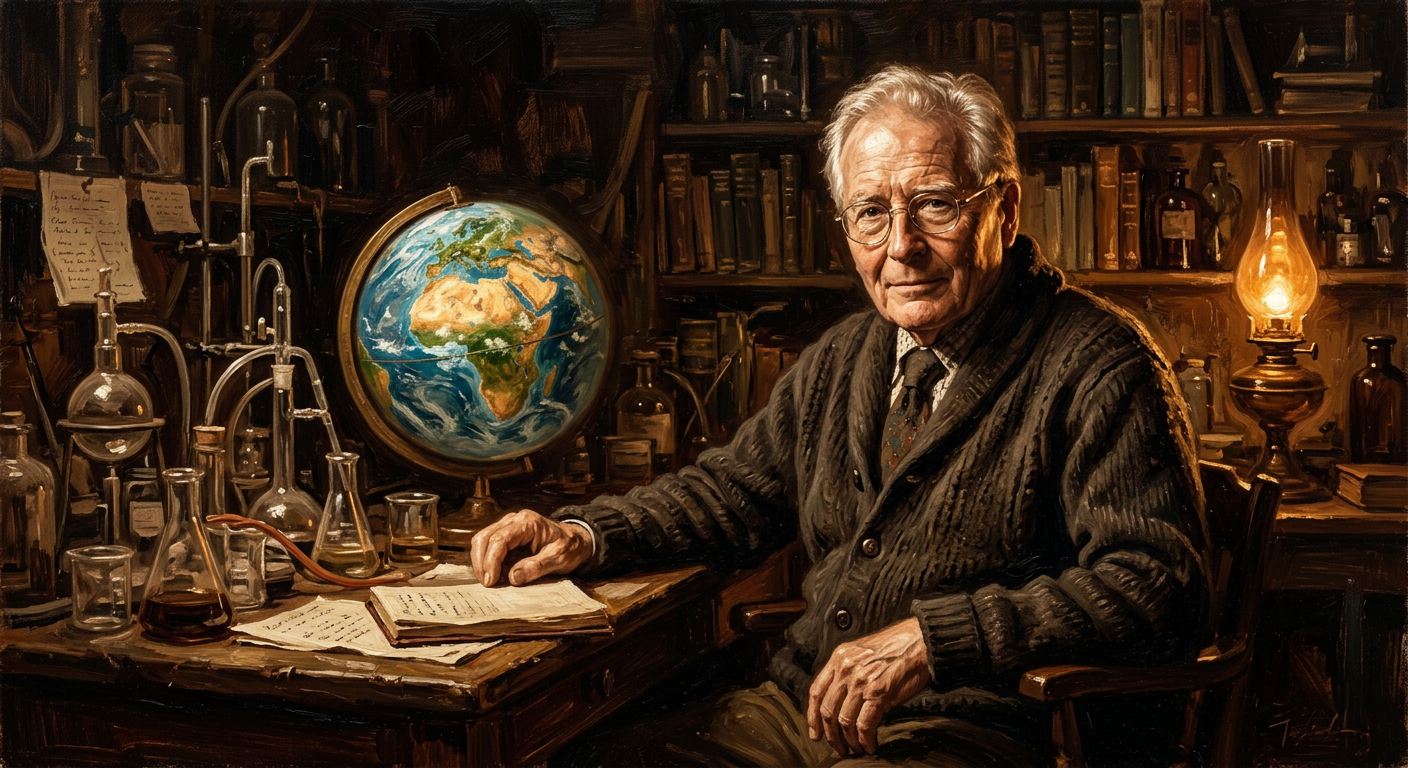
James Lovelock
1919–2022 · Independent Scientist and Environmentalist
Inventing the electron capture detector and developing the Gaia hypothesis, an influential idea about interactions between life and Earth's atmosphere, oceans and rocks.
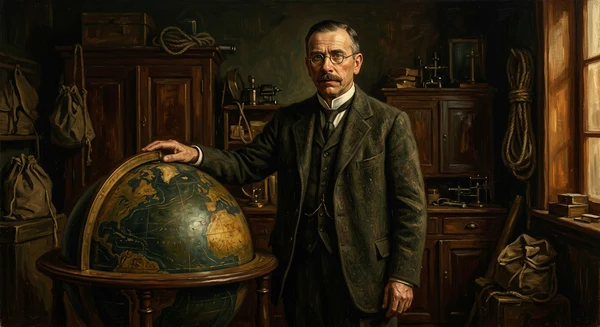
Alfred Wegener
1880–1930 · Meteorologist & Geophysicist
Proposed the theory of continental drift, the foundation of modern plate tectonics.
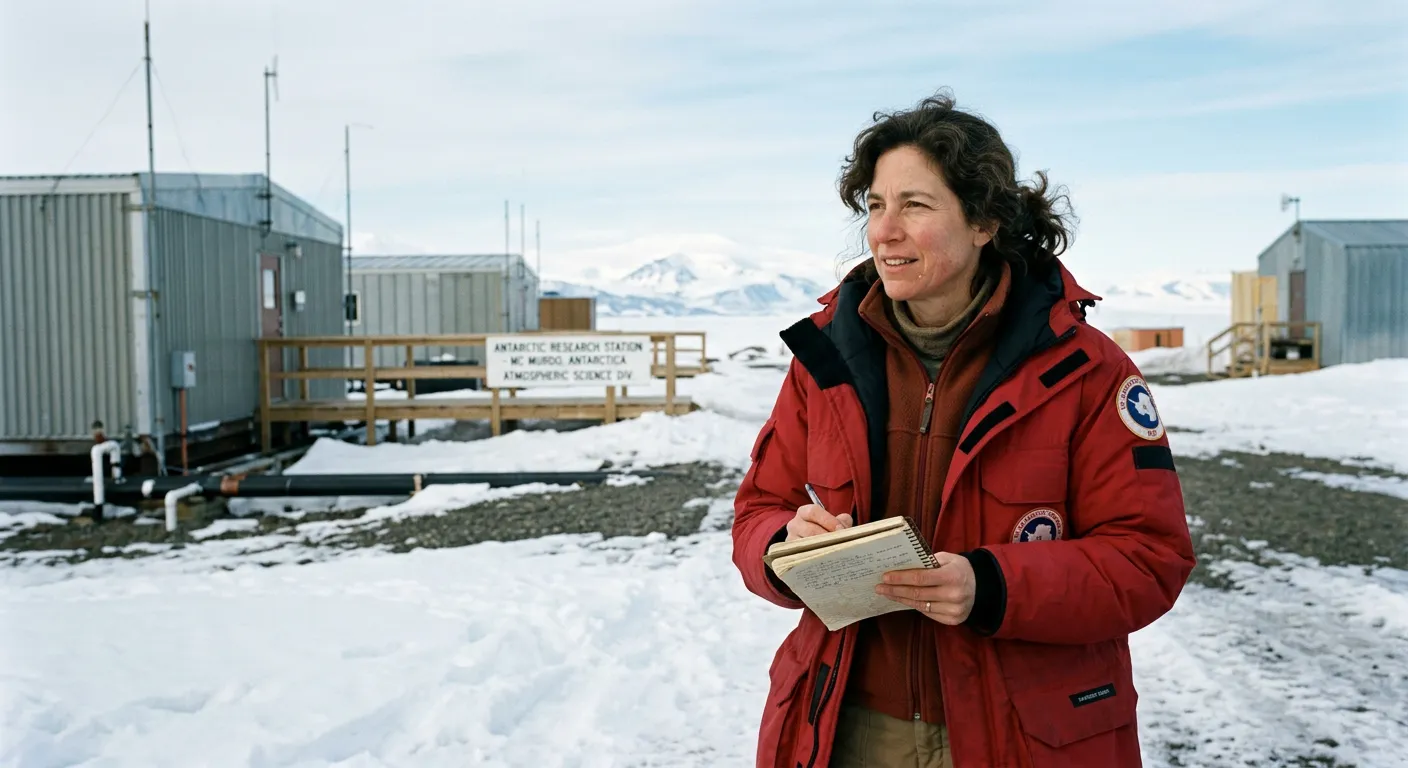
Susan Solomon
1956–present · Atmospheric chemistry and Earth science
Solomon led Antarctic research expeditions that explained why ozone depletion was especially severe there, connecting laboratory chemistry with a global environmental problem.