_(2).jpg)
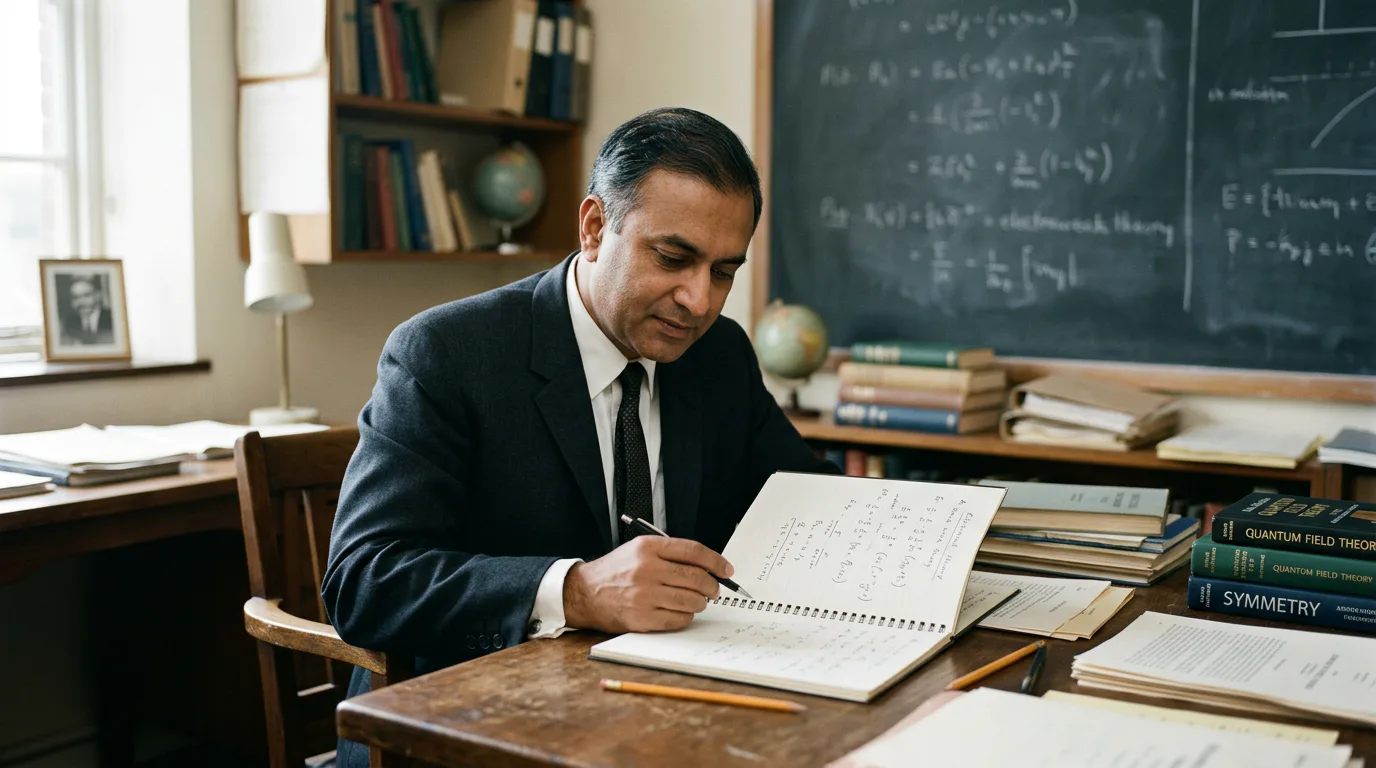
Abdus Salam
1926–1996 · Theoretical and particle physics
Pakistani physicist Abdus Salam helped build electroweak theory, unifying two fundamental forces, and founded a major centre for global physics research.
“Scientific thought is the common heritage of mankind”
Why is this scientist famous?
Helped develop electroweak theory, unifying the electromagnetic and weak nuclear interactions within one theoretical framework.
Electroweak theory is a central part of the Standard Model of particle physics, while the research centre Salam founded continues to connect scientists across the world.
Abdus's story
A remarkable student from Jhang
Abdus Salam was born in Jhang, in what was then British India and is now Pakistan, on 29 January 1926. He excelled at school and won a scholarship to Government College in Lahore, completing a master’s degree in 1946. That year he received another scholarship to St John’s College, Cambridge. He earned a double first in mathematics and physics in 1949, won Cambridge’s Smith’s Prize in 1950 and completed his doctorate in theoretical physics in 1951.
Building a home for theoretical physics
Salam returned to Pakistan in 1951 to teach, but found it difficult to maintain an active research programme there. He moved back to Cambridge in 1954 and later joined Imperial College London, where he became professor of theoretical physics. With colleagues including Paul Matthews, he helped build Imperial’s theoretical physics group into an important centre for quantum field theory and particle physics. He was elected a Fellow of the Royal Society in 1959.
Uniting two forces
Physicists knew electromagnetism and the weak nuclear interaction as apparently different forces. Salam’s work on symmetry and gauge theory helped show how they could be described within one electroweak framework. With John Ward he identified an important SU(2) × U(1) symmetry structure, and in 1967 Salam incorporated the Higgs mechanism into a complete electroweak theory. Comparable work was developed independently by Steven Weinberg, building on related work by Sheldon Glashow. Salam, Weinberg and Glashow shared the 1979 Nobel Prize in Physics for contributions to the unified theory, including the prediction of weak neutral currents.
Science across borders
Salam believed talented scientists should not have to leave poorer countries permanently in order to participate in world-class research. In 1964 he established the International Centre for Theoretical Physics in Trieste, Italy, working with partners including Paolo Budinich and international organisations. The centre enabled scientists from developing countries to spend time in a strong research environment while maintaining careers at home. Salam directed it for decades, received major honours including the Royal Medal and Copley Medal, and died in Oxford on 21 November 1996.
What did they discover?
Electroweak unification
Salam helped construct the theory showing that electromagnetism and the weak nuclear interaction are different manifestations of a single electroweak interaction.
Weak neutral-current prediction
The electroweak framework included neutral weak interactions, an important prediction that was later confirmed experimentally.
International Centre for Theoretical Physics
Salam founded the ICTP in 1964 to support high-level research and international scientific exchange, particularly for scientists from developing countries.
Amazing facts
At fourteen he achieved exceptionally high marks in the University of the Punjab matriculation examination and was welcomed home by people from his town.
He won a scholarship to St John’s College, Cambridge, in 1946.
Cambridge awarded him the Smith’s Prize in 1950 for outstanding pre-doctoral work in physics.
His doctoral research in quantum electrodynamics had already attracted international attention by the early 1950s.
He helped build Imperial College London’s theoretical physics group into a major centre for particle physics.
He founded the International Centre for Theoretical Physics in Trieste in 1964 to reduce the isolation of scientists in developing countries.
He shared the 1979 Nobel Prize in Physics with Sheldon Glashow and Steven Weinberg.
He directed prize money and other resources toward supporting physicists from developing countries rather than treating scientific recognition only as a personal reward.
Timeline
Born in Jhang, in what is now Pakistan.
Completes a master’s degree in Lahore and wins a scholarship to St John’s College, Cambridge.
Graduates from Cambridge with a double first in mathematics and physics.
Receives Cambridge’s Smith’s Prize.
Completes his doctorate in theoretical physics at Cambridge and returns to Pakistan to teach.
Becomes professor of theoretical physics at Imperial College London.
Is elected a Fellow of the Royal Society.
Establishes the International Centre for Theoretical Physics in Trieste.
Presents a complete electroweak theory incorporating the Higgs mechanism.
Shares the Nobel Prize in Physics with Sheldon Glashow and Steven Weinberg.
Receives the Royal Society’s Copley Medal.
Dies in Oxford, United Kingdom.
Awards & honours
Related Super Scientists
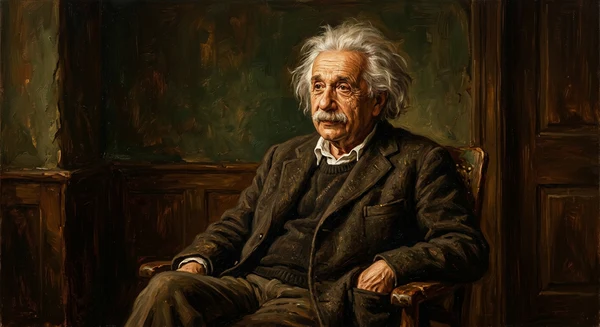
Albert Einstein
1879–1955 · Theoretical Physicist
Developing the theory of relativity and the equation E=mc².
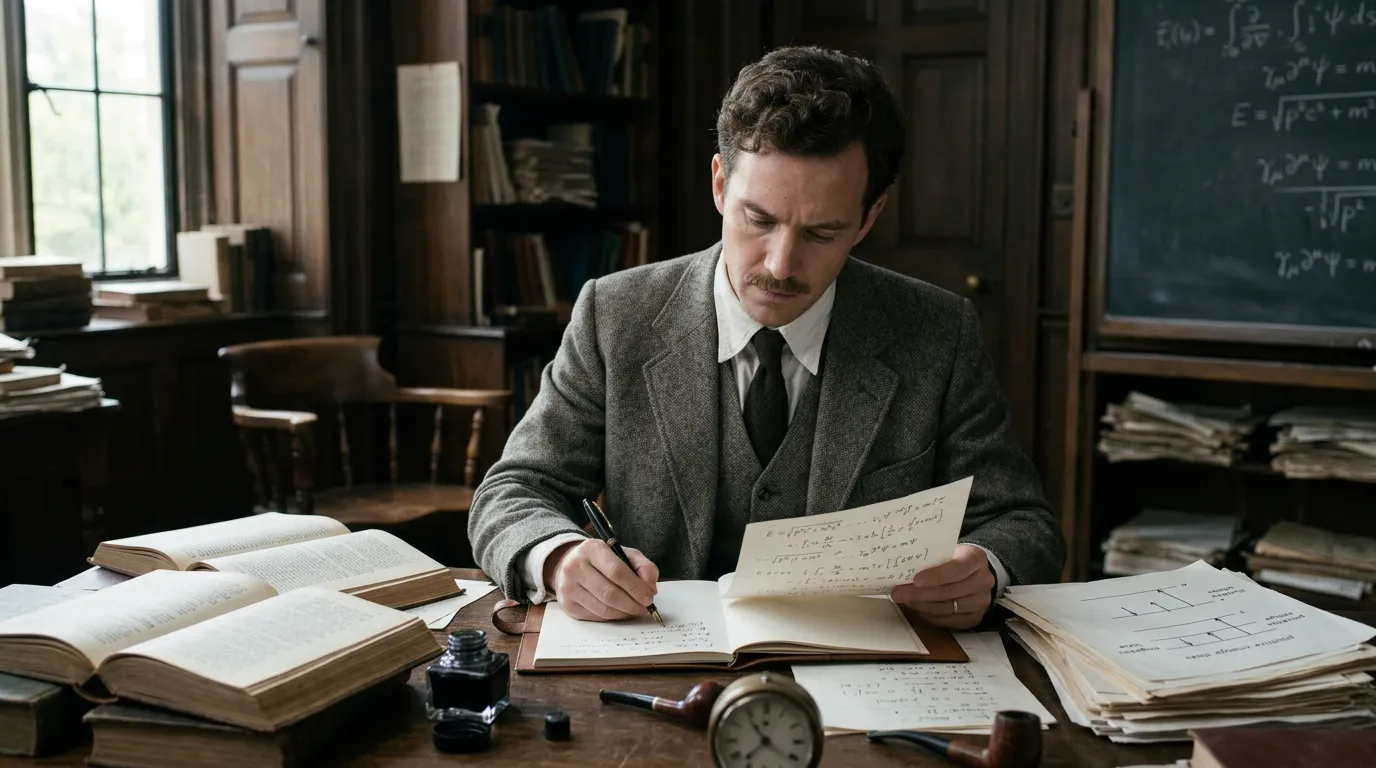
Paul Dirac
1902–1984 · Theoretical Physicist
Developing the Dirac equation, one of the foundational equations of relativistic quantum mechanics, and producing theory that implied the existence of antimatter. He shared the 1933 Nobel Prize in Physics with Erwin Schrödinger.