_(2).jpg)
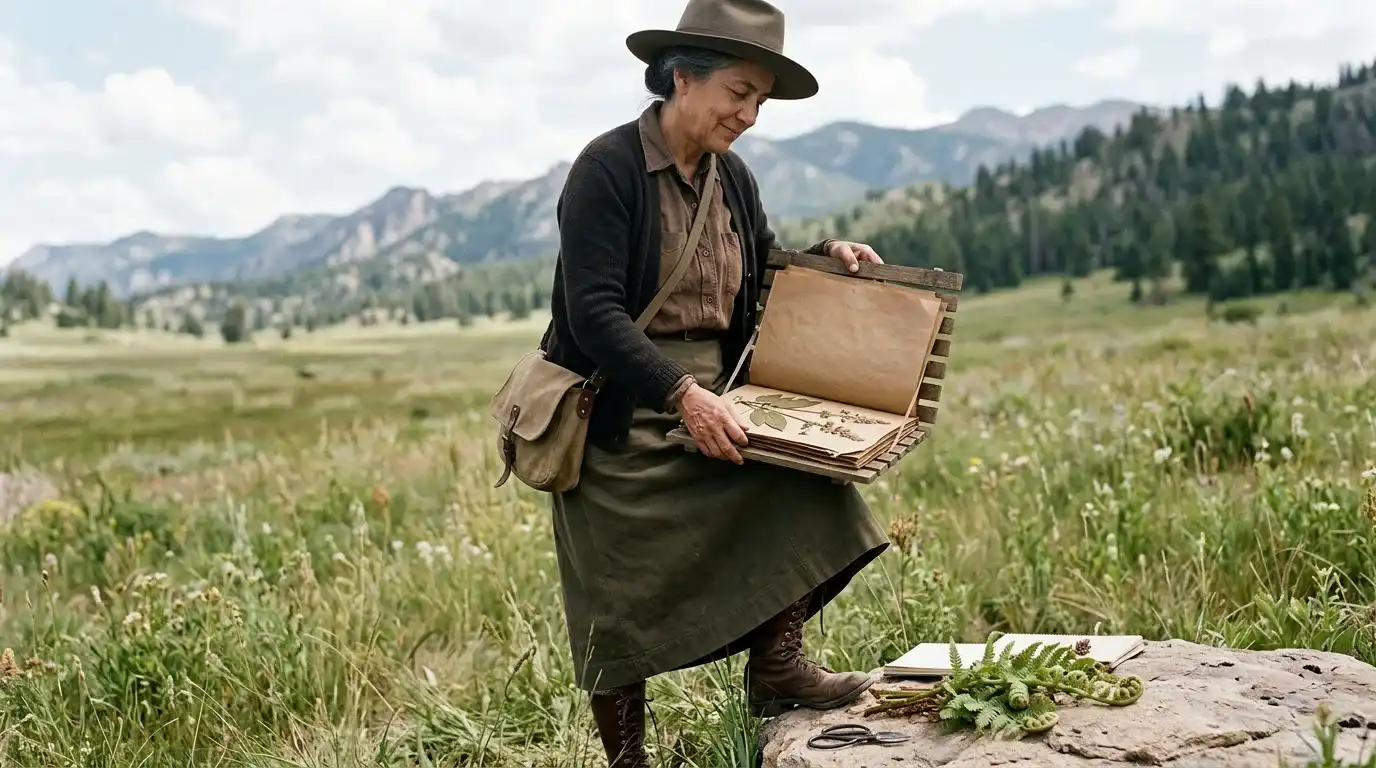
Ynes Mexía
1870–1938 · Botany, plant collecting and conservation
Ynes Mexía began botany in her fifties and collected more than 145,000 plant specimens across the Americas, helping scientists document plant diversity.
“I don't think there's any place in the world where a woman can't venture alone.”
Why is this scientist famous?
Ynes Mexía began serious botanical work in her fifties and collected vast numbers of plant specimens, expanding the record of plants across the Americas.
Her carefully labelled plant collections remain useful for identifying species, comparing habitats and studying environmental change.
Ynes's story
Discovering a new path after fifty
Ynes Mexía was born in Washington, DC, on 24 May 1870, and spent much of her early life in Mexico. She worked in social and community activities before moving to San Francisco in 1908. There she became involved with conservation organisations and outings that introduced her to the variety of plants around her. In 1921, at the age of fifty-one, she began studying botany at the University of California, Berkeley, as a special student. She did not earn a university degree, but she had found the work that would define the next part of her life.
A collector learns the craft
Mexía joined university field activities and travelled to Mexico to learn botanical collecting methods. In 1925 she began a major collecting expedition in Mexico, eventually continuing more independently. She searched for plants, noted where they grew, and pressed specimens so scientists could study them later. Properly prepared herbarium sheets can preserve a plant's structure together with details of its collection place and date. Because botanists across the world needed specimens for comparison, Mexía's careful fieldwork became highly valued.
Across mountains, forests and rivers
Mexía travelled through parts of Mexico, Central America, South America and Alaska during the 1920s and 1930s. Conditions could be difficult, with long journeys through remote areas while carrying equipment for collecting and drying plants. In 1928 she made an important collection in what is now Denali National Park in Alaska, gathering thousands of specimens. She often worked alone or with a small number of guides and assistants. Her field records and pressed plants allowed specialists in museums and universities to examine vegetation far from the places where it grew.
How a specimen becomes knowledge
Over roughly thirteen years of collecting, Mexía assembled more than 145,000 plant specimens. Her collections included plants that later proved to belong to hundreds of species new to botanical science. She collected and documented the plants, while taxonomists often carried out the later identification and formal scientific naming. Her friend and colleague Nina Floy Bracelin helped organise, label and distribute material for expert study. It was a collaborative system: the collector, curator and specialist botanist all mattered.
A lasting scientific collection
Mexía was also a committed supporter of protecting California's redwood forests. She became ill during a trip to Mexico in 1938 and died in Berkeley on 12 July that year. Her specimens were distributed to herbaria and scientific institutions, where many survive as records of the natural world. She left much of her estate to conservation organisations, helping support protection of landscapes she loved. Her career is proof that scientific discovery can begin later in life and that observation in the field is as important as work in a laboratory.
What did they discover?
Large-scale botanical collecting
Mexía collected more than 145,000 preserved plant specimens across the Americas, creating material scientists could compare and classify.
Alaskan plant records
Her 1928 fieldwork at Denali produced thousands of specimens and helped establish a systematic record of local plant life.
New botanical diversity
Specimens she gathered later contributed to the description of many previously unrecorded species by specialist botanists.
Herbarium and conservation legacy
Her labelled specimens still support botanical research, while her conservation efforts helped draw attention to endangered redwood forests.
Amazing facts
She undertook at least eight long collecting expeditions across the Americas between 1925 and 1938.
She attended the University of California as a special student but never earned a degree there.
On her 1928 Denali expedition, a park history records about 6,100 specimens representing 365 plant types.
Denali rangers helped move towering stacks of her dried specimens to a station using dog teams.
She pressed and dried plants in the field so they could be sent to herbaria and studied far away.
Nina Floy Bracelin helped organise her collections and prepare their labels so other botanists could identify them.
Plants collected on her journeys reached research institutions in North America and Europe.
Her estate supported the Sierra Club and the Save the Redwoods League, connecting botanical work with conservation.
Timeline
Born in Washington, DC, United States.
Moved to San Francisco and became involved in conservation and community activities.
Began studying botany as a special student at the University of California, Berkeley.
Took part in a university botany expedition to Mexico.
Began major plant collecting in Mexico, later undertaking independent expeditions.
Befriended Nina Floy Bracelin, who later helped curate her specimens.
Collected thousands of plant specimens in what is now Denali National Park, Alaska.
Joined a botanical field expedition through parts of the western United States.
Died in Berkeley, California, after becoming ill on a collecting trip.
Related Super Scientists
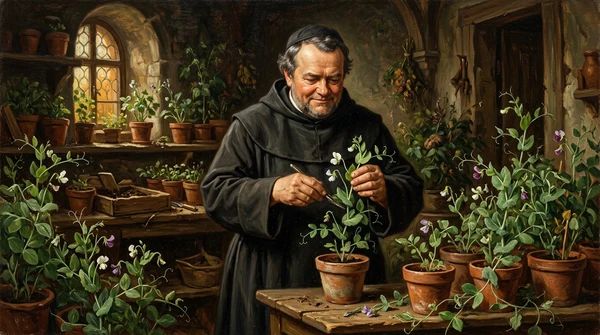
Gregor Mendel
1822–1884 · Biologist & Augustinian Friar
Discovered the fundamental laws of genetic inheritance by studying pea plants.
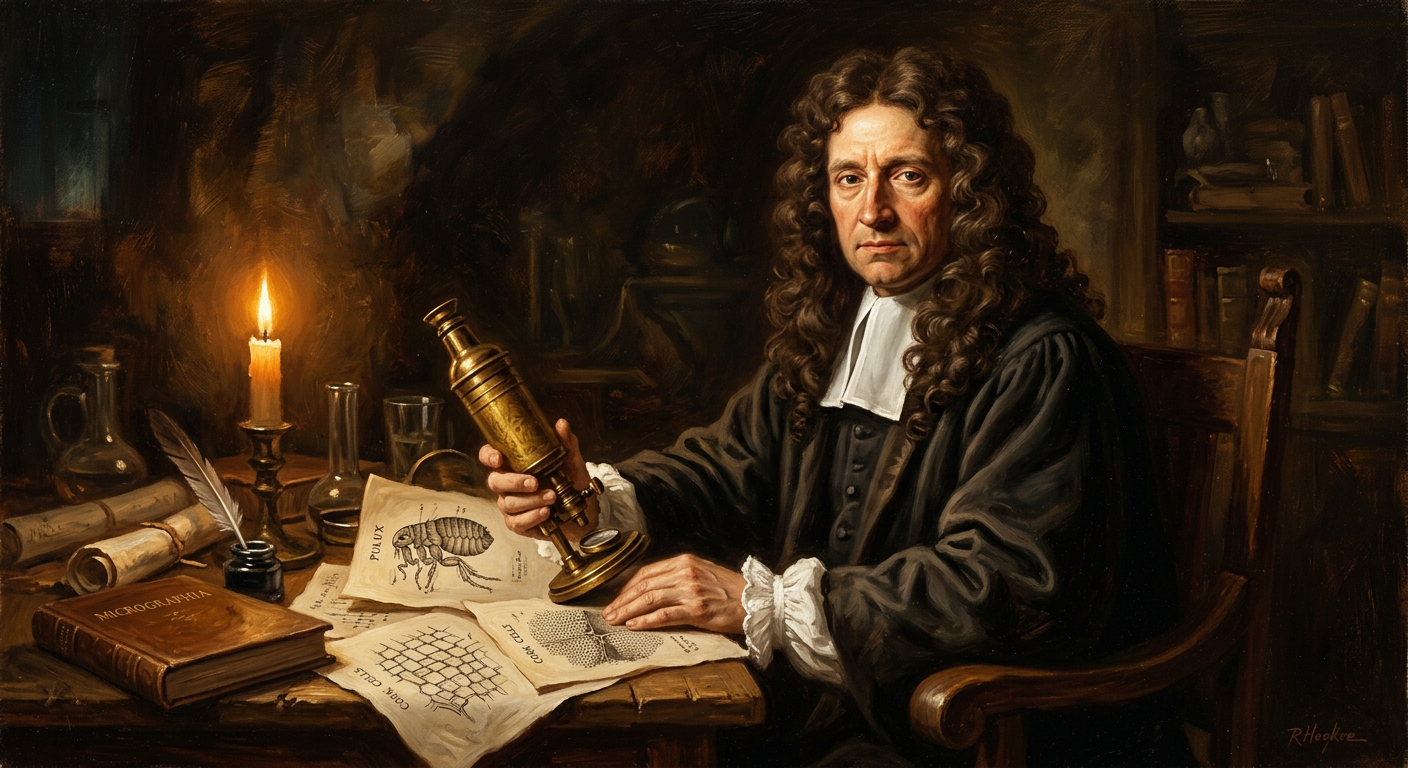
Robert Hooke
1635–1703 · Biologist and Physicist
Coined the word "cell" after examining cork under a microscope and formulated Hooke’s Law on springs.