_(2).jpg)
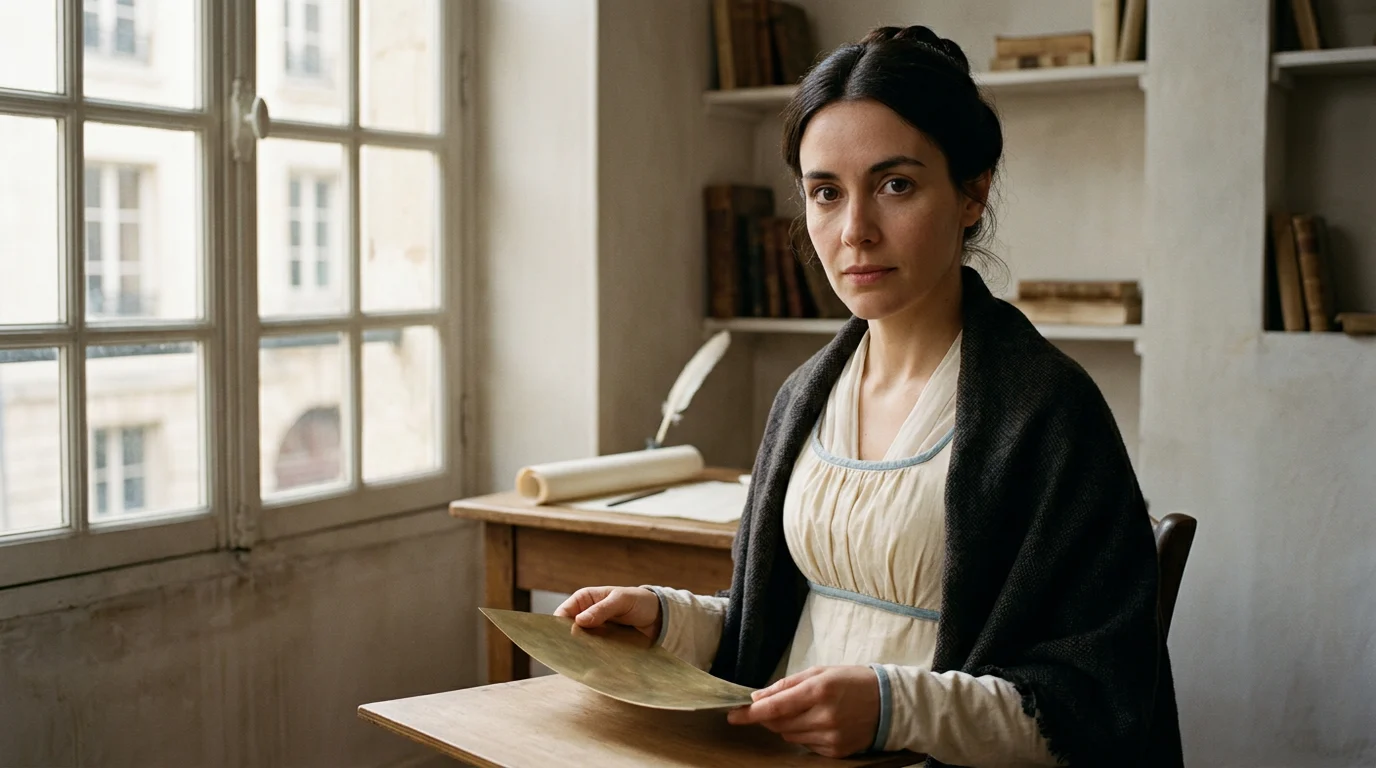
Sophie Germain
1776–1831 · Number theory and mathematical elasticity
Sophie Germain advanced number theory and the mathematics of vibrating surfaces, overcoming barriers that kept women outside French scientific institutions.
Why is this scientist famous?
Sophie Germain made important discoveries about prime numbers and helped develop the mathematical theory of elastic surfaces despite being excluded from formal study.
Her work helped mathematicians study primes and understand vibrations and elasticity in structures, foundations of modern engineering mathematics.
Sophie's story
A mathematician without a classroom
Sophie Germain was born in Paris on 1 April 1776. As a teenager she became absorbed in mathematics and taught herself from books, despite barriers that kept women out of advanced scientific institutions. When the École Polytechnique opened in 1794, she could not enrol. Yet she obtained some course material and sent written mathematical work under the name Monsieur LeBlanc. The disguise helped her receive serious attention before her identity was known.
Letters across Europe
The mathematician Joseph-Louis Lagrange became interested in her work after seeing papers signed LeBlanc. Germain also corresponded with Carl Friedrich Gauss about difficult questions concerning whole numbers. She first used the same male name in letters to him, worried that her work would be dismissed. Eventually they recognised one another as serious mathematical thinkers. Her correspondence demonstrates both the obstacles and the intellectual communities of early nineteenth-century science.
Special numbers and difficult proofs
Germain studied the properties of prime numbers and explored cases of Fermat’s Last Theorem, a famous challenge about equations involving powers. Certain primes now carry her name: a Sophie Germain prime is a prime number p for which 2p + 1 is also prime. Her mathematical reasoning advanced particular approaches to the problem, but she did not prove Fermat’s Last Theorem in full. Later historians have recognised that the surviving notebooks suggest a more ambitious programme than once appreciated.
Why do thin plates vibrate?
Germain also worked on mathematical equations describing vibrating elastic surfaces, inspired partly by patterns made by sound on metal plates. She entered a Paris Academy of Sciences competition several times; her earlier submissions had gaps, but the academy ultimately recognised her prize-winning attempt in the competition concluded in 1816. Her work did not provide a complete modern theory. Other mathematicians refined the equations and boundary conditions, while Germain helped make this difficult subject a major research problem.
Ideas that outlast exclusion
Germain continued writing about number theory and surfaces even as illness affected her final years. She died in Paris on 27 June 1831. She held no conventional university post, yet her research reached some of Europe’s leading mathematicians. Her story is not only about determination; it is about important technical contributions in mathematics made in circumstances that denied her many ordinary opportunities to learn and publish.
What did they discover?
Sophie Germain primes
Studied primes p for which 2p + 1 is prime and developed useful number-theory arguments.
Fermat’s Last Theorem
Advanced important cases and strategies without claiming a complete proof.
Elastic-surface mathematics
Helped develop equations for vibrating and bending surfaces.
Mathematical correspondence
Used letters to exchange substantial research with figures including Gauss and Lagrange.
Amazing facts
She was born in Paris in 1776 and pursued mathematics through independent study.
The École Polytechnique did not admit women when it opened in 1794.
She used the name Monsieur LeBlanc when submitting some mathematical work.
Joseph-Louis Lagrange was impressed by her anonymously submitted mathematics.
She exchanged letters about number theory with Carl Friedrich Gauss.
A Sophie Germain prime p has the property that 2p + 1 is also prime.
Her elasticity research won an Academy of Sciences competition prize in 1816.
She worked on mathematics involving vibrating plates as well as primes.
Timeline
Born in Paris.
The École Polytechnique opened; Germain studied material privately.
Began a period of mathematical correspondence with Gauss.
Submitted research to the Paris Academy’s elasticity competition.
Won the academy prize for work on elastic surfaces.
Died in Paris.
Related Super Scientists
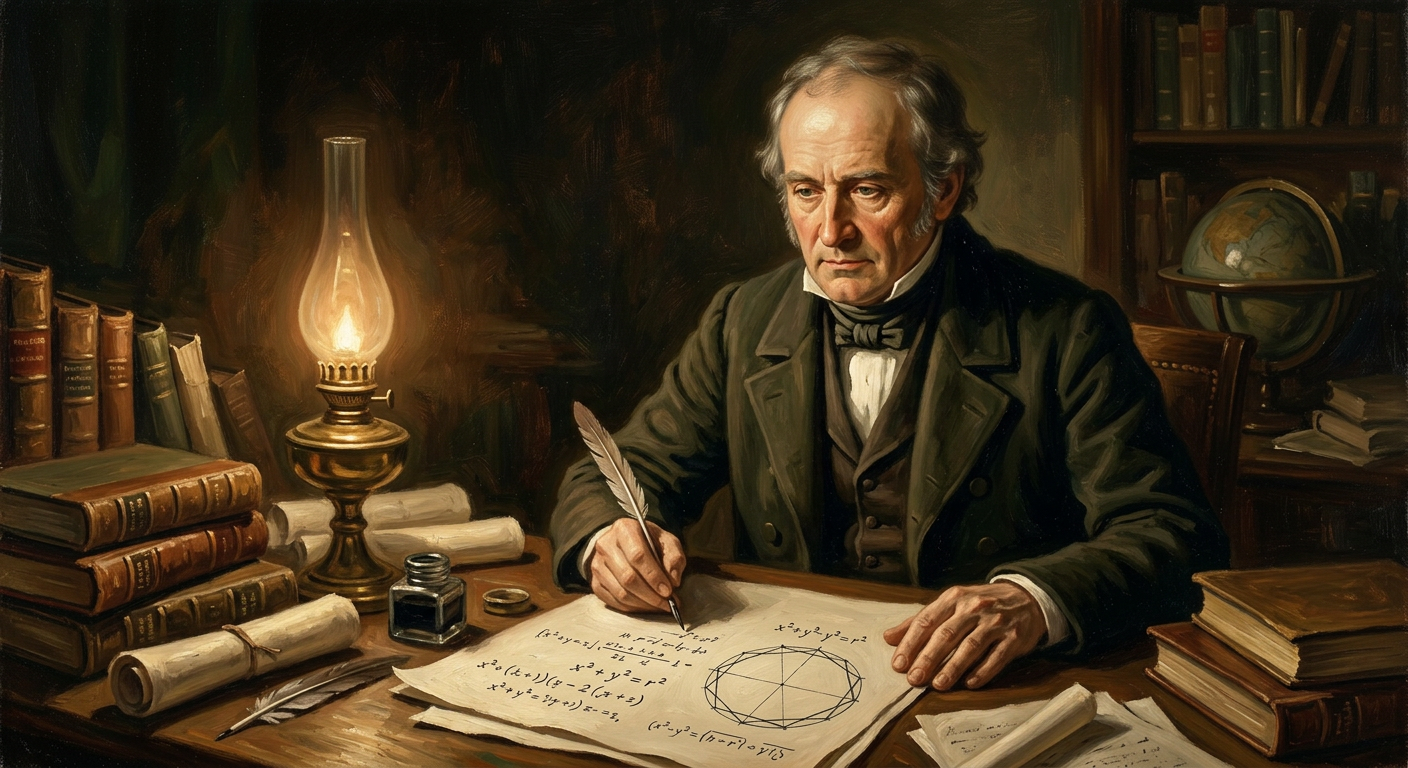
Carl Friedrich Gauss
1777–1855 · Mathematician & Physicist
Making groundbreaking contributions to number theory, geometry, astronomy, and statistics — often called the ‘Prince of Mathematicians.’
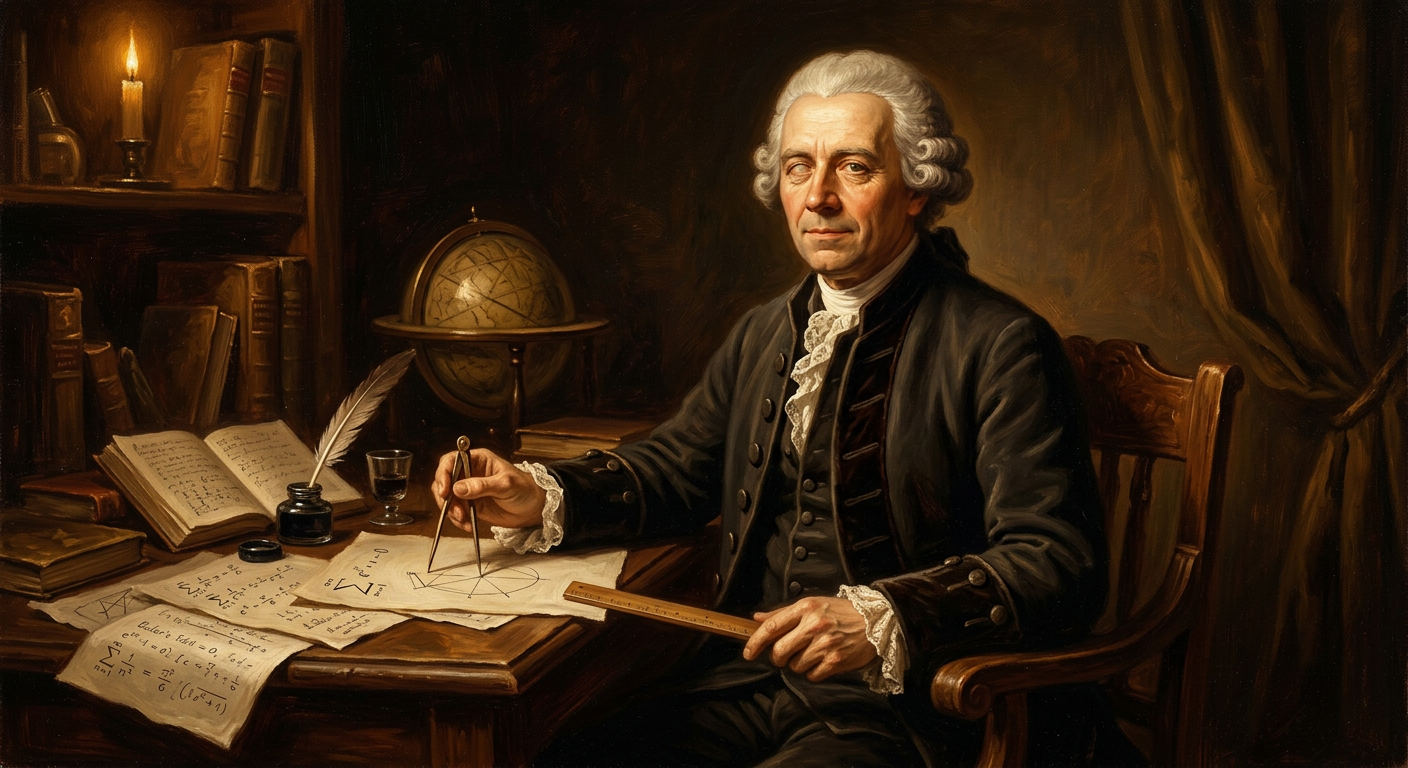
Leonhard Euler
1707–1783 · Mathematician and Physicist
Making fundamental contributions across mathematics and physics, including mathematical analysis, number theory, mechanics and graph theory, while introducing or popularising notation still used today.
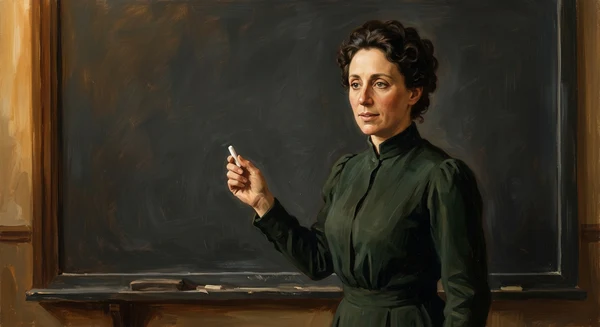
Emmy Noether
1882–1935 · Mathematician
Proved Noether's theorem, linking symmetry and conservation laws — a foundation of modern physics.