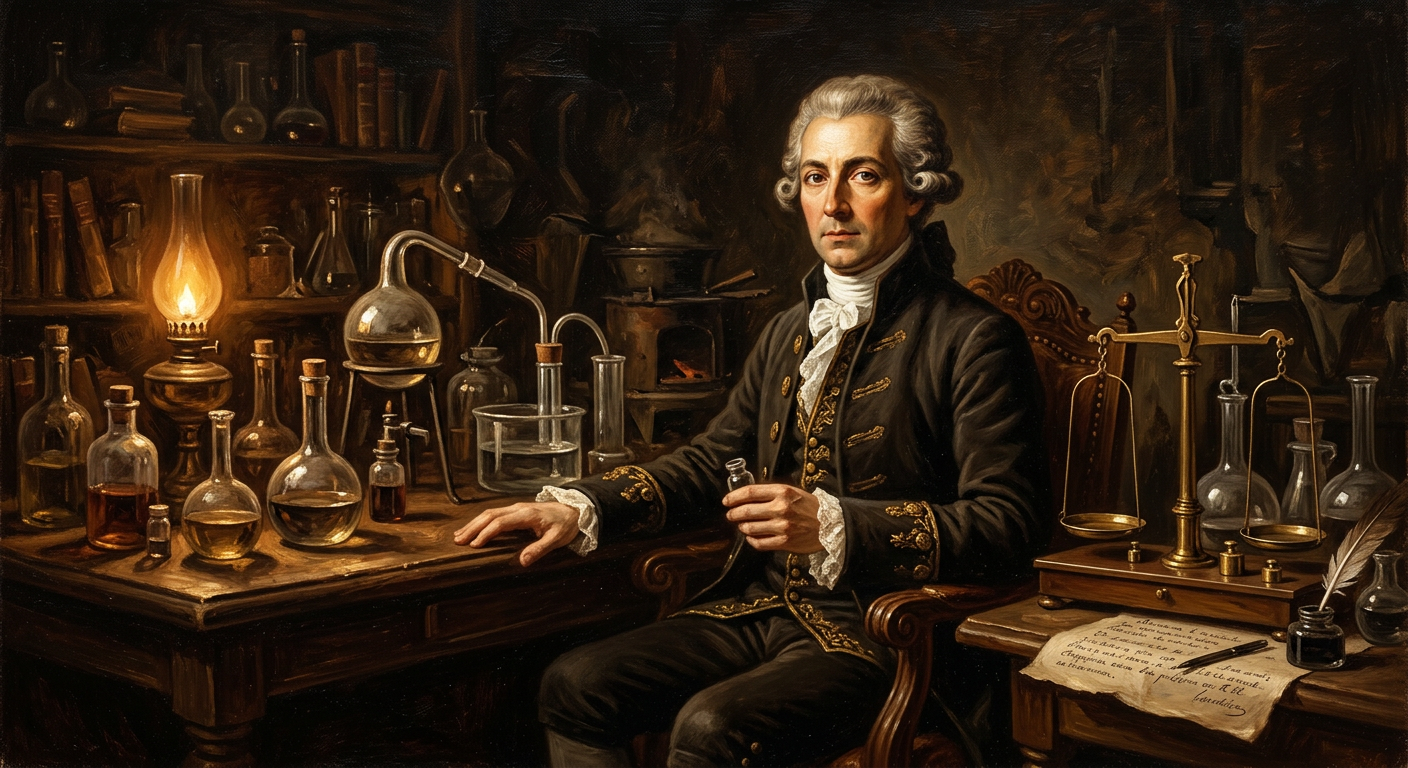
_(2).jpg)
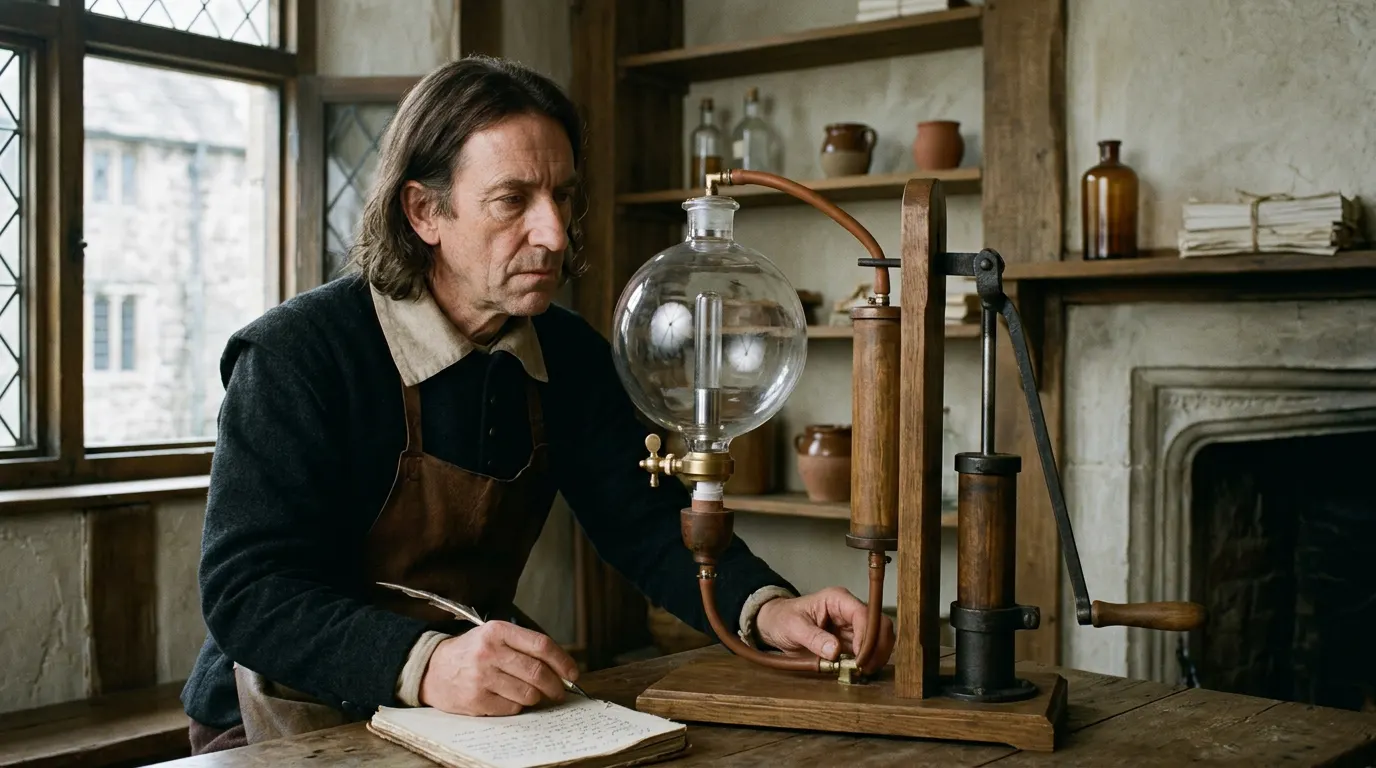
Robert Boyle
1627–1691 · Chemistry, physics and natural philosophy
Robert Boyle was an Irish-born natural philosopher whose experiments on air and vacuum helped establish the experimental approach central to modern science.
“I dare speak confidently and positively of very few things, except Matters of Fact.”
Why is this scientist famous?
An Irish-born natural philosopher whose air-pump experiments and The Sceptical Chymist helped shape experimental science.
Boyle helped establish rigorous experimentation and careful reporting of observations as central to science, making a major contribution to the study of gases and the development of chemistry.
Robert's story
A natural philosopher of means and curiosity
Robert Boyle was born on 25 January 1627 at Lismore Castle in County Waterford, Ireland. He was one of fifteen children of Richard Boyle, Earl of Cork, and Catherine Fenton. He attended Eton College from 1635 to 1638 and continued his education with private tutors and through travel in continental Europe. He did not follow the modern university-degree route.
Experiments on air and vacuum
By the 1650s Boyle was carrying out extensive experimental work, particularly at Oxford. Robert Hooke worked with Boyle and constructed the improved air-pump apparatus used in important experiments. In 1660 Boyle published New Experiments Physico-Mechanicall, Touching the Spring of the Air, and Its Effects. Their experiments investigated air pressure, vacuum conditions and physical phenomena involving air, exploring what happened when air pressure was greatly reduced.
Boyle’s law and The Sceptical Chymist
The pressure-volume relationship — that for a fixed amount of gas at constant temperature, increasing pressure decreases volume and decreasing pressure increases volume — became known as Boyle’s law after Boyle published experimental results demonstrating it in the 1662 second edition of his air-pump work. Henry Power and Richard Towneley had also investigated the relationship, and Robert Hooke was deeply involved in the experimental work and apparatus. In 1661 Boyle published The Sceptical Chymist, which challenged traditional accounts of matter based simply on the classical four elements or Paracelsian principles and became an important work in the development of chemistry.
A founding figure of the Royal Society
Boyle was a founding figure in the Royal Society and was elected on 28 November 1660. From 1668 he lived in London in the household of his sister Katherine Jones, Lady Ranelagh. He remained a major advocate of experiment-based natural philosophy throughout his life. He died in London on 31 December 1691, leaving behind a legacy of rigorous experimentation that helped shape the development of modern science.
What did they discover?
Experiments on air and vacuum
Boyle and Hooke carried out a major series of air-pump experiments investigating air pressure, vacuum conditions and the physical properties of air, published in 1660.
Boyle’s law
The pressure-volume relationship for gases became known as Boyle’s law after he published experimental results demonstrating it in 1662, building on work by Henry Power, Richard Towneley and Robert Hooke.
The Sceptical Chymist
His 1661 book challenged traditional accounts of matter based on the classical elements or Paracelsian principles and became an important work in the development of chemistry.
Amazing facts
Boyle was born at Lismore Castle and was one of fifteen children in the family of the Earl of Cork.
He attended Eton College before continuing his education through private study and European travel.
Robert Hooke built the air-pump apparatus used in important experiments carried out with Boyle.
Boyle’s air-pump experiments investigated what happened when air pressure was greatly reduced.
The gas relationship that carries his name is still taught as Boyle’s law.
His 1661 book The Sceptical Chymist challenged influential older ideas about matter.
He helped establish the experimental approach that became central to modern science.
He was a founding figure in the Royal Society.
Timeline
Born at Lismore Castle in Ireland
Attended Eton College
Developed his programme of experimental natural philosophy, particularly at Oxford
Published his first major collection of air-pump experiments and became a founding figure of the Royal Society
Published The Sceptical Chymist
Published the pressure-volume experimental results associated with Boyle’s law
Moved permanently to London and lived with his sister Lady Ranelagh
Died in London
Awards & honours
Related Super Scientists
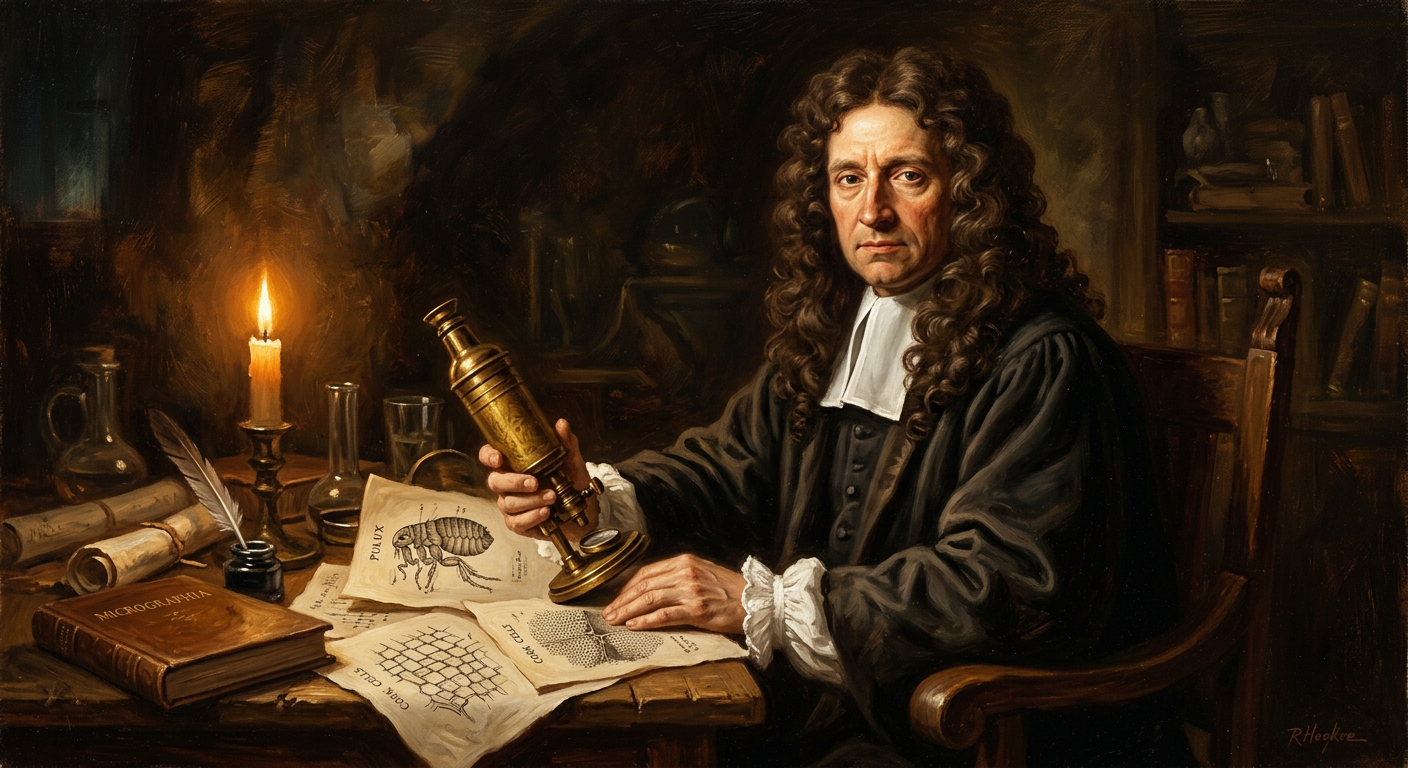
Robert Hooke
1635–1703 · Biologist and Physicist
Coined the word "cell" after examining cork under a microscope and formulated Hooke’s Law on springs.
Isaac Newton
1643–1727 · Physicist & Mathematician
Formulating the laws of motion and universal gravitation.
Blaise Pascal
1623–1662 · Mathematician and Physicist
Pascal's Triangle, foundational work on probability theory, experiments proving that air has pressure, and the Pascaline — one of the first mechanical calculators.