_(2).jpg)
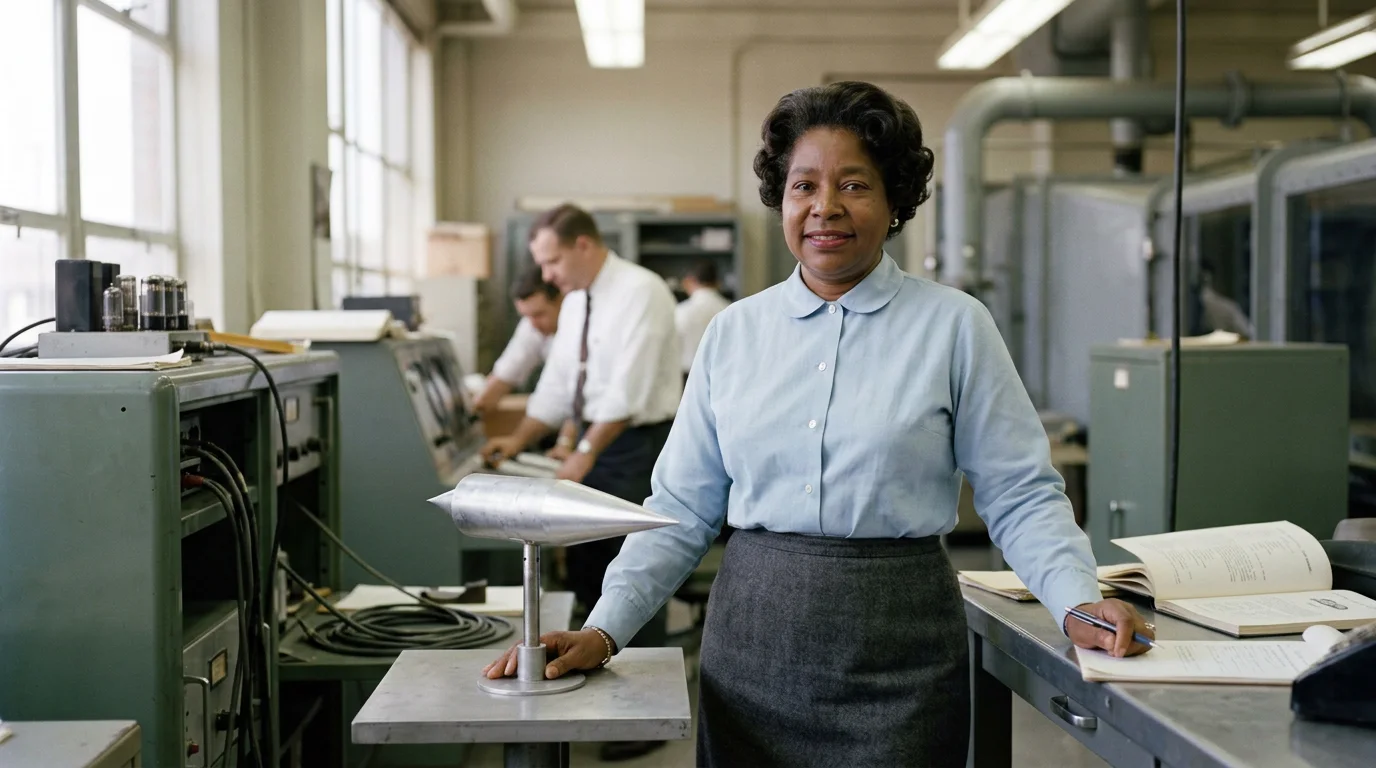
Mary Winston Jackson
1921–2005 · Aerospace engineering
Aerospace engineer Mary Jackson broke racial and gender barriers at NASA while researching how air flows around aircraft at supersonic speeds.
“We have to do something like this to get them interested in science.”
Why is this scientist famous?
Became NASA’s first Black female engineer and researched airflow and boundary-layer behaviour around aircraft at supersonic speeds.
Her aerodynamics research contributed to safer, better-understood high-speed flight, while her career helped widen opportunities for future engineers at NASA.
Mary's story
Mathematics, physics and a changing career
Mary Winston Jackson was born in Hampton, Virginia, on 9 April 1921. She graduated with honours from George P. Phenix Training School and earned a bachelor’s degree in mathematics and physical science from Hampton Institute in 1942. Before entering aerospace research she worked as a mathematics teacher and held several other jobs. In 1951 she joined the National Advisory Committee for Aeronautics, NASA’s predecessor, as a computer in the segregated West Area Computing unit at Langley.
The supersonic pressure tunnel
After two years in West Computing, Jackson began working with engineer Kazimierz Czarnecki in Langley’s 4-foot by 4-foot Supersonic Pressure Tunnel. The tunnel could blast test models with air moving close to twice the speed of sound, and Jackson gained practical experience collecting and analysing aerodynamic data. Czarnecki encouraged her to enter an engineering training programme. The required graduate-level classes were held at a segregated high school, so Jackson had to obtain special permission from the City of Hampton to attend with white students.
NASA’s first Black female engineer
Jackson completed the training and in 1958 became NASA’s first Black female engineer. Her research focused on aerodynamics, including the boundary layer of air around aircraft and the way nose angle and speed affected airflow over test shapes. That same year she co-authored a technical report on transition over cones at supersonic speeds. By 1975 she had authored or co-authored 12 NACA and NASA technical publications.
Engineering and opening doors
Late in her career Jackson saw that many talented women at Langley still faced barriers to promotion. In 1979 she left engineering and accepted a lower grade so she could work in equal opportunity, becoming Langley’s Federal Women’s Program Manager. She helped women and minority employees find paths into higher-level scientific, engineering and management roles before retiring in 1985. NASA later named its Washington headquarters building for her, and in 2024 her family received the Congressional Gold Medal awarded in recognition of her service during the Space Race.
What did they discover?
Supersonic aerodynamics research
Jackson studied high-speed airflow and boundary-layer behaviour, helping engineers understand how air moved around aircraft shapes at supersonic speeds.
Research on cones at high Mach numbers
Her 1958 co-authored report examined how nose angle and Mach number affected the transition of airflow over cones, a practical problem in high-speed aerodynamics.
Equal-opportunity leadership
Although not a scientific discovery, her later NASA role was a major professional contribution: she worked to improve hiring and promotion opportunities for women and minority staff.
Amazing facts
She graduated from Hampton Institute in 1942 with a degree covering both mathematics and physical science.
Her first NACA job was in the segregated West Area Computing unit supervised by Dorothy Vaughan.
The supersonic pressure tunnel where she worked used a 60,000-horsepower system to produce extremely fast airflow.
She needed special permission from the City of Hampton to attend engineering classes held at a segregated school.
She co-authored her first technical report in the same year she became an engineer, 1958.
By 1975 she had authored or co-authored 12 NACA and NASA technical publications.
NASA named its Washington headquarters building the Mary W. Jackson NASA Headquarters in 2021.
She led a Girl Scout troop for more than three decades and was named Langley’s Volunteer of the Year in 1976.
Timeline
Born in Hampton, Virginia, United States.
Graduates from Hampton Institute with a degree in mathematics and physical science.
Joins NACA’s Langley laboratory in the segregated West Area Computing unit.
Begins working with Kazimierz Czarnecki in the Supersonic Pressure Tunnel.
Becomes NASA’s first Black female engineer and co-authors her first technical report.
Moves from engineering into equal-opportunity work at Langley.
Retires after 34 years at Langley.
Dies in Hampton, Virginia.
Awards & honours
Related Super Scientists
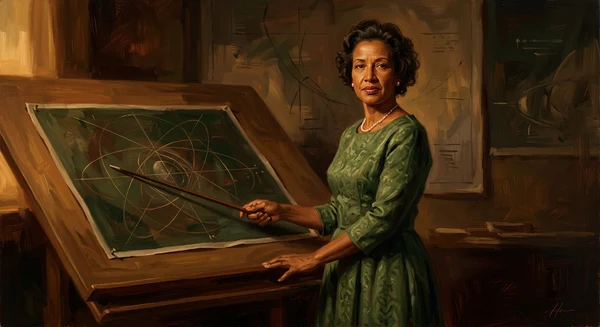
Katherine Johnson
1918–2020 · Mathematician
Calculating and verifying trajectories for historic NASA missions, including Alan Shepard's first American spaceflight, John Glenn's orbital mission and Apollo 11.
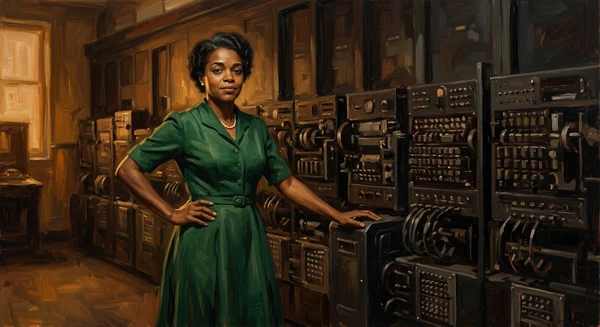
Dorothy Vaughan
1910–2008 · Mathematician & Computer Programmer
NACA's first Black supervisor and a pioneering FORTRAN programmer at NASA.
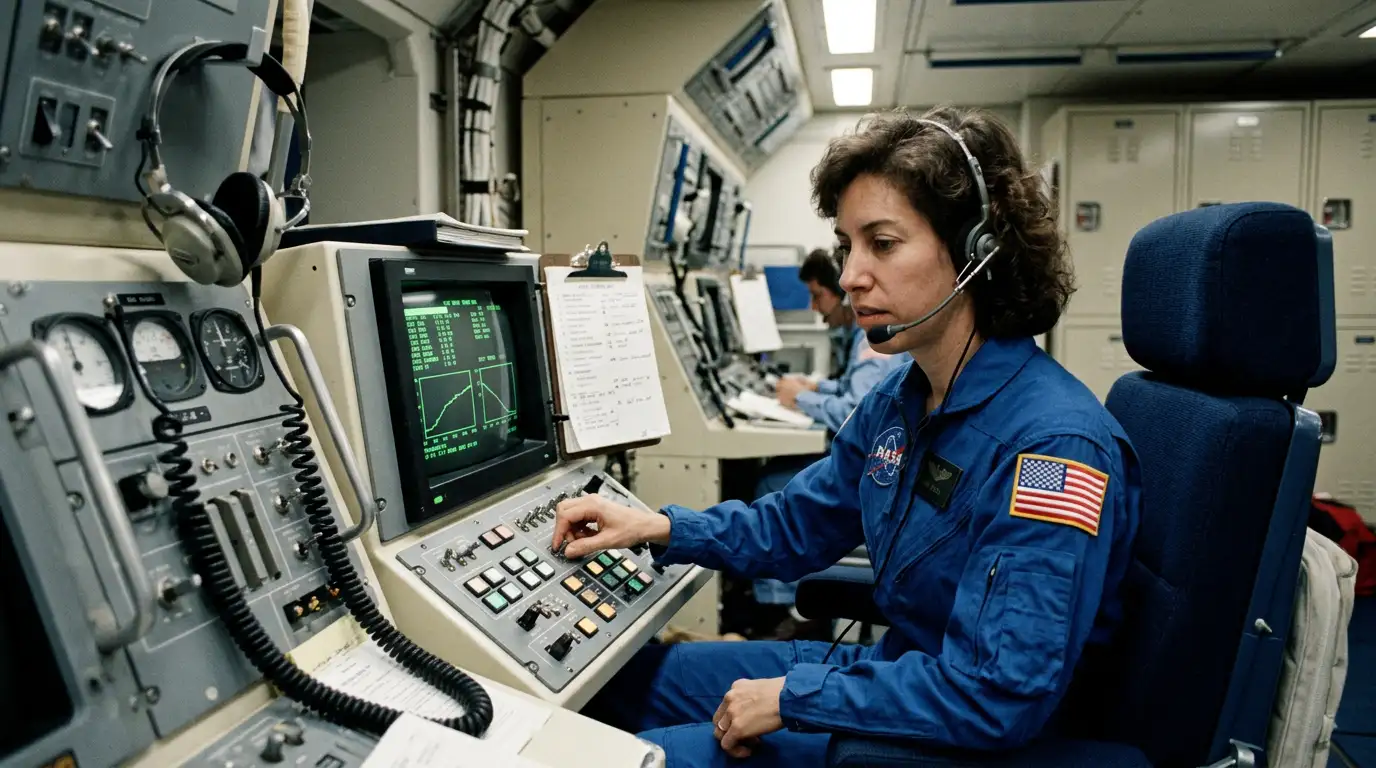
Ellen Ochoa
1958–present · Electrical Engineer and Astronaut
Electrical-engineering research, co-inventing optical systems and becoming the first Hispanic woman to travel into space.