_(2).jpg)
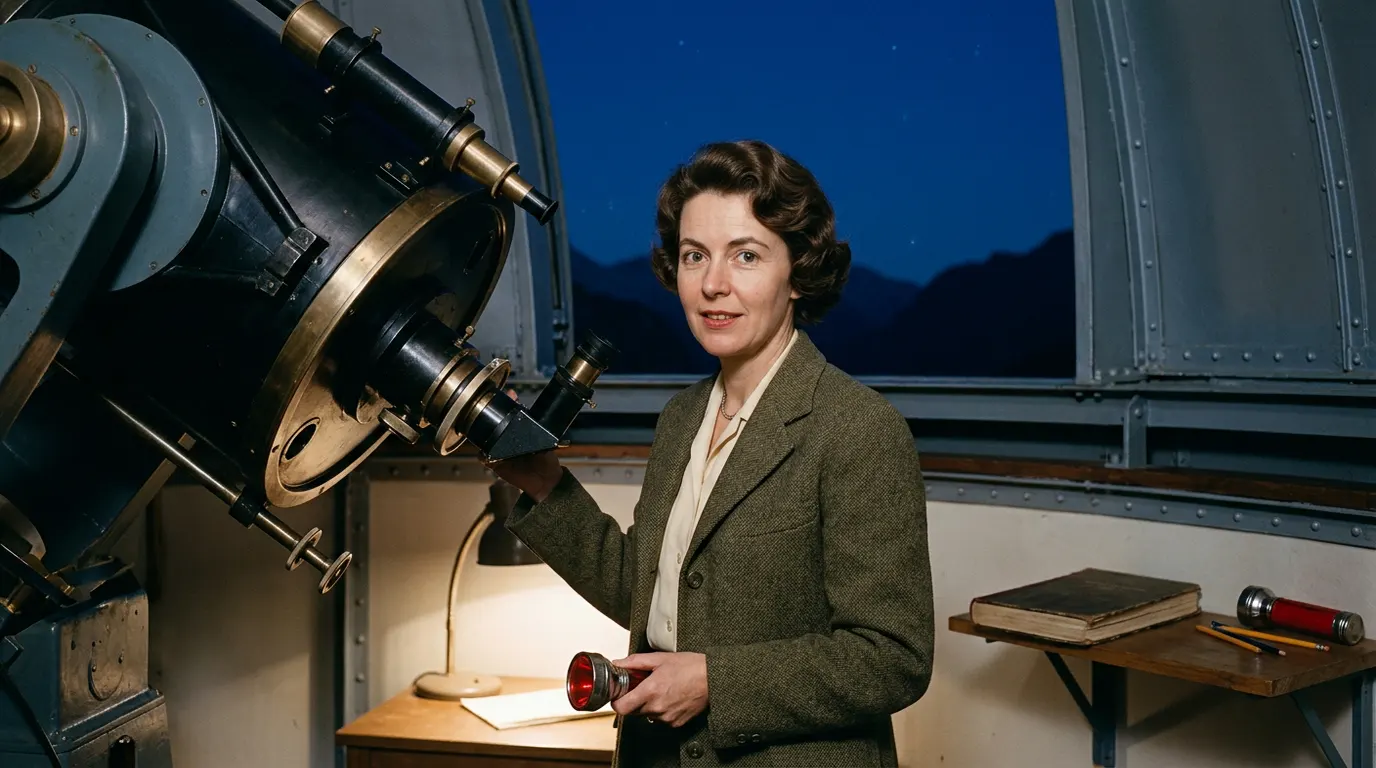
Margaret Burbidge
1919–2020 · Astrophysics and stellar nucleosynthesis
Margaret Burbidge helped explain how stars make chemical elements, measured distant galaxies and challenged barriers facing women astronomers.
“It is high time that discrimination in favor of, as well as against, women in professional life be removed”
Why is this scientist famous?
Margaret Burbidge co-authored a landmark 1957 explanation of how stars produce many chemical elements and became an influential observational astronomer.
Stellar nucleosynthesis explains the cosmic origins of many chemical elements in rocks, planets and living things, while astronomical spectroscopy reveals distant galaxies.
Margaret's story
From northern England to the stars
Eleanor Margaret Peachey, later Margaret Burbidge, was born in Stockport, England, on 12 August 1919. She studied physics and astronomy at University College London, graduating in 1939. During the Second World War she worked at Mill Hill Observatory and earned a doctorate in 1943. Looking through telescopes was more than a hobby: observing stars and analysing their light became central to her scientific career. Her work would eventually help explain where many of the elements around us originate.
When an observatory said no
After the war, Burbidge applied to work at Mount Wilson Observatory but encountered restrictions against women using its principal telescopes. The episode helped shape her long opposition to discriminatory scientific rules. She continued her research through other appointments, often working with her husband Geoffrey Burbidge and colleagues. Spectroscopy, the study of light spread into its component wavelengths, enabled her to infer what distant stars and galaxies contain.
Where do the elements come from?
In 1957 she was lead author of a major paper written with Geoffrey Burbidge, William A. Fowler and Fred Hoyle. Known as B2FH after their surnames, the paper brought together evidence and calculations showing how many elements are created through nuclear reactions in stars. It did not establish that every element originated in a star: some of the lightest elements largely trace back to the early universe. The paper became a foundation of modern astrophysics because it connected stellar life cycles with the chemistry of the cosmos.
Leadership and distant galaxies
Burbidge worked at the University of California, San Diego, and studied galaxies, quasars and the information hidden in their spectra. In 1972 she became the first woman director of the Royal Greenwich Observatory, a role distinct from the title of Astronomer Royal. From 1976 to 1978 she served as the first woman president of the American Astronomical Society. Her research also contributed to spectroscopic instruments used in space astronomy, including the Hubble Space Telescope’s Faint Object Spectrograph.
A scientist who opened doors
Burbidge rejected awards or professional restrictions that treated scientists differently solely because of gender. She received the Royal Astronomical Society’s Gold Medal jointly with Geoffrey Burbidge in 2005. She died in California on 5 April 2020, aged 100. Her legacy joins two lessons: evidence collected with powerful instruments can reveal the distant universe, and talented researchers need fair opportunities to carry out that work.
What did they discover?
Elements made in stars
Co-authored B2FH, a synthesis of how stars create many elements by nuclear reactions.
Astronomical spectroscopy
Used starlight and galaxy spectra to investigate composition and distant objects.
Galaxies and quasars
Investigated the spectra and properties of remote galaxies and active galactic objects.
Improving astronomy access
Challenged barriers to women using telescopes and occupying scientific leadership roles.
Amazing facts
She graduated from University College London in 1939.
She earned a doctorate in 1943 while working in wartime astronomy.
She encountered restrictions on women at Mount Wilson Observatory.
Her four-author 1957 paper became known by the initials B2FH.
The B2FH paper explained nuclear processes that make many heavy elements inside stars.
She became the first woman director of the Royal Greenwich Observatory in 1972.
She served as the first woman president of the American Astronomical Society from 1976 to 1978.
She and Geoffrey Burbidge jointly received the Royal Astronomical Society’s Gold Medal in 2005.
Timeline
Born in Stockport, England.
Graduated from University College London.
Earned her doctorate after wartime observatory work.
Co-authored Synthesis of the Elements in Stars, known as B2FH.
Became director of the Royal Greenwich Observatory.
Began her term as American Astronomical Society president.
Received the Royal Astronomical Society Gold Medal jointly with Geoffrey Burbidge.
Died in California.
Awards & honours
Related Super Scientists
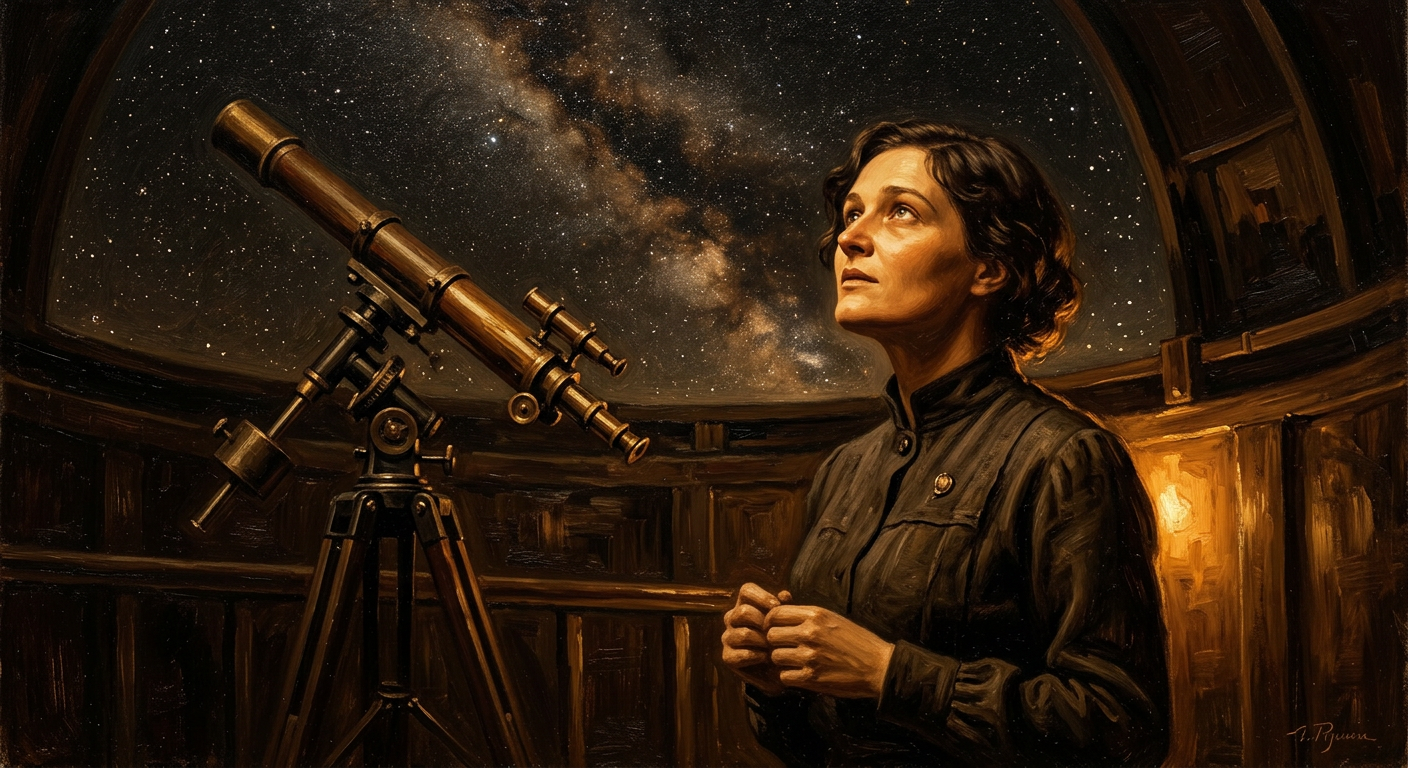
Cecilia Payne-Gaposchkin
1900–1979 · Astronomer
Showed in her 1925 doctoral thesis that hydrogen and helium are enormously more abundant in stars than previously believed, laying a foundation for modern stellar astrophysics.
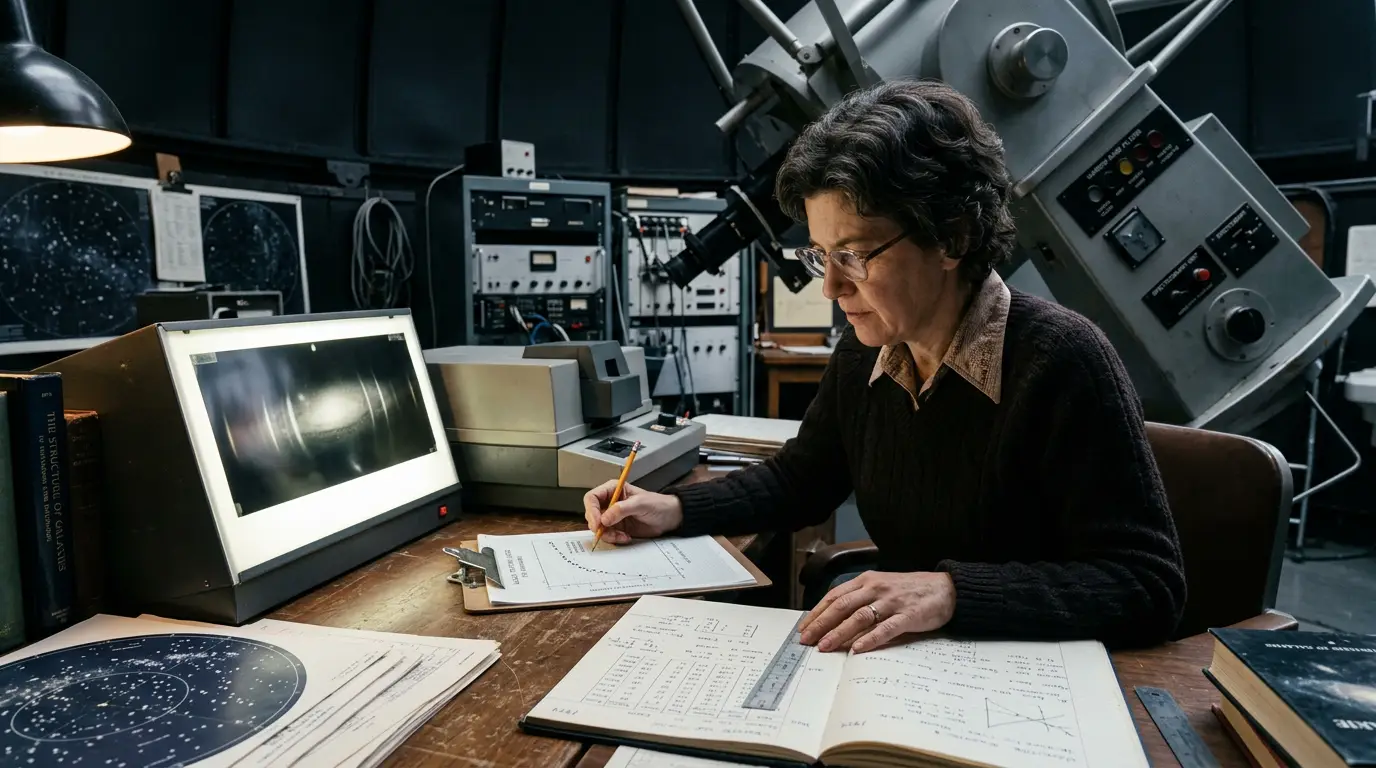
Vera Rubin
1928–2016 · Astronomer
Providing the most compelling early evidence for the existence of dark matter through galaxy rotation measurements.
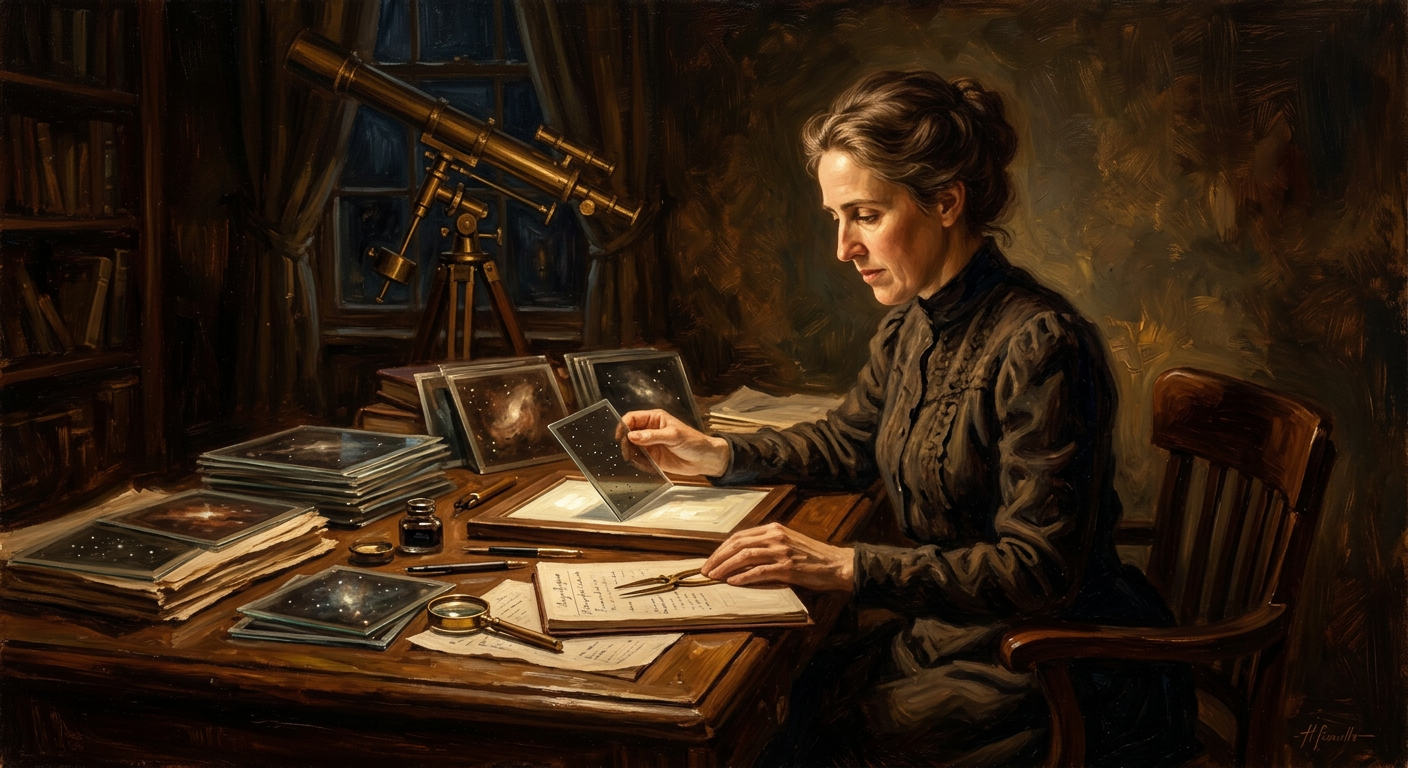
Henrietta Swan Leavitt
1868–1921 · Astronomy and stellar photometry
Discovered the period–luminosity relationship of Cepheid variable stars, providing a method for measuring cosmic distances.