
John Bardeen
1908–1991 · Solid-state physics and electrical engineering
John Bardeen co-invented the transistor and co-developed the theory of superconductivity, earning two Nobel Prizes in Physics.
“The discovery was but a step along the road of semiconductor research to which a great many people in different countries have contributed.”
Why is this scientist famous?
John Bardeen helped develop the point-contact transistor with Walter Brattain at Bell Laboratories and later co-developed the Bardeen–Cooper–Schrieffer theory of superconductivity with Leon Cooper and John Robert Schrieffer.
Transistors became essential components in computers, phones and nearly all modern electronic devices. The BCS theory explained how electrical resistance disappears in many materials at very low temperatures, giving researchers a framework for understanding superconductors and related quantum materials.
John's story
Engineering, mathematics and physics
John Bardeen was born in Madison, Wisconsin, in 1908. He studied electrical engineering at the University of Wisconsin, earning his bachelor’s degree in 1928 and master’s degree in 1929. He later completed a doctorate in mathematical physics at Princeton in 1936. His early work included geophysics and the behaviour of electrical conductors. This mix of practical engineering and theoretical physics became important in his later research on semiconductors.
The semiconductor problem at Bell Labs
Bardeen joined Bell Telephone Laboratories in 1945. The team wanted a solid-state amplifier that might replace bulky vacuum tubes in telephone equipment. Bardeen studied how electrons behaved at the surface of semiconductors such as germanium. His explanation of “surface states” helped show why earlier attempts to control current with an electric field were failing. He and experimental physicist Walter Brattain tested new arrangements, while William Shockley led the broader semiconductor research group and later developed the junction transistor.
Building the point-contact transistor
In December 1947, Bardeen and Brattain made a working point-contact transistor using two closely spaced metal contacts on a germanium crystal. A small electrical signal at one contact could control a larger current through the device, producing amplification without a vacuum tube. The result depended on Bardeen’s theoretical insight and Brattain’s experimental skill, alongside the group’s materials work. The transistor effect was demonstrated at Bell Labs before the invention was publicly announced in 1948; the dates describe different milestones.
A second major problem: superconductivity
After moving to the University of Illinois in 1951, Bardeen continued research in both semiconductors and low-temperature physics. With Leon Cooper and graduate student John Robert Schrieffer, he developed a quantum theory explaining superconductivity. The theory, published in 1957, described how electrons in certain conditions form paired states that move through a material without ordinary electrical resistance. It became known as BCS theory, from the initials of its three authors.
Two Nobel Prizes, shared credit
Bardeen shared the 1956 Nobel Prize in Physics with Brattain and Shockley for semiconductor research and the transistor effect. In 1972 he shared a second Physics Nobel with Cooper and Schrieffer for the theory of superconductivity. He remains the only person to have received two Nobel Prizes in Physics. In his first Nobel lecture, he stressed that the transistor discovery depended on many people and earlier work. His career is a reminder that engineering breakthroughs often grow from basic research and collaboration.
What did they discover?
Surface-state explanation
Developed an account of how electrons become trapped at semiconductor surfaces, clarifying why early field-effect amplifier designs failed.
Point-contact transistor
Co-developed the working transistor with Walter Brattain; the broader Bell Labs team, including William Shockley, contributed to the research programme and subsequent device development.
BCS theory
Co-developed with Leon Cooper and John Robert Schrieffer the theory explaining conventional superconductivity.
Semiconductor physics
Contributed foundational research on electrical conduction and semiconductor materials that supported later electronics.
Amazing facts
Bardeen is the only person to have won two Nobel Prizes in Physics.
His first degree was in electrical engineering; he later earned a doctorate in mathematical physics.
The transistor did not begin as a plan to build a tiny computer part: Bell Labs wanted a compact amplifier for telephone systems.
A key part of Bardeen’s work was explaining surface states, where electrons at a semiconductor’s surface behaved differently from those inside it.
The first working point-contact transistor used two very close metal contacts on germanium; Bardeen and Brattain devised a practical way to make them close enough.
The transistor’s public announcement in 1948 and the first successful device work in December 1947 were separate milestones.
The 1956 Physics Nobel was shared by Bardeen, Walter Brattain and William Shockley; their contributions were related but not identical.
BCS theory is named for Bardeen, Leon Cooper and John Robert Schrieffer, who developed it together.
In his 1956 Nobel lecture Bardeen described the transistor discovery as one step in a much wider international research effort.
Timeline
Born in Madison, Wisconsin
Earns bachelor’s (1928) and master’s (1929) degrees in electrical engineering from the University of Wisconsin
Completes a doctorate in mathematical physics at Princeton University
Joins Bell Telephone Laboratories
In December, Bardeen and Brattain demonstrate the point-contact transistor effect
Joins the University of Illinois faculty
Shares the Nobel Prize in Physics with Brattain and Shockley
Bardeen, Cooper and Schrieffer publish their theory of superconductivity
Shares a second Nobel Prize in Physics with Cooper and Schrieffer
Dies in Boston, Massachusetts
Awards & honours
Related Super Scientists
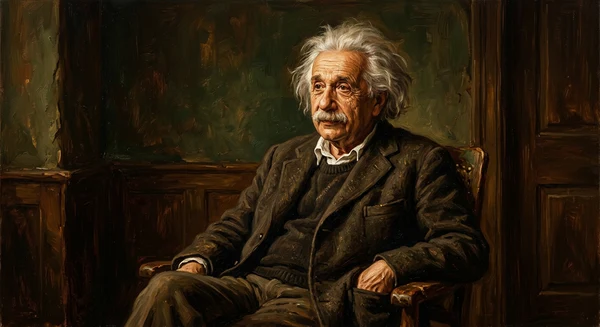
Albert Einstein
1879–1955 · Theoretical Physicist
Developing the theory of relativity and the equation E=mc².
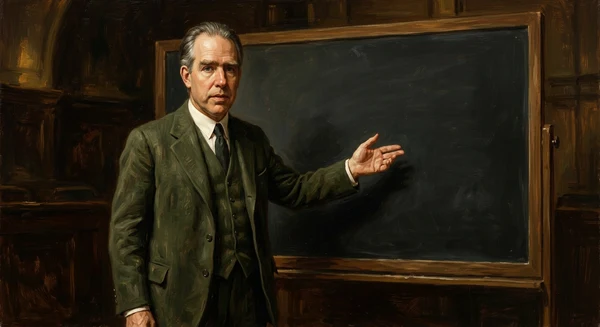
Niels Bohr
1885–1962 · Physicist
Developed the Bohr model of the atom and made foundational contributions to quantum mechanics.
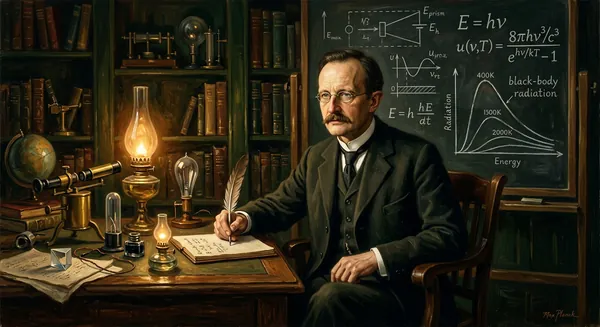
Max Planck
1858–1947 · Theoretical Physicist
Introducing the quantum of action while deriving his black-body radiation law, helping launch quantum theory.
Sources & references
- Semiconductor Research Leading to the Point-Contact Transistor, John Bardeen’s Nobel lecture (11 December 1956; primary source)
- Microscopic Quantum Interference Effects in the Theory of Superconductivity, John Bardeen’s Nobel lecture (11 December 1972; primary source)
- Oral history interview with John Bardeen, 1980 February 13, American Institute of Physics, Niels Bohr Library & Archives
- John Bardeen, University of Illinois Grainger College of Engineering