_(2).jpg)
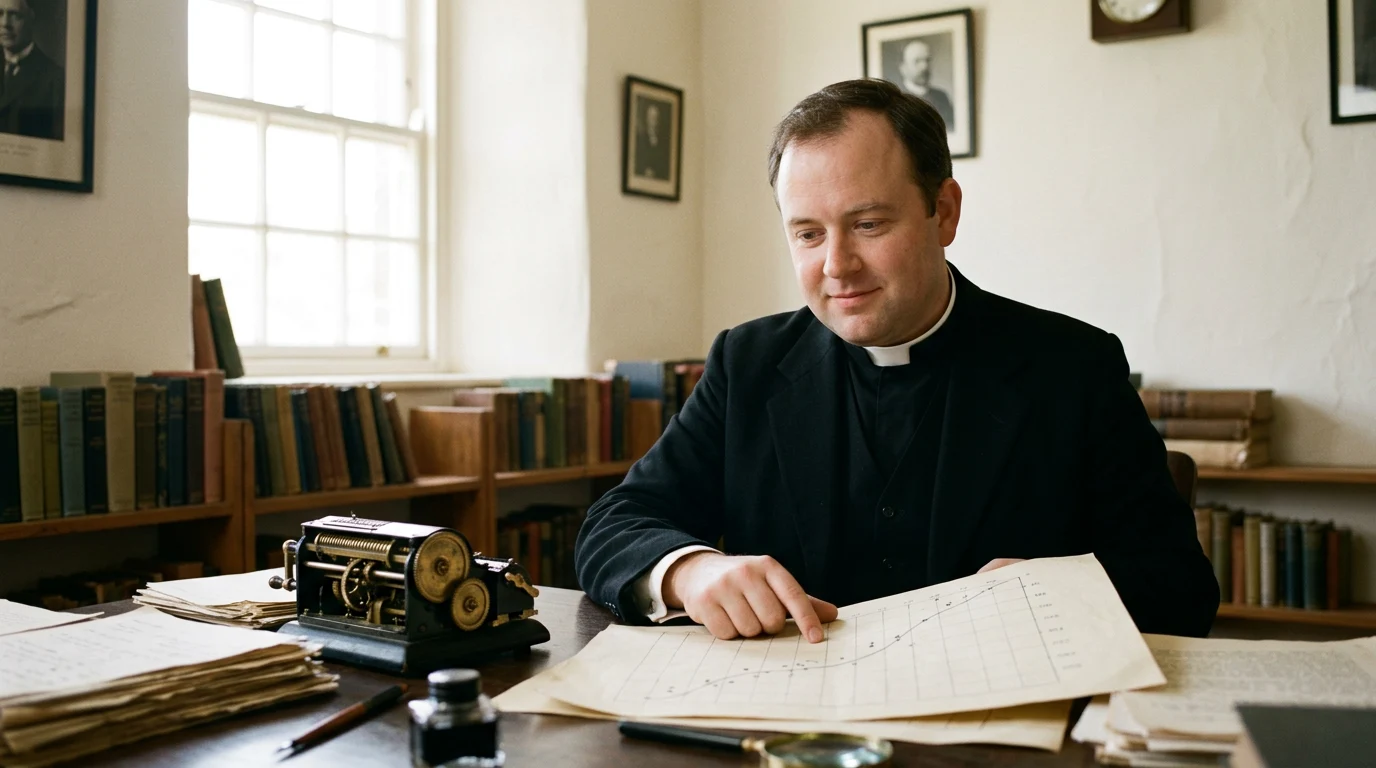
Georges Lemaître
1894–1966 · Cosmology and astrophysics
Belgian cosmologist Georges Lemaître described an expanding universe and proposed the primeval-atom idea that helped shape modern Big Bang cosmology.
“If the world has begun with a single quantum, the notions of space and time would altogether fail to have any meaning at the beginning.”
Why is this scientist famous?
Proposed an expanding universe from Einstein’s equations and later developed the primeval-atom idea that became an early form of Big Bang cosmology.
Modern cosmology still uses the expanding-universe framework Lemaître helped establish, and the Hubble–Lemaître law now recognises his role in that history.
Georges's story
From engineering student to cosmologist
Georges Henri Joseph Édouard Lemaître was born in Charleroi, Belgium, on 17 July 1894. He began engineering studies at the Catholic University of Louvain, but the First World War interrupted his education and he served in the Belgian army. After the war he turned to mathematics and physics, earning a doctorate at Louvain in 1920. He then entered the seminary and was ordained a priest in 1923, while continuing to pursue science.
Learning from Eddington and studying relativity
A Belgian fellowship took Lemaître to the University of Cambridge, where he studied with astronomer Arthur Eddington and became deeply interested in Einstein’s general theory of relativity. He then worked at Harvard College Observatory and enrolled for a second doctorate at the Massachusetts Institute of Technology. In 1927 he defended an MIT thesis on gravity in a fluid sphere. By then he had returned to Louvain, where he was building a career that joined advanced mathematics with questions about the whole universe.
An expanding universe before Hubble’s famous paper
In 1927 Lemaître published a paper showing that Einstein’s equations could describe a universe that was physically expanding. He also combined available galaxy distances and radial velocities to derive a relation between distance and recession speed. Edwin Hubble later published powerful observational evidence for such a relation in 1929, and for decades Hubble received most of the naming credit. In 2018 the International Astronomical Union recommended the name Hubble–Lemaître law to recognise the fundamental contributions of both scientists.
The primeval atom
Lemaître went further in 1931 by asking what an expanding universe would have been like far in the past. He proposed that the universe had begun from an extremely concentrated initial state that he later called the primeval atom. This was not the modern Big Bang model in every detail, but it was a major step toward the idea of a universe with a hot, dense beginning. Lemaître continued research, numerical work and teaching at Louvain, received Belgium’s Francqui Prize in 1934, and served as president of the Pontifical Academy of Sciences from 1960 until his death in 1966.
What did they discover?
Expanding-universe model
In 1927 Lemaître used general relativity to describe a universe whose scale changes with time rather than remaining static.
Distance–recession relation
He derived a relation between galaxy distance and recession speed before Hubble’s famous 1929 observational paper; the relationship is now widely called the Hubble–Lemaître law.
Primeval-atom hypothesis
In 1931 he proposed that the expanding universe could be traced back to an extremely concentrated beginning, an important precursor of modern Big Bang cosmology.
Amazing facts
He volunteered for Belgian military service during the First World War after his university studies were interrupted.
He was ordained a Catholic priest in 1923 while continuing his scientific training.
He studied with Arthur Eddington at Cambridge and later worked at Harvard College Observatory.
He earned a second doctorate at MIT in 1927 for research on general relativity.
His 1927 expansion paper appeared in French in a Belgian scientific journal and was not immediately widely recognised.
He became interested in mechanical and electronic calculation and helped establish numerical-research work at Louvain.
The International Astronomical Union voted in 2018 to recommend the term Hubble–Lemaître law.
A lunar crater and asteroid 1565 Lemaître were named in his honour.
Timeline
Born in Charleroi, Belgium.
University studies are interrupted by the First World War; he serves in the Belgian army.
Earns a doctorate in mathematics at the Catholic University of Louvain.
Is ordained a priest and begins advanced scientific study abroad.
Publishes his expanding-universe paper and completes a PhD at MIT.
Proposes a singular beginning for the expanding universe and develops the primeval-atom idea.
Receives the Francqui Prize, one of Belgium’s highest scientific honours.
Becomes president of the Pontifical Academy of Sciences.
Dies in Louvain, Belgium.
Awards & honours
Related Super Scientists
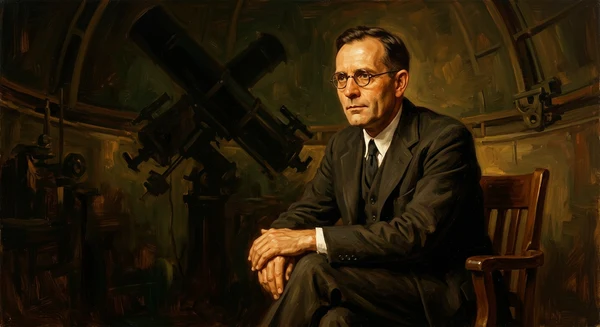
Edwin Hubble
1889–1953 · Astronomer
Showed that galaxies exist far beyond the Milky Way and published the distance–redshift relationship now called the Hubble–Lemaître law.
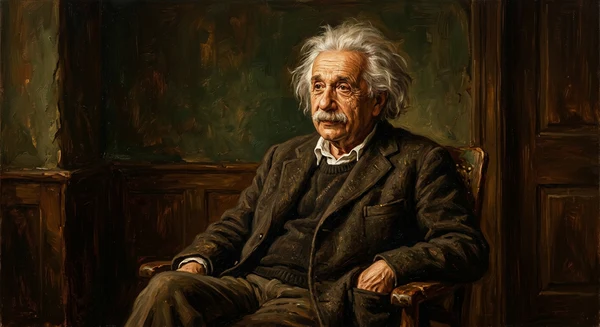
Albert Einstein
1879–1955 · Theoretical Physicist
Developing the theory of relativity and the equation E=mc².
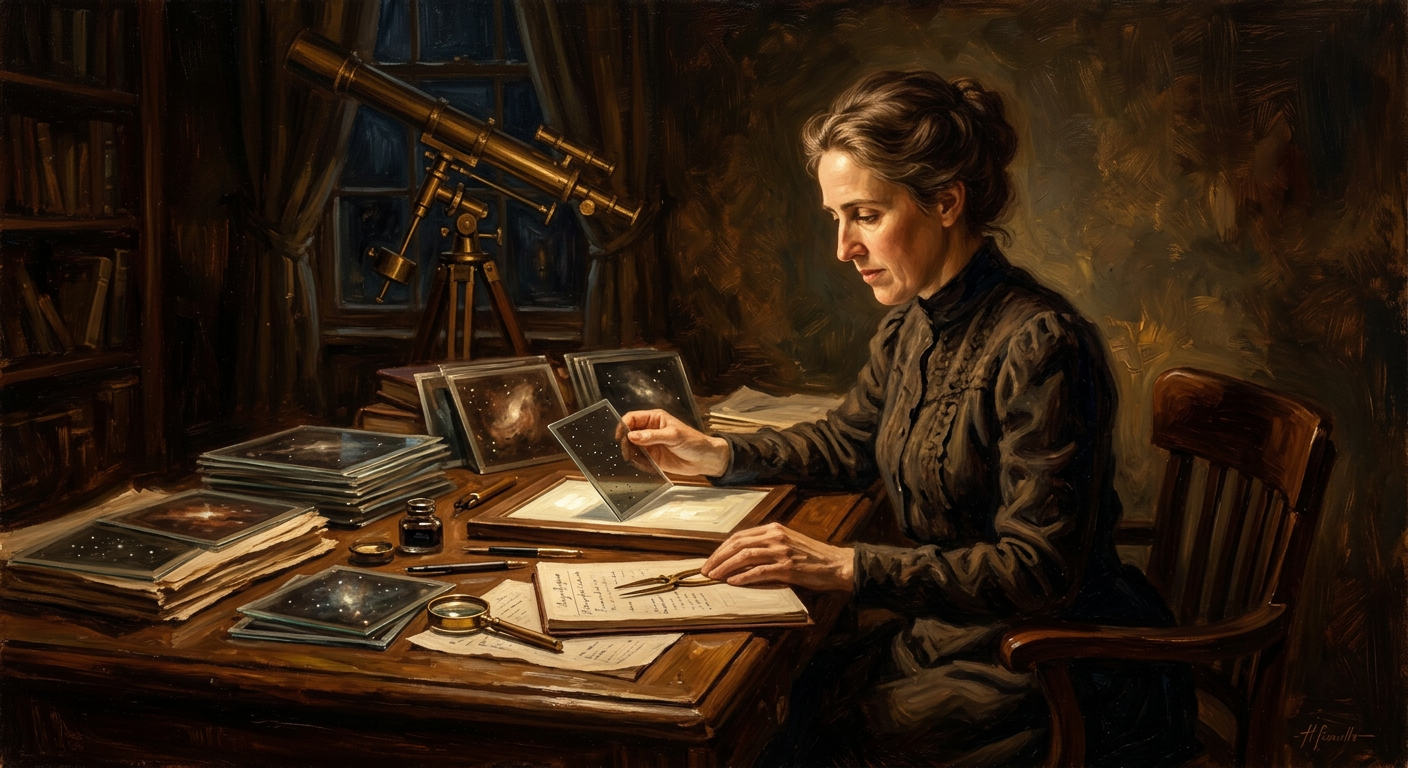
Henrietta Swan Leavitt
1868–1921 · Astronomy and stellar photometry
Discovered the period–luminosity relationship of Cepheid variable stars, providing a method for measuring cosmic distances.