_(2).jpg)
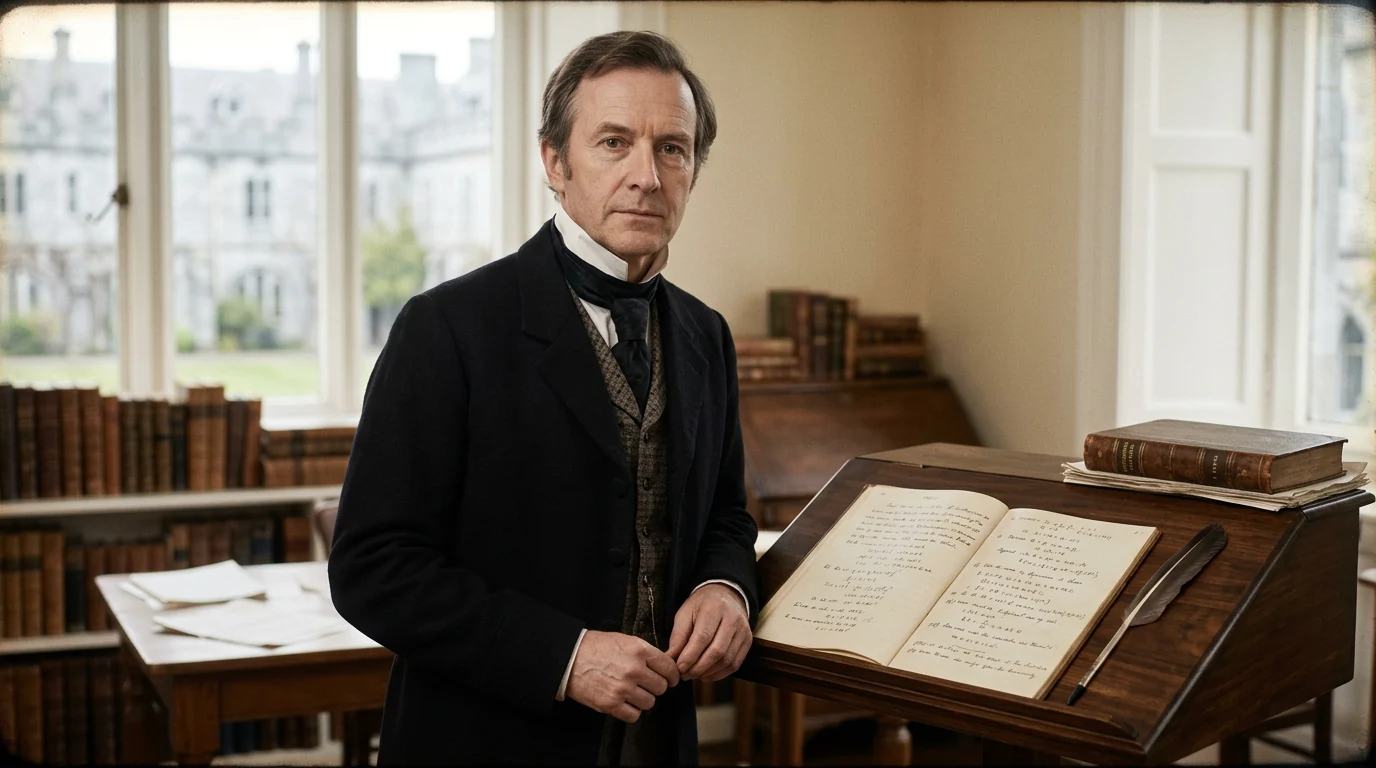
George Boole
1815–1864 · Mathematical logic and Boolean algebra
George Boole turned logic into algebra, laying mathematical foundations later used to design digital computers and electronic circuits.
Why is this scientist famous?
George Boole developed a mathematical language for logical reasoning, creating ideas that eventually became essential to electronic circuits and computing.
Boolean operations such as AND, OR and NOT are central to computer circuits, programming, searching and digital systems.
George's story
A self-taught mathematician
George Boole was born in Lincoln, England, on 2 November 1815. His formal schooling was limited, but he taught himself advanced subjects and began earning a living as a teacher while still young. He later ran schools and studied mathematics in his spare time. He did not follow the usual route of university examinations and degrees. Instead, he developed his work through reading, teaching, correspondence and original problem-solving.
Can reasoning be calculated?
Boole wondered whether the rules of logical statements could be expressed using algebra. Ordinary algebra helps calculate with numbers; his new approach used symbols and operations to describe conditions that are true or false. He published The Mathematical Analysis of Logic in 1847 and developed the ideas further in An Investigation of the Laws of Thought in 1854. The books helped create the field now called Boolean algebra, though later thinkers extended and changed his methods.
Logic meets electrical machines
Boole did not invent the computer and did not build modern electronic circuits. Long after his death, engineers recognised that switches could represent two logical states and combine according to operations closely related to Boolean algebra. AND, OR and NOT operations became basic building blocks of digital electronics and programming. This is why his nineteenth-century investigations are still useful when learning about contemporary computing.
A professor without a university degree
In 1849 Boole became the first professor of mathematics at Queen’s College Cork in Ireland, now part of University College Cork. He received recognition for research far beyond logic, including work on differential equations and other mathematical questions. He also received a Royal Medal in 1844 for mathematical research. His teaching and scholarship show that logic was only one part of a broad mathematical career.
A language still used every day
Boole died in Cork on 8 December 1864. The digital technology most associated with his name arrived many decades later. Computers perform physical operations using modern hardware, while Boolean logic provides one way to describe which combinations of conditions should lead to particular outcomes. From search filters to electronic gates, his legacy appears whenever a device must decide whether a condition is satisfied.
What did they discover?
Boolean algebra
Developed a symbolic algebra for analysing logical statements.
Mathematical logic
Showed how aspects of logical reasoning could be expressed as formal operations.
Foundations for digital circuits
Provided logic later adapted to combinations of electronic switches.
Work in analysis
Contributed significant research beyond logic, including differential equations.
Amazing facts
Boole was largely self-taught and did not obtain a conventional university degree.
He became a teacher while still a teenager and later ran his own school.
He received the Royal Society’s Royal Medal in 1844 for research in mathematics.
He published The Mathematical Analysis of Logic in 1847.
He became Queen’s College Cork’s first mathematics professor in 1849.
His 1854 book was titled An Investigation of the Laws of Thought.
Boolean AND, OR and NOT operations are central to modern digital logic.
He also wrote major works on differential equations, not just logic.
Timeline
Born in Lincoln, England.
Awarded the Royal Medal for mathematical research.
Published The Mathematical Analysis of Logic.
Became the first mathematics professor at Queen’s College Cork.
Published An Investigation of the Laws of Thought.
Elected a Fellow of the Royal Society.
Died in Cork, Ireland.
Awards & honours
Related Super Scientists
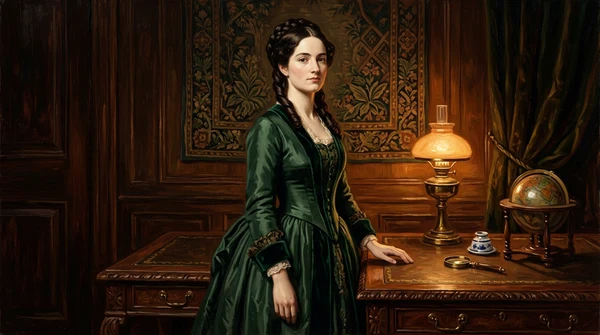
Ada Lovelace
1815–1852 · Mathematician
Publishing influential 1843 Notes on Charles Babbage's Analytical Engine, including a detailed algorithm for calculating Bernoulli numbers and a visionary description of uses beyond arithmetic.
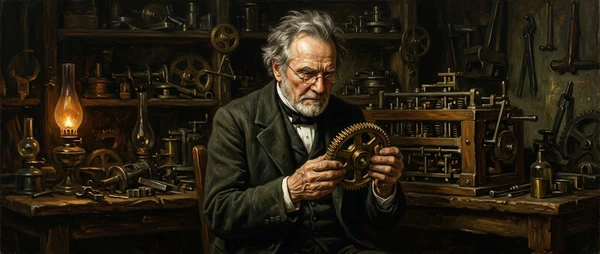
Charles Babbage
1791–1871 · Mathematician & Inventor
Designing the Difference Engine, an automatic mechanical calculator, and the Analytical Engine, an early design for a general-purpose programmable computer.
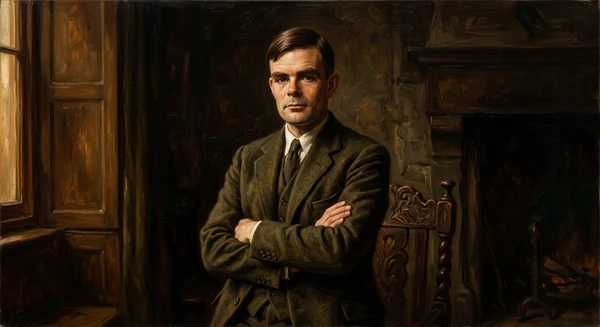
Alan Turing
1912–1954 · Mathematician & Computer Scientist
Making foundational contributions to theoretical computer science and artificial intelligence, and playing a major role in Allied codebreaking during the Second World War.