_(2).jpg)
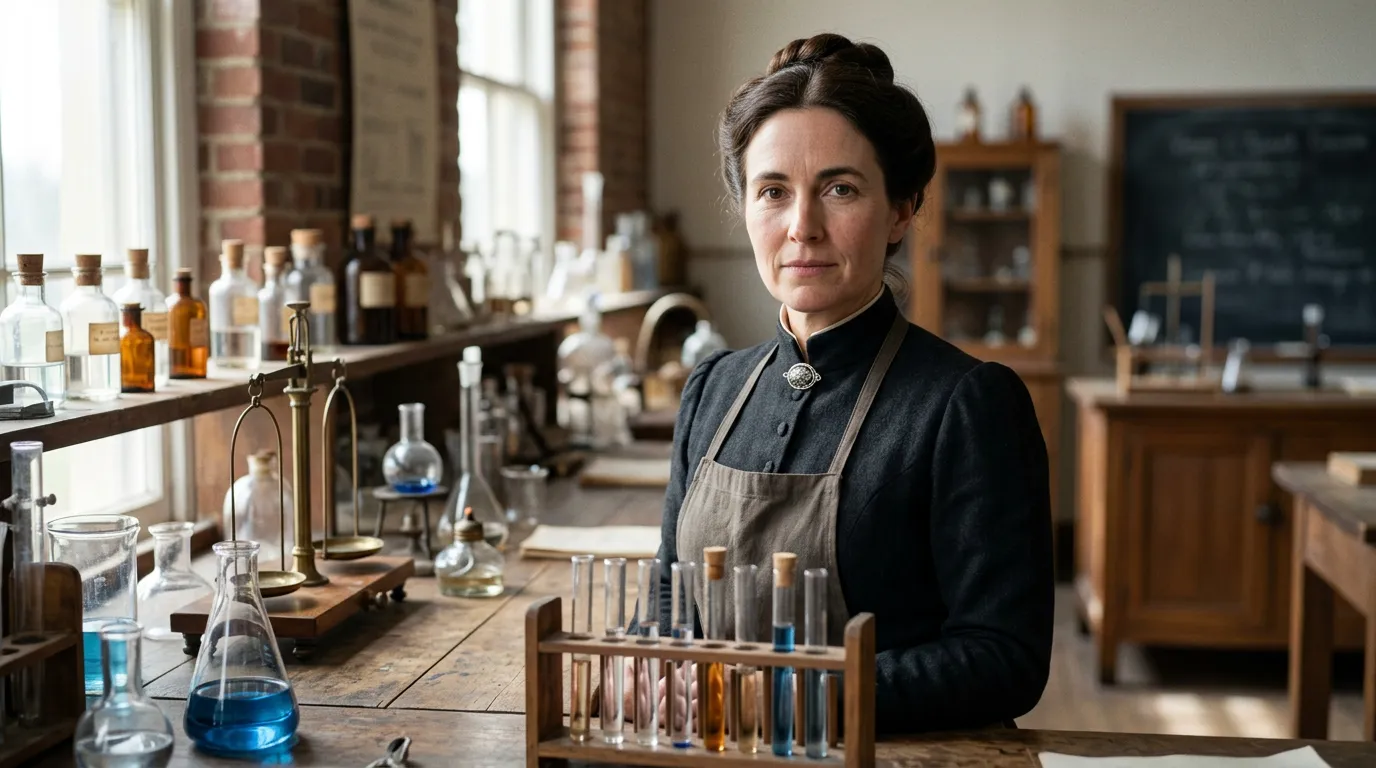
Ellen Henrietta Swallow Richards
1842–1911 · Environmental chemistry and sanitary engineering
Ellen Swallow Richards pioneered water-quality testing, helped expose pollution in Massachusetts and opened opportunities for women to study science.
Why is this scientist famous?
Pioneered scientific testing of water, air and food and helped establish environmental sanitation and home economics.
Testing water chemically remains essential to protecting public health.
Ellen's story
A determination to study
Ellen Swallow was born in Massachusetts in 1842 and grew up in a family that valued education. She saved money by teaching and taking other work so she could attend Vassar College. After graduating in 1870, she sought further chemistry training at a time when laboratories rarely admitted women. In 1871 she entered the Massachusetts Institute of Technology as its first female student.
Opening laboratory doors
Richards graduated from MIT in 1873 and helped others enter scientific education. She raised money for a Women's Laboratory, which opened in 1876 and offered practical science instruction. For years she taught there without pay. When the institute admitted women as regular students, the separate laboratory closed in 1883.
Reading the clues in water
Richards worked on sanitary chemistry, applying laboratory methods to everyday dangers in water, food and air. Beginning in 1887, she led analysis of more than 20,000 water samples for a Massachusetts survey. By comparing their chlorine levels with natural patterns, the researchers could identify signs of pollution. Her work helped inspire early public standards for clean water.
Science in everyday life
Richards also argued that better nutrition, kitchens and schools could be studied scientifically. She helped establish home economics as a field and supported educational opportunities for women. Her work connected chemistry with public health rather than treating the laboratory as a world apart. Modern environmental testing follows the same basic idea: measure carefully before deciding what is safe.
What did they discover?
Water-quality survey
Directed chemical analysis of thousands of Massachusetts water samples and helped identify patterns of human pollution.
Sanitary chemistry
Advanced the use of chemical testing to study clean water, food and living environments.
Education for women
Helped establish MIT's Women's Laboratory and taught practical science to women.
Science of daily life
Promoted systematic study of nutrition and healthy living conditions.
Amazing facts
She saved about $300 before entering Vassar College.
She became MIT's first female student in 1871.
Her chemistry degree from MIT was awarded in 1873.
She helped raise funds for a separate Women's Laboratory at MIT.
She taught women there without receiving a salary.
Her water survey involved more than 20,000 samples.
Her team mapped naturally occurring chlorine levels to help spot pollution.
She helped bring science into discussions of food, sanitation and school meals.
Timeline
Born in Massachusetts, United States.
Entered Vassar College.
Graduated from Vassar College.
Entered MIT as its first female student.
Graduated from MIT.
Helped open MIT's Women's Laboratory.
Became an instructor in sanitary chemistry at MIT.
Began leading a large Massachusetts water survey.
Died in Massachusetts.