_(2).jpg)
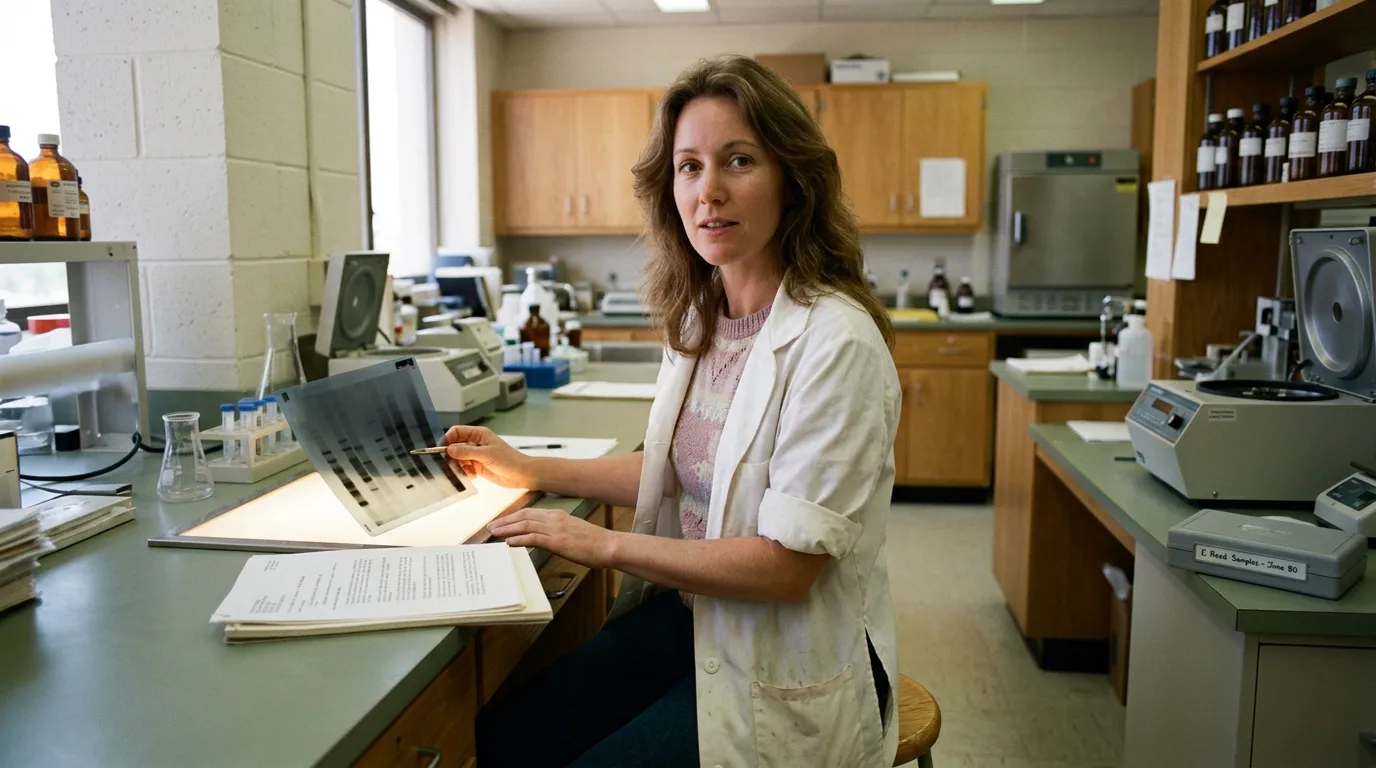
Elizabeth Blackburn
1948–present · Telomeres, telomerase and molecular biology
Elizabeth Blackburn discovered key features of telomere DNA and co-discovered telomerase, revealing how chromosome ends are maintained.
“You have to get the science right.”
Why is this scientist famous?
Elizabeth Blackburn helped explain how the ends of chromosomes are protected, co-discovering the enzyme telomerase and receiving the 2009 Nobel Prize.
Telomere research has transformed studies of chromosome stability, ageing and cancer, without proving that telomerase alone determines lifespan.
Elizabeth's story
Curiosity on the coast of Tasmania
Elizabeth Helen Blackburn was born in Hobart, Tasmania, on 26 November 1948. Her parents were doctors, and she was fascinated by living things from an early age. She studied at the University of Melbourne and later earned a doctorate at the University of Cambridge. At Yale University, she worked with Joseph Gall to investigate the ends of DNA molecules. The questions she asked were simple to state but difficult to answer: why do chromosome ends not disappear each time a cell copies its DNA?
Protecting the ends of chromosomes
Chromosomes carry genetic information, but their ends are vulnerable during copying and repair. Blackburn studied telomeres, regions of repeated DNA at chromosome tips. Working with a single-celled organism named Tetrahymena, she identified repeating DNA sequences that helped explain how these ends differ from ordinary chromosome regions. Her work helped reveal why cells need special protective structures at their chromosome tips. Telomeres are sometimes compared with the plastic ends of shoelaces, although real chromosome protection involves DNA and specialised proteins.
The enzyme that adds DNA back
After moving to the University of California, Berkeley, Blackburn collaborated with Jack Szostak to show that telomere sequences could stabilise chromosome ends in other organisms. In 1984, her graduate student Carol Greider detected an unusual activity that could lengthen telomere DNA. Their discovery, reported in 1985, identified the enzyme telomerase. The work was a genuine collaboration involving experiments, interpretation and earlier predictions, not a lone discovery by Blackburn.
Not simply a clock for ageing
Researchers later found that telomerase can help maintain telomeres in some cells, while its activity is limited in many ordinary human body cells. Telomere shortening is associated with cell ageing, and the enzyme is active in many cancers. These connections make telomerase important for medicine, but do not mean that switching on telomerase would safely make a person younger. Biology is more complicated: tumour cells can also exploit mechanisms that keep dividing cells alive.
A Nobel Prize for chromosome ends
Blackburn joined the faculty at the University of California, San Francisco, in 1990 and pursued research on telomeres and telomerase. In 2009 she shared the Nobel Prize in Physiology or Medicine with Carol Greider and Jack Szostak. Her work illustrates how studying a tiny organism can lead to a discovery relevant to nearly every kind of living cell that has linear chromosomes. Modern genetics continues to examine the balance between protecting genetic material and controlling cell growth.
What did they discover?
Telomere DNA
Helped identify the repeated DNA sequences at the ends of linear chromosomes.
Telomerase
Co-discovered an enzyme that replenishes telomere DNA during chromosome maintenance.
Chromosome stability
Helped explain how chromosome ends are protected from loss and damage.
Cell ageing and cancer
Opened new lines of research into controlled cell division and tumour growth.
Amazing facts
She was born in Hobart, Tasmania, in 1948.
She trained in biology at the University of Melbourne and earned a doctorate at Cambridge.
At Yale she studied a tiny single-celled organism called Tetrahymena.
Her early work identified repeating DNA at chromosome ends called telomeres.
With Jack Szostak she investigated how telomere DNA protects chromosomes.
Carol Greider, working in Blackburn’s lab, detected telomerase activity in 1984.
Blackburn and Greider reported telomerase in 1985.
She shared the 2009 Nobel Prize in Physiology or Medicine with Greider and Szostak.
Timeline
Born in Hobart, Tasmania.
Began postdoctoral research on telomeres at Yale University.
Published telomere research and joined the University of California, Berkeley.
Carol Greider detected telomerase activity in Blackburn’s laboratory.
Telomerase discovery published by Blackburn and Greider.
Joined the University of California, San Francisco.
Shared a Lasker Award for basic medical research on telomerase.
Shared the Nobel Prize in Physiology or Medicine.
Awards & honours
Related Super Scientists
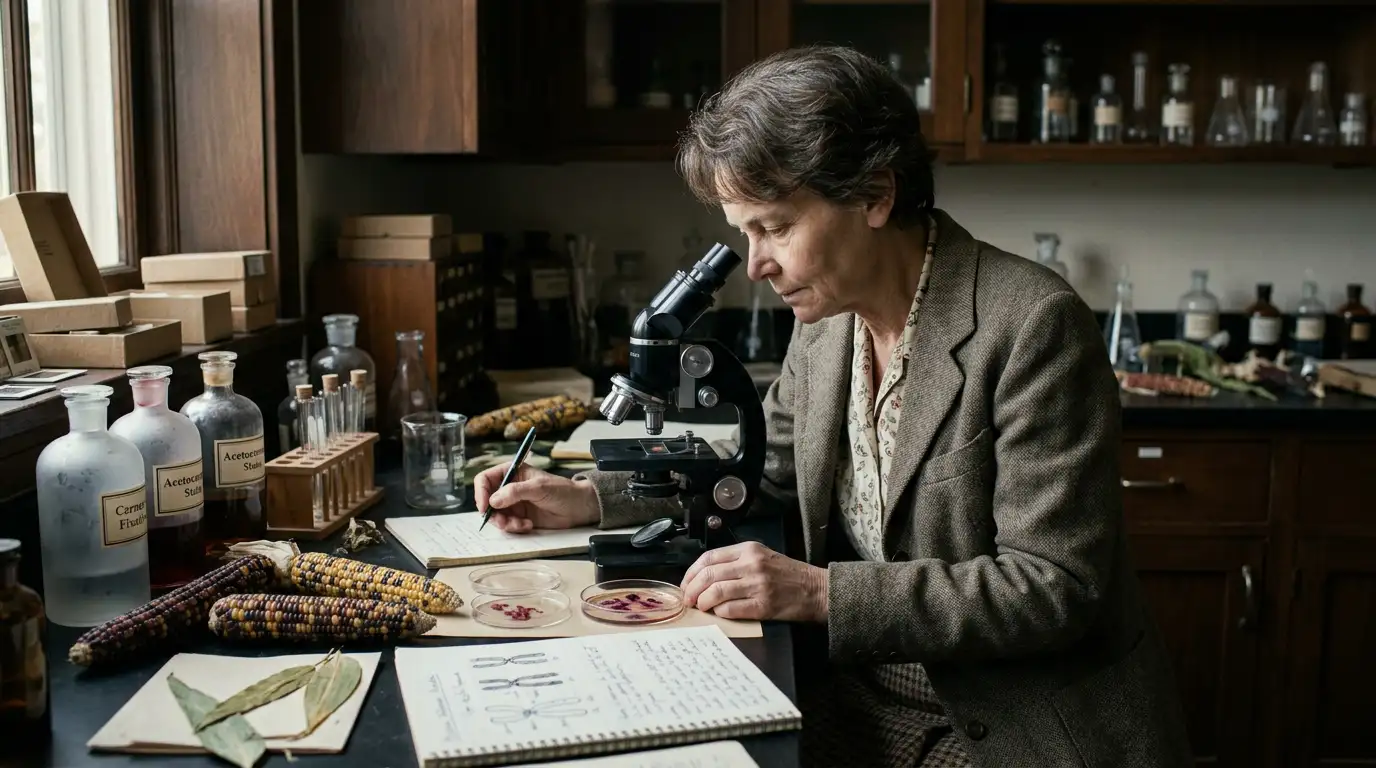
Barbara McClintock
1902–1992 · Geneticist
Discovering transposable elements — jumping genes — that can move within the genome.
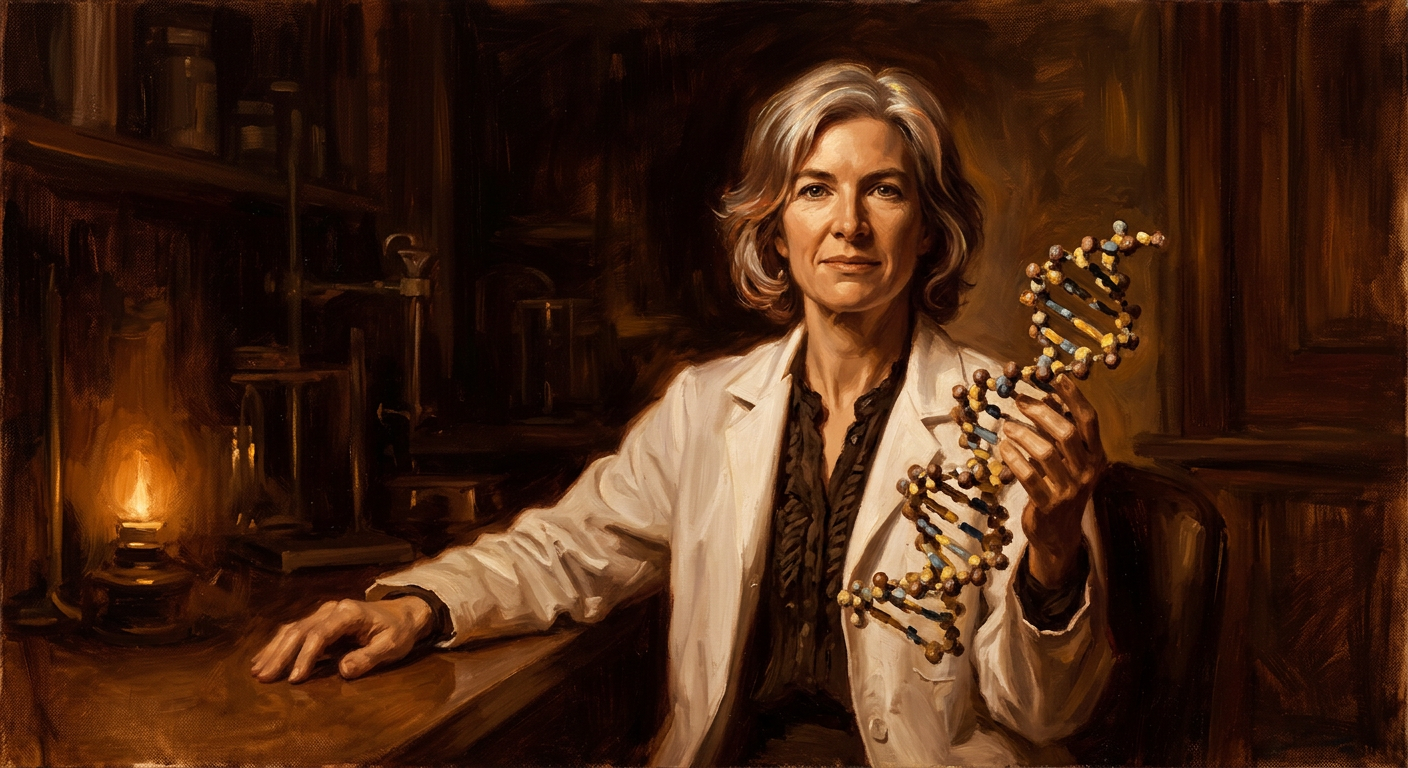
Jennifer Doudna
1964–present · Biochemist
Co-developed CRISPR-Cas9, the gene-editing technology that allows scientists to rewrite DNA with extraordinary precision, and won the 2020 Nobel Prize in Chemistry for the work.
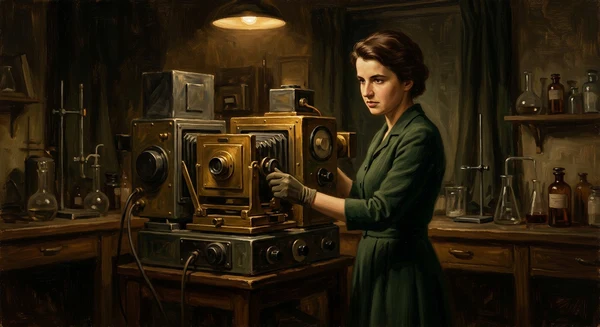
Rosalind Franklin
1920–1958 · Chemist & X-ray Crystallographer
Producing crucial X-ray diffraction data on DNA, including Photograph 51, with her student Raymond Gosling.