_(2).jpg)
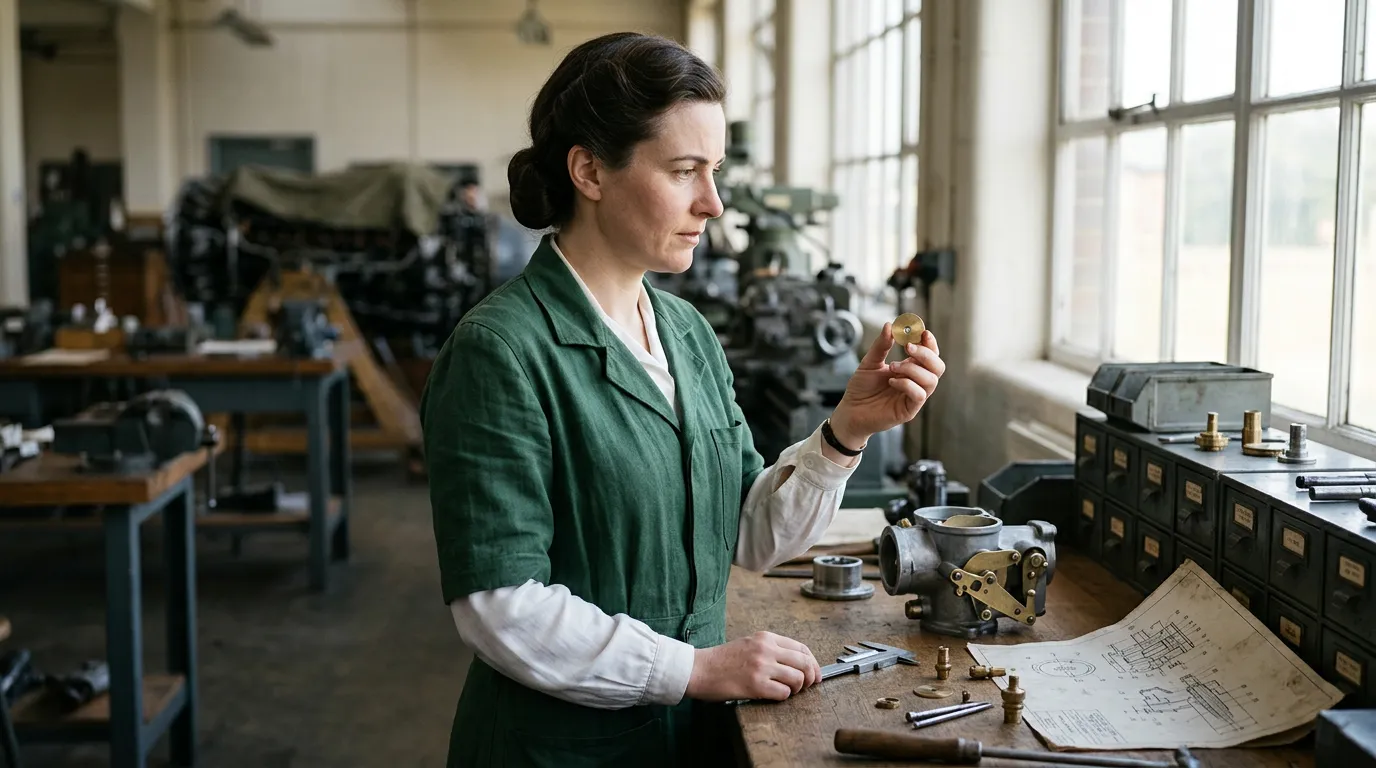
Beatrice Shilling
1909–1990 · Aeronautical and mechanical engineering
Engineer Beatrice Shilling designed a simple device to reduce fuel flooding in Merlin aircraft engines, helping RAF pilots carry out demanding wartime manoeuvres.
Why is this scientist famous?
Beatrice Shilling devised a small fuel-flow restrictor that helped Rolls-Royce Merlin aircraft engines keep running during steep wartime manoeuvres.
Her work shows how testing, precise measurements and a carefully designed small component can make complex machines safer and more reliable.
Beatrice's story
A fascination with machines
Beatrice Shilling was born in Waterlooville, Hampshire, on 8 March 1909. As a teenager she was interested in engines and the way mechanical parts fitted together. She began working with electrical equipment before going to the University of Manchester to study engineering. In 1932 she completed a degree in electrical engineering, followed by a master’s degree in mechanical engineering in 1933. This was an unusual career path for a woman at a time when engineering offered few opportunities to female students.
The motorcycle racer
Engineering was not just a classroom subject for Shilling. She enjoyed motorcycles, understood their engines and put that knowledge to work on the racing circuit. In 1934 she achieved a Brooklands Gold Star after riding her modified Norton motorcycle at more than 100 miles per hour around the track. The same habit of thinking about the behaviour of machines would become vital during the Second World War. In 1936 she joined the Royal Aircraft Establishment at Farnborough, which studied problems affecting aircraft performance.
A dangerous problem in the air
British fighter aircraft such as the Spitfire and Hurricane used powerful Rolls-Royce Merlin engines. During certain nose-down manoeuvres, the forces on the aircraft could disrupt the fuel flow in the carburettor, causing the engine to lose power. An enemy aircraft with a different fuel system could perform the manoeuvre without suffering the same difficulty. Shilling studied the problem and developed a carefully sized metal restrictor that limited the fuel reaching the carburettor at critical moments. The device was small, but it helped pilots use their engines more reliably during difficult manoeuvres.
A tiny part with a big job
From 1941 Shilling and a team helped fit the Royal Aircraft Establishment restrictor to fighter aircraft at operational airfields. The solution became informally known by nicknames including Miss Shilling’s orifice, meaning the precisely sized opening in the metal part. It was not a complete new engine or a permanent cure for every fuel-system problem. Instead it provided an important practical improvement while other carburettor designs were developed. Shilling’s work demonstrates that a well-understood small change can make a major difference to a large machine.
Engineering beyond the war
Shilling continued working at the Royal Aircraft Establishment after the war, investigating other technical questions related to aircraft and their equipment. Her work included later aerospace projects and studies of how machinery performed under demanding conditions. She received an Officer of the Order of the British Empire honour for her wartime service and retired from the establishment in 1969. Shilling died in 1990, remembered for her engineering ability as well as her motorcycle racing. Her career combined scientific understanding with the practical skill to test and improve real machines.
What did they discover?
The RAE fuel-flow restrictor
Shilling developed a precisely sized metal restrictor to reduce carburettor flooding when Rolls-Royce Merlin engines experienced negative acceleration during steep aircraft manoeuvres.
Rapid wartime engineering implementation
She and colleagues helped bring the restrictor into use at fighter airfields, creating a practical short-term improvement while further fuel-system work continued.
Broader aircraft engineering
Her Royal Aircraft Establishment career extended beyond the restrictor to research and development on aircraft systems and performance.
Practical mechanical analysis
She brought detailed understanding of engines from her education, racing experience and research work to problems that demanded tested engineering solutions.
Amazing facts
She was interested in mechanical tools and engines long before becoming a professional engineer.
Her first motorcycle arrived when she was about fourteen, and she learned by examining its mechanism.
At the University of Manchester she was one of very few women studying engineering at that time.
In 1934 she earned a Brooklands Gold Star after a motorcycle lap faster than 100 miles per hour.
The famous wartime modification was a small metal piece with a carefully measured hole, not an entirely new engine.
She and fellow engineers travelled to operational RAF stations to help install the modification.
Her nickname was Tilly, and the fuel restrictor acquired informal names connected to her surname.
Her later work included helping to design a bobsled for an RAF Olympic team.
Timeline
Born in Waterlooville, Hampshire, England.
Began studying electrical engineering at the University of Manchester.
Completed her electrical engineering degree.
Completed a master’s degree in mechanical engineering.
Earned a Brooklands Gold Star for high-speed motorcycle racing.
Joined the Royal Aircraft Establishment at Farnborough.
Her team began fitting the RAE fuel-flow restrictor to fighter aircraft.
Retired from the Royal Aircraft Establishment.
Died in England.
Awards & honours
Related Super Scientists

Isambard Kingdom Brunel
1806–1859 · Civil and Marine Engineer
Brunel was chief engineer of the Great Western Railway and designed major bridges, tunnels and ships including Great Western, Great Britain and Great Eastern. His work pushed nineteenth-century railway and ship engineering into new territory.
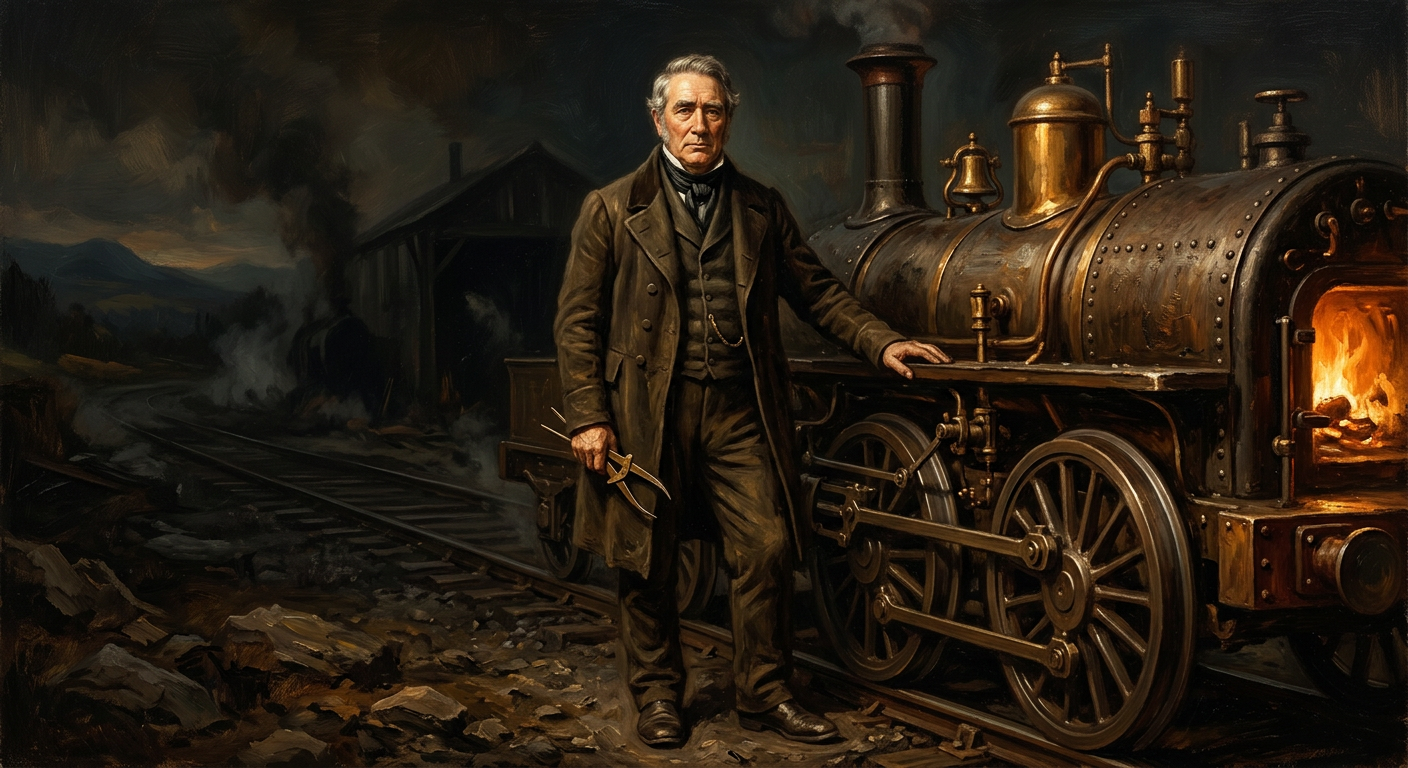
George Stephenson
1781–1848 · Engineer and Inventor
Developed successful early steam locomotives and engineered pioneering public railways that helped establish steam-powered rail transport.