_(2).jpg)
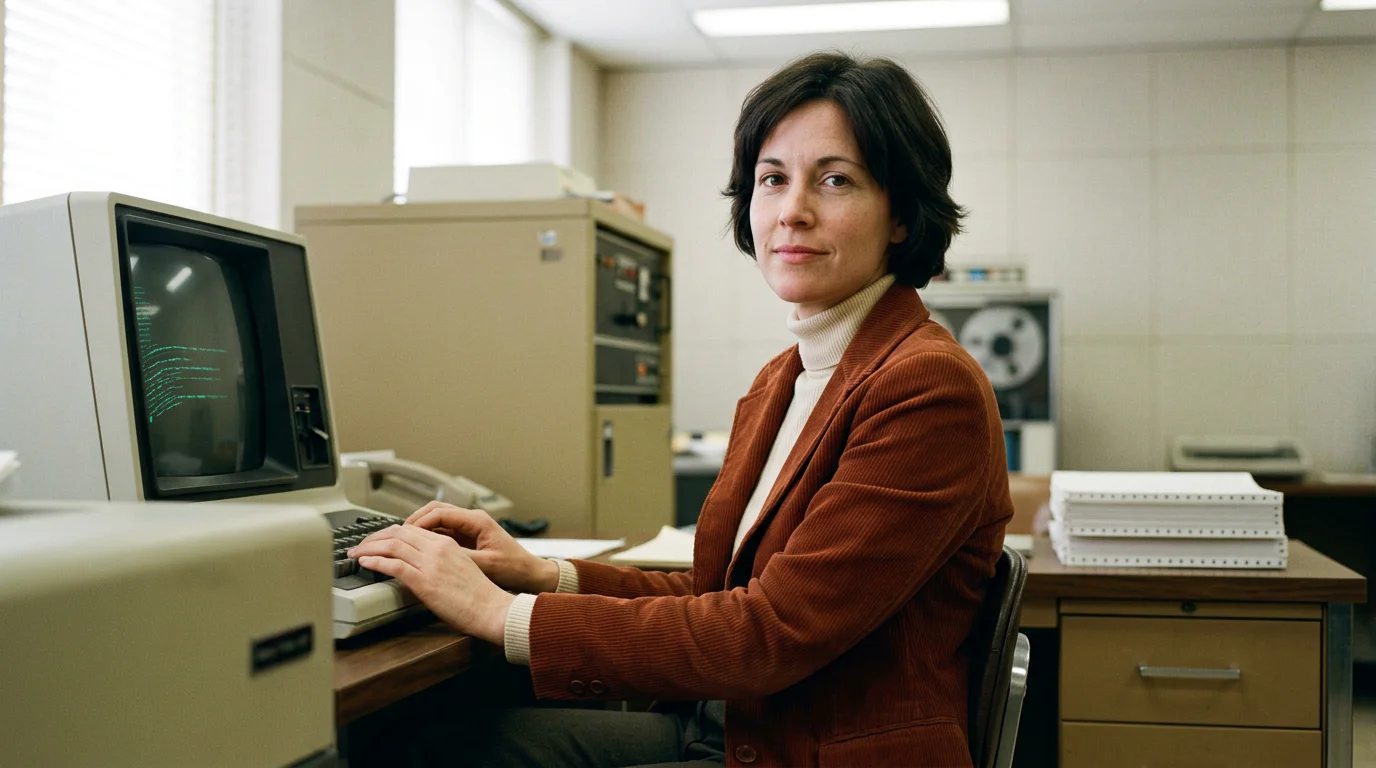
Barbara Liskov
1939–present · Computer science and programming languages
Computer scientist Barbara Liskov pioneered data abstraction and reliable software design, influencing modern programming languages and distributed systems.
“I tend to look for research in areas where there are hard problems and finding good solutions is important to advance the field.”
Why is this scientist famous?
Pioneered data abstraction, designed the CLU and Argus programming languages and helped establish principles for reliable object-oriented and distributed software.
Ideas from Liskov’s work help programmers build modular, reusable and fault-tolerant software, from programming languages to distributed online services.
Barbara's story
From mathematics to programming
Barbara Jane Huberman Liskov was born in Los Angeles on 7 November 1939 and grew up in San Francisco. She studied mathematics at the University of California, Berkeley, graduating in 1961. After university she joined the MITRE Corporation, where she discovered that she enjoyed programming and was good at it. She later worked on computer translation of human languages at Harvard before entering graduate study at Stanford.
A doctorate in computer science
At Stanford, Liskov worked in the growing field of computer science and completed a doctorate in 1968, becoming one of the earliest women in the United States to earn a PhD from a computer-science department. Her thesis involved a program for playing chess endgames. She returned to MITRE and worked on computer design and operating systems, including the experimental Venus system. In 1972 she joined the Massachusetts Institute of Technology faculty.
CLU and the power of abstraction
At MIT, Liskov focused on a problem that every large software project faces: how to organise code so that one part can change without breaking everything else. Her work on data abstraction led to CLU, a programming language designed to let programmers define data through the operations that could be performed on it while hiding unnecessary implementation details. These ideas influenced later programming languages and software-engineering practice. Liskov’s work helped turn abstraction from a useful idea into a practical way of designing reliable programs.
Distributed systems and substitutability
Liskov later led work on Argus, a high-level language for distributed programs, and on systems including Thor and Viewstamped Replication. With Jeannette Wing she helped formalise behavioural subtyping, associated with what is now called the Liskov substitution principle: a subtype should be usable wherever its parent type is expected without breaking the promised behaviour. Her research also contributed to fault-tolerant distributed computing. She received the 2008 ACM A. M. Turing Award for contributions to programming-language and system design.
What did they discover?
Data abstraction and CLU
Liskov helped establish data abstraction as a practical foundation for modular software and designed CLU to support these ideas directly.
Argus and distributed programming
Argus provided high-level language support for programs spread across multiple computers and helped advance thinking about reliable distributed systems.
Liskov substitution principle
Her work on behavioural subtyping helped define when one software type can safely stand in for another without violating the expectations of the program using it.
Fault-tolerant distributed systems
Her later research included replication methods and Byzantine fault tolerance, helping distributed services remain reliable when components fail or behave incorrectly.
Amazing facts
She studied mathematics at Berkeley before she had formal training in computer science.
Her first professional programming experience came at MITRE, where she discovered an aptitude for software work.
Her Stanford doctoral thesis involved a computer program for playing chess endgames.
She joined MIT’s faculty in 1972 and became a full professor in 1980.
The name CLU came from the word ‘cluster’, the mechanism used to group the operations of an abstract data type.
Argus was designed to support programs running across multiple machines rather than on only one computer.
MIT named her an Institute Professor in 2008, its highest faculty title.
She was inducted into the National Inventors Hall of Fame in 2012 for programming-language and system-design innovations.
Timeline
Born in Los Angeles, California.
Graduates from the University of California, Berkeley with a bachelor’s degree in mathematics.
Completes a PhD in computer science at Stanford University.
Joins the MIT faculty.
Becomes a full professor at MIT and develops distributed-computing research including Argus.
Receives the IEEE John von Neumann Medal.
Receives the ACM A. M. Turing Award and is named an MIT Institute Professor.
Is inducted into the National Inventors Hall of Fame.
Receives the IEEE Computer Society Computer Pioneer Award.
Awards & honours
Related Super Scientists

Alan Turing
1912–1954 · Mathematician & Computer Scientist
Making foundational contributions to theoretical computer science and artificial intelligence, and playing a major role in Allied codebreaking during the Second World War.

Grace Hopper
1906–1992 · Computer Scientist & Naval Admiral
Developing one of the earliest compilers and pioneering word-based programming languages that helped make computers easier to program.
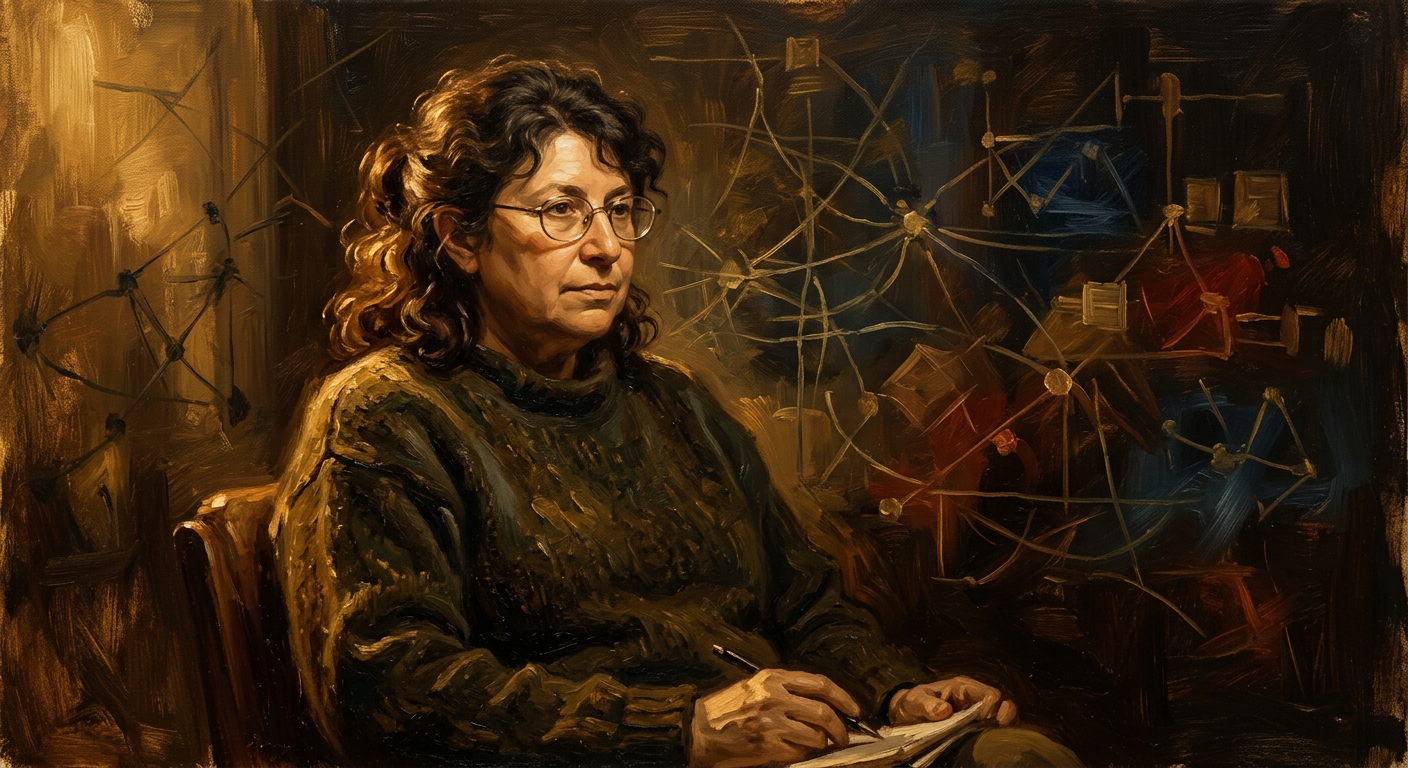
Radia Perlman
1951–present · Computer Scientist and Network Engineer
Designed the Spanning Tree Protocol, which prevents forwarding loops in bridged Ethernet networks and allowed Ethernet networks to grow far larger and more reliably.