_(2).jpg)
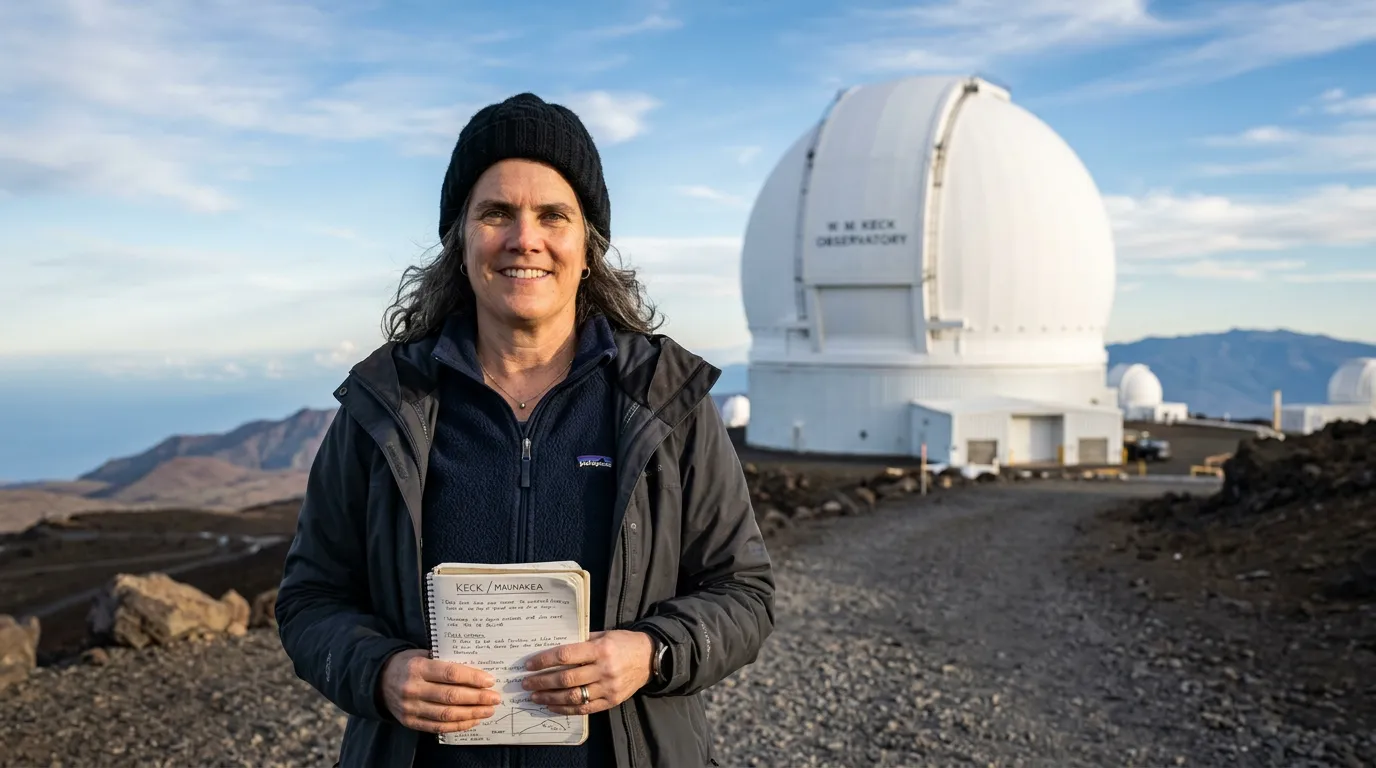
Andrea Ghez
1965–present · Astronomy and astrophysics
Andrea Ghez tracked stars orbiting the Milky Way's centre, providing powerful evidence for a supermassive black hole associated with Sagittarius A*.
“Focus on getting the science right, rather than being first.”
Why is this scientist famous?
Ghez led a team that tracked stars orbiting the Milky Way's centre, providing strong evidence for a supermassive black hole at the Galactic Centre.
Her repeated measurements of stars near the Galactic Centre demonstrate how patient observation and improved instruments can reveal something invisible. The work also tests Einstein's theory of gravity in one of the most extreme environments in the galaxy.
Andrea's story
A childhood in Chicago and New York
Andrea Ghez was born on 16 June 1965 in New York City and grew up in Chicago. She earned a bachelor’s degree in physics at the Massachusetts Institute of Technology (MIT) in 1987, then completed a doctorate at the California Institute of Technology in 1992. She joined the University of California, Los Angeles (UCLA) faculty in 1994.
Watching the centre of the galaxy
Ghez leads research on the Galactic Centre using the W. M. Keck Observatory in Hawai‘i. Her team tracks stars near the Milky Way’s centre over many years. The orbits of these stars reveal a huge amount of mass concentrated in a small region: powerful evidence for a supermassive black hole associated with Sagittarius A*. The mass is about four million times that of the Sun.
Seeing through dust with infrared
The centre of the galaxy is hidden behind obscuring dust. Near-infrared observations penetrate this dust more effectively than ordinary visible light. Ghez’s team uses infrared cameras to detect stars that would otherwise be invisible, making the precise measurements possible.
Correcting the atmosphere’s blur
Even with large telescopes, Earth’s atmosphere blurs the view of distant stars. Adaptive optics adjusts for atmospheric distortion in real time, making ground-based observations much sharper. Ghez helped pioneer the use of adaptive optics to study stars near the Galactic Centre.
Testing Einstein at the galaxy’s heart
One tracked star, called S0-2, completes an orbit around the Galactic Centre in roughly sixteen years. By following a substantial part of this orbit, the team could test general relativity near a supermassive black hole. Their 2019 study supported Einstein’s theory in that test rather than disproving it.
Nobel recognition
Reinhard Genzel led an independent research team pursuing similar measurements. In 2020, Ghez and Genzel shared half the Nobel Prize in Physics; Roger Penrose received the other half for theoretical work on black holes. Ghez became the fourth woman to win the Physics Nobel. She uses her visibility to encourage younger scientists and stresses getting the science right.
What did they discover?
Stellar orbits at the Galactic Centre
Led a team that tracked stars orbiting the Milky Way’s centre over many years, providing strong evidence for a supermassive black hole of about four million solar masses.
Adaptive optics in astronomy
Helped pioneer the use of adaptive optics to correct atmospheric distortion, enabling sharper ground-based observations of stars near the Galactic Centre.
Testing general relativity near a black hole
The team’s 2019 study of star S0-2’s orbit tested Einstein’s theory of gravity near the supermassive black hole, supporting the theory in that environment.
Amazing facts
She investigated an object by watching other objects move. Stars orbiting the Galactic Centre revealed a compact mass that could not be explained as an ordinary visible star.
The inferred giant has about four million times the Sun’s mass. The important evidence combines that huge mass with how tightly it is confined.
One tracked star completes an orbit in roughly sixteen years. S0-2 made it possible to follow a substantial part of a stellar orbit within a researcher’s career.
Invisible-to-our-eyes light helps reveal the centre. Near-infrared observations penetrate intervening dust more effectively than ordinary visible-light observations.
Astronomers correct the atmosphere’s blur. Adaptive optics adjusts for atmospheric distortion, making ground-based observations much sharper.
The telescope mirrors are enormous. Keck operates two telescopes with ten-metre primary mirrors, giving the team powerful tools for measuring distant stars.
Her team’s observations also test gravity. Their 2019 study tested general relativity near the central black hole; evidence supported the theory in that test rather than disproving Einstein.
She became the fourth woman to win the Physics Nobel in 2020. She uses her visibility to encourage younger scientists and stresses getting the science right.
Timeline
Born in New York City, United States.
Completes her bachelor’s degree in physics at MIT.
Completes her doctorate at the California Institute of Technology.
Joins the UCLA faculty.
Her team provides evidence for a supermassive black hole at the Galactic Centre.
Her team reports stellar acceleration near the Galactic Centre.
Receives a MacArthur Fellowship.
Shares the Crafoord Prize in Astronomy with Reinhard Genzel.
Publishes a gravity test near the central black hole.
Shares half the Nobel Prize in Physics with Reinhard Genzel; the other half goes to Roger Penrose.
Awards & honours
Related Super Scientists
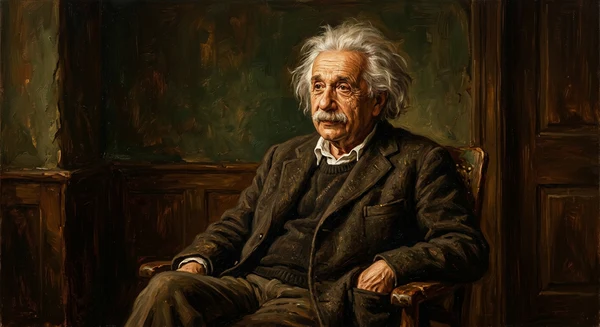
Albert Einstein
1879–1955 · Theoretical Physicist
Developing the theory of relativity and the equation E=mc².
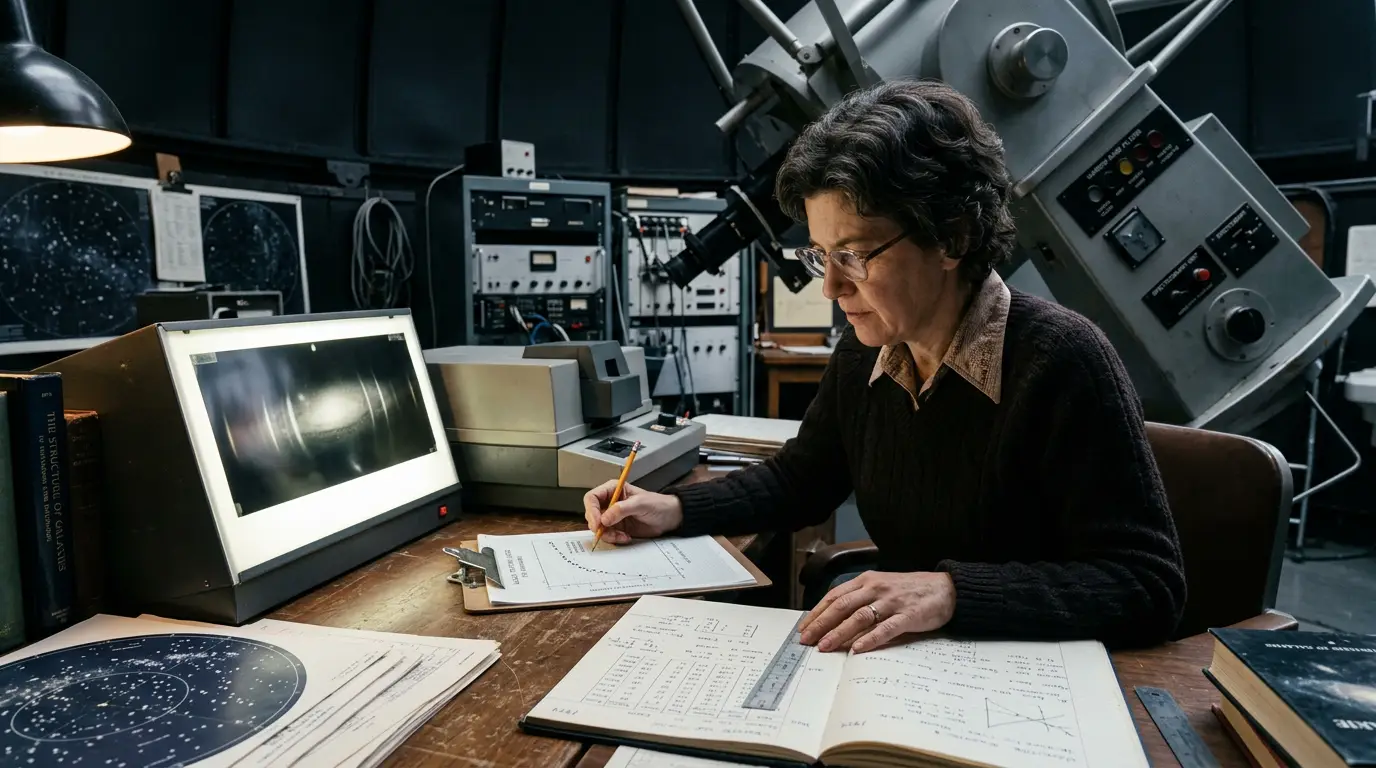
Vera Rubin
1928–2016 · Astronomer
Providing the most compelling early evidence for the existence of dark matter through galaxy rotation measurements.
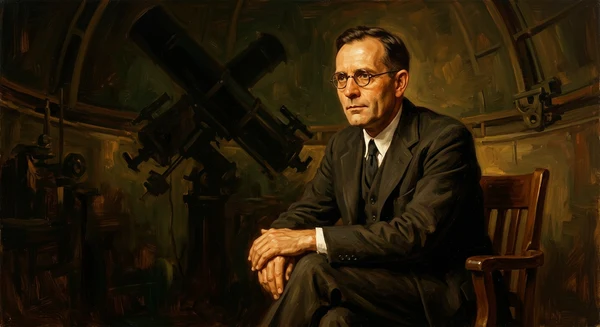
Edwin Hubble
1889–1953 · Astronomer
Showed that galaxies exist far beyond the Milky Way and published the distance–redshift relationship now called the Hubble–Lemaître law.