_(2).jpg)
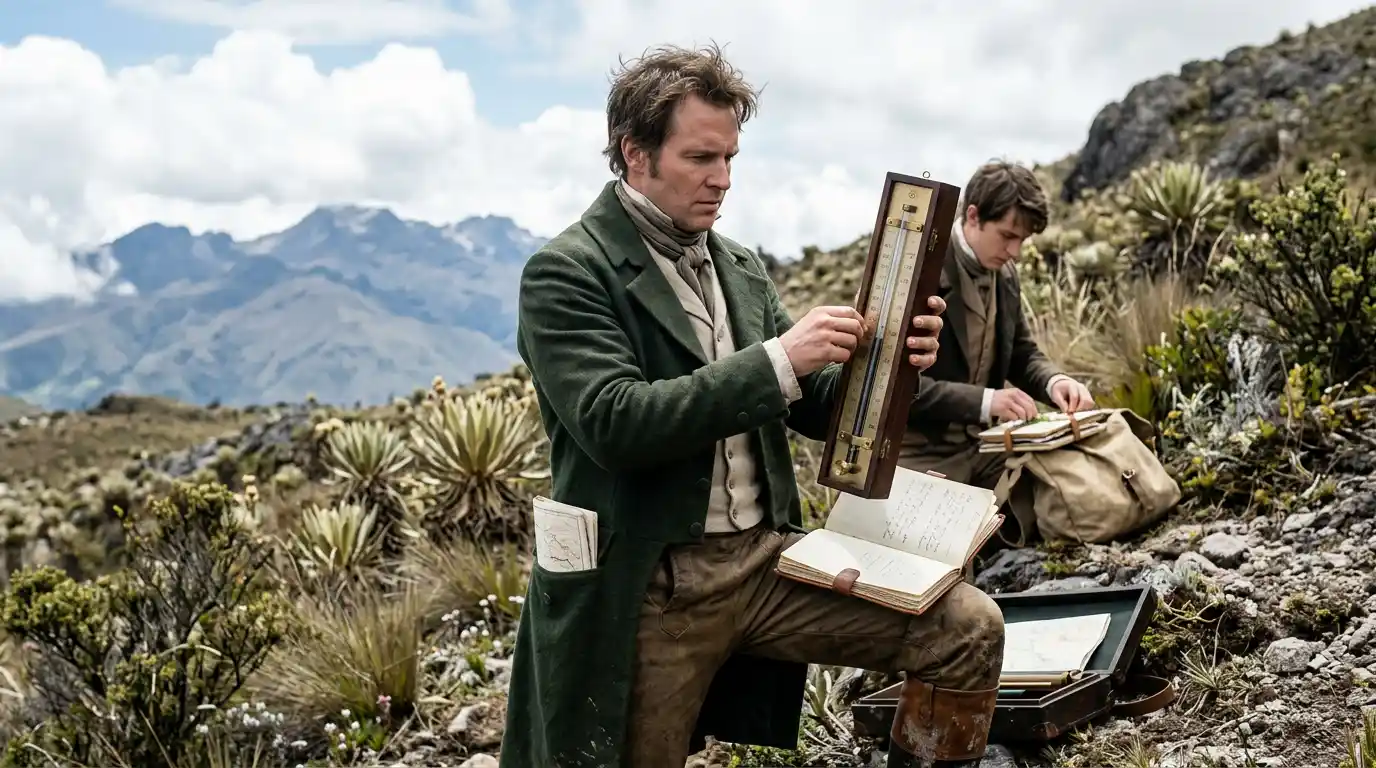
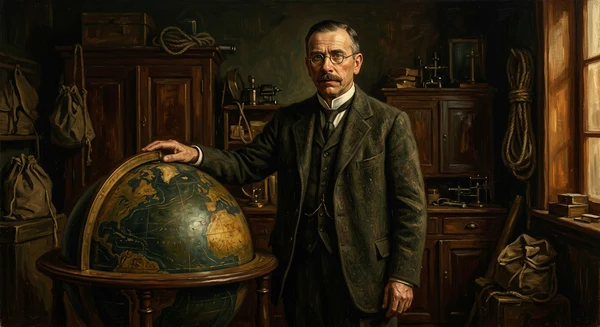
Alexander von Humboldt
1769–1859 · Natural science, geography and earth science
Alexander von Humboldt was a Prussian naturalist and geographer whose expeditions and field measurements laid foundations for biogeography, climatology and ecology.
“Everything is interrelated, nothing stands alone, and a shared bond embraces all organic nature.”
Why is this scientist famous?
A Prussian naturalist and geographer whose field measurements revealed the interconnections of nature.
Humboldt’s field measurement and comparative natural science laid foundations for later fields including biogeography, physical geography, climatology and ecology.
Alexander's story
A scientific traveller
Friedrich Wilhelm Heinrich Alexander von Humboldt was born on 14 September 1769 in Berlin, Prussia. He was educated by private tutors when young and studied at Frankfurt (Oder) and Göttingen. He studied mining and related sciences at Freiberg and entered the Prussian mining service, where his work included scientific investigation and practical inspection. Humboldt financed much of his major scientific travel using his own resources and inheritance.
The American expedition
From 1799 to 1804 Humboldt travelled through the Americas. His principal scientific companion was French botanist and physician Aimé Bonpland. They carried an unusually large collection of precision scientific instruments, including barometers, thermometers, sextants and a marine chronometer. Humboldt used measurements rather than relying only on visual description. In 1802 Humboldt, Bonpland and Carlos Montúfar climbed Chimborazo in Ecuador, reaching approximately 5,900 metres but not the summit. His observations of changing vegetation with altitude helped him recognise broad relationships between elevation, climate and plant distribution, contributing strongly to plant geography.
Measuring nature’s connections
Humboldt’s defining scientific method involved extensive measurement, field observation, comparison across regions and connecting climate, altitude, geography, plants and other natural phenomena. During his Pacific journey he measured the temperature and characteristics of the cold coastal current later named the Humboldt Current, while acknowledging that local fishermen already knew it. His work stressed that different parts of nature are interconnected rather than isolated, helping lay foundations for later fields including biogeography, physical geography, climatology and ecology.
Kosmos and legacy
After completing the American expedition and returning to Europe in 1804, Humboldt undertook a major expedition through Russia and Central Asia in 1829. He began sustained work on Kosmos in the 1830s, and the first volume was published in 1845. The multi-volume work attempted a broad physical description of the universe and nature as an interconnected whole; the fifth volume was published posthumously. In 1852 he received the Copley Medal of the Royal Society for his eminent services in terrestrial physics. He died in Berlin on 6 May 1859.
What did they discover?
Plant geography and altitude-climate relationships
His observations of changing vegetation with altitude on Chimborazo helped reveal broad relationships between elevation, climate and plant distribution, contributing strongly to plant geography.
Comparative field measurement across regions
Humboldt’s defining method involved extensive measurement, field observation and comparison across regions, connecting climate, altitude, geography and natural phenomena.
Kosmos
His multi-volume work, first published in 1845, attempted a broad physical description of the universe and nature as an interconnected whole.
Amazing facts
Humboldt financed much of his major scientific travel using his own resources and inheritance.
On his American expedition he travelled with dozens of advanced measuring instruments, including barometers, thermometers, sextants and a marine chronometer.
Aimé Bonpland accompanied him through much of his major 1799–1804 American journey.
In 1802 Humboldt reached about 5,900 metres on Chimborazo but did not reach the summit.
His mountain observations helped reveal how vegetation changes systematically with altitude and climate.
He measured the cold Pacific current later named after him but acknowledged that local fishermen already knew about it.
His scientific work stressed that different parts of nature are interconnected rather than isolated.
His multi-volume Kosmos attempted to bring together a remarkably wide range of knowledge about the natural world.
Timeline
Born in Berlin
Studied at Göttingen and Freiberg and entered the Prussian mining service
Began his major American expedition with Aimé Bonpland
Climbed to about 5,900 metres on Chimborazo while carrying out scientific observations
Completed the American expedition and returned to Europe
Undertook a major expedition through Russia and Central Asia
Began sustained work on Kosmos
First volume of Kosmos published
Received the Royal Society’s Copley Medal
Died in Berlin
Awards & honours
Related Super Scientists
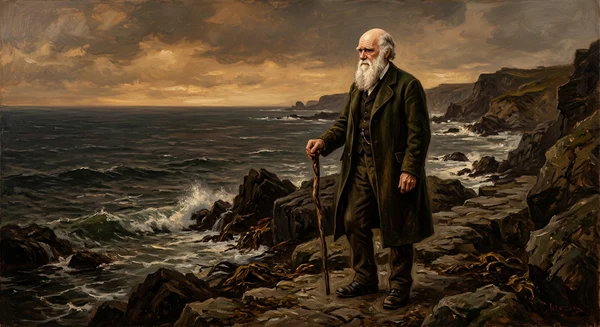
Charles Darwin
1809–1882 · Naturalist & Biologist
Proposing the theory of evolution by natural selection.
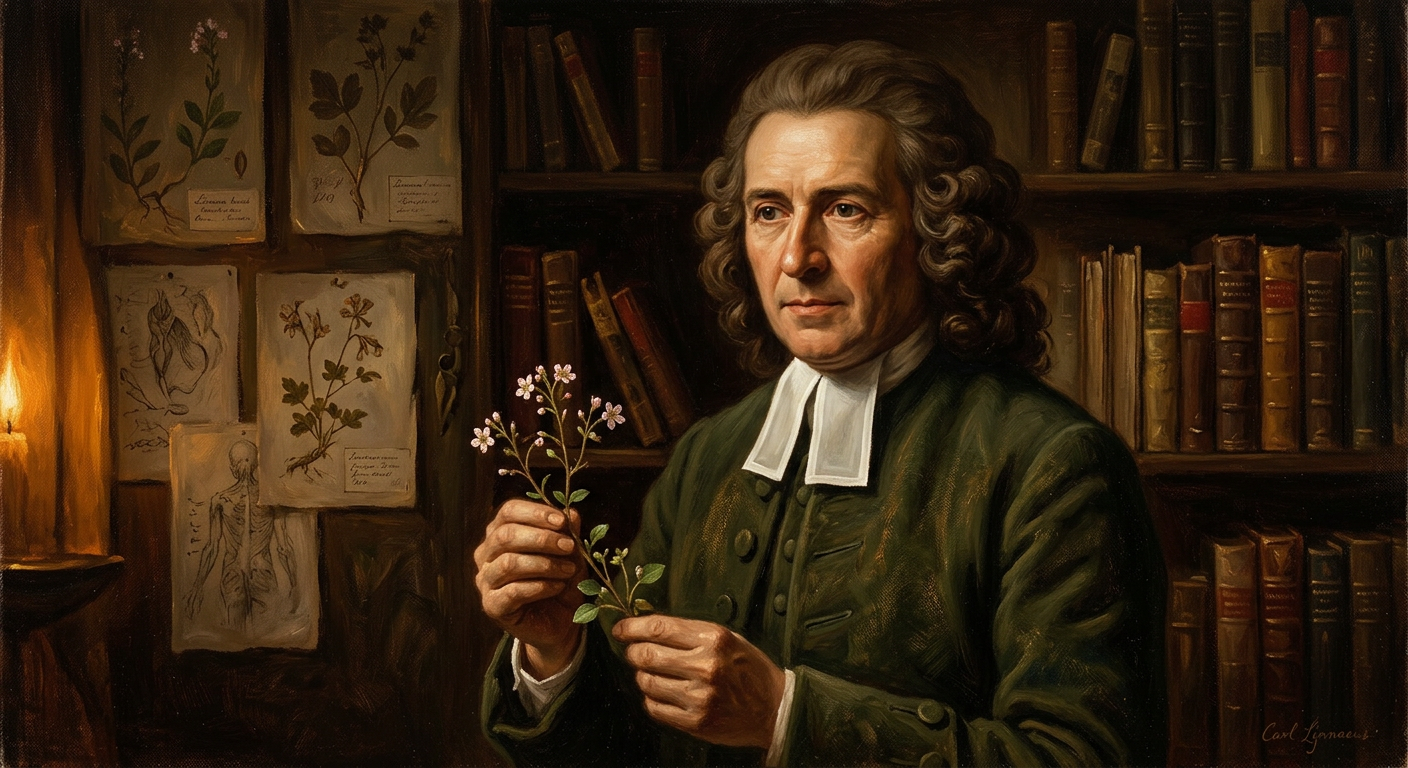
Carl Linnaeus
1707–1778 · Botanist and Zoologist
Standardised binomial nomenclature — the two-part scientific naming system used for species — and developed an influential system of biological classification.
Alfred Wegener
1880–1930 · Meteorologist & Geophysicist
Proposed the theory of continental drift, the foundation of modern plate tectonics.