_(2).jpg)
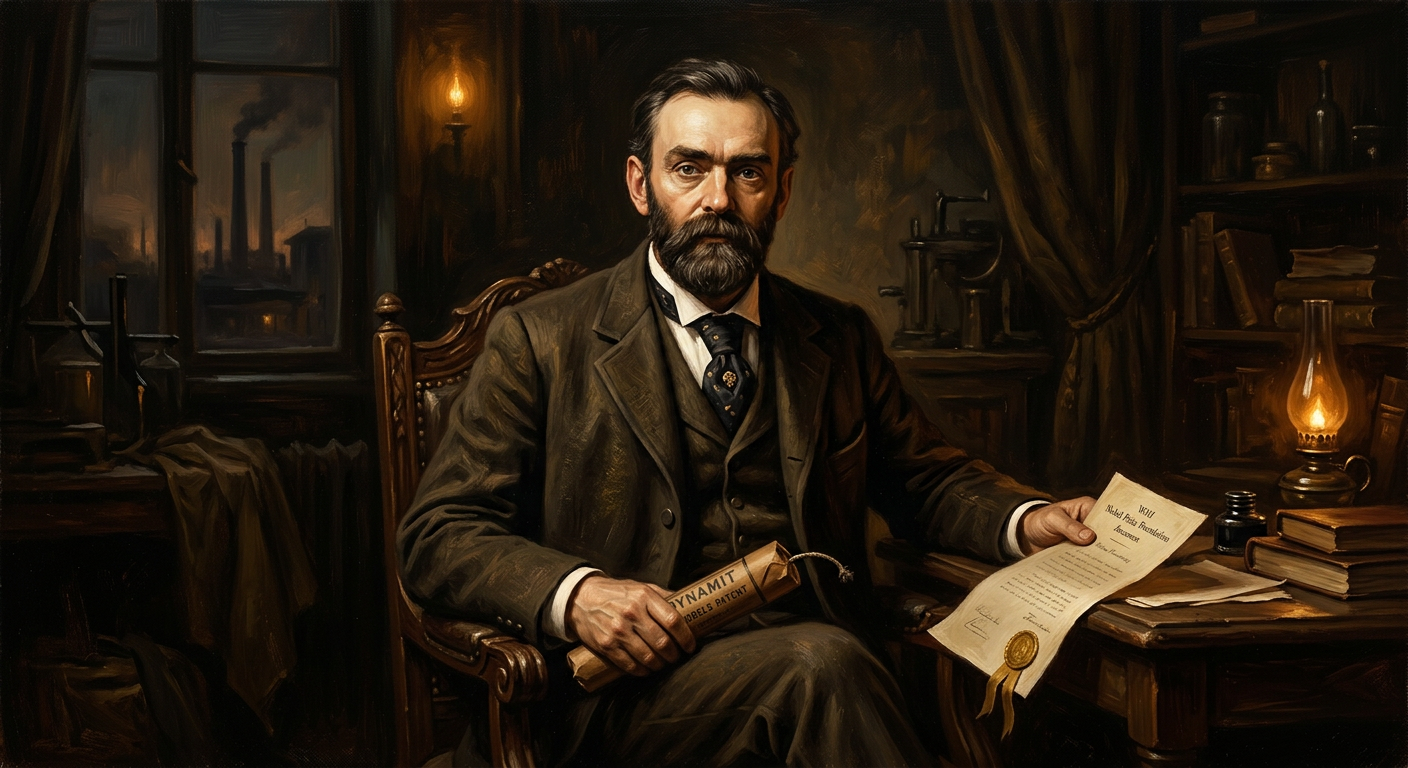
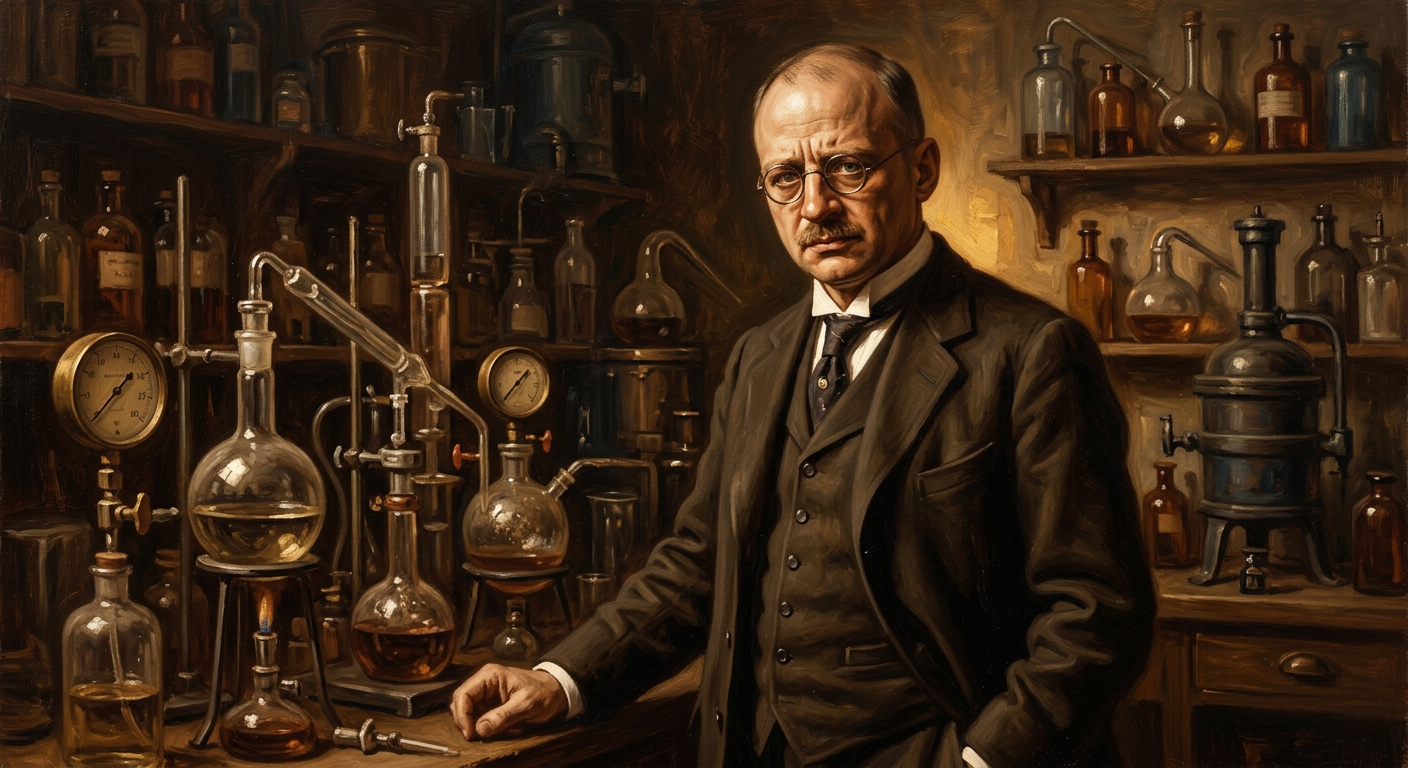
Alfred Nobel
1833–1896 · Chemist and Inventor
A Swedish chemist who invented dynamite, then used his fortune to create the Nobel Prizes — rewarding those who benefit humanity.
“The conquests of scientific research and its ever expanding field awake in us the hope that microbes — of the soul as well as of the body — will gradually be exterminated and that the only war humanity will wage in future will be war against these microbes.”
Nobel was inspired to create his prizes after reading his own prematurely published obituary, which condemned him as a “merchant of death”.
Why is this scientist famous?
Invented dynamite and founded the Nobel Prizes, the world’s most famous awards for scientific and cultural achievement.
Alfred's story
The Inventor’s Son
Alfred Nobel was born in Stockholm in 1833, the third of four sons. His father, Immanuel Nobel, was an engineer and inventor who had gone bankrupt that same year, partly because a factory he built burned down. When Alfred was nine, his father moved to St. Petersburg in Russia to start a new business making explosives and naval mines for the Russian military. There, Alfred received a first-rate private education in chemistry, physics, and literature. He was fluent in Swedish, Russian, German, English, and French by his late teens. His father sent him abroad to study, and the young Alfred spent time in Paris working with the chemist Théophile-Jules Pelouze and in the United States under the Swedish-American inventor John Ericsson. He returned to the family business with a deep interest in nitroglycerine, a recently discovered explosive so unstable that even a small jolt could cause a devastating blast. Alfred became determined to tame it.
Taming Nitroglycerine
Nitroglycerine was extraordinarily powerful but far too dangerous for practical use. Explosions killed workers, destroyed factories, and killed Alfred’s own younger brother Emil in 1864 when a shed he was working in blew up. Nobel experimented relentlessly. In 1867, he discovered that by mixing nitroglycerine with a porous mineral called diatomaceous earth, he could create a stable paste that could be shaped into sticks and handled safely. He called it dynamite, from the Greek word for power. Dynamite revolutionised construction, mining, and engineering — it made it possible to blast tunnels through mountains, dig canals, and build railways far faster than ever before. Nobel patented the invention and built factories across Europe. He went on to invent gelignite, a more powerful and flexible explosive, and ballistite, one of the earliest smokeless powders. By the 1880s, he held 355 patents and ran a global empire of factories producing explosives for industry and, increasingly, for war.
The Obituary That Changed Everything
In 1888, Alfred’s brother Ludvig died while visiting Cannes. A French newspaper, confusing the two brothers, published an obituary of Alfred under the headline “The Merchant of Death Is Dead.” It went on to say that he had made his fortune by finding ways to kill more people faster than anyone before him. Nobel was devastated. He had always seen himself as a pacifist and a man of science, and the thought that this was how the world would remember him was unbearable. He had no wife and no children to carry on his name, and his vast fortune — one of the largest in Europe — had no obvious heir. For the remaining eight years of his life, Nobel quietly worked on what would become his most enduring legacy: a plan to use his wealth to reward those who had “conferred the greatest benefit to mankind.” He signed his final will in Paris on 27 November 1895, setting aside the bulk of his estate — about 31 million Swedish kronor, equivalent to roughly 1.8 billion kronor today — to fund annual prizes in physics, chemistry, medicine, literature, and peace.
The Most Famous Prizes in the World
Nobel’s will caused an enormous controversy. His relatives were furious at being largely disinherited. The Swedish institutions he named as prize-awarding bodies were reluctant to take on the responsibility. The Swedish press attacked him for being unpatriotic — the peace prize, in particular, was criticised because it was to be awarded by a Norwegian committee. But Nobel’s executors, two young engineers named Ragnar Sohlman and Rudolf Lilljeqvist, fought doggedly to carry out his wishes. On 10 December 1901 — the fifth anniversary of Nobel’s death — the first Nobel Prizes were awarded in Stockholm and Oslo. Among the first laureates were Wilhelm Röntgen for physics (discovery of X-rays) and Emil von Behring for medicine (diphtheria treatment). The economics prize was added later, in 1968, funded by Sweden’s central bank. Today the Nobel Prize is widely considered the highest honour a scientist, writer, or peacemaker can receive. The ceremony is held every year on 10 December — the day Alfred Nobel died.
What did they discover?
Dynamite
By mixing highly unstable nitroglycerine with diatomaceous earth, Nobel created the first safe, manageable explosive. It transformed mining, tunnelling, and construction worldwide.
Gelignite
A more powerful and flexible explosive than dynamite, gelignite could be used underwater and in harder rock, further expanding the reach of industrial blasting.
Ballistite
One of the earliest smokeless propellants, ballistite became a predecessor to modern gunpowder and had major military applications.
The Nobel Prizes
His will established annual prizes for the greatest contributions to physics, chemistry, medicine, literature, and peace — funded by his entire fortune and awarded annually since 1901.
Amazing facts
Nobel was fluent in five languages by his late teens: Swedish, Russian, German, English, and French.
He held 355 patents in his lifetime, covering explosives, rubber, leather, and artificial silk.
He never married, though he had a long friendship and romantic correspondence with Bertha von Suttner, who later won the Nobel Peace Prize herself in 1905.
His younger brother Emil was killed in a nitroglycerine explosion in 1864 — a tragedy that only strengthened Alfred’s determination to make the explosive safer.
Nobel wrote poetry and a play called Nemesis in his later years, though it was so poorly received that he destroyed most copies.
The Nobel Prize ceremony is always held on 10 December, the anniversary of his death, and the prize includes a gold medal, a diploma, and a sum of money.
Timeline
Born in Stockholm, Sweden
Family moves to St. Petersburg, where his father makes military explosives for Russia
Sent to study chemistry in Paris under Théophile-Jules Pelouze, and then to the United States
Younger brother Emil is killed in a nitroglycerine explosion at the family factory
Patents dynamite, having mixed nitroglycerine with diatomaceous earth
Invents gelignite, a more powerful and flexible explosive
Reads a premature obituary calling him “the merchant of death” and begins planning his prizes
Signs his final will in Paris, dedicating his fortune to the Nobel Prizes
Dies in San Remo, Italy, aged 63
Awards & honours
Related Super Scientists
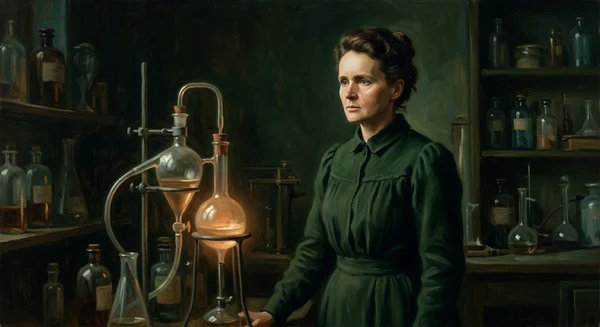
Marie Curie
1867–1934 · Physicist & Chemist
Discovering radioactivity and two new elements: radium and polonium.
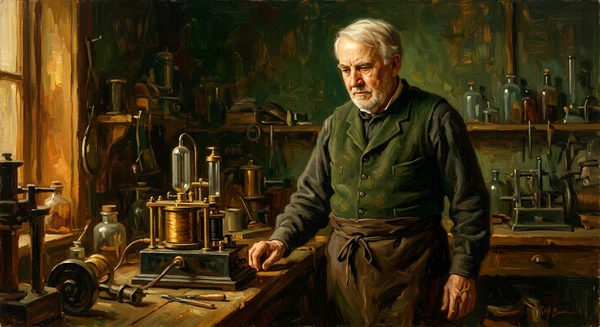
Thomas Edison
1847–1931 · Inventor & Businessman
Invented the practical incandescent light bulb, phonograph, and motion picture camera.
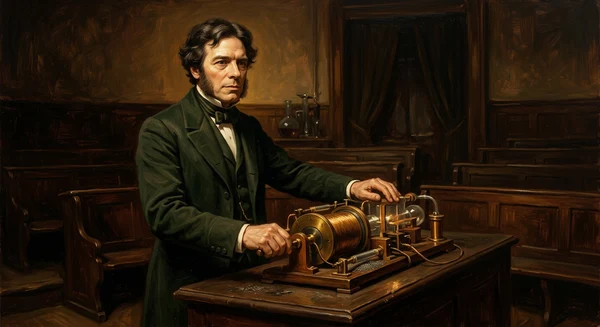
Michael Faraday
1791–1867 · Physicist & Chemist
Discovered electromagnetic induction and built the first electric motor and generator.
Sources & references
Books and educational kits about Alfred Nobel coming soon