_(2).jpg)
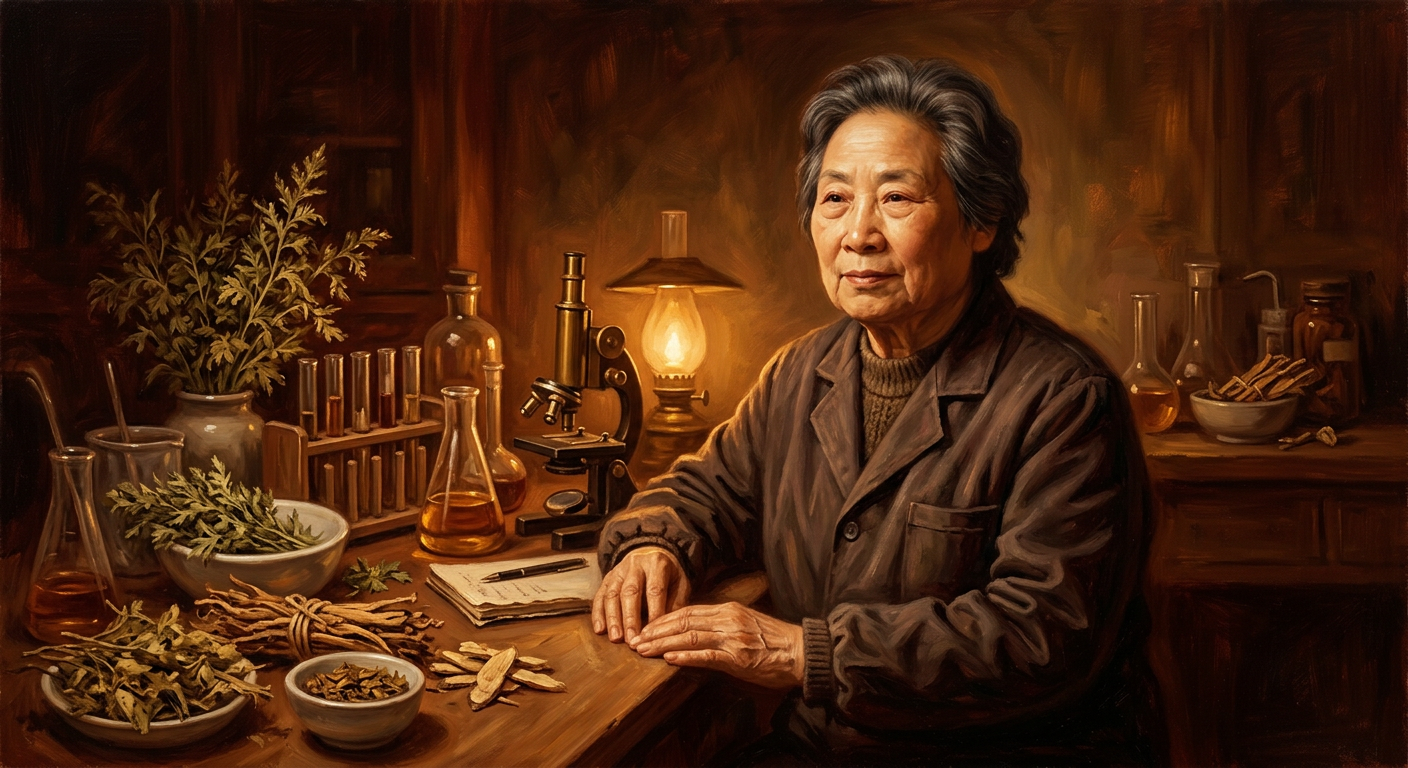
Tu Youyou
1930–present · Pharmaceutical Chemist
Tu Youyou discovered artemisinin, a malaria medicine drawn from an ancient Chinese herbal remedy, saving millions of lives worldwide. She did it without a doctorate, without overseas training, and became the first Chinese woman to win a Nobel Prize in science.
“Every scientist dreams of doing something that can help the world.”
She volunteered to be the first human test subject for artemisinin, taking the drug herself before clinical trials to prove it was safe after early animal studies raised concerns about toxicity.
Why is this scientist famous?
Discovering artemisinin, a drug derived from sweet wormwood that became the world’s most effective treatment for malaria and saved millions of lives.
Tu's story
Early Life in Ningbo
Tu Youyou was born on December 30, 1930, in the port city of Ningbo in Zhejiang Province, China. Her name, given by her father, comes from a line in an ancient Chinese poem meaning ‘a peaceful and happy life.’ When she was 15, she contracted tuberculosis, a devastating illness that kept her out of school for two years. The experience of being seriously ill shaped her deeply — she later said it was during her recovery that she decided to devote her life to medicine so she could cure diseases that made people suffer. She studied pharmacology at Beijing Medical College, graduating in 1955, and went to work at the Academy of Traditional Chinese Medicine, where she would spend her entire career.
The Secret Malaria Mission
In 1967, during the Vietnam War, malaria had become a catastrophic problem for soldiers on both sides. The malaria parasite had developed resistance to chloroquine, the standard treatment, and soldiers were dying. China’s government launched a secret military program called Project 523, bringing together hundreds of scientists to find a new cure. Tu Youyou was appointed head of the project’s research group. She and her team scoured ancient Chinese medical texts, looking for remedies that had been used against fevers centuries ago. She examined thousands of traditional recipes, translated ancient manuscripts, and traveled to the island of Hainan to study malaria patients directly. After hundreds of failed experiments, she found a passage in a 1,600-year-old text describing how sweet wormwood, or qinghao, was used to treat fever.
The Breakthrough
The breakthrough came when Tu realized that the traditional method of boiling the wormwood plant destroyed the active ingredient. Inspired by the ancient text, which described soaking the plant in cold water rather than heating it, she used ether to extract the compound at a low temperature. The result was a substance she called qinghaosu, or artemisinin, that killed the malaria parasite with astonishing effectiveness. When early animal tests raised worries about possible cardiac toxicity, Tu made a remarkable decision: she and two colleagues volunteered to take the drug themselves to prove it was safe for humans. The tests succeeded, and artemisinin became the foundation of modern malaria treatment. The World Health Organization later recommended artemisinin-based combination therapies as the first-line treatment for malaria worldwide, and the drug is credited with saving millions of lives, particularly in Africa and Southeast Asia.
A Late but Deserved Recognition
For decades, Tu Youyou’s work remained largely unknown, partly because Project 523 was a military secret and partly because she worked quietly without seeking fame. She had no doctorate, no overseas training, and was not a member of any prestigious academy, leading some to call her the ‘three-noes’ laureate. In 2011, she received the Lasker Award, America’s most prestigious biomedical research prize, which brought her work to international attention. In 2015, at the age of 84, she became the first Chinese woman to win a Nobel Prize in science, sharing the Nobel Prize in Physiology or Medicine for the discovery of artemisinin. In her Nobel lecture, she called the drug ‘a gift from traditional Chinese medicine to the world.’ She remained humble, saying she did not want fame and that the discovery belonged to her whole team.
What did they discover?
Discovery of Artemisinin
Tu Youyou isolated artemisinin from sweet wormwood, using a cold-extraction technique inspired by a 1,600-year-old Chinese medical text. The drug became the world’s most effective malaria treatment, saving millions of lives.
Project 523 Leadership
As head of a research group within China’s secret Project 523, Tu led the systematic search through thousands of traditional Chinese remedies to find a new malaria drug after chloroquine-resistant strains emerged.
Bridging Traditional and Modern Medicine
Tu demonstrated that ancient herbal knowledge, when subjected to modern scientific methods, could yield drugs of global importance. Her work is a landmark example of traditional medicine informing modern pharmacology.
Amazing facts
She had no doctorate, no overseas training, and was not a member of any Chinese academy when she won the Nobel Prize, leading some to call her the ‘three-noes’ laureate.
She contracted tuberculosis at age 15 and spent two years recovering, an experience that inspired her to study medicine.
She and two colleagues volunteered to take artemisinin themselves to prove it was safe after animal tests raised toxicity concerns.
Her name comes from a line in an ancient Chinese poem meaning ‘a peaceful and happy life.’
She examined over 2,000 traditional Chinese recipes and plants during Project 523 before finding the right one.
She was the first Chinese woman to win a Nobel Prize in any scientific category.
The Lasker Foundation called her discovery ‘arguably the most important pharmaceutical intervention in the last half-century.’
Timeline
Born in Ningbo, Zhejiang Province, China
Contracted tuberculosis at age 15, spending two years in recovery
Graduated from Beijing Medical College and joined the Academy of Traditional Chinese Medicine
Appointed head of a research group in Project 523, China’s secret anti-malaria program
Successfully extracted artemisinin from sweet wormwood using a low-temperature ether technique
Volunteered as a human test subject to confirm artemisinin was safe for people
Presented her findings on artemisinin at an international meeting in Beijing
Received the Lasker-DeBakey Clinical Medical Research Award
Awarded the Nobel Prize in Physiology or Medicine, becoming the first Chinese woman to win a Nobel in science
Awards & honours
Related Super Scientists
Alexander Fleming
1881–1955 · Bacteriologist
Discovered penicillin, the world's first antibiotic, saving hundreds of millions of lives.
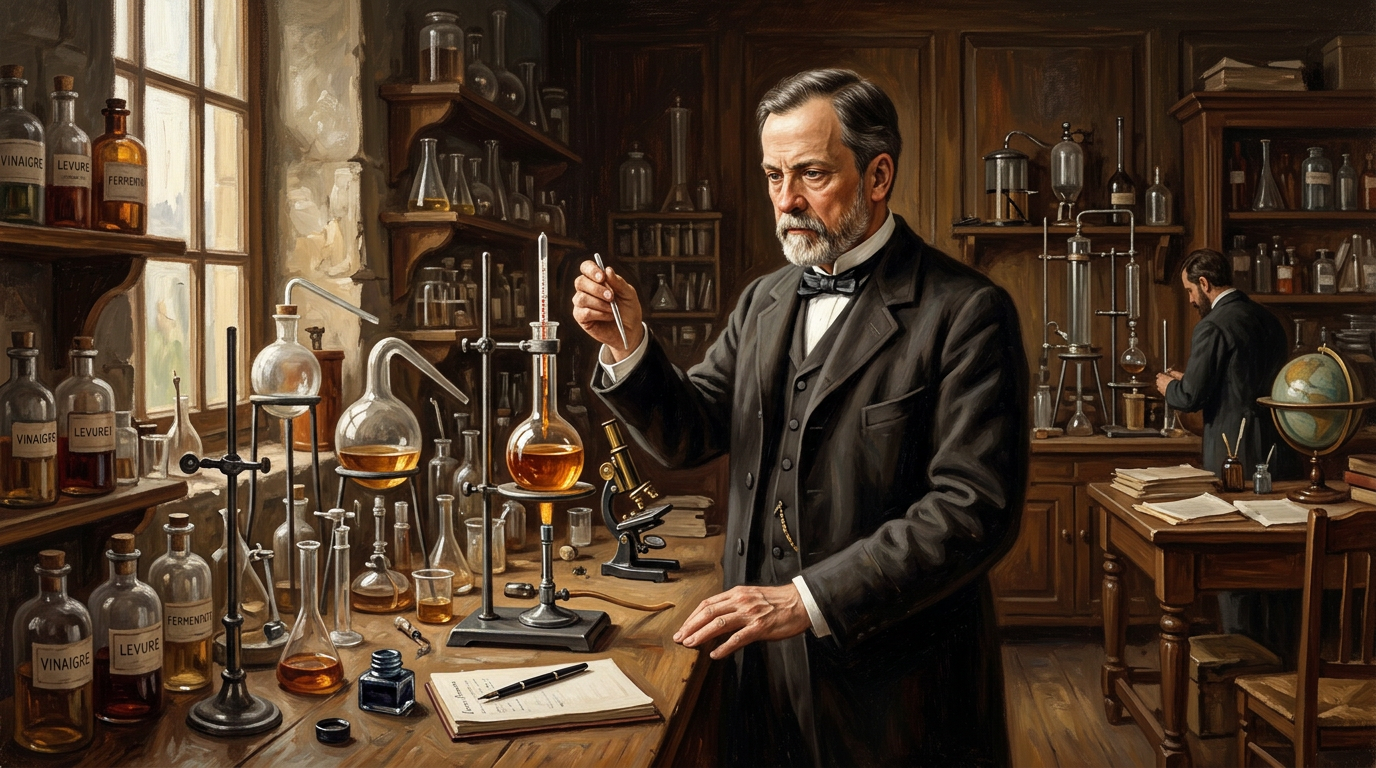
Louis Pasteur
1822–1895 · Chemist and microbiologist
Proving that germs cause disease, developing pasteurisation, and creating the first rabies vaccine.
Jonas Salk
1914–1995 · Virologist and Medical Researcher
Developing the first safe and effective polio vaccine, which ended a disease that paralysed and killed children by the thousands.
Sources & references
Books and educational kits about Tu Youyou coming soon