_(2).jpg)
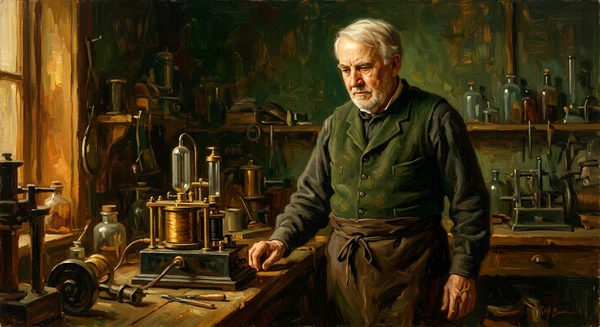
Thomas Edison
1847–1931 · Inventor & Businessman
Thomas Edison was America's greatest inventor, holding 1,093 patents. His inventions — the light bulb, phonograph, and movie camera — created the electric, audio, and entertainment industries we know today.
“I have not failed. I've just found 10,000 ways that won't work.”
Edison was almost entirely deaf from childhood, but he said his deafness actually helped him concentrate — and he credited it with helping him invent the phonograph.
Why is this scientist famous?
Invented the practical incandescent light bulb, phonograph, and motion picture camera.
Edison perfected the practical light bulb and built the first power grid, turning night into day. He also invented the phonograph (ancestor of all music players) and improved the motion picture camera. His real genius was the invention factory — a lab where teams of people worked together to solve problems. The research-and-development labs at every major tech company today follow the model he created in Menlo Park.
Thomas's story
Early Life
Born in 1847 in Milan, Ohio, Edison had little formal schooling — his mother taught him at home after a teacher called him "addled." He was curious and entrepreneurial from a young age, selling newspapers and candy on trains and starting his own newspaper at 12.
The Wizard of Menlo Park
Edison set up the world's first industrial research laboratory in Menlo Park, New Jersey, in 1876. Instead of inventing alone, he employed teams of engineers and mechanics to develop ideas systematically. This approach — the modern R&D lab — was itself one of his most influential inventions.
The Light Bulb
Edison didn't invent the first electric light — but in 1879 he created the first practical, long-lasting incandescent bulb that could light homes and streets. He also built the power stations, wiring, and meters needed to deliver electricity to customers. By 1882, his Pearl Street station was powering lights in Manhattan.
Phonograph and Film
Edison invented the phonograph in 1877 — the first machine that could record and play back sound. He later developed the kinetoscope, an early motion picture viewer, and built the first movie studio. He also improved the telephone with a better transmitter and invented the carbon microphone.
What did they discover?
The Practical Incandescent Light Bulb
Created the first commercially viable light bulb in 1879, along with the power grid to make electricity available to homes and businesses.
The Phonograph
Invented the first device capable of recording and reproducing sound in 1877, laying the foundation for the music industry.
The Motion Picture Camera
Developed the kinetograph and kinetoscope, early motion picture technology that gave birth to the film industry.
The Modern Research Laboratory
Established the first industrial R&D laboratory at Menlo Park, inventing the team-based approach to innovation that every tech company uses today.
Amazing facts
He held 1,093 U.S. patents — more than anyone else in American history.
He was almost completely deaf from age 12, possibly from scarlet fever, but said it helped him concentrate.
His first successful invention was an improved stock ticker that sold for $40,000 — worth about $900,000 today.
He once electrocuted an elephant to discredit rival George Westinghouse's alternating current system.
His last breath is reportedly preserved in a sealed test tube at the Henry Ford Museum (though the story is disputed).
He worked an estimated 100 hours a week and expected his employees to do the same.
Timeline
Born in Milan, Ohio on February 11
Started selling newspapers and candy on trains; began experiments in a baggage car
Moved to New York City and patented his first invention, an improved stock ticker
Established his research laboratory at Menlo Park, New Jersey
Invented the phonograph, the first device to record and play back sound
Created the first practical incandescent light bulb that burned for over 13 hours
Opened the Pearl Street power station in Manhattan, launching the electric utility industry
Developed the kinetoscope, an early motion picture viewer
Died in West Orange, New Jersey on October 18, age 84
Awards & honours
Related Super Scientists
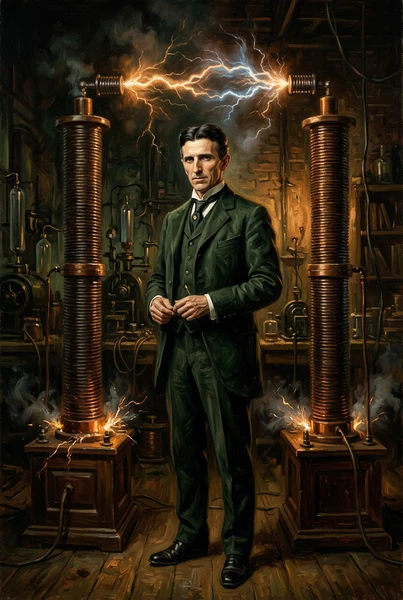
Nikola Tesla
1856–1943 · Inventor & Engineer
Pioneering alternating current (AC) electricity and numerous electrical inventions.
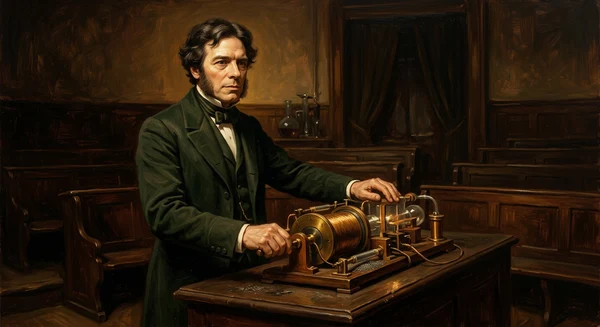
Michael Faraday
1791–1867 · Physicist & Chemist
Discovered electromagnetic induction and built the first electric motor and generator.
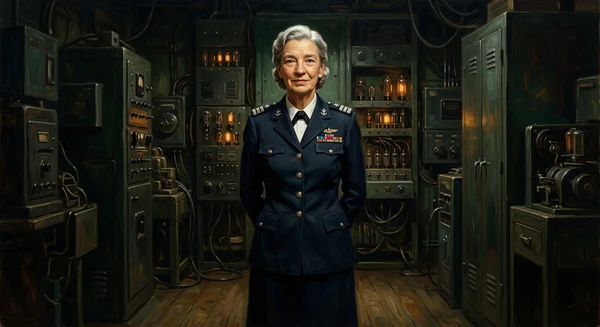
Grace Hopper
1906–1992 · Computer Scientist & Naval Admiral
Inventing the first compiler and making programming accessible with English-like languages.
Articles about this scientist
Sources & references
Books and educational kits about Thomas Edison coming soon