_(2).jpg)
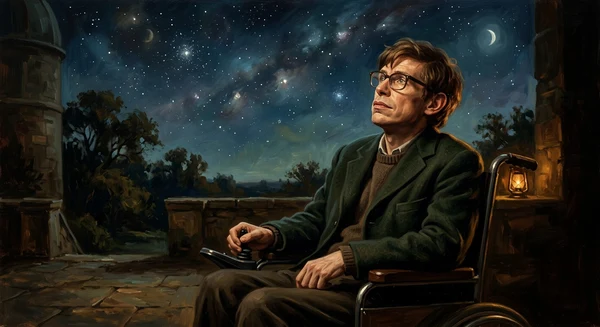
Stephen Hawking
1942–2018 · Theoretical Physicist & Cosmologist
Confined to a wheelchair and unable to speak, Stephen Hawking made profound discoveries about the universe and became science's most famous public figure.
“However difficult life may seem, there is always something you can do and succeed at.”
Stephen Hawking was given only two years to live when diagnosed at age 21 — he survived for 55 more years and became one of the most famous scientists in history.
Why is this scientist famous?
Discovering that black holes emit radiation and writing "A Brief History of Time."
Hawking showed that black holes are not completely black — they slowly leak radiation and eventually evaporate. "Hawking radiation" remains one of the most important ideas in theoretical physics. He also wrote A Brief History of Time, making the universe's biggest questions accessible to millions. Despite living with severe disability for decades, he showed that the mind can travel where the body cannot.
Stephen's story
Early Life
Born in Oxford, England — on the 300th anniversary of Galileo's death. Hawking was a bright but unmotivated student. He managed to get into Oxford despite not doing well on his scholarship exams, and studied physics there. After Oxford, he moved to Cambridge for his PhD in cosmology.
The Diagnosis
At 21, in 1963, Hawking was diagnosed with amyotrophic lateral sclerosis (ALS), a motor neuron disease. Doctors told him he had two years to live. The disease progressed: he lost the ability to walk, use his hands, and eventually speak. But the progression slowed, and his mind remained entirely unaffected.
Black Hole Discoveries
Working with Roger Penrose, Hawking showed that the universe began in a singularity — confirming the Big Bang. His greatest breakthrough came in 1974: using quantum theory, he proved that black holes are not completely black but emit thermal radiation, now called "Hawking radiation." This discovery combined quantum mechanics and gravity in a way no one had before.
Cultural Icon
His 1988 book "A Brief History of Time" sold over 25 million copies and made cosmology a household topic. Despite being able to communicate only through a speech synthesizer controlled by a cheek muscle, he lectured worldwide, appeared on The Simpsons and Star Trek, and flew in a zero-gravity simulator at age 65.
What did they discover?
Hawking Radiation
Proved that black holes emit thermal radiation due to quantum effects near the event horizon, meaning they slowly evaporate.
Singularities and the Big Bang
Showed with Roger Penrose that the universe must have started from an infinitely dense point — mathematical proof supporting the Big Bang.
A Brief History of Time
His 1988 popular science book that spent 147 weeks on the Sunday Times bestseller list and made cosmology accessible to millions.
Amazing facts
He was born on 8 January 1942 — exactly the 300th anniversary of Galileo's death.
He was given two years to live at age 21; he lived to 76.
He lost a bet about the nature of black holes with fellow physicist Kip Thorne and had to buy him a year's subscription to Penthouse.
He flew in NASA's zero-gravity "Vomit Comet" at age 65, experiencing weightlessness for the first time.
His synthetic voice with an American accent was so iconic that he copyrighted it.
He appeared as himself on The Simpsons, Star Trek: The Next Generation, and The Big Bang Theory.
Timeline
Born in Oxford, England, on the 300th anniversary of Galileo's death
Diagnosed with ALS; given two years to live
Discovered that black holes emit radiation
Became Lucasian Professor of Mathematics at Cambridge (Newton's old chair)
Published "A Brief History of Time"
Experienced zero gravity aboard NASA's Vomit Comet
Died at age 76, on the 139th anniversary of Einstein's birth
Awards & honours
Related Super Scientists
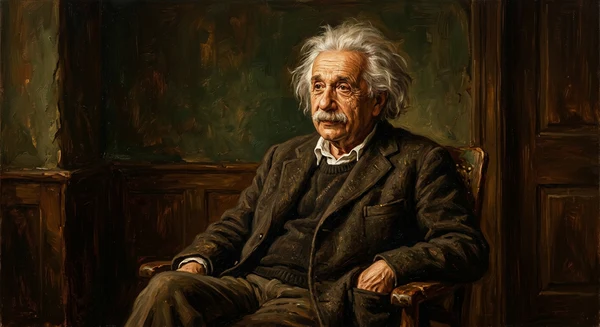
Albert Einstein
1879–1955 · Theoretical Physicist
Developing the theory of relativity and the equation E=mc².
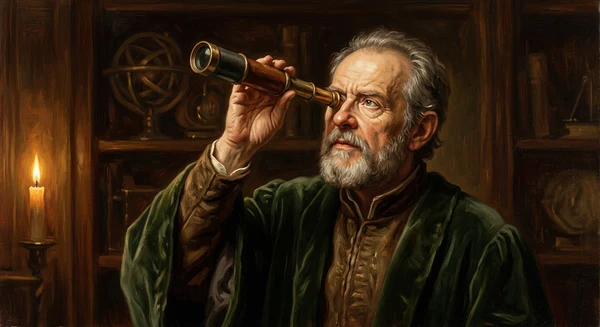
Galileo Galilei
1564–1642 · Astronomer & Physicist
Proving that the Earth orbits the Sun and founding modern observational astronomy.
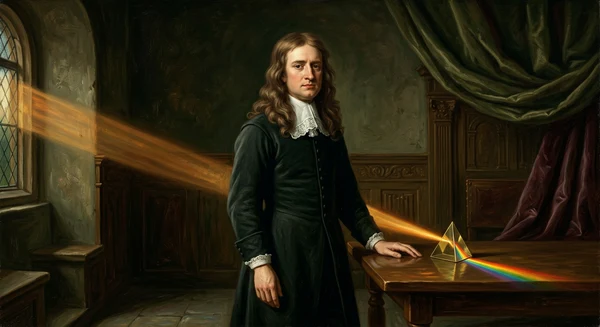
Isaac Newton
1643–1727 · Physicist & Mathematician
Formulating the laws of motion and universal gravitation.
Sources & references
Books and educational kits about Stephen Hawking coming soon