_(2).jpg)
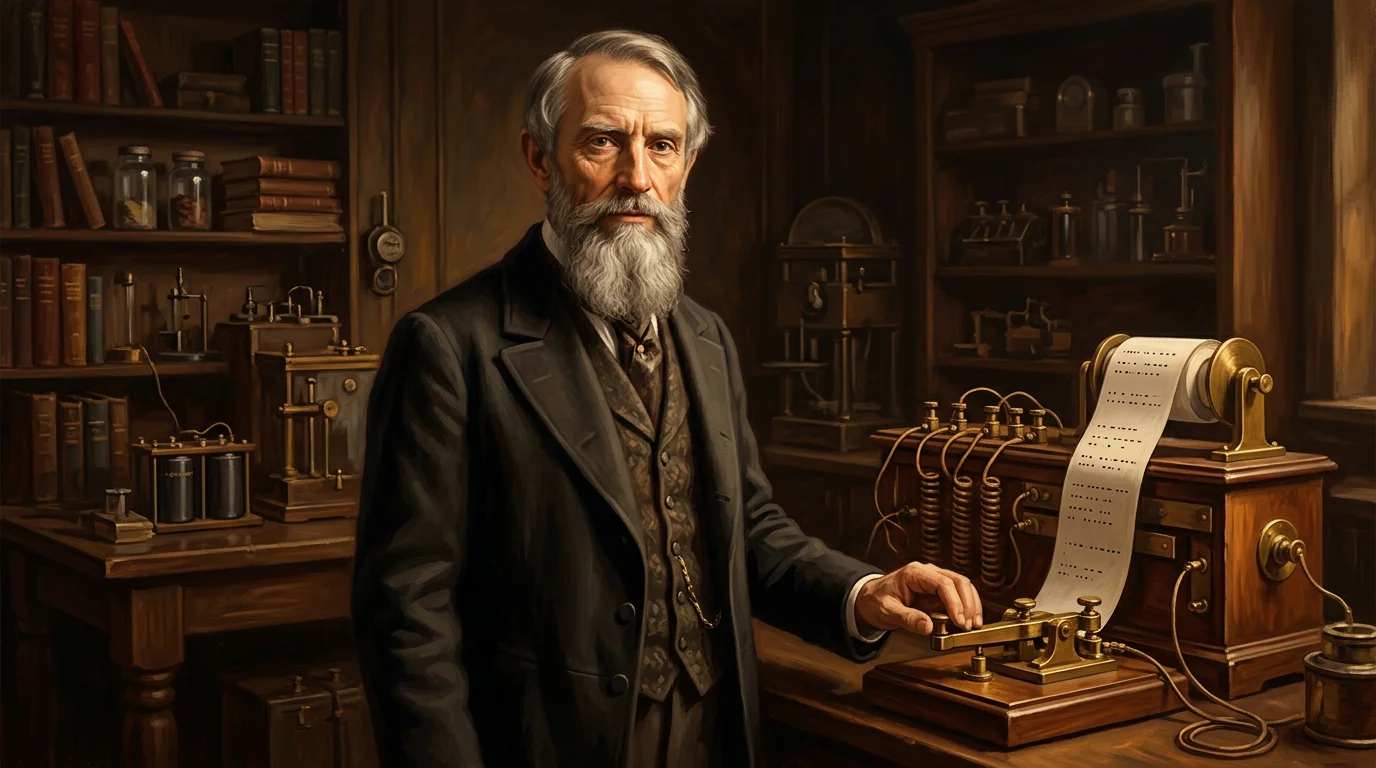
Samuel F. B. Morse
1791–1872 · Inventor and Painter
An American painter who became an inventor in middle age, creating the telegraph and Morse code — the system that first connected the world with instant electronic communication.
“What hath God wrought.”
Morse was a professional portrait painter before he became an inventor — he studied art in London and painted portraits of presidents, but at 41 turned his attention to the telegraph.
Why is this scientist famous?
Helped develop the practical electric telegraph and the signalling system known as Morse code, using dots and dashes to send messages over long distances.
Samuel's story
The Artist
Samuel Finley Breese Morse was born in Charlestown, Massachusetts, the son of a Calvinist preacher and geographer. He attended Yale College, where he studied mathematics and science alongside religious philosophy, but his passion was art. After graduating, he travelled to England to study painting at the Royal Academy. He spent four years in London, honing his skills as a portrait and historical painter, and exhibited at the Royal Academy. He returned to America in 1815 hoping to make his living as a fine artist, but America was not yet ready for grand historical painting. He scraped by as a portrait painter, travelling from town to town in search of commissions. He painted portraits of presidents and notable figures, but he always felt that his talents were underappreciated.
The Fateful Voyage
In 1830, Morse sailed from Europe back to America after a period of further artistic study. On board the ship he encountered a conversation about electromagnetism — specifically, about how electric signals could be sent instantaneously through wires. The idea seized his imagination. If an electric current could be sent through a long wire, it could carry messages at a speed no horse, ship, or pigeon could match. Morse was not the first to think of an electric telegraph, but he was the first to combine the idea with a practical, simple signalling system. He returned to New York and, between painting commissions, began designing a device that could send coded messages over a wire.
Morse Code and the Telegraph
Morse's genius was not in the physics of electromagnetism but in the simplicity and practicality of his system. He devised a code in which each letter of the alphabet was represented by a unique combination of short signals (dots) and long signals (dashes). This was far more efficient than the complex needle-and-letter systems other inventors had proposed. A single operator could tap out a message using a simple key, and another operator could decode it from the pattern of clicks. The code was binary in spirit — on and off, short and long — and it could work over any distance that a wire could reach. Morse patented his telegraph in 1837 and spent years seeking government support to build a demonstration line.
What Hath God Wrought
After years of lobbying Congress, Morse finally secured funding to build a telegraph line from Washington, D.C. to Baltimore. On 24 May 1844, in a demonstration witnessed by members of Congress, Morse sat in the Supreme Court chamber of the U.S. Capitol and tapped out a message to his assistant Alfred Vail in Baltimore. The message — 'What hath God wrought' — was suggested by Annie Ellsworth, the daughter of the commissioner of patents, and was taken from the Book of Numbers in the Bible. Vail received it and sent it back. In that moment, instantaneous long-distance communication was born. The telegraph spread across America and the world with astonishing speed, connecting cities, countries, and continents within a single generation.
A Mixed Legacy
Morse became famous and wealthy from the telegraph, but his later life was marked by bitter patent disputes and personal controversies. He fought lengthy legal battles to defend his patent rights, eventually prevailing in the U.S. Supreme Court. He was also a vocal opponent of Catholic immigration to America, and late in life he ran unsuccessfully for mayor of New York on an anti-immigrant platform — a chapter of his life that his biographers have not overlooked. He remained a complex figure: a brilliant inventor and a gifted artist, but also a man shaped by the prejudices of his time. He died in New York in 1872, having lived to see the telegraph connect the world.
Legacy
Morse code was used for over 150 years — in telegraphy, radio communication, maritime signalling, and aviation. The international distress signal SOS (three dots, three dashes, three dots) became the most famous sequence in the code. Although Morse code was officially retired from maritime use in 1999, it is still learned by amateur radio operators and used in emergency situations. The telegraph was the first electronic communication system in human history, and every subsequent development — the telephone, radio, television, the internet — built on the foundation that Morse and his contemporaries laid. The painter from Massachusetts had, quite literally, connected the world.
What did they discover?
The Electric Telegraph
Morse developed the first practical electric telegraph system, patenting it in 1837. It used a simple key to send electric pulses through a wire, enabling messages to travel at the speed of electricity rather than the speed of a horse or ship. The first successful line connected Washington, D.C. to Baltimore in 1844.
Morse Code
Devised the elegant binary signalling system in which each letter is represented by a unique combination of dots and dashes. Its simplicity made it far more practical than competing systems, and it was used worldwide for over 150 years in telegraphy, radio, and maritime communication.
The First Telegraf Message
On 24 May 1844, Morse sent 'What hath God wrought' from the U.S. Capitol to Baltimore — the first long-distance electronic message in history. The demonstration convinced Congress to fund the expansion of the telegraph network.
The SOS Distress Signal
The international distress signal SOS (dot-dot-dot, dash-dash-dash, dot-dot-dot) became the most famous Morse code sequence, used by ships and aircraft in distress for over a century until it was officially retired from maritime use in 1999.
Amazing facts
Morse was a professional portrait painter before he became an inventor — he studied art at the Royal Academy in London and painted portraits of American presidents.
He was 41 years old when he first began working on the telegraph, inspired by a shipboard conversation about electromagnetism.
The famous first message — 'What hath God wrought' — was suggested to Morse by Annie Ellsworth, the young daughter of the commissioner of patents.
Morse code was used for over 150 years and was not officially retired from maritime communication until 1999.
The international distress signal SOS is a Morse code sequence: three dots, three dashes, three dots.
Morse fought years of bitter patent battles to protect his telegraph invention, eventually winning in the U.S. Supreme Court.
He ran for mayor of New York on an anti-immigrant platform late in life and lost — a controversial chapter that contrasts with his scientific legacy.
Timeline
Born in Charlestown, Massachusetts
Graduated from Yale College
Sailed to England to study painting at the Royal Academy
Returned to America and worked as a portrait painter
Conceived the idea of an electric telegraph during a shipboard conversation
Patented the telegraph and developed Morse code with Alfred Vail
Sent the first telegraph message from Washington to Baltimore: 'What hath God wrought'
Won a landmark U.S. Supreme Court case defending his telegraph patent rights
Died in New York City, aged 80
Awards & honours
Related Super Scientists
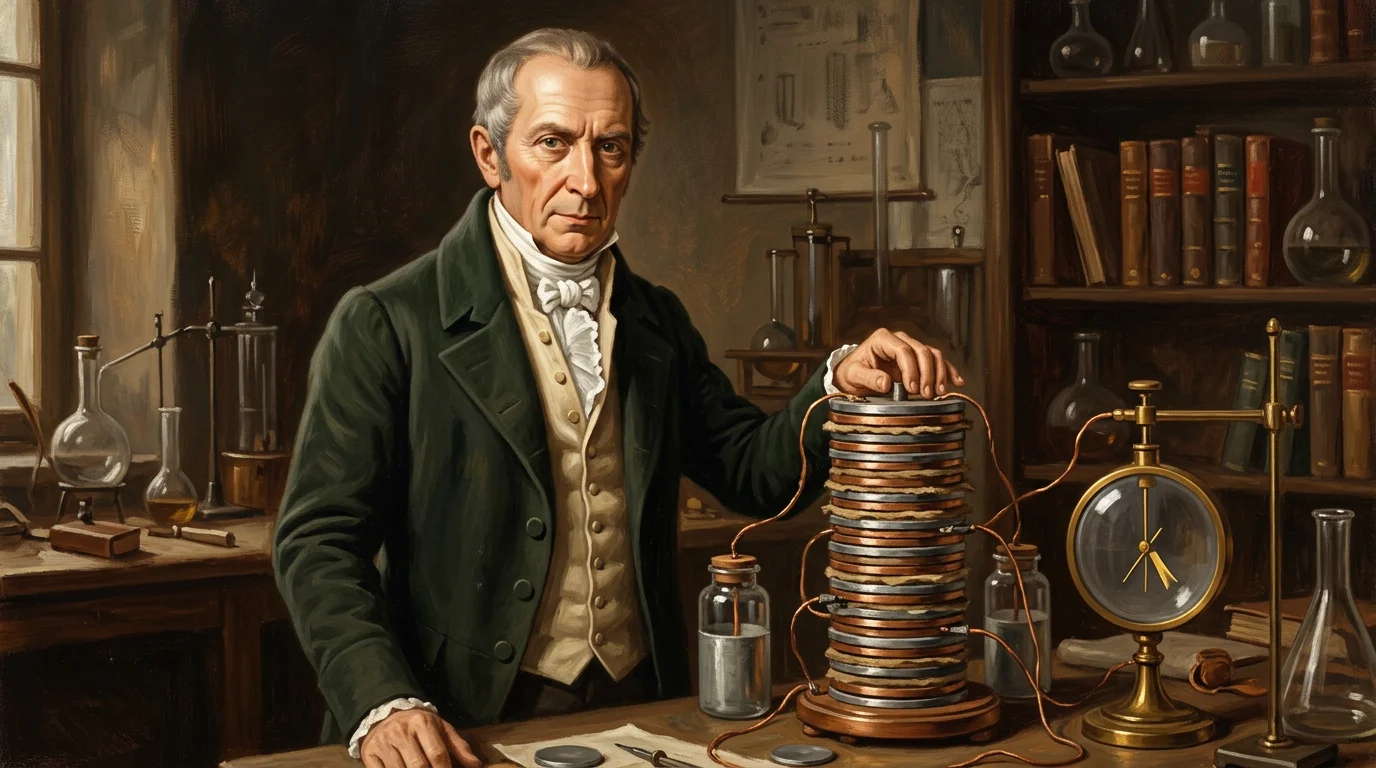
Alessandro Volta
1745–1827 · Physicist
Invented the voltaic pile in 1800, the first electric battery capable of producing a continuous current. The volt is named after him.
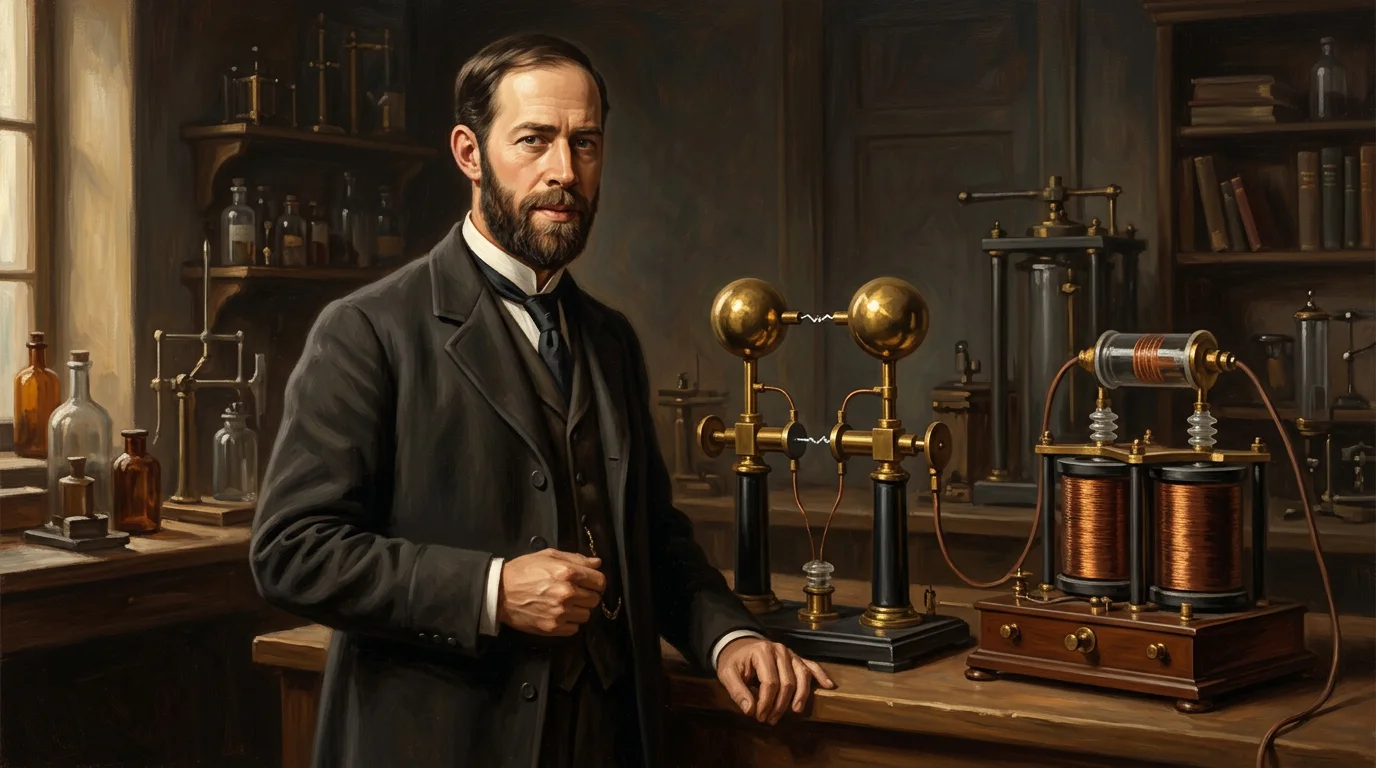
Heinrich Hertz
1857–1894 · Physicist
Demonstrated the existence of electromagnetic waves in 1887, proving James Clerk Maxwell's theory of electromagnetism and laying the foundation for radio technology. The unit hertz (Hz) is named after him.
Thomas Edison
1847–1931 · Inventor & Businessman
Invented the practical incandescent light bulb, phonograph, and motion picture camera.
Sources & references
Books and educational kits about Samuel F. B. Morse coming soon