_(2).jpg)
Sally Ride
1951–2012 · Physicist and Astronaut
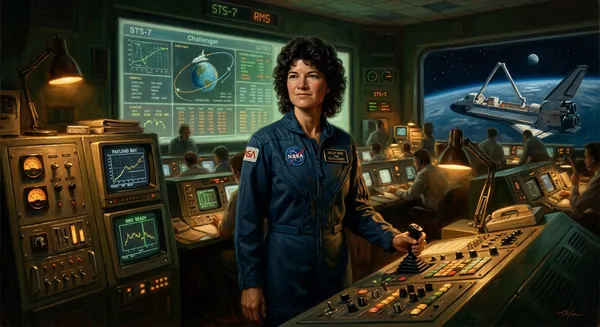
Sally Ride was the first American woman and the third person in space, flying aboard the Space Shuttle Challenger in 1983 and inspiring a generation of young people — especially girls — to pursue science.
“Young people need role models. It’s as simple as that. And if they can see somebody who looks like them, they know that they can do it too.”
Sally Ride was the first American woman in space — and the only person to serve on the investigation panels of both the Challenger and Columbia shuttle disasters.
Why is this scientist famous?
Becoming the first American woman in space, aboard the Space Shuttle Challenger in 1983.
Sally Ride became the first American woman in space, aboard the Space Shuttle Challenger in 1983. She proved that space exploration is for everyone, not just men. After NASA, she devoted herself to education, writing science books for young people and inspiring kids — especially girls — to pursue science. Every young person who looks at the stars and thinks "maybe I can go there too" is following the path she lit.
Sally's story
Early Life
Born in Encino, Los Angeles, in 1951, Sally Kristen Ride showed early talent in both science and sport. She was a nationally ranked junior tennis player who briefly considered turning professional, but she chose science instead. She attended Swarthmore College for a year before transferring to Stanford University, where she earned bachelor’s degrees in both physics and English literature — a rare combination — and then a PhD in astrophysics in 1978.
Joining NASA
The same year she completed her doctorate, NASA was recruiting astronauts for the Space Shuttle programme and, for the first time, was accepting women. Ride was one of only 8,000 applicants chosen from a pool of over 8,000 — and one of six women selected in her class. She was assigned to the crew of STS-7 as a mission specialist, making her the first American woman scheduled for spaceflight.
First Flight
On 18 June 1983, Ride launched aboard the Space Shuttle Challenger, becoming the first American woman in space. During the six-day mission, she operated the shuttle’s robotic arm to deploy and retrieve a satellite — a task she had helped design and test. The flight was a global sensation. The media asked her endlessly about whether space travel would affect her reproductive organs and whether she planned to cry if something went wrong. She answered them all with patient calm, saying she found the questions ‘a little silly.’
Challenger and Columbia
After her second shuttle flight in 1984, Ride was appointed to the Rogers Commission, which investigated the 1986 Challenger explosion that killed all seven crew members. She played a key role, uncovering the O-ring failure that caused the disaster. Seventeen years later, in 2003, she served on the Columbia Accident Investigation Board as well — making her the only person to serve on both shuttle disaster panels. She then led NASA’s strategic planning office, helping shape the agency’s long-term direction.
Inspiring the Next Generation
After leaving NASA in 1987, Ride became a professor of physics at the University of California, San Diego. She grew frustrated that so few girls chose science and dedicated the rest of her life to changing that. She wrote six children’s books about space, and in 2001 she founded Sally Ride Science, a company that created educational programmes and materials to engage young people — especially girls and minorities — in STEM. She believed role models were the single most important factor.
What did they discover?
First American Woman in Space
Flew aboard STS-7 on the Space Shuttle Challenger in June 1983, operating the robotic arm to deploy and retrieve satellites — a role she had helped design and test on the ground.
Robotic Arm Operations
Pioneered the use of the shuttle’s Canadian-built robotic arm for satellite deployment and retrieval, including a test of refuelling techniques that would be crucial for future space station construction.
Challenger Investigation
Served on the Rogers Commission that uncovered the O-ring failure behind the 1986 Challenger disaster, contributing critical technical analysis to the investigation.
Sally Ride Science
Founded an educational company in 2001 that reached millions of students with STEM programmes, teacher training, and science books aimed at engaging girls and underrepresented minorities.
Amazing facts
She was a nationally ranked junior tennis player who considered turning pro before choosing physics.
She was the only person to serve on the investigation boards of both the Challenger and Columbia shuttle disasters.
She earned bachelor’s degrees in both physics and English literature from Stanford — a combination almost unheard of for an astronaut.
A reporter asked her during a press conference if she planned to cry if something went wrong in space — she replied that she found the question ‘a little silly.’
She wrote six children’s books about space exploration to inspire young readers.
She was inducted into the Astronaut Hall of Fame in 2003 and the National Women’s Hall of Fame in 2002.
Her partner of 27 years, Tam O’Shaughnessy, accepted the Presidential Medal of Freedom on her behalf in 2013.
She operated the shuttle’s robotic arm to deploy and retrieve a satellite — a task she had helped design and test before ever flying.
Timeline
Born in Encino, Los Angeles, California
Earned bachelor’s degrees in physics and English from Stanford
Earned a PhD in astrophysics from Stanford and was selected by NASA as an astronaut
Became the first American woman in space aboard STS-7 on the Space Shuttle Challenger
Flew her second shuttle mission, STS-41G, spending eight days in orbit
Served on the Rogers Commission investigating the Challenger disaster
Left NASA to become a professor of physics at UC San Diego
Founded Sally Ride Science to inspire young people in STEM
Served on the Columbia Accident Investigation Board
Died of pancreatic cancer in La Jolla, California, age 61
Awards & honours
Related Super Scientists
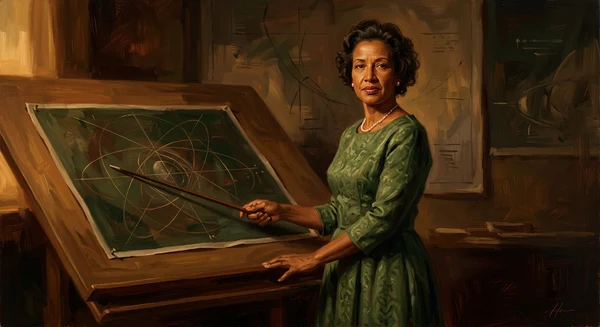
Katherine Johnson
1918–2020 · Mathematician
Calculating the trajectories that put the first Americans into space and on the Moon.
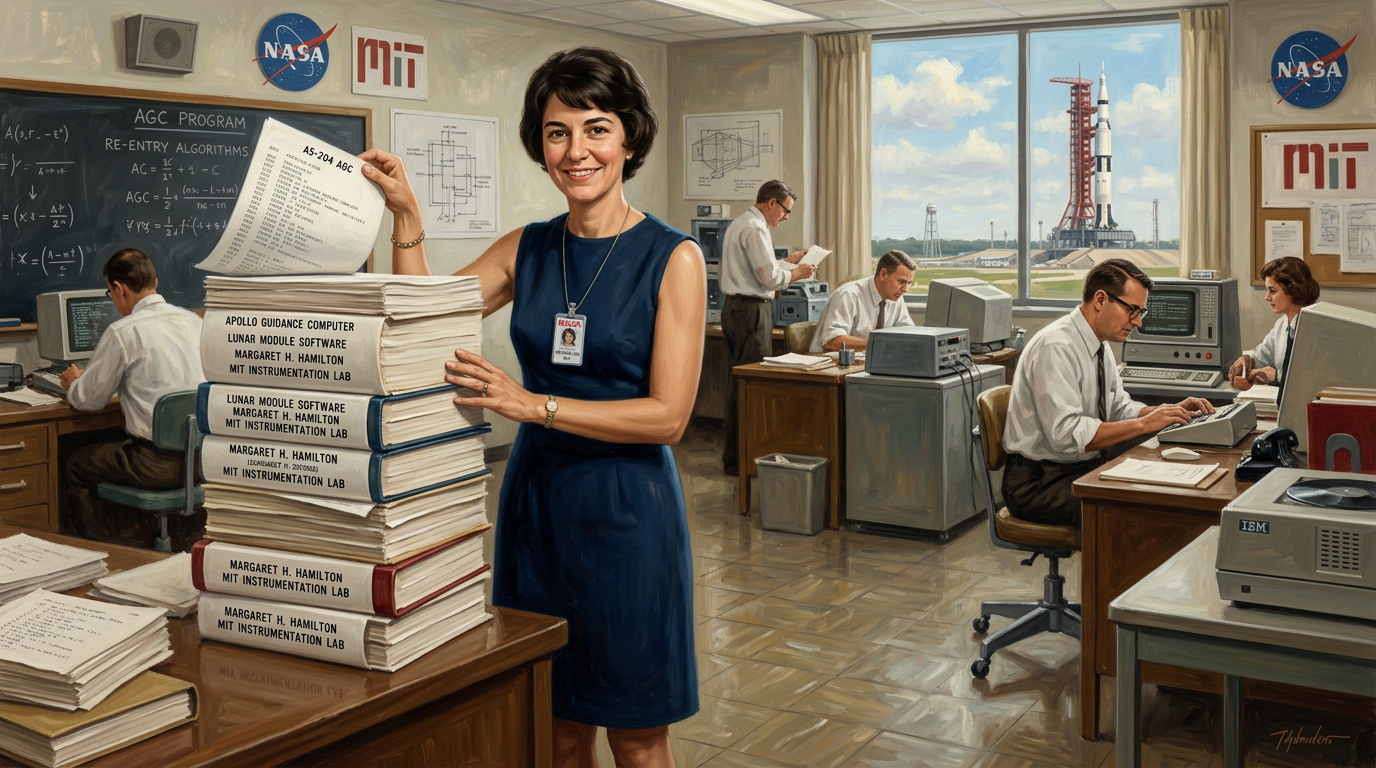
Margaret Hamilton
1936–present · Computer scientist and software engineer
Leading the team that wrote the Apollo flight software and helping establish software engineering as a discipline.
Sources & references
Books and educational kits about Sally Ride coming soon