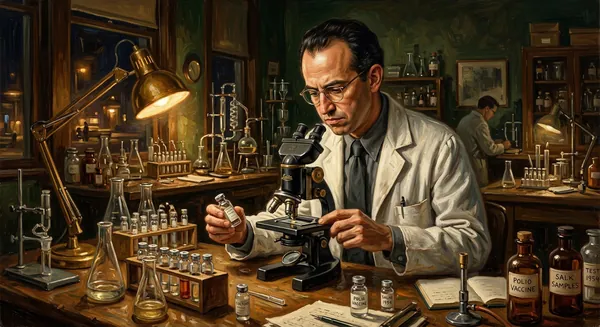
_(2).jpg)
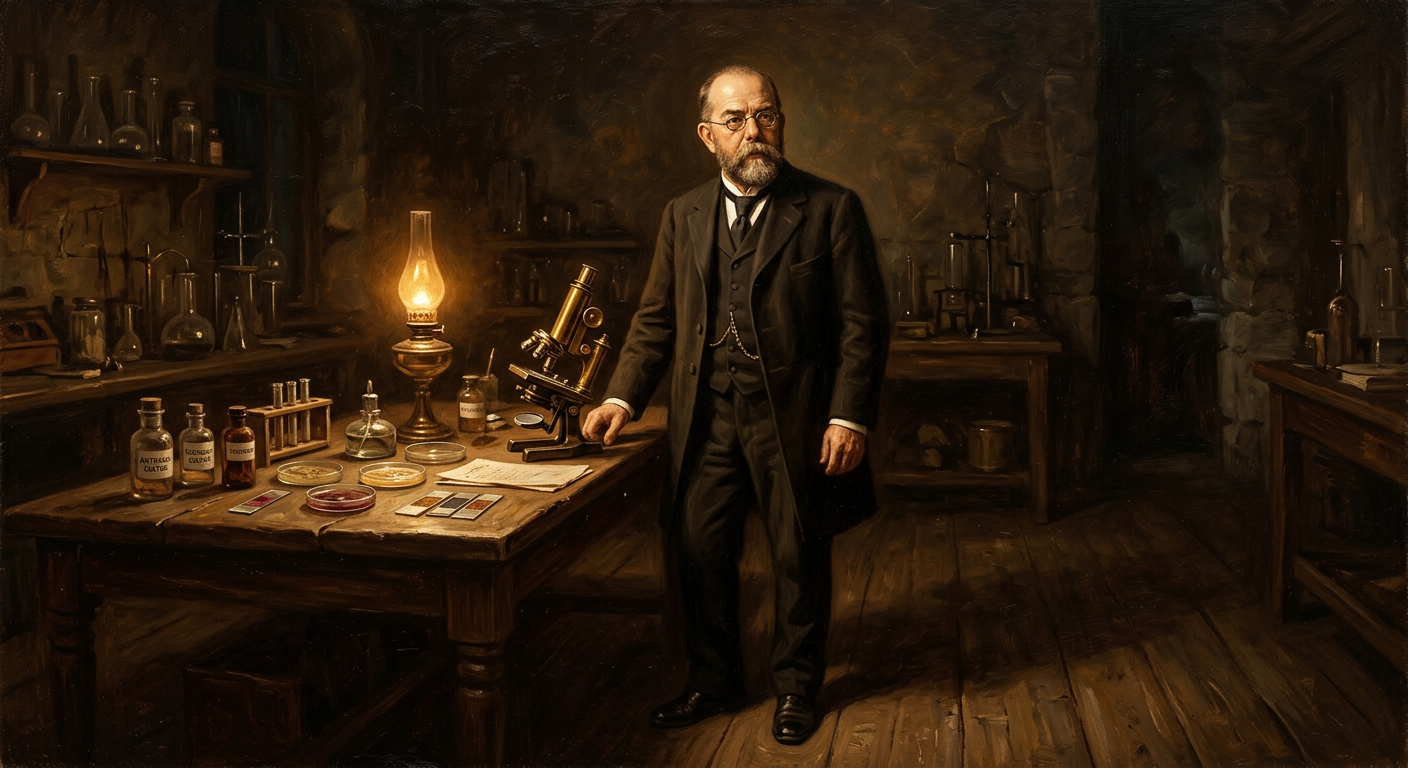
Robert Koch
1843–1910 · Physician and Microbiologist
A country doctor who became one of the founders of bacteriology, identifying the microscopic killers behind three of humanity's deadliest diseases.
“If the importance of a disease for mankind is measured by the number of fatalities it causes, then tuberculosis must be considered far more important than those most feared infectious diseases.”
Koch's attempt to cure tuberculosis with a substance called tuberculin was a spectacular public failure — but tuberculin later became the basis for the standard skin test still used today to detect TB infection.
Why is this scientist famous?
Discovered the bacteria that cause anthrax, tuberculosis, and cholera, and laid the foundations of modern medical microbiology.
Koch worked out how to identify which microbe causes which disease — a method now called "Koch's postulates." His approach is still how scientists identify the cause of a new outbreak, from COVID-19 to Ebola. He also discovered the bacteria that cause tuberculosis and cholera. Every time public health officials track a disease to its source, they follow the playbook he wrote.
Robert's story
A Country Doctor''s Curiosity
Heinrich Hermann Robert Koch was born on 11 December 1843 in Clausthal, a small mining town in the Harz Mountains of Germany. His father was a mining official. As a boy, Koch was fascinated by the natural world and taught himself to read newspapers by age five. He studied medicine at the University of Göttingen, where he was inspired by his anatomy professor Jacob Henle, who had proposed that microscopic organisms might cause infectious diseases. After graduating in 1866, Koch settled into the quiet life of a country doctor in rural towns, treating farmers and their families. But when anthrax began killing livestock in his district, his life changed forever.
The Anthrax Breakthrough
In 1876, working in a makeshift laboratory in his home — a four-room apartment with a microscope his wife had given him — Koch became the first person to prove that a specific microorganism causes a specific disease. He observed the anthrax bacillus under his microscope, watched it form spores, and demonstrated that those spores could survive in soil and later cause fresh infections. He photographed every stage of the process, creating a visual record that convinced even the most sceptical scientists. This was the first time anyone had definitively linked a particular bacterium to a particular disease. It was a thunderclap for medicine.
Koch''s Postulates
After his anthrax work, Koch moved to Berlin and joined the Imperial Health Office. There he developed a set of four criteria — now called Koch''s postulates — that became the gold standard for linking a microbe to a disease. To prove causation, you must find the microbe in every case of the disease, isolate it and grow it in culture, induce the disease by injecting the cultured microbe into a healthy animal, and recover the same microbe from the newly sick animal. These four rules brought rigorous discipline to a field that had been drowning in guesswork. They are still taught to medical students today.
The Tuberculosis Triumph
In 1882, Koch announced that he had identified the bacterium that causes tuberculosis — Mycobacterium tuberculosis. This was an extraordinary achievement. TB was one of the deadliest diseases in human history, killing an estimated one in seven people in Europe and America. The bacterium was fiendishly difficult to grow and stain, but Koch invented new staining techniques and culture media to isolate it. His announcement on 24 March 1882 sent shockwaves through the medical world. For this work he was awarded the Nobel Prize in Physiology or Medicine in 1905. He then turned his attention to cholera, travelling to Egypt and India to track down the comma-shaped bacterium Vibrio cholerae, and identifying contaminated water as its route of transmission.
The Tuberculin Setback
In 1890, Koch announced that he had found a cure for tuberculosis — a substance he called tuberculin. The world went wild with hope. Patients flocked to Berlin from across Europe and America. But tuberculin was not a cure. It caused severe reactions and even deaths, and within months it was clear that it had failed as a treatment. The scandal damaged Koch''s reputation and led to his estrangement from his wife. Yet tuberculin was not worthless: it later became the basis for the tuberculin skin test, which is still used worldwide to detect TB infection. The setback was a painful reminder that discovering the cause of a disease is not the same as curing it.
What did they discover?
Anthrax Life Cycle Discovered
Koch was the first to demonstrate that a specific bacterium (Bacillus anthracis) causes a specific disease, and he discovered the spore form that allows anthrax to survive in soil for decades between outbreaks.
Koch''s Postulates
His four criteria for linking a microbe to a disease became the foundation of medical microbiology, providing a rigorous method that is still used and taught today.
Discovery of the Tuberculosis Bacterium
In 1882 he identified Mycobacterium tuberculosis, the organism responsible for one of humanity''s deadliest diseases, winning him the 1905 Nobel Prize in Physiology or Medicine.
Discovery of the Cholera Bacterium
Koch identified Vibrio cholerae during field expeditions in Egypt and India, and recognised that contaminated drinking water was the primary route of transmission — a discovery that transformed public sanitation worldwide.
Amazing facts
Koch worked on anthrax in a homemade lab in his four-room apartment, using a microscope his wife had given him as a gift.
He was the first person to photograph bacteria, creating images of the anthrax life cycle that stunned other scientists.
He invented the technique of growing bacteria on solid media (using potato slices and later gelatin), which revolutionised microbiology — his assistant Richard Petri later invented the Petri dish.
His tuberculin cure was a public failure that damaged his reputation, but the same substance later became the standard skin test for detecting TB infection.
He led field expeditions to Egypt, India, and South Africa to study cholera, plague, and sleeping sickness, often at great personal risk.
Koch had a fierce and public rivalry with Louis Pasteur, the other great founder of microbiology — the two clashed over methods, credit, and national pride.
Timeline
Born in Clausthal, Germany
Graduated in medicine from the University of Göttingen
Became district physician in Wollstein, a small town in rural Prussia
Proved that the anthrax bacillus causes anthrax — the first proof that a specific microbe causes a specific disease
Joined the Imperial Health Office in Berlin
Discovered Mycobacterium tuberculosis, the cause of tuberculosis
Travelled to Egypt and India to investigate cholera and identified Vibrio cholerae
Announced tuberculin as a TB cure — it failed as a treatment but later became the basis for the TB skin test
Awarded the Nobel Prize in Physiology or Medicine for his tuberculosis research
Died in Baden-Baden, Germany, at the age of 66
Awards & honours
Related Super Scientists
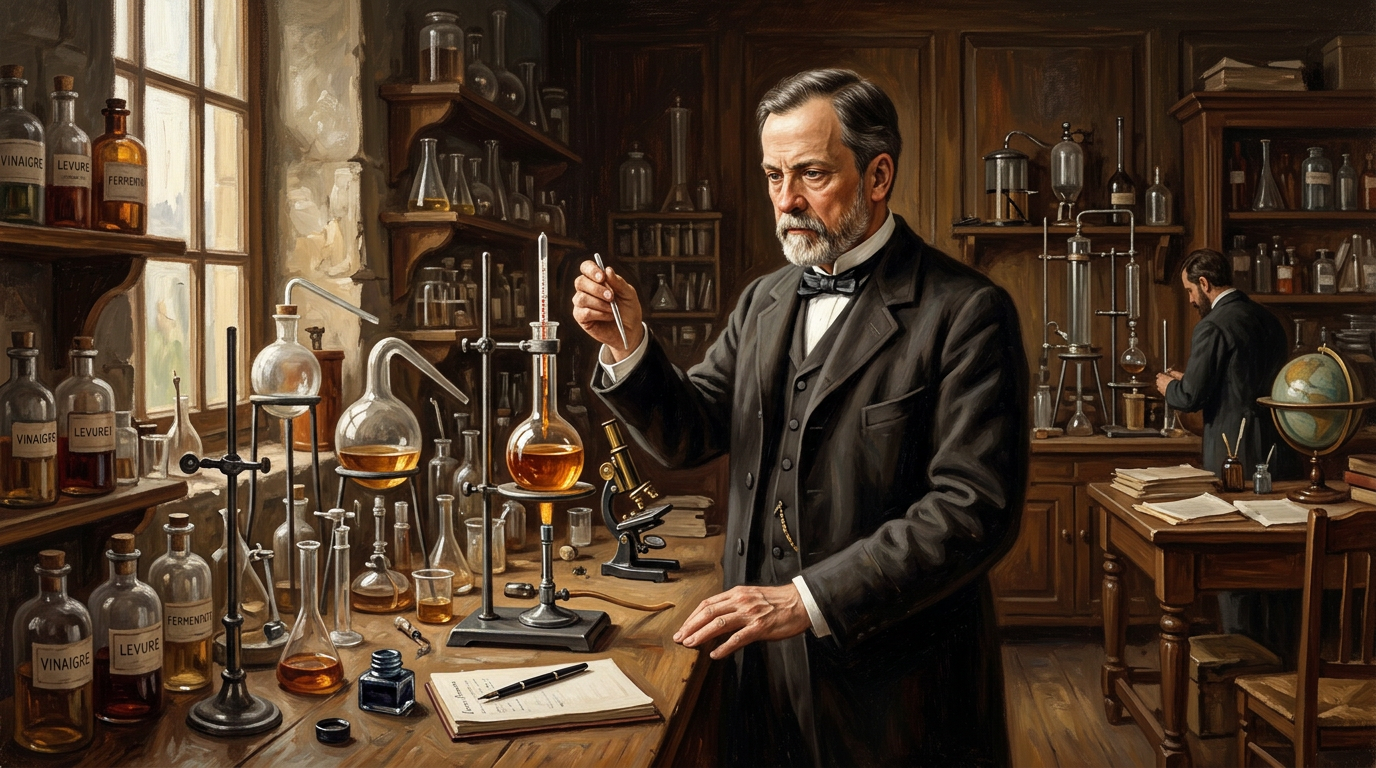
Louis Pasteur
1822–1895 · Chemist and microbiologist
Proving that germs cause disease, developing pasteurisation, and creating the first rabies vaccine.
Alexander Fleming
1881–1955 · Bacteriologist
Discovered penicillin, the world's first antibiotic, saving hundreds of millions of lives.
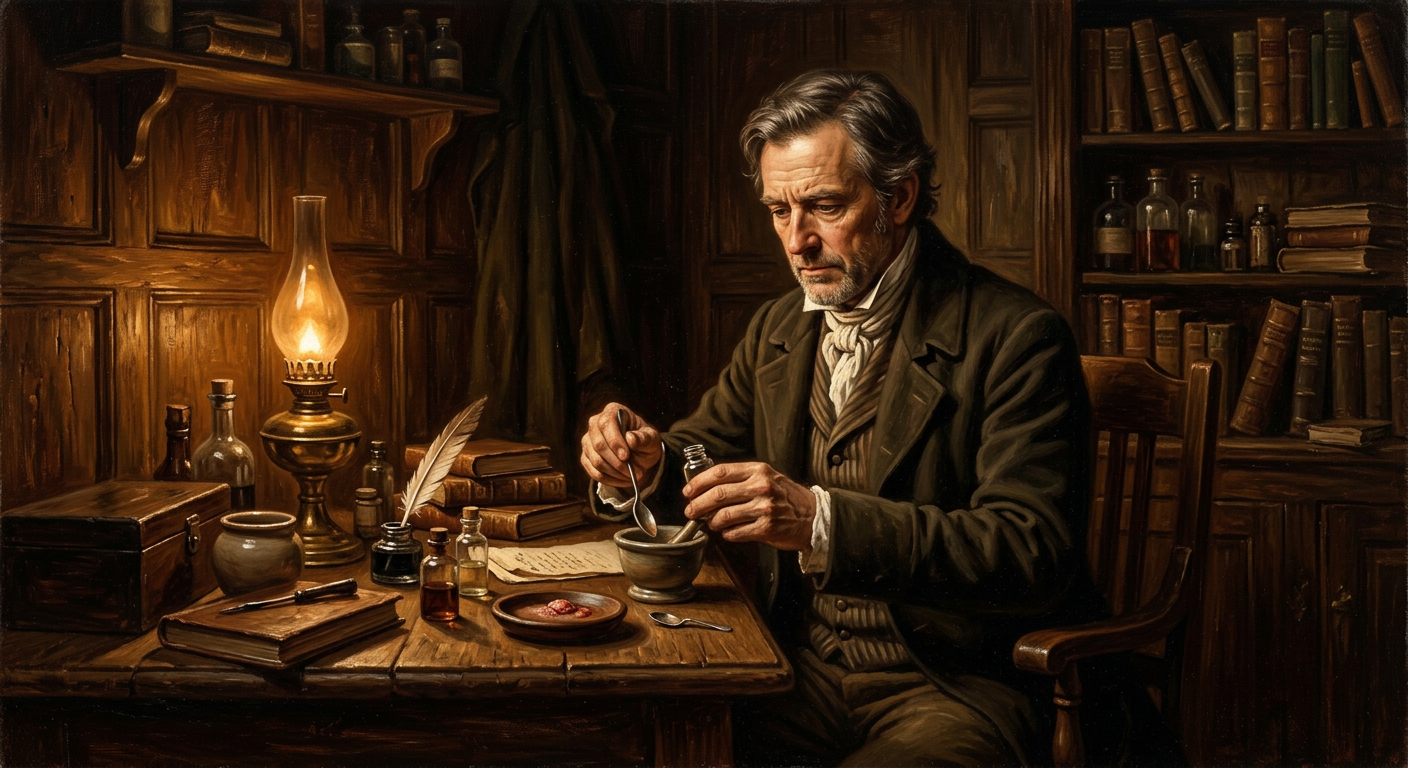
Edward Jenner
1749–1823 · Physician & Immunologist
Creating the world’s first vaccine, against smallpox, and founding the science of immunology.
Articles about this scientist
Sources & references
Books and educational kits about Robert Koch coming soon