_(2).jpg)
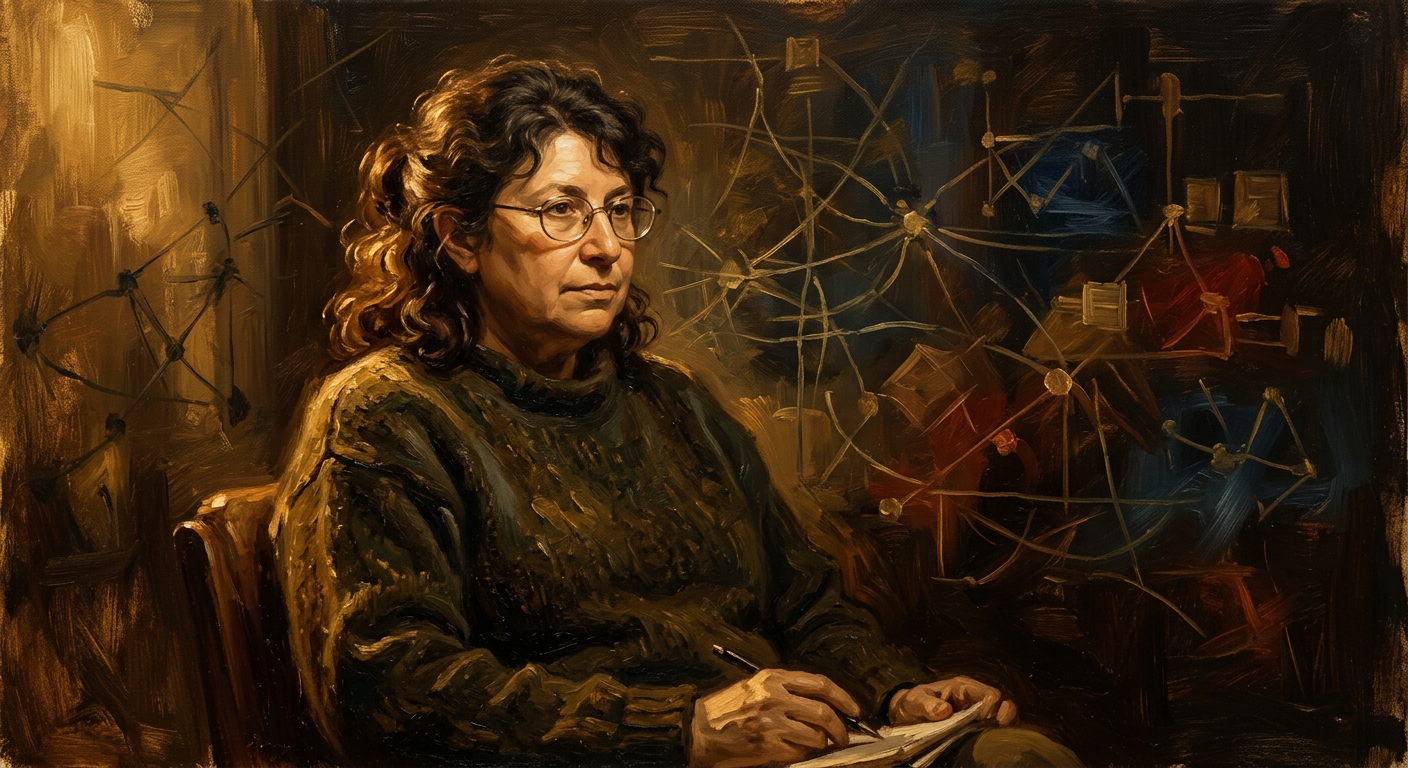
Radia Perlman
1951–present · Computer Scientist and Network Engineer
An American computer scientist whose work on network routing protocols made the modern internet possible — though she dislikes being called the “Mother of the Internet”.
“I was not the type of kid who took things apart or built stuff.”
Despite being called the “Mother of the Internet”, Perlman once said she was not the kind of child who took things apart or built gadgets — she was drawn to abstract logic and mathematics, not hardware.
Why is this scientist famous?
Invented the Spanning Tree Protocol, the algorithm that prevents loops in computer networks and keeps the internet from collapsing into chaos.
Radia's story
A Childhood in Logic
Radia Joy Perlman was born on 18 December 1951 in Portsmouth, Virginia, and grew up in New Jersey. Both her parents were engineers — her father worked on radar systems, and her mother was a mathematician and computer programmer at a time when very few women entered those fields. Despite this technical household, Radia was not the kind of child who dismantled radios or built machines. She was drawn to puzzles, logic, and abstract reasoning. She attended the Massachusetts Institute of Technology, where she earned a bachelor’s degree in mathematics in 1973 and a master’s in mathematics in 1976. At MIT, she became interested in how computers could be used to teach young children, developing a system called TORTIS that let pre-schoolers learn programming concepts by arranging physical blocks.
MIT and the Path to Networking
Perlman stayed at MIT for her doctoral studies, joining a research group at BBN Technologies, the company that had built much of the early ARPANET — the predecessor of the internet. It was there that she first encountered the challenge of network routing: how to send data from one computer to another when the path between them might pass through dozens of intermediate machines, any of which could fail. She completed her PhD in computer science in 1988 with a thesis on routing in networks where some nodes might be malicious — work that remains foundational to network security today.
The Spanning Tree Protocol
In 1984, while working as a consulting engineer at Digital Equipment Corporation (DEC), Perlman was handed a problem that would define her career. Network bridges — devices that connect two segments of a local network — were prone to forming loops, where data circulated endlessly and brought the network to a halt. Building larger bridged networks was nearly impossible because of this. Perlman was asked to design a protocol that could detect and disable loops automatically, using a constant amount of memory on each device regardless of how large the network was. She solved the problem in a matter of days. Her Spanning Tree Protocol (STP) allowed bridges to communicate with each other, map the network’s topology, and block redundant paths — all without human intervention. The protocol was published in 1985 and became an IEEE standard in 1990. It runs in virtually every network switch on Earth to this day.
Beyond STP
Perlman did not stop with STP. She recognised that her original protocol had limitations — it was slow to recover when the network topology changed, and it blocked paths that could have been used productively. Decades later, she developed TRILL (Transparent Interconnection of Lots of Links), a more sophisticated protocol that addressed these problems while preserving the simplicity that made STP so successful. She also made pioneering contributions to link-state routing protocols, the foundations of how routers share information about the network. After leaving DEC in 1993, she worked at Novell, Sun Microsystems, and Intel, and she has taught at Harvard and the University of Washington. She holds over 100 patents.
What did they discover?
Spanning Tree Protocol (1985)
An algorithm that allows network bridges to automatically detect and disable loops in a local area network, preventing data from circulating endlessly. STP became an IEEE standard and runs in nearly every network switch on Earth.
TRILL Protocol
A successor to STP that allows multiple paths to be used simultaneously, improving network performance and resilience. Perlman developed TRILL to fix the limitations she identified in her original Spanning Tree Protocol.
TORTIS Educational System
An early tangible computing system that taught pre-school children programming concepts using physical blocks, demonstrating that complex ideas could be made accessible to very young learners.
Amazing facts
She is widely known as the ‘Mother of the Internet’ for her Spanning Tree Protocol — a title she dislikes, saying it diminishes the work of many others.
She invented the Spanning Tree Protocol in just a few days while working at Digital Equipment Corporation in 1984.
Her father was an engineer who worked on radar systems, and her mother was a mathematician and computer programmer.
As a child, she was not interested in taking things apart or building gadgets; she was drawn to abstract logic and mathematics.
Her PhD thesis from MIT addressed how to route data in networks where some nodes might be malicious — work that remains foundational to network security.
She later developed TRILL to fix limitations in her original Spanning Tree Protocol.
She also created TORTIS, an educational system that taught pre-schoolers programming concepts using physical blocks.
She holds over 100 issued patents in networking and computing.
Timeline
Born in Portsmouth, Virginia
Earned SB in Mathematics from MIT
Earned MS in Mathematics from MIT
Invented the Spanning Tree Protocol at Digital Equipment Corporation
Earned PhD in Computer Science from MIT
Spanning Tree Protocol became an IEEE standard (802.1D)
Left DEC to work at Novell and later Sun Microsystems
Inducted into the Internet Hall of Fame
Awards & honours
Related Super Scientists
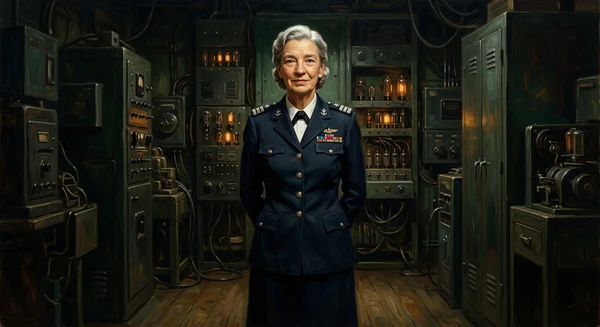
Grace Hopper
1906–1992 · Computer Scientist & Naval Admiral
Inventing the first compiler and making programming accessible with English-like languages.
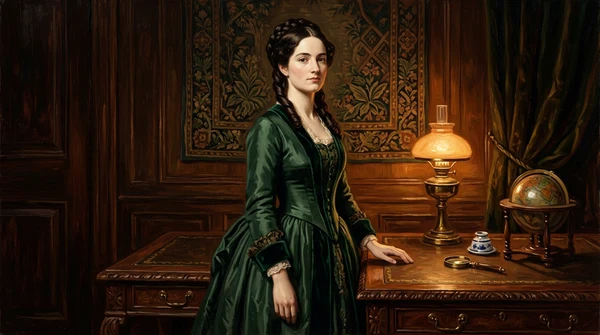
Ada Lovelace
1815–1852 · Mathematician
Writing the first computer algorithm, a century before electronic computers existed.
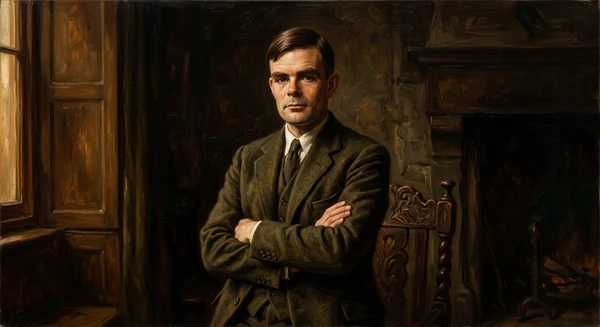
Alan Turing
1912–1954 · Mathematician & Computer Scientist
Breaking Nazi codes and founding the science of artificial intelligence.
Sources & references
Books and educational kits about Radia Perlman coming soon