_(2).jpg)
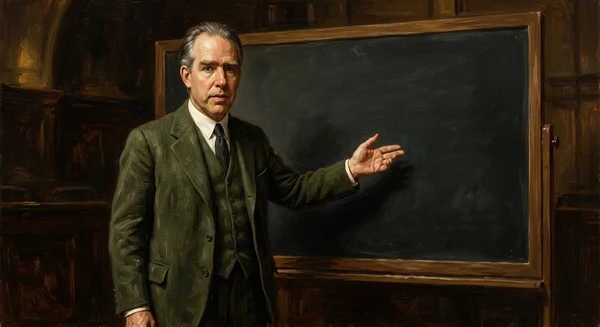
Niels Bohr
1885–1962 · Physicist
Niels Bohr was a Danish physicist who revolutionised our understanding of the atom. His model of atomic structure became the foundation of quantum mechanics, and his Copenhagen Institute became the world's centre for atomic physics.
“Everything we call real is made of things that cannot be regarded as real.”
Bohr and Einstein had a famous decades-long debate about quantum physics — Bohr believed particles don't have definite properties until measured, and Einstein famously replied, \"God does not play dice.\"
Why is this scientist famous?
Developed the Bohr model of the atom and made foundational contributions to quantum mechanics.
Bohr applied quantum ideas to atoms, proposing that electrons orbit the nucleus in specific energy levels. That model is how chemistry and physics are taught today, and it explains why elements behave the way they do — why sodium glows orange in a flame, why neon signs glow red. Quantum computing, an emerging technology that could revolutionise computing, builds directly on the quantum rules he helped uncover.
Niels's story
Early Life
Born in Copenhagen in 1885 to a professor of physiology, Bohr grew up in an academic household. He excelled at football and physics, playing as a goalkeeper for a top Danish club while studying at the University of Copenhagen.
The Bohr Model
In 1913, Bohr proposed a revolutionary model of the atom in which electrons orbit the nucleus in fixed energy levels. When an electron jumps between levels, it emits or absorbs light at specific colours. This explained why elements produce characteristic spectral lines and why the periodic table works.
Quantum Mechanics and the Copenhagen Interpretation
Bohr became the spiritual leader of quantum physics. His Copenhagen Interpretation, developed with Werner Heisenberg, held that quantum particles exist in probability states until observed. This view dominated physics for decades, though Einstein never accepted it.
Nuclear Fission and the Manhattan Project
When Nazi Germany occupied Denmark in 1940, Bohr's Jewish heritage made him a target. He fled to Sweden, then England, and finally the United States, where he contributed to the Manhattan Project. After the war, he campaigned passionately for international control of nuclear weapons.
What did they discover?
The Bohr Model of the Atom
Proposed that electrons orbit the nucleus in discrete energy levels, explaining atomic spectra and the structure of the periodic table.
The Principle of Complementarity
Established that quantum objects can exhibit wave-like or particle-like properties depending on the experiment — both descriptions are complementary and necessary.
Nuclear Fission Research
Bohr correctly explained that uranium-235, not uranium-238, was responsible for nuclear fission, a key insight for both nuclear power and nuclear weapons.
Amazing facts
He won the Nobel Prize in Physics in 1922, the same year his son Aage was born — who also won a Nobel Prize in Physics in 1975.
He played semi-professional football as a goalkeeper before dedicating himself to physics.
The element Bohrium (Bh, atomic number 107) is named after him.
He escaped Nazi-occupied Denmark in 1943 by boat to Sweden, hidden in a fishing boat.
His famous debates with Einstein about quantum mechanics took place at conferences throughout the 1920s and 30s.
He received the Atoms for Peace Award in 1957 for his work on peaceful uses of atomic energy.
Timeline
Born in Copenhagen, Denmark on October 7
Earned his PhD from the University of Copenhagen
Published the Bohr model of the atom, describing electrons in fixed energy levels
Founded the Institute for Theoretical Physics in Copenhagen (later named the Niels Bohr Institute)
Won the Nobel Prize in Physics for his work on atomic structure
Developed the Copenhagen Interpretation of quantum mechanics with Heisenberg
Explained the mechanism of nuclear fission, identifying uranium-235 as the fissile isotope
Fled Nazi-occupied Denmark, eventually reaching the United States
Returned to Copenhagen after World War II
Died in Copenhagen on November 18, age 77
Awards & honours
Related Super Scientists
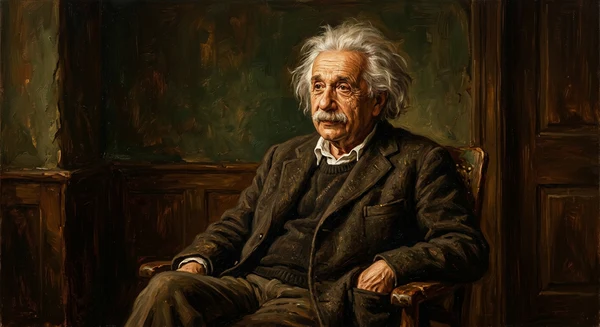
Albert Einstein
1879–1955 · Theoretical Physicist
Developing the theory of relativity and the equation E=mc².
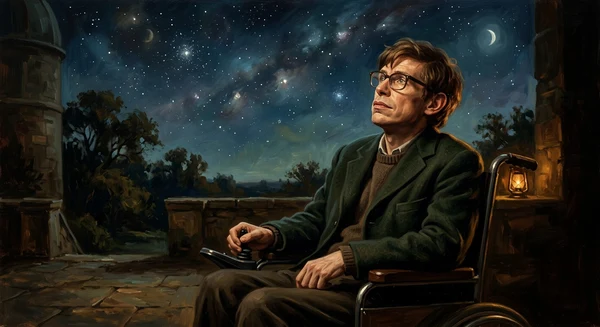
Stephen Hawking
1942–2018 · Theoretical Physicist & Cosmologist
Discovering that black holes emit radiation and writing "A Brief History of Time."
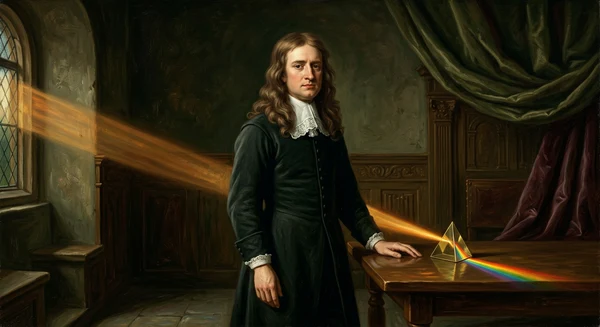
Isaac Newton
1643–1727 · Physicist & Mathematician
Formulating the laws of motion and universal gravitation.
Articles about this scientist

Sources & references
Books and educational kits about Niels Bohr coming soon