_(2).jpg)
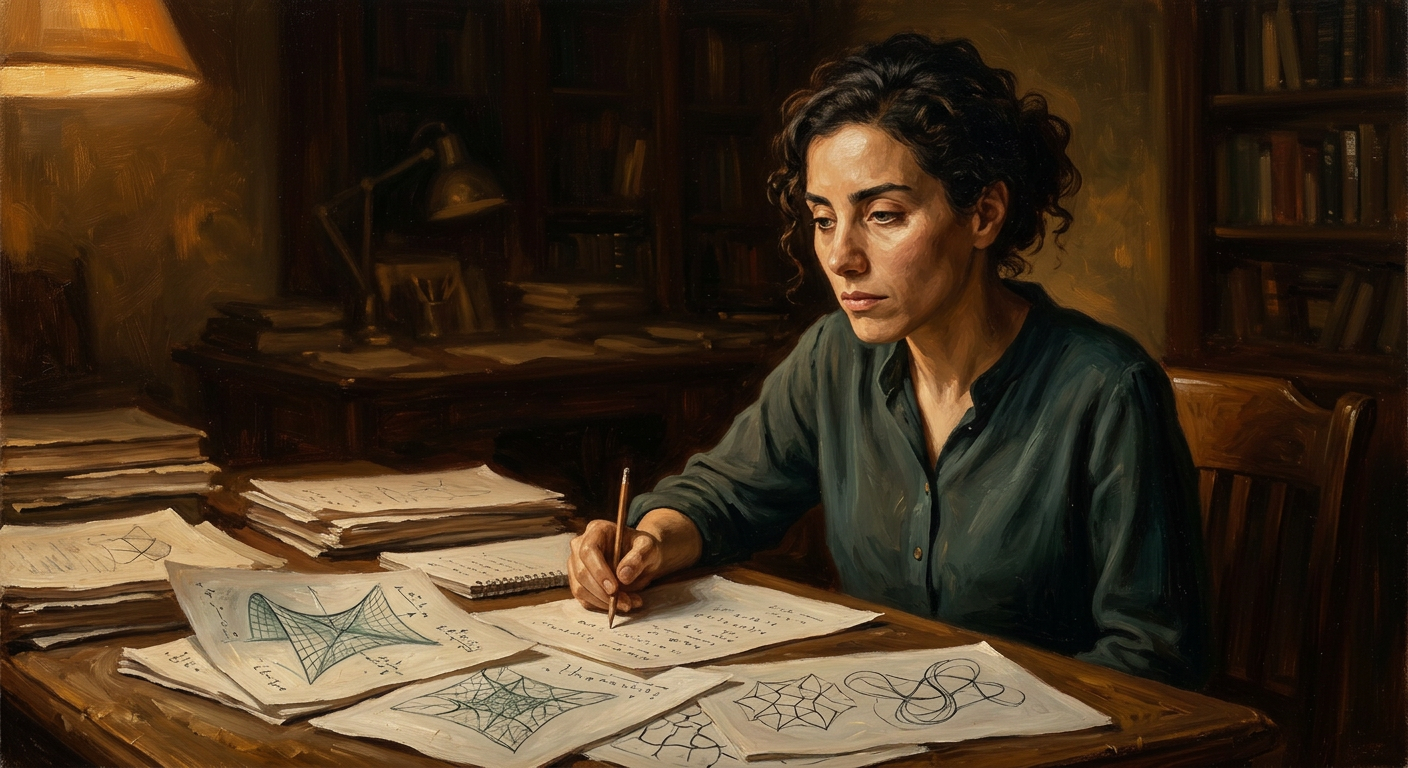
Maryam Mirzakhani
1977–2017 · Mathematician
An Iranian mathematician at Stanford whose work on Riemann surfaces and moduli spaces opened new doors in geometry and dynamical systems.
“The beauty of mathematics only shows itself to more patient followers.”
As a teenager in Tehran, she dreamed of becoming a novelist. She only fell in love with mathematics after her brother spotted a geometry problem in a magazine and challenged her to solve it.
Why is this scientist famous?
The first woman and the first Iranian to win the Fields Medal, the most prestigious prize in mathematics, for her groundbreaking work on the geometry of curved surfaces.
Maryam's story
Early Life in Tehran
Maryam Mirzakhani was born on 12 May 1977 in Tehran, Iran, during a period of enormous political change. Her childhood coincided with the Iranian Revolution and the long, devastating war with Iraq, yet her family encouraged her curiosity. She attended a special school for gifted girls run by the National Organization for Development of Exceptional Talents, where she was pushed to think deeply and independently. As a teenager, she read widely and imagined herself becoming a writer. Mathematics was not her first love — she found it abstract and cold until a moment that changed everything.
Finding Mathematics
The turning point came when her older brother showed her a geometry problem from a magazine. The problem involved calculating a formula from a pattern of shapes, and Maryam found herself unable to put it down. She worked on it for days, and when she finally cracked it, she felt a thrill she had never experienced before. Her teachers at school noticed her talent and began to nurture it. In 1994, she represented Iran at the International Mathematical Olympiad in Hong Kong and won a gold medal. The following year, in Toronto, she scored a perfect 42 out of 42 — a feat achieved by only a handful of competitors in the competition’s history. Mathematics had become her calling.
Harvard and Graduate Work
In 1999, Mirzakhani earned her bachelor’s degree from Sharif University of Technology in Tehran, one of Iran’s most prestigious universities. She then moved to the United States to pursue a PhD at Harvard University under the guidance of Curtis McMullen, himself a Fields Medalist. Her dissertation, completed in 2004, was so original that McMullen described it as unlike anything he had seen. She worked on the geometry of moduli spaces — the mathematical spaces that describe all possible shapes of a given kind of surface. Her approach combined techniques from hyperbolic geometry, complex analysis, and dynamical systems in ways that surprised even experienced mathematicians.
Princeton, Stanford, and the Moduli Spaces
After her PhD, Mirzakhani became a research fellow at the Clay Mathematics Institute and an assistant professor at Princeton University. In 2009, she moved to Stanford University as a full professor, where she would spend the rest of her career. Her research focused on Riemann surfaces — the curved, multi-holed mathematical objects that generalise the surface of a sphere or a doughnut. She studied how geodesics (the shortest paths on these surfaces) wind around and interlock, and how the moduli spaces that parametrise these surfaces behave. Her work was technically formidable but also deeply beautiful, connecting areas of mathematics that had seemed unrelated.
The Fields Medal
On 13 August 2014, at the International Congress of Mathematicians in Seoul, South Korea, Mirzakhani was awarded the Fields Medal. Established in 1936 and given only every four years to mathematicians under 40, the Fields Medal is often called the Nobel Prize of mathematics. Mirzakhani was the first woman ever to receive it, and the first Iranian citizen of any gender. The award recognised her ‘outstanding contributions to the dynamics and geometry of Riemann surfaces and their moduli spaces’. The announcement made headlines around the world and was celebrated across Iran, where newspapers published her photograph on their front pages.
Legacy
Mirzakhani had been diagnosed with breast cancer in 2013, a year before the Fields Medal, and she continued her research through years of treatment. The cancer spread, and on 14 July 2017 she died in Palo Alto, California, at the age of 40. Her death was met with an outpouring of grief from the global mathematical community. Stanford’s president called her ‘a brilliant mathematical theorist who made stunning advances in understanding the geometric and dynamical complexity of curved surfaces’. The International Mathematical Union created the Maryam Mirzakhani New Frontiers Award in her honour, given biennially to outstanding young female mathematicians. In Iran, her photograph was displayed on the walls of Sharif University, and both a primary school and a street in Tehran were named after her.
What did they discover?
Geometry of Moduli Spaces
Mirzakhani developed new tools for understanding moduli spaces — the mathematical spaces that describe all possible shapes of a given type of surface. Her calculations made it possible to count the number of geodesics on complicated surfaces, a problem that had resisted solution for decades.
The Magic Wand Theorem
In a 172-page paper with Alex Eskin, she proved a result about billiard trajectories on polygonal tables that other mathematicians dubbed the ‘magic wand theorem’ for its unexpected power. It connects geometry, dynamical systems, and physics in ways that continue to yield new insights.
Counting Simple Closed Geodesics
She found a formula for counting the number of simple closed geodesics on a hyperbolic surface — curves that wrap around the surface without crossing themselves. This result connected geometry to combinatorics and number theory in a way no one had previously imagined.
Amazing facts
She was the first woman and the first Iranian citizen to win the Fields Medal, mathematics’ highest honour.
As a teenager, she wanted to be a novelist, not a mathematician.
She won two gold medals at the International Mathematical Olympiad — in 1994 and 1995 — scoring a perfect 42 out of 42 in her second appearance.
Her PhD thesis at Harvard was so original that her advisor, Fields Medalist Curtis McMullen, said it was unlike anything he had seen.
She doodled constantly while working on proofs, filling large sheets of paper with curves and shapes — her daughter once described it as ‘painting’.
Her 172-page paper with Alex Eskin was so ambitious that it took several years for other mathematicians to fully verify and absorb its results.
She was diagnosed with breast cancer in 2013, a year before winning the Fields Medal, and continued working through treatment.
After her death in 2017, the International Mathematical Union created the Maryam Mirzakhani New Frontiers Award in her honour.
Both a primary school and a street in Tehran are named after her.
Her likeness was displayed on the walls of Sharif University of Technology, where she had studied as an undergraduate.
Timeline
Born in Tehran, Iran
Won gold medal at the International Mathematical Olympiad in Hong Kong
Scored a perfect 42 at the International Mathematical Olympiad in Toronto
Earned BSc from Sharif University of Technology in Tehran
Earned PhD from Harvard University under Curtis McMullen
Became a Clay Mathematics Institute research fellow and joined Princeton University
Became a professor at Stanford University
Awarded the Fields Medal at the International Congress of Mathematicians in Seoul
Diagnosed with breast cancer; continued research through treatment
Died in Palo Alto, California, aged 40
Awards & honours
Related Super Scientists
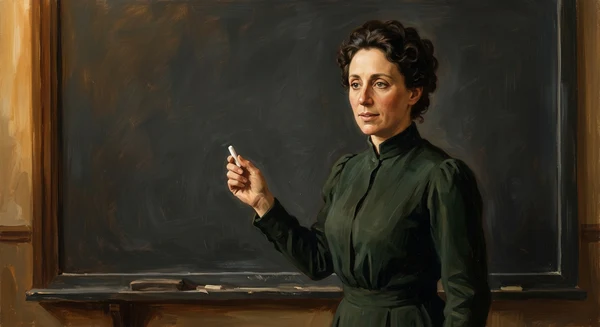
Emmy Noether
1882–1935 · Mathematician
Proved Noether's theorem, linking symmetry and conservation laws — a foundation of modern physics.
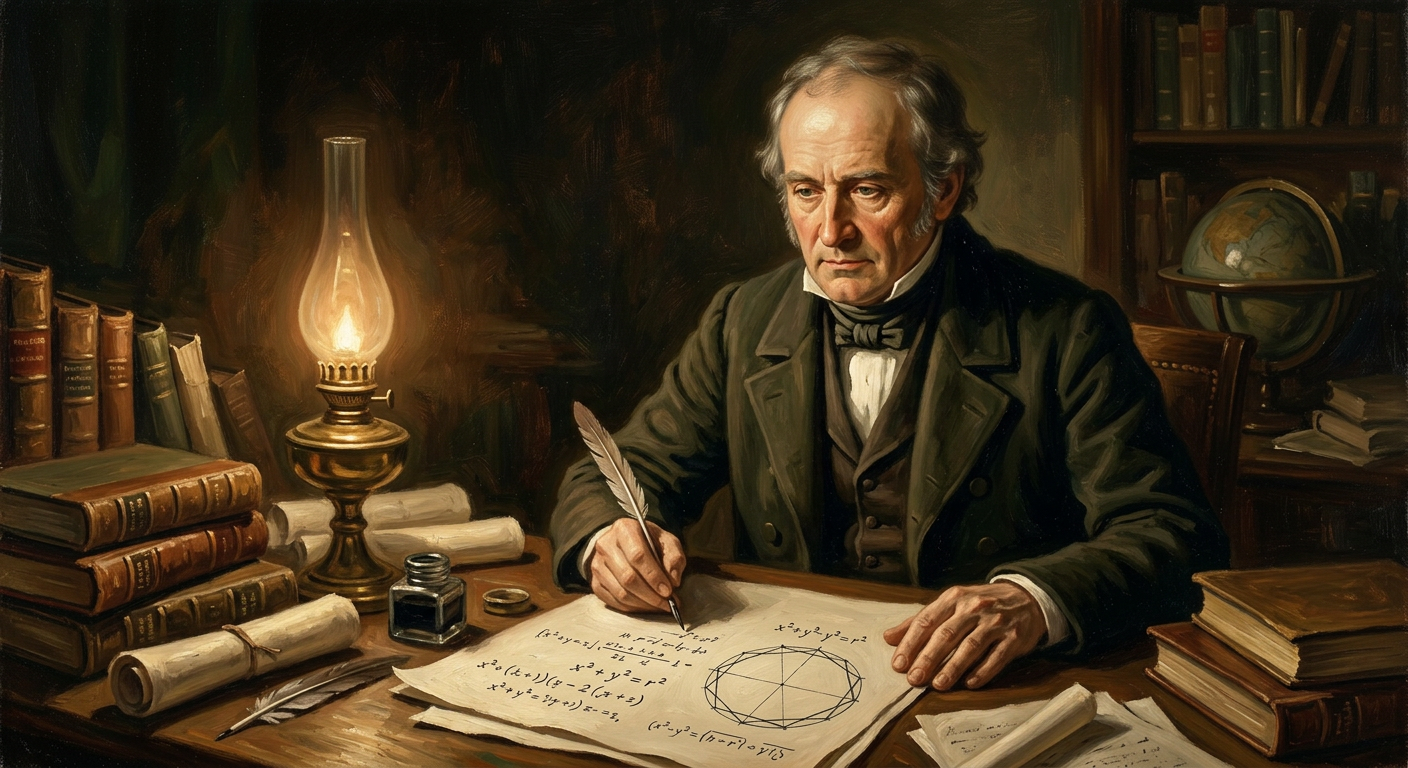
Carl Friedrich Gauss
1777–1855 · Mathematician & Physicist
Making groundbreaking contributions to number theory, geometry, astronomy, and statistics — often called the ‘Prince of Mathematicians.’
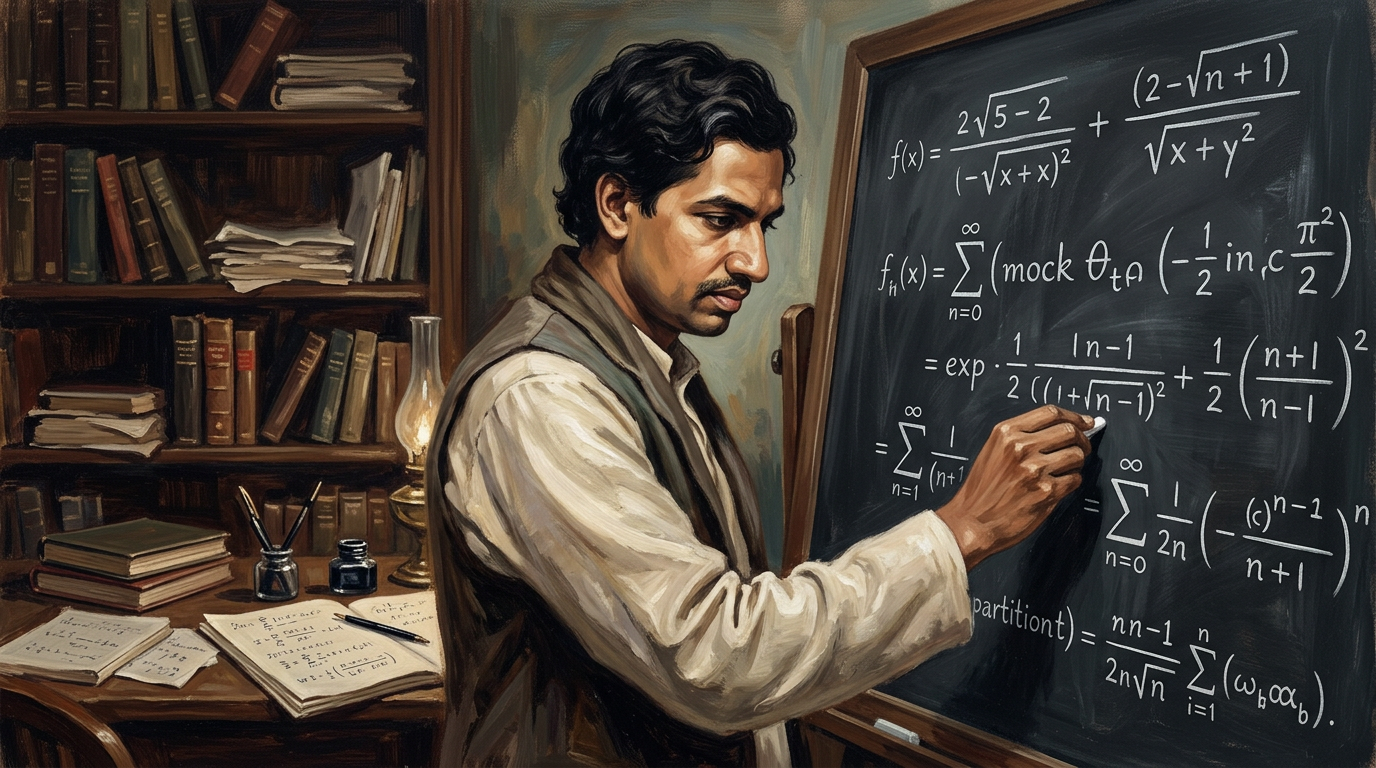
Srinivasa Ramanujan
1887–1920 · Mathematician
Making extraordinary contributions to number theory, infinite series, and continued fractions, largely self-taught.
Sources & references
Books and educational kits about Maryam Mirzakhani coming soon