_(2).jpg)
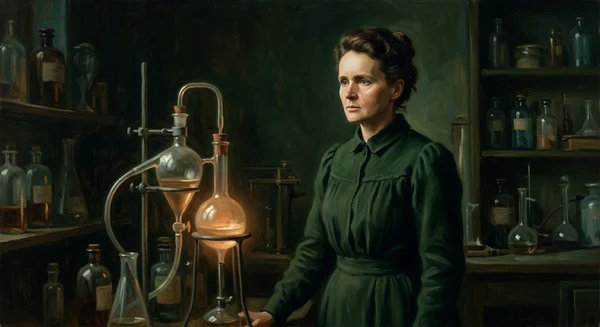
Marie Curie
1867–1934 · Physicist & Chemist
The first person to win Nobel Prizes in two different sciences (physics and chemistry), Marie Curie pioneered research into radioactivity.
“Nothing in life is to be feared, it is only to be understood. Now is the time to understand more, so that we may fear less.”
Marie Curie is the only person ever to win Nobel Prizes in two completely different sciences — Physics in 1903 and Chemistry in 1911.
Why is this scientist famous?
Discovering radioactivity and two new elements: radium and polonium.
Marie Curie discovered two new elements and pioneered the use of radiation to treat cancer. The radiotherapy machines in hospitals today are descendants of her work. She was the first person to win Nobel Prizes in two different sciences. Her notebooks are still so radioactive they are stored in lead boxes — a testament to how much she sacrificed to open the door to modern cancer treatment.
Marie's story
Early Life
Born Maria Skłodowska in Warsaw, Poland, during a time when the country was under Russian rule. Women were barred from higher education, so she attended the secret 'Flying University,' an underground institution dedicated to teaching Polish women. She saved money for years by working as a governess to fund her sister's medical studies in Paris, on the understanding that her sister would then support her. In 1891, she finally moved to Paris to study physics and mathematics at the Sorbonne, living in a freezing attic room and sometimes fainting from hunger.
Partnership with Pierre
In Paris she met Pierre Curie, a brilliant physicist already known for his work on piezoelectricity. They married in 1895 and became scientific partners, working together in a converted shed that was freezing in winter and stifling in summer — a visitor once described it as 'a cross between a stable and a potato cellar.' Despite the conditions, this was where their most important work was done.
Radioactivity
Following Henri Becquerel's discovery that uranium emitted mysterious rays, Marie coined the term 'radioactivity' and showed that the phenomenon was a property of the atom itself, not a chemical reaction — a revolutionary idea. She and Pierre discovered two new radioactive elements: polonium (named after Poland) and radium. To isolate radium, she processed tons of pitchblende ore by hand in the shed, stirring boiling cauldrons with a heavy iron rod.
Nobel Prizes
In 1903 she shared the Nobel Prize in Physics with Pierre and Becquerel — the committee initially wanted to exclude her because she was a woman, until Pierre insisted. After Pierre's tragic death in a street accident in 1906, she took over his professorship, becoming the first woman to teach at the Sorbonne. In 1911 she won a second Nobel Prize, this time in Chemistry, for isolating pure radium. She is the only person ever to win Nobel Prizes in two different sciences.
The Front Lines
During World War I, Curie recognised that X-rays could save soldiers' lives by helping surgeons locate bullets and shrapnel. She developed mobile X-ray units — vehicles equipped with X-ray machines and dynamos — and drove them to the front lines herself. She trained 150 women to operate the machines, and the 'Little Curies,' as they were called, treated over a million wounded soldiers. She also organised the production of radon needles for cancer treatment in military hospitals.
Legacy
Curie died in 1934 from aplastic anemia, almost certainly caused by decades of radiation exposure — the dangers of radioactivity were not yet understood. Her daughter Irène won the 1935 Nobel Prize in Chemistry, making them the most decorated family in Nobel history. Her notebooks are still so radioactive that they are stored in lead-lined boxes at the Bibliothèque Nationale in Paris, and researchers must sign a waiver to access them. The element curium and the unit of radioactivity, the curie, are named after her and Pierre.
What did they discover?
Radioactivity
Coined the term and proved that radiation comes from within the atom itself, not from interactions between molecules — a fundamentally new idea that opened the door to nuclear physics.
Polonium
A new radioactive element she discovered in 1898, named after her native Poland — which did not exist as an independent country at the time.
Radium
A radioactive element isolated from pitchblende after years of painstaking hand processing of tons of ore, once used in luminous paint and early cancer treatments.
Mobile X-ray Units
Designed and deployed field X-ray vehicles during WWI that treated over a million wounded soldiers, personally driving them to the front lines.
Isolation of Pure Radium
Won her second Nobel Prize for producing a pure radium sample, which allowed scientists to study its properties and medical applications precisely.
Amazing facts
She is the only person ever to win Nobel Prizes in two different sciences (Physics and Chemistry).
Her notebooks are still so radioactive that they are stored in lead-lined boxes; researchers must sign a waiver to access them.
She drove a mobile X-ray van herself on the front lines of World War I.
Her daughter Irène also won a Nobel Prize in Chemistry, making them the most decorated family in Nobel history.
She named polonium after her homeland, Poland, which did not exist as an independent country at the time.
She was the first woman to win a Nobel Prize and the first woman to become a professor at the Sorbonne.
She processed tons of pitchblende ore by hand, stirring boiling cauldrons with a heavy iron rod, to isolate radium.
The Nobel committee initially tried to exclude her from the 1903 Prize because she was a woman, until Pierre insisted she be included.
The element curium and the unit of radioactivity, the curie, are named after her and Pierre.
She lived in a freezing attic in Paris and sometimes fainted from hunger while studying at the Sorbonne.
Timeline
Born in Warsaw, Poland
Began working as a governess to fund her sister's medical studies
Moved to Paris to study at the Sorbonne
Earned a degree in physics, finishing first in her class
Married Pierre Curie
Discovered polonium and radium
Won the Nobel Prize in Physics with Pierre and Becquerel
Pierre Curie killed in a street accident; Marie took over his post at the Sorbonne
Won the Nobel Prize in Chemistry for isolating pure radium
Developed mobile X-ray units and drove them to the WWI front lines
Toured the United States to raise funds for radium research
Died from aplastic anemia caused by radiation exposure
Awards & honours
Related Super Scientists
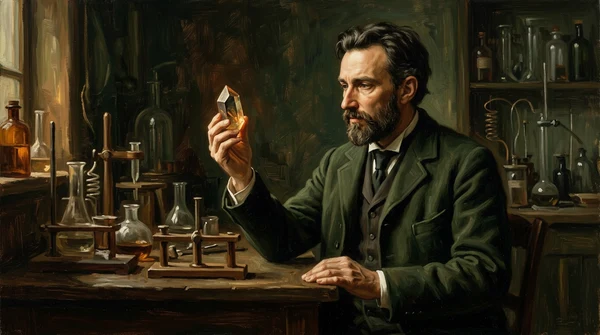
Pierre Curie
1859–1906 · Physicist
Co-discovered radium and polonium and pioneered the study of radioactivity with Marie Curie.
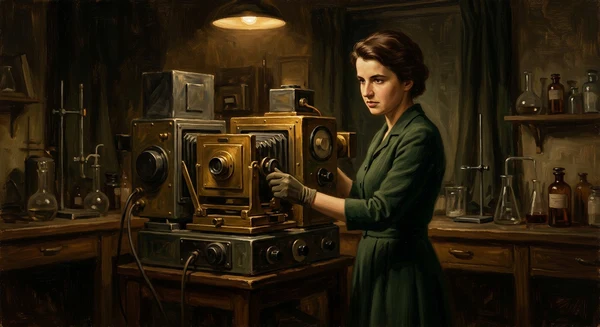
Rosalind Franklin
1920–1958 · Chemist & X-ray Crystallographer
Taking the photograph that revealed the double-helix structure of DNA.
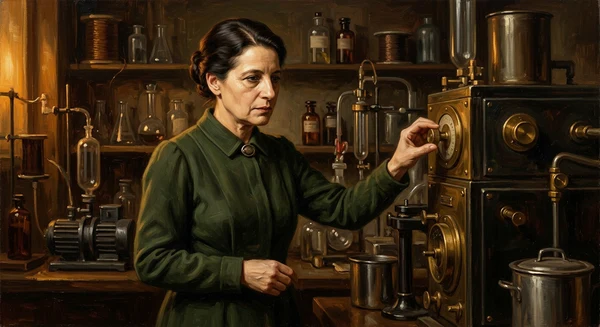
Lise Meitner
1878–1968 · Physicist
Co-discovered nuclear fission and explained how splitting atoms releases enormous energy.
Articles about this scientist
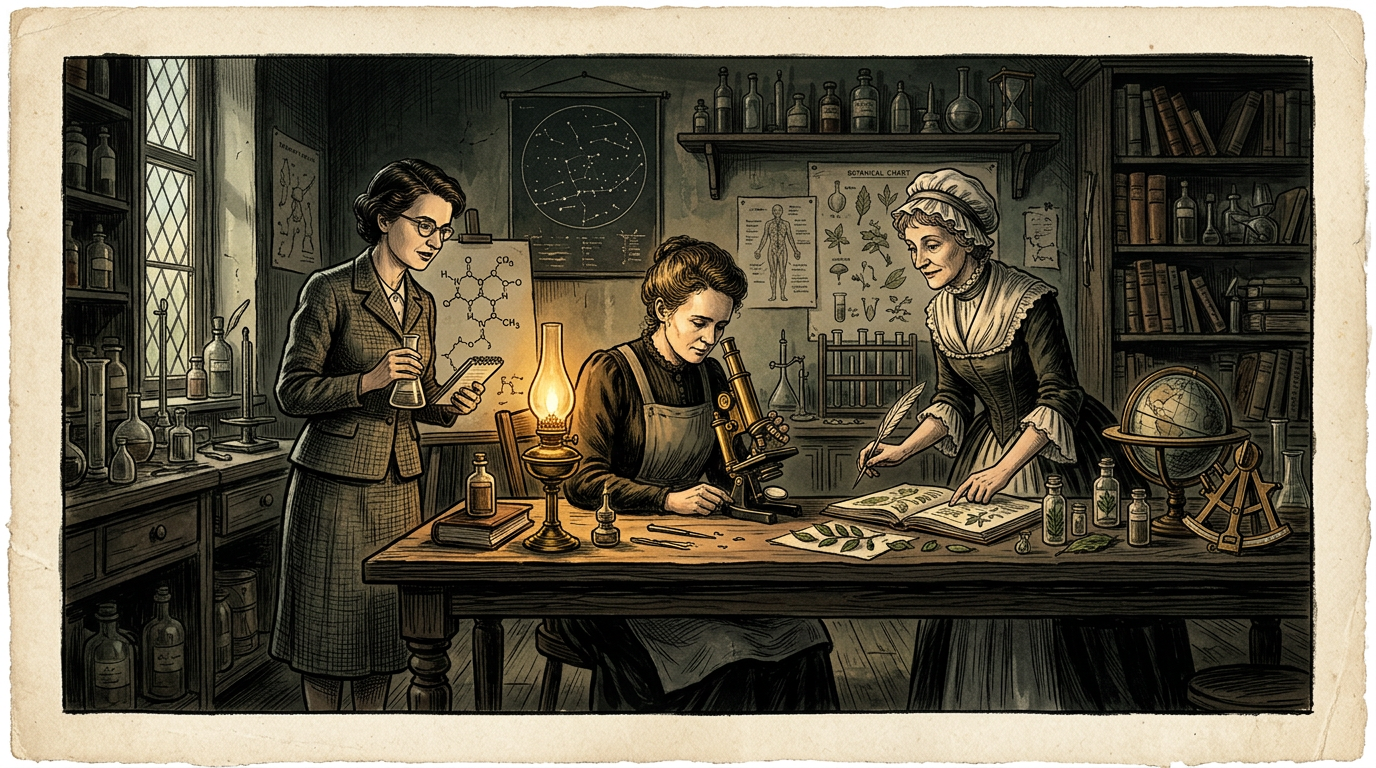
Women Who Changed Science
Throughout history, women in science have faced exclusion, dismissal, and erasure. Yet their discoveries have been transformative. This article celebrates the women whose brilliance could not be held back by the barriers of their time.
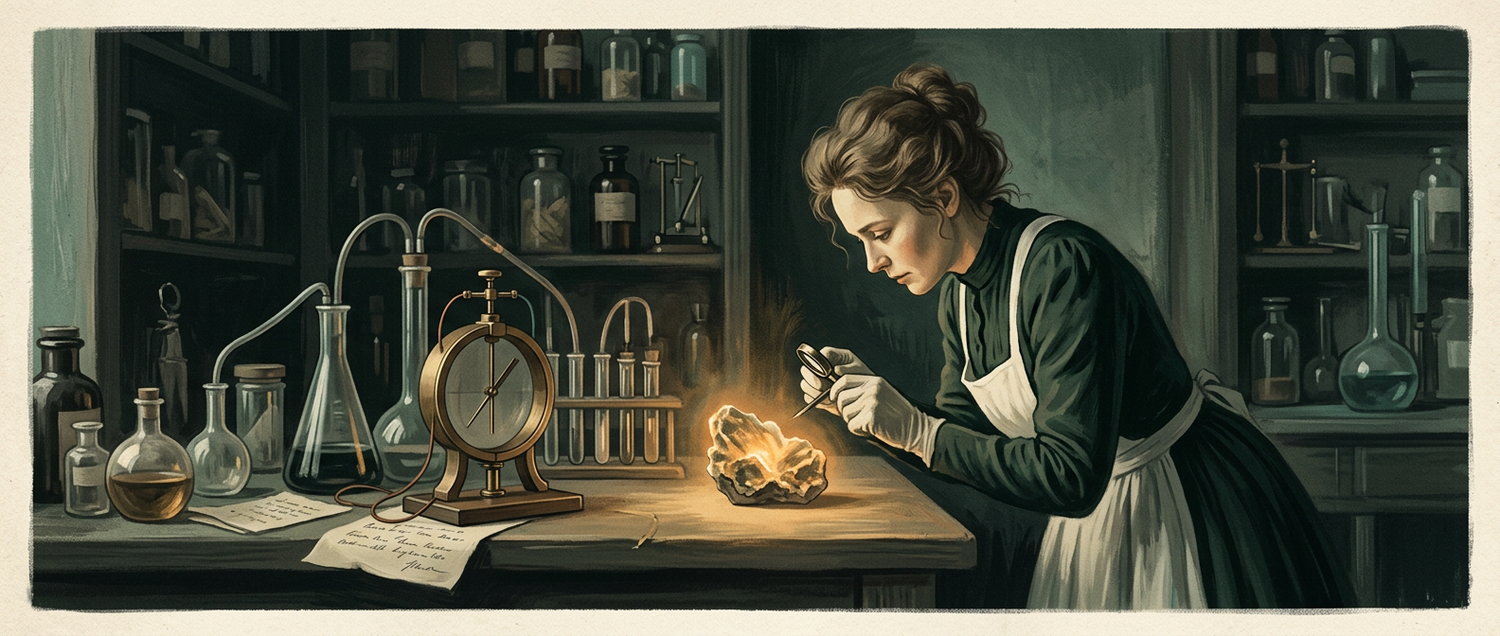
The Discovery of Radioactivity
In 1896, a French physicist noticed that a crystal of uranium left near a photographic plate had fogged it — even though nothing was touching it. That simple observation led to the discovery of radioactivity.
Sources & references
Books and educational kits about Marie Curie coming soon