_(2).jpg)
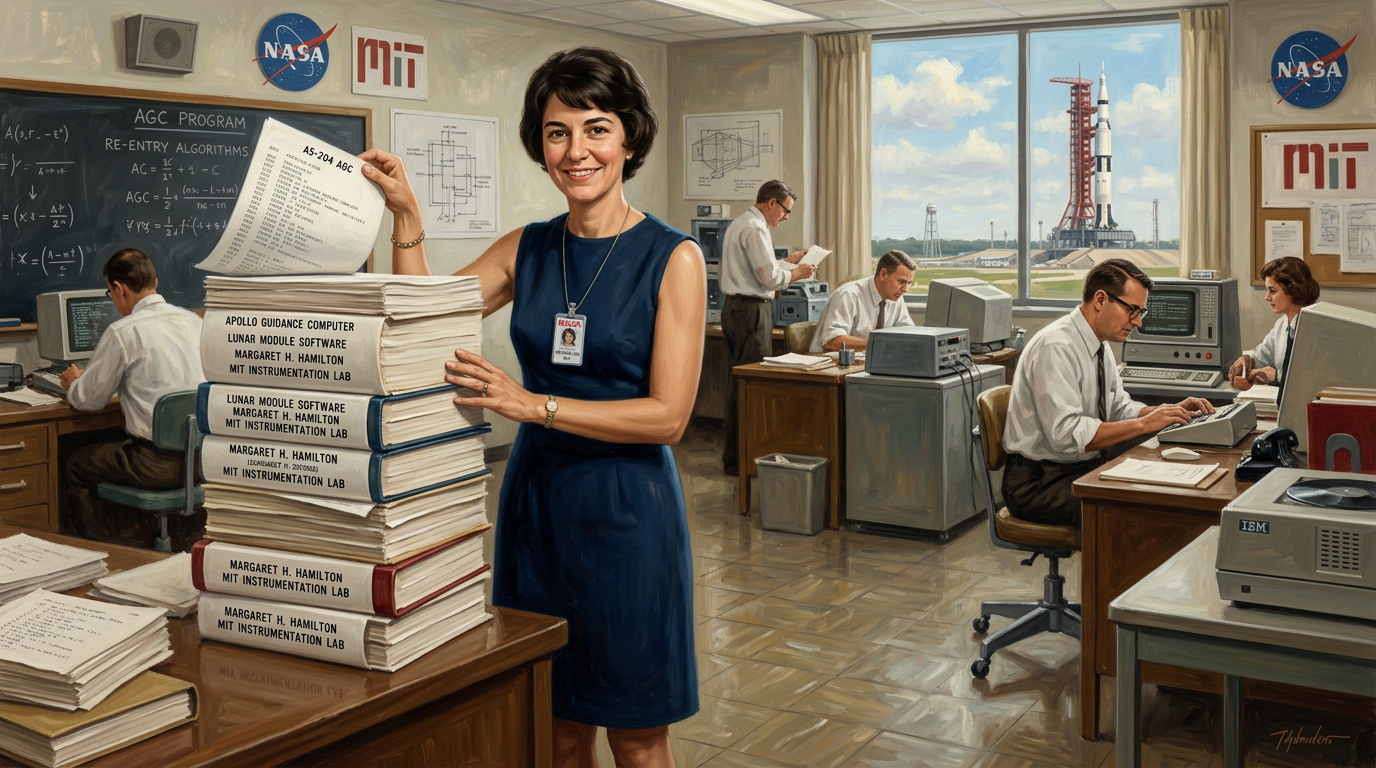
Margaret Hamilton
1936–present · Computer scientist and software engineer
Margaret Hamilton was a computer scientist who led the team that wrote the onboard flight software for NASA's Apollo missions, including the landing of Apollo 11 on the Moon.
“There was no choice but to be pioneers.”
Margaret Hamilton was 32 years old when she led the team that wrote the software for the first Moon landing — and she had to fight to be taken seriously as a woman in a field that barely existed.
Why is this scientist famous?
Leading the team that wrote the Apollo flight software and helping establish software engineering as a discipline.
Hamilton led the team that wrote the onboard flight software for NASA's Apollo missions. Her software was so reliable it saved the Apollo 11 Moon landing from an overload alarm at the last minute. She also coined the term "software engineering." The apps on your phone, the code in your car, and the software in spacecraft all benefit from the rigorous standards she helped establish.
Margaret's story
Early Life
Born in Paoli, Indiana, Hamilton studied mathematics at Earlham College and originally planned to do graduate work in abstract mathematics. In 1960 she took a job at MIT to support her husband through law school, intending to return to graduate school later. Instead, she found herself working on weather prediction software — one of the first computerised forecasting systems — and never looked back.
Apollo and the AGC
In 1965 Hamilton joined MIT's Instrumentation Laboratory, which had been contracted to write the guidance software for the Apollo Guidance Computer (AGC). She eventually became director of the Software Engineering Division, leading a team that wrote the most reliable software ever created at the time. The AGC had only 4 kilobytes of RAM and 32 kilobytes of read-only memory, and the software had to work flawlessly — a bug could kill astronauts.
Saving Apollo 11
During the Apollo 11 lunar landing on 20 July 1969, the guidance computer became overloaded with radar data and triggered alarms. Because Hamilton's team had designed the software with priority scheduling — an idea she championed — the computer automatically discarded lower-priority tasks and kept the critical landing functions running. The landing succeeded, and the approach became a standard principle of software design.
Legacy
Hamilton is credited with popularising the term 'software engineering' at a time when software was not taken seriously as an engineering discipline. She later founded two software companies and received the NASA Exceptional Space Act Award in 2003. In 2016, President Barack Obama awarded her the Presidential Medal of Freedom, the highest civilian honour in the United States, for her contributions to the Apollo programme and to the field of software engineering.
What did they discover?
Apollo Guidance Software
Led development of the onboard software for the Apollo Guidance Computer, used in all Apollo missions including Apollo 11 — the first crewed Moon landing.
Priority Scheduling
Designed asynchronous software with priority-based task handling, allowing the computer to shed low-priority work and keep critical functions running during overload — a principle now universal in operating systems.
Software Engineering as a Discipline
Helped establish software engineering as a respected field, insisting on rigorous testing, error detection, and system-level design decades before these became standard practice.
Amazing facts
She popularised the term 'software engineering' at a time when the field was not considered real engineering.
The Apollo Guidance Computer had only 4 KB of RAM — less than a single email today.
Her priority-scheduling design saved the Apollo 11 landing when the computer became overloaded with radar data.
She received the Presidential Medal of Freedom from President Obama in 2016.
She was 32 years old when she led the software team for the first Moon landing.
A famous photograph shows her standing next to a stack of Apollo code printouts taller than she is.
Timeline
Born in Paoli, Indiana
Began programming weather prediction software at MIT
Joined the MIT Instrumentation Laboratory for the Apollo programme
Became director of the Software Engineering Division at MIT
Apollo 11 landed on the Moon using her team's software
Founded Hamilton Technologies, her own software company
Received the NASA Exceptional Space Act Award
Received the Presidential Medal of Freedom
Awards & honours
Related Super Scientists
Katherine Johnson
1918–2020 · Mathematician
Calculating the trajectories that put the first Americans into space and on the Moon.
Ada Lovelace
1815–1852 · Mathematician
Writing the first computer algorithm, a century before electronic computers existed.
Grace Hopper
1906–1992 · Computer Scientist & Naval Admiral
Inventing the first compiler and making programming accessible with English-like languages.
Articles about this scientist
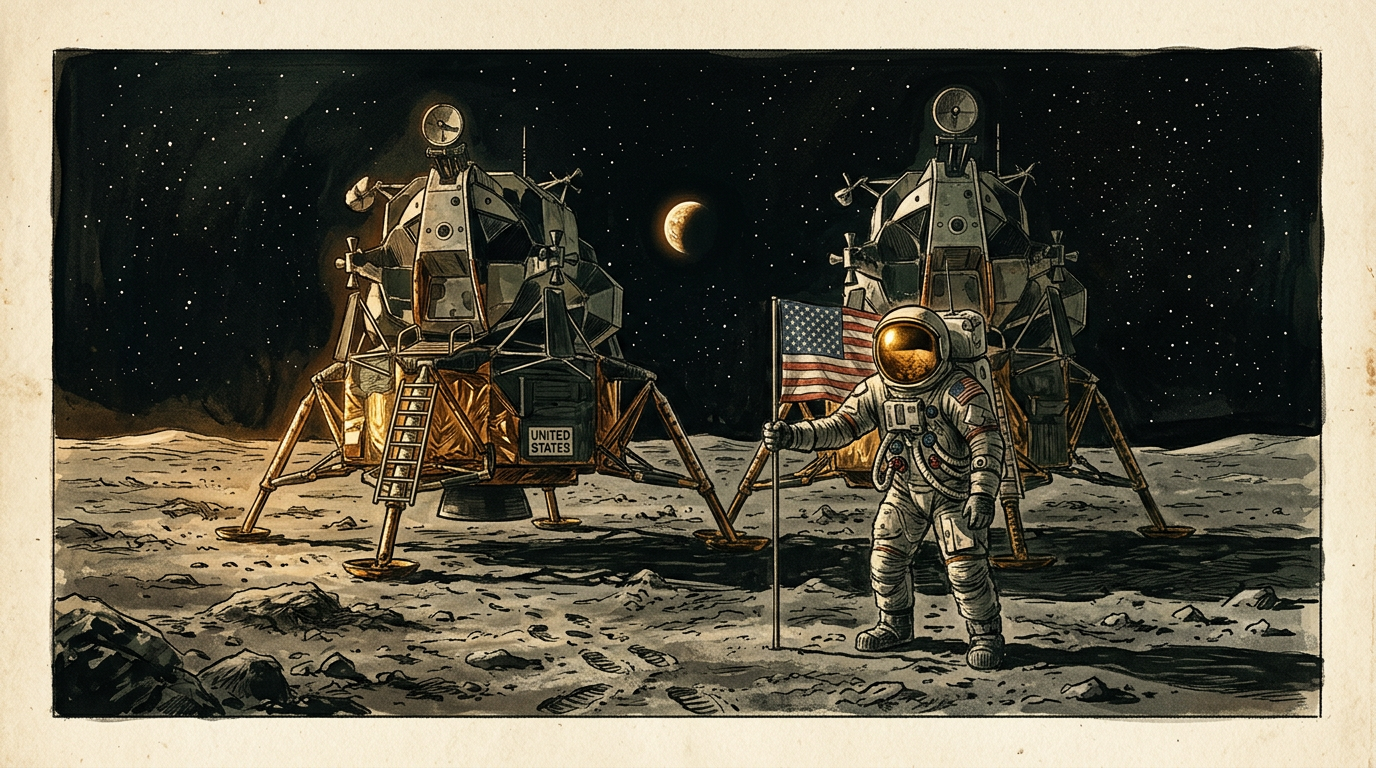
Reaching the Moon
On 20 July 1969, Neil Armstrong took the first human step on the Moon. But behind that footprint were thousands of engineers and a computer with less memory than a single email.

The Birth of Computing
The computer you are using is the latest link in a chain stretching back 200 years. This is the story of the visionaries who imagined that machines could do more than calculate.
Sources & references
Books and educational kits about Margaret Hamilton coming soon