_(2).jpg)
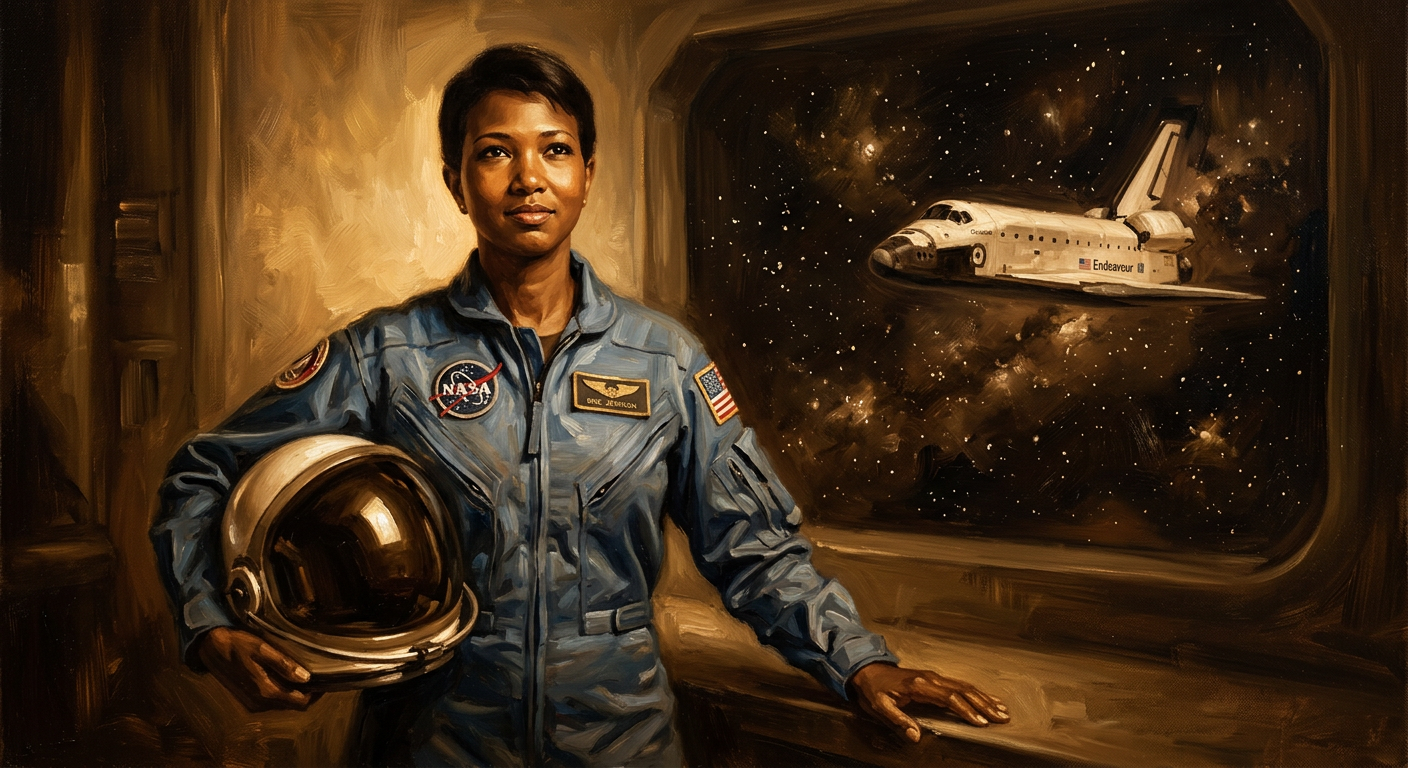
Mae Jemison
1956–present · Astronaut and Physician
Mae Jemison is an engineer, physician, and former NASA astronaut who became the first Black woman to travel into space. A polymath with passions spanning medicine, dance, and space exploration, she has devoted her career to inspiring the next generation of scientists.
“Never be limited by other people’s limited imaginations. If you adopt their attitudes, then the possibility won’t exist because you’ll have already shut it out.”
She brought a photograph of Bessie Coleman, the first African American woman to earn a pilot’s licence, with her into space as a tribute to the pioneers who came before her.
Why is this scientist famous?
Becoming the first African American woman to travel into space aboard the Space Shuttle Endeavour in 1992.
Mae's story
Early Life in Chicago
Mae Carol Jemison was born on October 17, 1956, in Decatur, Alabama, but her family moved to Chicago when she was three years old. Growing up on the South Side of Chicago, she was a curious child who loved science, astronomy, and dance in equal measure. Her parents encouraged all of it. She spent hours at the public library reading about the stars, and she took dance classes in ballet, modern dance, and African dance. At age 11, she watched the Apollo missions on television and was captivated, but she noticed something that bothered her: there were no women astronauts, and no one who looked like her. When she told a teacher she wanted to be a scientist, the teacher suggested she become a nurse instead. Jemison refused to accept that limitation. She entered Stanford University at the age of 16 on a National Achievement Scholarship.
From Stanford to the Peace Corps
At Stanford, Jemison earned two bachelor’s degrees simultaneously — one in chemical engineering and one in African and African American studies — while also choreographing and performing in dance productions. She graduated in 1977 and went on to Cornell University Medical College, earning her medical doctorate in 1981. But she had no intention of settling into an ordinary medical practice. She spent two years as a medical officer for the Peace Corps in Sierra Leone and Liberia, where she was responsible for the health of Peace Corps volunteers and U.S. Embassy staff across West Africa. She also worked in a refugee camp in Thailand, caring for people fleeing Cambodia. Her medical skills, her experience in remote and difficult conditions, and her broad education made her an extraordinary candidate for something she had dreamed of since childhood.
Into Space
In 1985, Jemison applied to NASA’s astronaut programme. She was one of roughly 2,000 applicants, and she was rejected — NASA had suspended the programme after the Challenger disaster in January 1986. She reapplied in 1987 and was selected as one of 15 candidates from over 2,000 applicants, becoming the first African American woman admitted to NASA’s astronaut training programme. Her training included spacewalk simulations, flight training in T-38 jets, and intensive science and engineering coursework. On September 12, 1992, Jemison flew into space aboard the Space Shuttle Endeavour on mission STS-47. She served as a science mission specialist, conducting experiments in weightlessness on bone cell research, human physiology, and the effects of microgravity on fertilised frog eggs. The mission lasted nearly eight days, during which Endeavour orbited the Earth 127 times. Jemison was the first Black woman to travel into space, and she carried with her a photograph of Bessie Coleman, the first African American woman to earn a pilot’s licence, as a tribute to the pioneers who had opened the way.
After NASA
Jemison left NASA in March 1993 to pursue a broader mission: using science and technology to improve life on Earth. She founded the Jemison Group, a technology consulting company, and created BioSentient Corporation, a medical technology company. In 1994, she founded the Dorothy Jemison Foundation for Excellence, named after her mother, and launched The Earth We Share, an international science camp for teenagers from diverse backgrounds. She became a fierce advocate for science education, particularly for children of colour and girls who, like her, had been told to aim lower. In 2012, she was chosen to lead the 100 Year Starship project, a Defence Advanced Research Projects Agency initiative to make human travel beyond our solar system possible within the next century. She has received numerous honours, including election to the National Women’s Hall of Fame, and has appeared on Star Trek: The Next Generation, making her the first real astronaut to appear on the show.
What did they discover?
First Black Woman in Space
On September 12, 1992, Jemison flew aboard the Space Shuttle Endeavour on mission STS-47, becoming the first African American woman to travel into space. She served as science mission specialist conducting experiments on bone cell growth and frog embryo development in microgravity.
Peace Corps Medical Officer
Before joining NASA, Jemison served as a medical officer for the Peace Corps in Sierra Leone and Liberia, responsible for the health of volunteers across West Africa and working in refugee camps in Thailand.
100 Year Starship Project
In 2012, Jemison was selected to lead the 100 Year Starship project, a initiative funded by the U.S. Defence Department to develop the capability for human interstellar travel within the next century.
Amazing facts
She entered Stanford University at age 16 and earned two bachelor’s degrees simultaneously — chemical engineering and African American studies.
She is a trained dancer and choreographer who brought her love of dance into her adult life, choreographing shows at Stanford.
She was the first real astronaut to appear on Star Trek: The Next Generation, playing a crew member in a 1993 episode.
She brought a photograph of Bessie Coleman, the first African American woman to earn a pilot’s licence, into space as a tribute.
She founded an international science camp called The Earth We Share to bring together teenagers from diverse backgrounds.
She was named after her mother, Dorothy Jemison, through the foundation she created to support science education.
She speaks four languages: English, Swahili, Japanese, and Russian.
She founded two technology companies after leaving NASA, including one focused on medical devices that monitor the body’s nervous system.
Timeline
Born in Decatur, Alabama
Entered Stanford University at age 16 on a National Achievement Scholarship
Graduated from Stanford with degrees in chemical engineering and African American studies
Earned her medical doctorate from Cornell University Medical College
Served as a Peace Corps medical officer in Sierra Leone and Liberia
Selected by NASA as one of 15 astronaut candidates from over 2,000 applicants
Flew into space aboard the Space Shuttle Endeavour on mission STS-47, becoming the first Black woman in space
Left NASA to found the Jemison Group and pursue science education advocacy
Founded the Dorothy Jemison Foundation for Excellence and launched The Earth We Share science camp
Selected to lead the 100 Year Starship project to make interstellar travel possible within a century
Became the first real astronaut to appear on Star Trek: The Next Generation
Awards & honours
Related Super Scientists
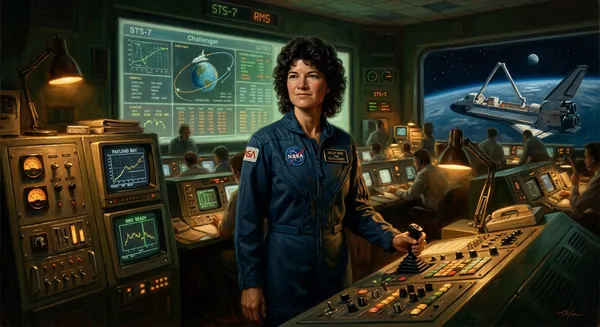
Sally Ride
1951–2012 · Physicist and Astronaut
Becoming the first American woman in space, aboard the Space Shuttle Challenger in 1983.
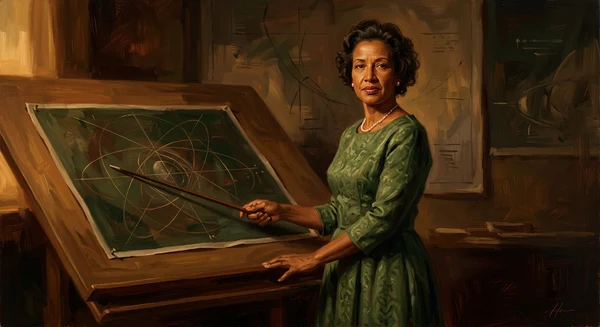
Katherine Johnson
1918–2020 · Mathematician
Calculating the trajectories that put the first Americans into space and on the Moon.
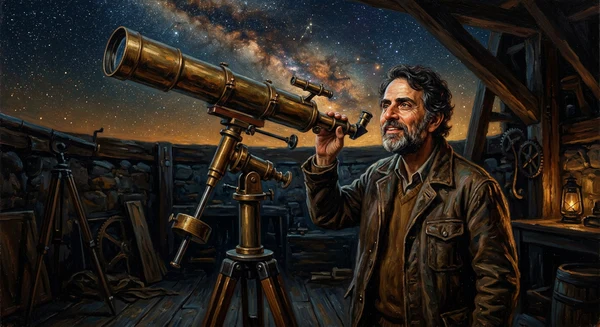
Carl Sagan
1934–1996 · Astronomer & Science Communicator
Created the Voyager Golden Record, wrote Cosmos, and inspired millions to love science.
Sources & references
Books and educational kits about Mae Jemison coming soon