_(2).jpg)
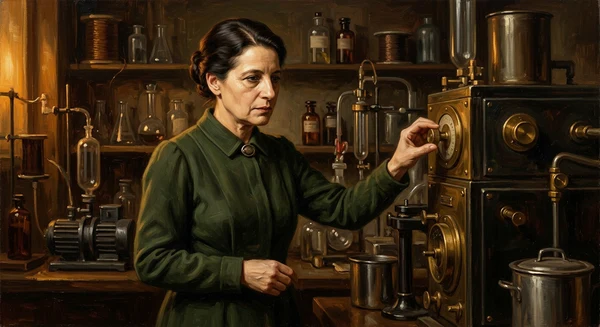
Lise Meitner
1878–1968 · Physicist
Lise Meitner was an Austrian physicist who co-discovered nuclear fission — the process that powers nuclear reactors and atomic bombs. Despite being overlooked for the Nobel Prize, she is now recognised as one of the most important physicists of the 20th century.
“Science makes people reach selflessly for truth and objectivity.”
Meitner discovered how splitting an atom releases vast energy — but the Nobel Prize was given to her male lab partner. Einstein called her \"our Madame Curie.\"
Why is this scientist famous?
Co-discovered nuclear fission and explained how splitting atoms releases enormous energy.
Meitner explained how nuclear fission works — the splitting of atoms that releases enormous energy. Her discovery is the science behind nuclear power plants, which generate electricity for millions of homes, and behind medical treatments that use radioactive particles to target tumours. She never worked on weapons, and her story reminds us that scientists must have a voice in how their discoveries are used.
Lise's story
Early Life
Born in 1878 in Vienna, Meitner was one of the first women allowed to attend university in Austria. She earned her PhD in physics in 1905 — only the second woman to do so at the University of Vienna. Women were not yet fully accepted in science, and she would face discrimination throughout her career.
The Berlin Years
Meitner moved to Berlin to work with Max Planck and began a 30-year collaboration with chemist Otto Hahn. For years she worked in a converted woodshop because women were not allowed in the main laboratory. Together they discovered several new isotopes and studied radioactive decay.
The Discovery of Fission
In 1938, Nazi Germany annexed Austria, making Meitner — who was Jewish — unsafe. She fled to Sweden. Meanwhile, Hahn and his assistant Fritz Strassmann bombarded uranium with neutrons and unexpectedly found barium — a much lighter element. Hahn wrote to Meitner asking for an explanation. With her nephew Otto Frisch, she realized the uranium nucleus had split in two — and that the process released enormous energy. She called it "fission."
The Nobel Snub
Despite providing the theoretical explanation for fission, Meitner was excluded from the 1944 Nobel Prize in Chemistry, which went to Hahn alone. She refused to work on the atomic bomb, saying, "I will have nothing to do with a bomb." Element 109 was named Meitnerium in her honour — one of only two elements named after a woman.
What did they discover?
Nuclear Fission
Co-discovered and theoretically explained nuclear fission — the splitting of atomic nuclei that releases vast energy, powering nuclear reactors and atomic weapons.
Protactinium
Discovered protactinium, a new radioactive element, with Otto Hahn in 1917.
The Meitner-Hupfeld Effect
Identified an anomalous scattering of gamma rays, later important in understanding nuclear physics.
Amazing facts
She was excluded from the Nobel Prize for fission despite providing the theoretical explanation — the prize went to her male partner Otto Hahn.
Einstein praised her as "our Madame Curie" and said she was smarter than Marie Curie.
She had to flee Nazi Germany in 1938, escaping by train with just 10 marks and a diamond ring to bribe guards.
She refused to work on the Manhattan Project, saying "I will have nothing to do with a bomb."
Element 109, Meitnerium (Mt), was named after her — one of only two elements named after a woman.
For years she had to work in a basement woodshop because women weren't allowed in the main lab.
Timeline
Born in Vienna, Austria-Hungary on November 7
Earned her PhD in physics from the University of Vienna
Moved to Berlin and began collaboration with Otto Hahn
Discovered the element protactinium with Hahn
Became the first female physics professor in Germany
Fled Nazi Germany to Sweden after the Anschluss
Co-discovered nuclear fission with Otto Frisch, explaining Hahn's experimental results
Otto Hahn alone received the Nobel Prize for fission — Meitner was excluded
Died in Cambridge, England on October 27, age 89
Element 109 was named Meitnerium in her honour
Awards & honours
Related Super Scientists
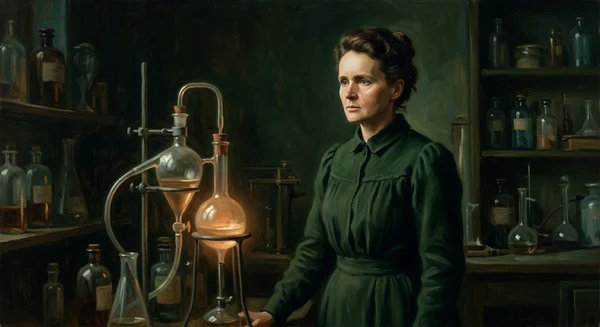
Marie Curie
1867–1934 · Physicist & Chemist
Discovering radioactivity and two new elements: radium and polonium.
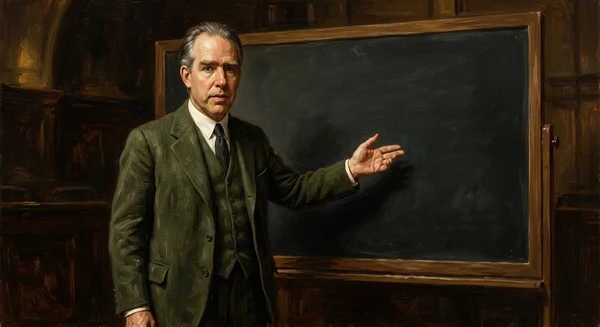
Niels Bohr
1885–1962 · Physicist
Developed the Bohr model of the atom and made foundational contributions to quantum mechanics.
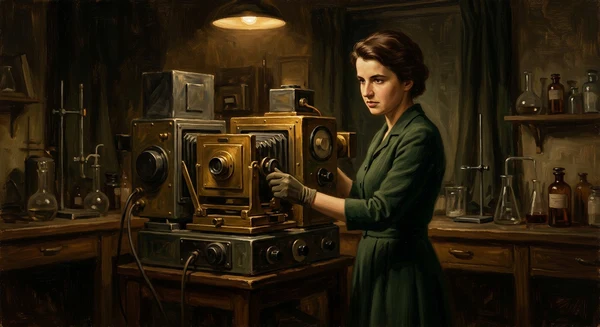
Rosalind Franklin
1920–1958 · Chemist & X-ray Crystallographer
Taking the photograph that revealed the double-helix structure of DNA.
Articles about this scientist
Sources & references
Books and educational kits about Lise Meitner coming soon