_(2).jpg)
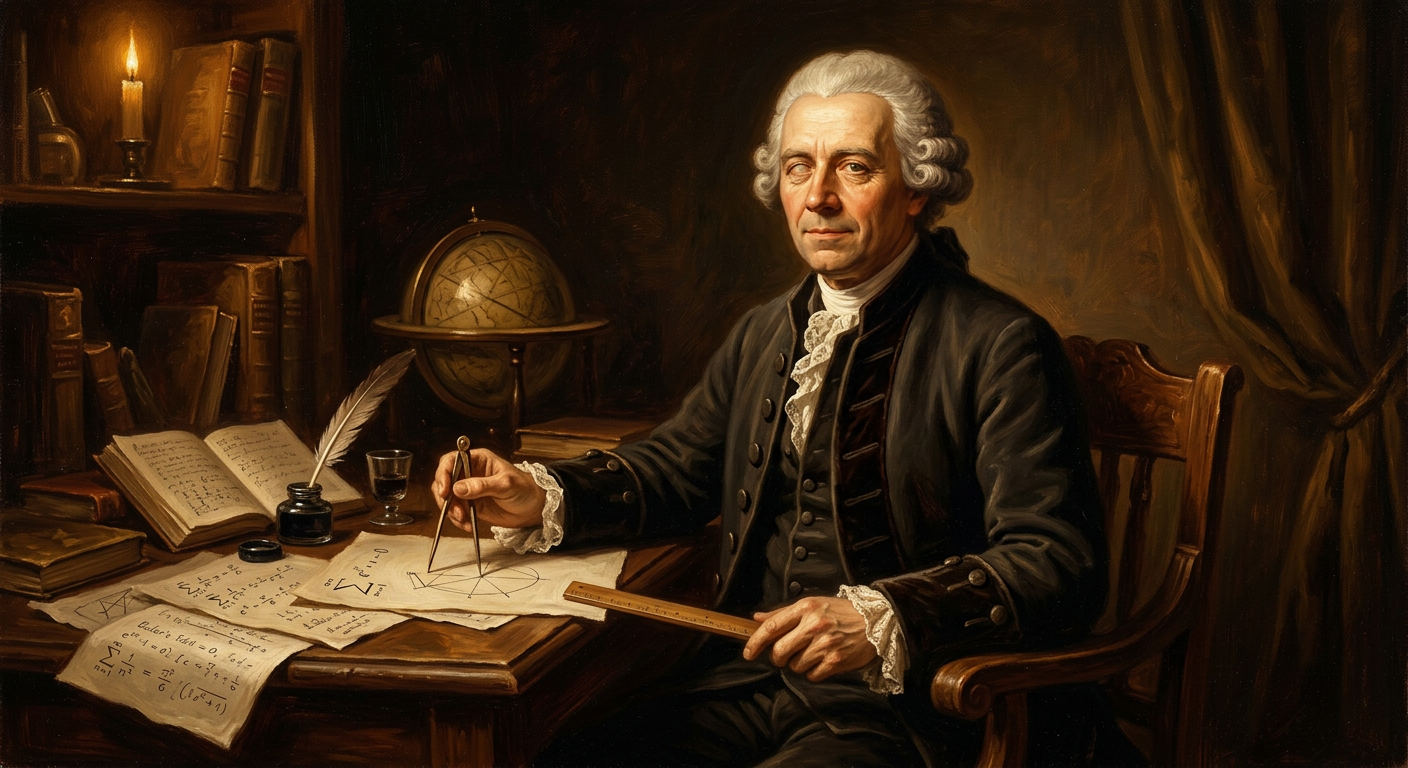
Leonhard Euler
1707–1783 · Mathematician and Physicist
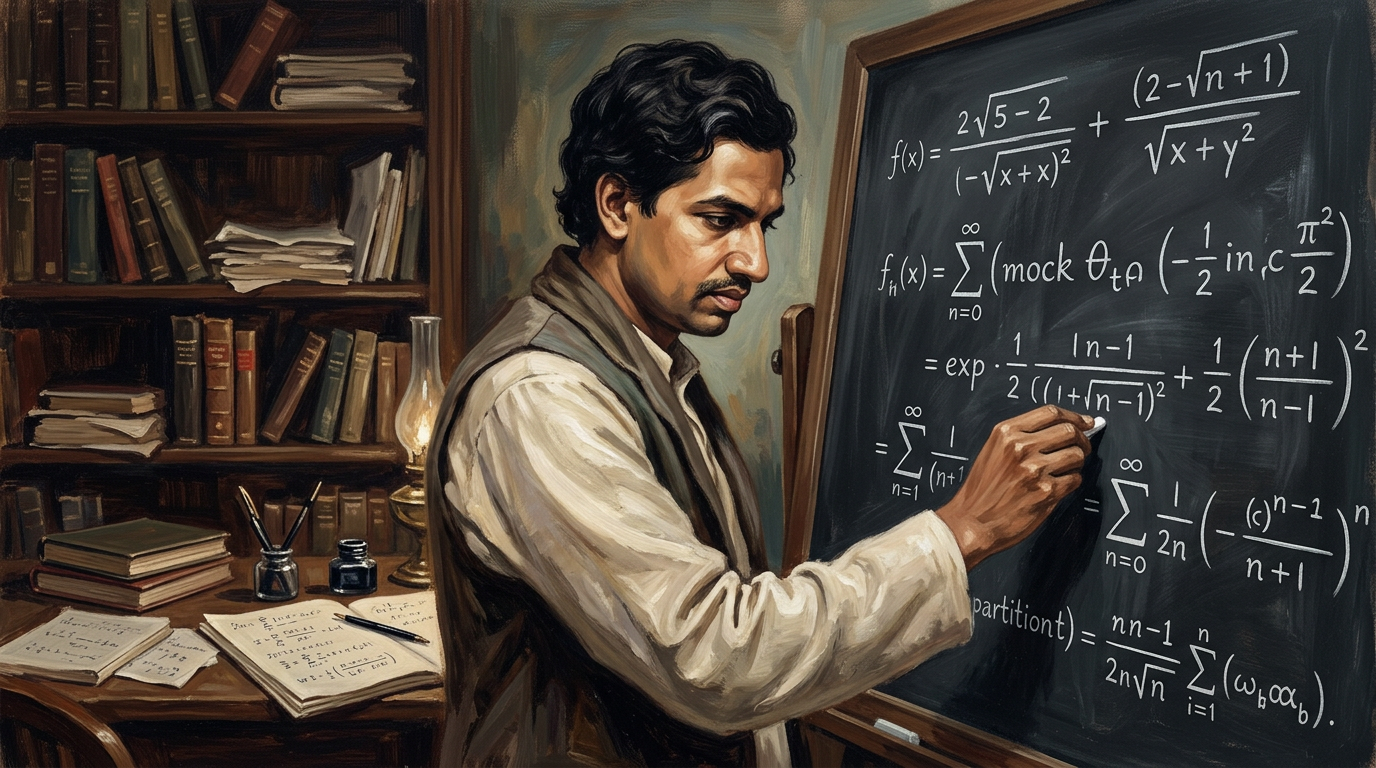
A Swiss mathematician whose boundless output shaped nearly every branch of mathematics, from the bridges of Königsberg to the foundations of calculus — and who kept producing masterworks after losing his sight.
“Nothing in the world can take the place of persistence. Talent will not; nothing is more common than unsuccessful men with talent. Genius will not; unrewarded genius is almost a proverb.”
Euler published over 800 papers and books — more than any other mathematician in history. Even after going completely blind in 1766, he continued to produce mathematics at a furious pace, dictating his work to assistants and claiming he could now think without distraction.
Why is this scientist famous?
The most prolific mathematician in history, who produced groundbreaking work in calculus, number theory, and topology — much of it after going entirely blind.
Euler produced more maths than perhaps anyone in history. He invented the way we write functions, popularized the symbol for pi, and created graph theory after solving a puzzle about bridges in his city. His work underpins everything from Google's search algorithms to network analysis to the maths behind computer graphics and animations.
Leonhard's story
A Pastor''s Son in Basel
Leonhard Euler was born on 15 April 1707 in Basel, Switzerland, the son of a Calvinist pastor who had studied mathematics under Jakob Bernoulli. His father hoped Leonhard would follow him into the church, but the boy''s extraordinary talent for numbers was impossible to ignore. He entered the University of Basel at just 13, and by 15 he had completed his master''s degree. A family friend, the mathematician Johann Bernoulli, recognised the young man''s genius and gave him private tutoring on Saturdays — the only mathematics instruction Euler ever received beyond what his father taught him. Bernoulli told Euler''s father that his son was destined to be a great mathematician, not a pastor.
To Russia and St Petersburg
At 19, Euler moved to St Petersburg, Russia, to join the newly established Academy of Sciences. The Academy had been founded by Peter the Great, and Euler was initially offered a position in the medical section, but a vacancy in mathematics soon opened. He threw himself into research with extraordinary energy, publishing on navigation, ballistics, artillery, and shipbuilding alongside his pure mathematical work. He married Katharina Gsell, the daughter of a Swiss painter at the Academy, and they had 13 children, though only five survived to adulthood. Euler often said he did some of his best mathematics while holding a baby in one arm.
The Bridges of Königsberg
In 1735, Euler solved a puzzle that had been nagging the citizens of Königsberg (now Kaliningrad): could you walk through the city crossing each of its seven bridges exactly once? Euler proved it was impossible, and in doing so he invented an entirely new branch of mathematics — graph theory. His insight was to strip away all the irrelevant detail and focus only on which pieces of land were connected to which. This abstraction, treating connections rather than physical distances, laid the groundwork for topology, the study of shape and connectivity that underpins everything from network analysis to Google''s PageRank algorithm.
Berlin and the Academy
In 1741, Euler left St Petersburg for Berlin, where Frederick the Great had invited him to join the Prussian Academy of Sciences. He spent 25 years there, producing an astonishing flood of work — hundreds of papers on calculus, astronomy, optics, and lunar motion. He wrote textbooks that became the standard for generations, including his Introductio in Analysin Infinitorum, which laid out the foundations of mathematical analysis. Frederick the Great, however, found Euler too quiet and unworldly for his glittering court, once calling him ''my cyclops'' — a cruel reference to Euler''s blind eye. The relationship cooled, and in 1766 Euler returned to St Petersburg.
Blindness and the Golden Flood
Euler had been losing his eyesight for years. A fever in 1735 damaged his right eye, and by 1766, back in St Petersburg, he went completely blind. For most mathematicians this would have been the end. For Euler, it was the beginning of his most productive period. He had a photographic memory — he could recite the entire Aeneid from memory and tell you the first and last lines on any page — and he dictated his ideas to a team of assistants. His output actually increased. He produced nearly half of his total work after going blind, including a 775-page treatise on the motion of the Moon and his beloved Letters to a German Princess, a popular science bestseller.
A Legacy in Every Equation
Euler died on 18 September 1783, collapsing while playing with his grandson. He was 76. His collected works, which scholars are still cataloguing today, fill more than 80 large volumes — the largest body of mathematical work ever produced by a single person. His name is everywhere in mathematics: Euler''s number e, Euler''s constant gamma, Euler''s formula, Euler''s identity, Euler''s totient function, Euler angles, Euler diagrams. Pierre-Simon Laplace once said: ''Read Euler, read Euler, he is the master of us all.''
What did they discover?
Euler''s Identity
His formula e^(iπ) + 1 = 0, linking the five most important constants in mathematics (e, i, π, 1, and 0), is widely regarded as the most beautiful equation ever discovered.
Foundations of Graph Theory
Modern Mathematical Notation
Euler standardised the notation we still use today: f(x) for functions, e for the base of natural logarithms, i for the imaginary unit, Σ for summation, and π for the ratio of a circle''s circumference to its diameter.
Euler''s Formula for Polyhedra
He proved that for any convex polyhedron, the number of vertices minus edges plus faces always equals two (V − E + F = 2), a foundational result in topology that connects geometry to the study of shapes.
Seven Bridges of Königsberg
His 1735 proof that it is impossible to cross all seven bridges of Königsberg exactly once created the field of graph theory and introduced the concept of an Eulerian path.
Lunar Motion Calculations
His precise calculations of the Moon''s orbit were so accurate that the British Navy used them for navigation, and the method helped solve the longitude problem that had plagued sailors for centuries.
Amazing facts
Euler published over 800 papers and books — more than any other mathematician in history. His collected works fill over 80 large volumes, and scholars are still cataloguing them.
He went completely blind in 1766 but produced nearly half of his entire body of work after losing his sight, dictating mathematics to assistants.
He could recite Virgil''s Aeneid from memory and tell you the first and last line on any page you named.
He had 13 children with his wife Katharina, though only five survived to adulthood. He often did mathematics with a baby in one arm.
Frederick the Great called Euler ''my cyclops'' because of his damaged right eye — a cruel nickname that contributed to Euler leaving Berlin.
The mathematical constant e (approximately 2.71828) is called Euler''s number because he was the first to recognise its fundamental importance in calculus.
He popularised the use of the Greek letter π for the ratio of a circle''s circumference to its diameter, though it was first proposed by William Jones.
His Letters to a German Princess, a collection of popular science lessons written in plain language, became one of the bestselling science books of the 18th century.
He invented the concept of a function — writing f(x) — which is so fundamental to mathematics that it is hard to imagine the subject without it.
Laplace, one of history''s greatest mathematicians, told his students: ''Read Euler, read Euler, he is the master of us all.''
Timeline
Born in Basel, Switzerland
Entered the University of Basel at age 13
Completed his master''s degree at 15, having studied under Johann Bernoulli
Moved to St Petersburg to join the Russian Academy of Sciences
Solved the Bridges of Königsberg problem, founding graph theory
Suffered a severe fever that damaged his right eye and nearly killed him
Moved to Berlin to join the Prussian Academy of Sciences at Frederick the Great''s invitation
Published Introductio in Analysin Infinitorum, founding modern mathematical analysis
Published Institutiones Calculi Differentialis, a foundational calculus textbook
Returned to St Petersburg and went completely blind
Published Letters to a German Princess, a bestselling popular science book
Published the 775-page treatise on lunar motion, completed entirely while blind
Died in St Petersburg while playing with his grandson, aged 76
Awards & honours
Related Super Scientists
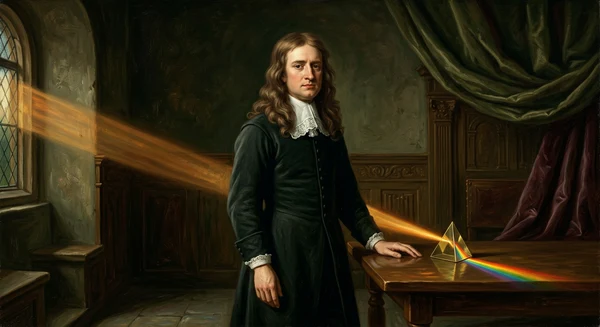
Isaac Newton
1643–1727 · Physicist & Mathematician
Formulating the laws of motion and universal gravitation.
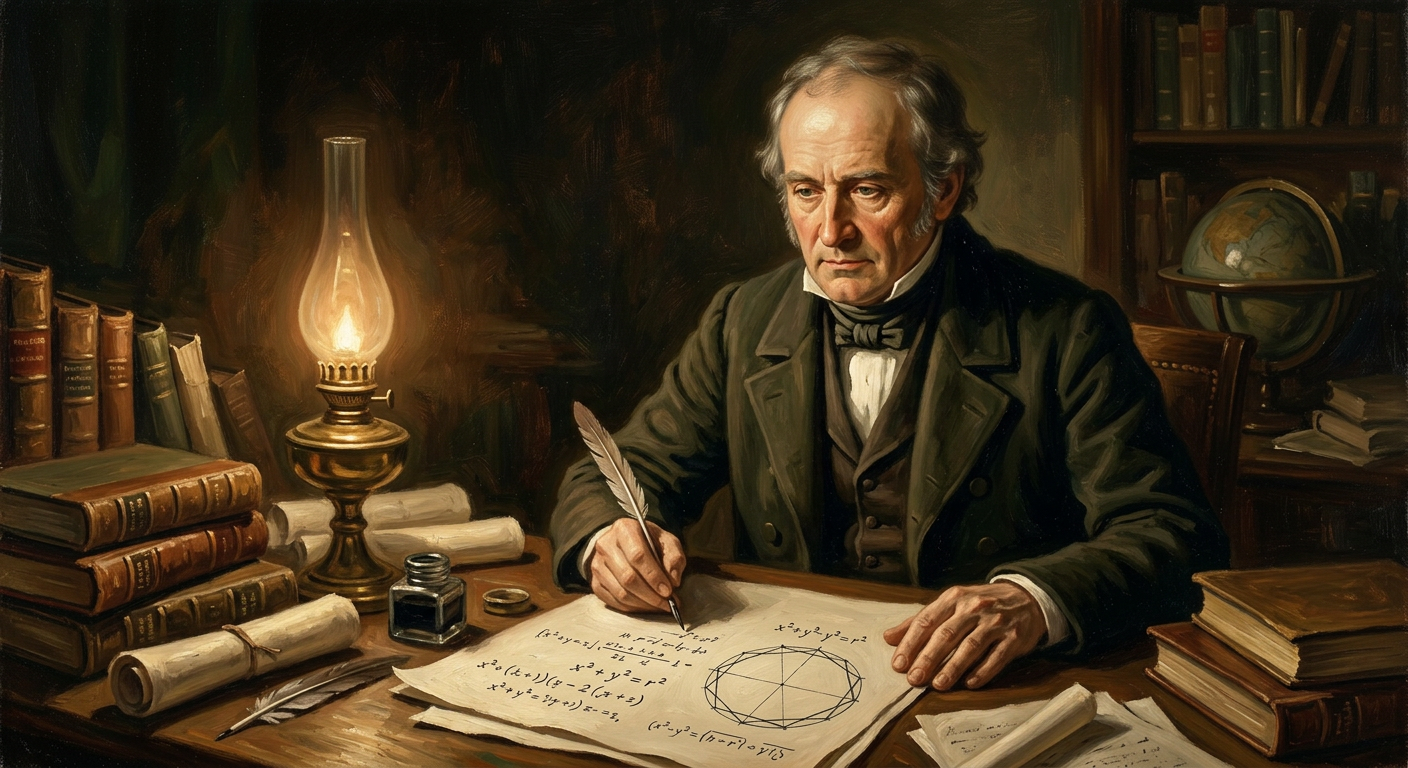
Carl Friedrich Gauss
1777–1855 · Mathematician & Physicist
Making groundbreaking contributions to number theory, geometry, astronomy, and statistics — often called the ‘Prince of Mathematicians.’
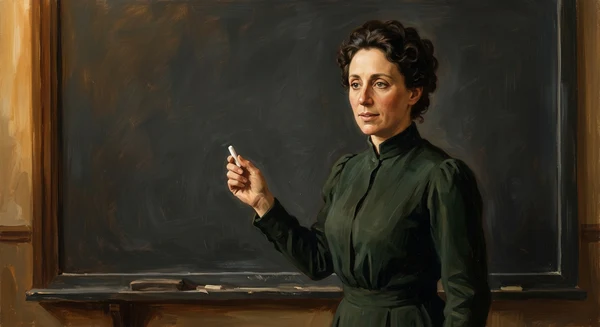
Emmy Noether
1882–1935 · Mathematician
Proved Noether's theorem, linking symmetry and conservation laws — a foundation of modern physics.
Sources & references
Books and educational kits about Leonhard Euler coming soon